







Executive Overview
In the modern digital landscape, the seamless continuity of online services often belies a complex web of technical infrastructure, server routing protocols, and automated algorithms. When high-traffic web platforms undergo domain migrations—whether to enhance security resilience, balance server loads, or adapt to evolving regulatory frameworks—users frequently encounter a puzzling phenomenon: search engines display outdated results, broken links populate search engine results pages (SERPs), and finding the correct, active web address becomes an exercise in navigating digital friction.
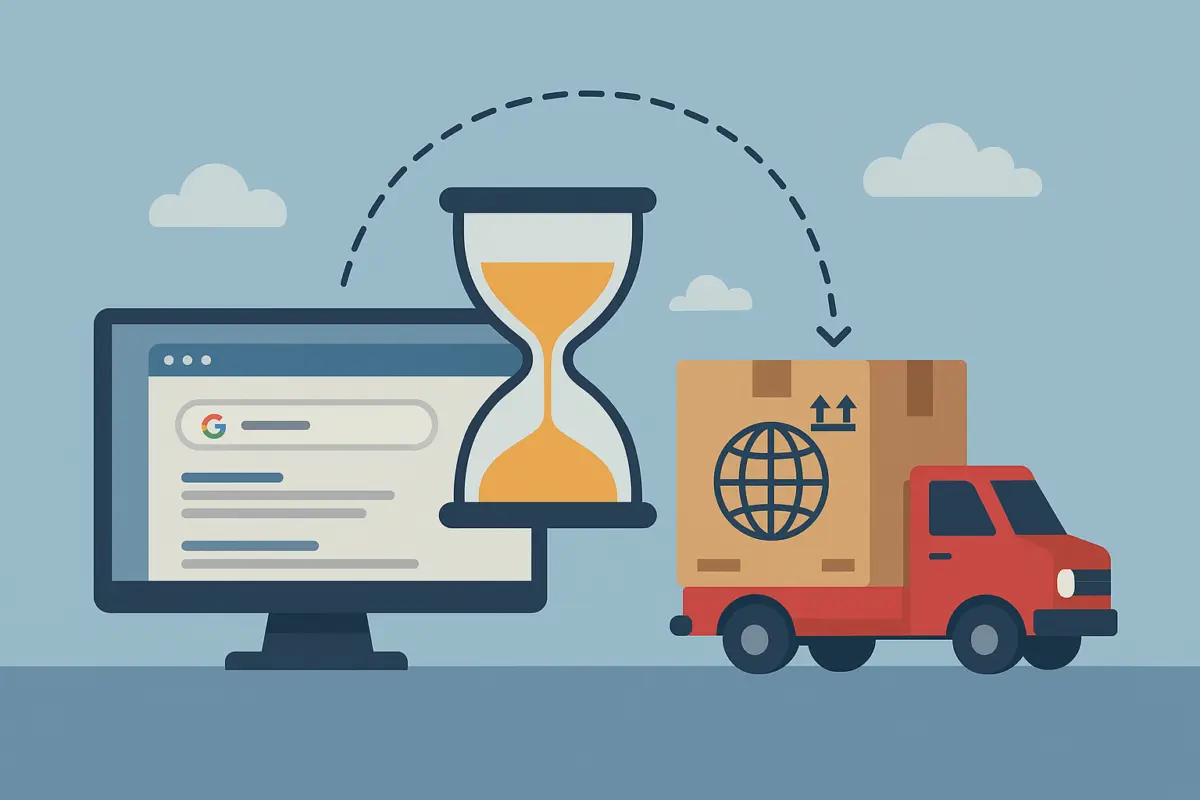
This friction is not a symptom of service failure, but rather a direct consequence of search engine indexing latency. According to foundational documentation from Google Search Central and industry migration standards outlined by analytical platforms like Semrush, search crawlers require a finite window of time to process server redirects, re-evaluate cached references, and map authoritative ranking signals from a legacy address to a newly established one.
This technical lag becomes particularly pronounced when examining large-scale digital repositories and open-access knowledge networks, such as the widely accessed academic and literary platform Z-Library. Because such services maintain sprawling digital footprints—spanning millions of peer-reviewed articles, textbooks, and archival documents—user demand remains perpetually high, even as underlying network infrastructure and domain addresses shift.
This comprehensive report investigates the mechanics of search engine indexing latency during web migrations, explores the technical architecture of domain transitions, analyzes how crawl delays impact user navigation toward the zlibrary official domain, and provides strategic insights for maintaining reliable access amidst transient digital disruptions.
Detailed Chronology: The Lifecycle of a Domain Migration and Indexing Lag
To comprehend why users frequently encounter mismatched search results or temporary dead ends following a platform address change, one must examine the chronological lifecycle of a web domain migration from a systems engineering perspective.
[Phase 1: Pre-Migration & DNS Setup]
       │
       ▼
[Phase 2: Live Transition & 301 Redirects]
       │
       ▼
[Phase 3: Crawler Discovery & Crawl Budget Allocation]
       │
       ▼
[Phase 4: Signal Transfer & Ranking Map Updates]
       │
       ▼
[Phase 5: Full SERP Synchronization & Cache Purge]
Phase 1: Pre-Migration and Configuration
Before a platform alters its public routing address, network administrators establish the new destination server, configure security certificates (SSL/TLS), and replicate databases. At this stage, the legacy domain remains the sole active entity recognized by major search engines like Google, Bing, and DuckDuckGo. No indexing lag exists because no structural changes have been published to the live web environment.
Phase 2: The Live Transition and Redirect Deployment
The moment a domain shift goes live, administrators implement server-side instructions—most notably 301 Permanent Redirects—designed to automatically route incoming traffic from the old URL to the new URL. Concurrently, updated XML sitemaps are submitted to webmaster consoles. However, this is precisely when the divergence between live infrastructure and search engine awareness begins. While human visitors clicking an old link are instantly forwarded to the new location, automated search engine bots do not register the change instantaneously.
Phase 3: Crawler Discovery and Crawl Budget Allocation
Search engines operate by deploying automated programs known as crawlers or spiders across the web. These bots do not visit every page on the internet simultaneously; instead, they operate under a strict crawl budget—an algorithmic limit on how many pages a bot will crawl on a specific site within a given timeframe.
- When a domain changes, search crawlers must spend a portion of their limited budget discovering the new server architecture.
- Legacy URLs remain cached in search engine memory banks, often leading to search snippets that point to transitional states or temporary holding pages.
Phase 4: Signal Transfer and Ranking Authority Mapping
One of the most complex tasks for search engines during a migration is transferring "link juice" (domain authority, backlink profiles, and trust metrics) from the historical URL to the new zlibrary official domain. Search engines must verify that the 301 redirects are properly configured and that the content on the new address genuinely mirrors or legitimately succeeds the old content. Until this algorithmic validation completes, ranking fluctuations and indexing gaps are standard operational anomalies.
Phase 5: Complete SERP Synchronization and Cache Purge
The final stage of the migration lifecycle occurs when search engine indexes completely purge historical references and replace them across all global data centers with the new uniform resource locator (URL). Depending on the scale of the website, the depth of its index, and the frequency with which crawlers revisit the domain, this phase can span anywhere from several days to multiple weeks.
Supporting Context & Metrics: Analyzing the Impact of Crawl Delays
To quantify the operational impact of domain migrations, digital analysts frequently examine metrics related to crawl frequency, index refresh rates, and user routing behavior. Empirical studies from web analytics firms, including a 2024 IndexCheckr analysis on indexing delays and technical audits published by enterprise SEO software suites, illuminate the scale of these challenges.
Key Metrics and Technical Observations
| Metric / Indicator | Average Duration / Impact | Technical Driver |
|---|---|---|
| Initial Crawler Discovery | 24 to 72 hours | Server-side sitemap submission and DNS propagation speeds. |
| 301 Redirect Processing | 3 to 14 days | Crawler allocation of crawl budget to verify redirect permanence. |
| Complete Cache Purge | 2 to 6 weeks | Global distribution networks (CDNs) and multi-tier search database synchronization. |
| SERP Discrepancy Rate | 15% to 40% of legacy queries | Persistence of third-party backlinks pointing to outdated historical URLs. |
The persistence of third-party references is arguably the most significant contributor to user confusion during platform updates. While a website’s internal architecture can be updated overnight, the wider internet—comprising academic citation boards, discussion forums, social media platforms, and archived blog posts—retains historical hyperlinks indefinitely. When an internet user searches for resources like those provided by Z-Library, these lingering external links frequently direct them toward outdated search snippets or cached pages that no longer reflect the live network topology.
Big Data, Digital Libraries, and Infrastructure Resilience
Platforms hosting massive electronic repositories—encompassing millions of academic journals, specialized textbooks, and general interest titles—face unique infrastructural hurdles. As explored in digital library marketing strategies and big data integration frameworks, maintaining high availability for millions of concurrent global users requires dynamic load balancing, distributed content delivery networks (CDNs), and occasional domain restructuring.
When an entity like Z-Library updates its underlying network routing, the core database, user account credentials, and interface layouts often remain entirely identical. The visible change is strictly linguistic: the text-based string entered into a browser’s address bar. Understanding this technical dissociation—separating the changing browser string from the persistent digital service operating behind it—is essential for interpreting why the zlibrary official site may appear distinct across different search engine results pages over time.
Official Guidelines and Technical Standards
Navigating domain transitions safely and transparently requires adherence to rigorous webmaster standards. Major search engine operators, most notably Google via Google Search Central documentation, provide explicit guidelines for web administrators executing platform migrations.
Core Principles of Site Moves According to Search Central
- Implement Permanent Redirects (301s): Temporary redirects (such as 302s) signal to search engines that the move is transient, prompting crawlers to retain the old URL in the index. A proper 301 redirect explicitly communicates that the resource has permanently relocated.
- Consolidate Internal Linking: All internal navigation, menus, and footer links must be updated simultaneously with the domain shift to prevent internal routing loops and wasted crawl budgets.
- Submit Updated Sitemaps: Webmasters must generate new XML sitemaps reflecting the new URL structure and submit them via search engine console tools to accelerate crawler discovery.
- Monitor Server Log Files: Analyzing server logs allows administrators to track when and how frequently search engine crawlers (Googlebot, Bingbot, etc.) are visiting the new address, providing empirical visibility into the indexing recovery timeline.
When these protocols are meticulously followed, the transition period—while technically unavoidable due to the sheer scale of global web indexing—is kept to an absolute minimum. However, external factors such as third-party caching and decentralized web archiving mean that end-users will invariably experience transitional lag, necessitating vigilance and reliance on verified directory sources rather than legacy search indexes.
Future Outlook: The Evolution of Web Indexing and Decentralized Access
As the internet continues to scale exponentially, the fundamental architecture of search engine indexing and domain management is undergoing rapid transformation. Looking toward the future, several technological shifts promise to reshape how users track active web properties and how search crawlers process platform migrations.
1. Real-Time Indexing and Push-Based Crawling
Traditional search engine architecture relies on a "pull" model, where automated crawlers periodically visit websites to check for updates. However, the rise of real-time web indexing protocols and streaming APIs is shifting the industry toward a "push" model. In the near future, automated notifications from web servers directly to search engine registries could reduce indexing latency from weeks to mere minutes, virtually eliminating the gap between a domain migration and its reflection in global SERPs.
2. Decentralized Identity and Persistent Addressing
The volatility of domain names (such as the frequent updates to the zlibrary official domain) highlights a structural vulnerability in the traditional Domain Name System (DNS). Emerging technologies, including decentralized web protocols (such as IPFS and blockchain-based naming systems), point toward a future where digital resources are indexed by cryptographic hashes rather than mutable server addresses. In such an ecosystem, physical location and domain routing become decoupled from resource identification, ensuring permanent, unalterable access to digital literature regardless of server migrations.
3. Enhanced User Education and Metadata Transparency
As search engines incorporate more sophisticated artificial intelligence to interpret user intent, search results pages are becoming better equipped to handle platform migrations dynamically. Future search algorithms will likely feature automated verification badges that instantly identify official domain updates, reducing user reliance on outdated cached snippets and mitigating the confusion caused by crawl latency.
Conclusion
Web domain migrations are a routine, necessary component of maintaining high-performance, secure, and resilient digital platforms. Whether driven by infrastructure scaling, security optimizations, or administrative restructuring, changes to a platform’s public routing address invariably trigger a transient phase of search engine indexing latency.
For platforms with extensive digital footprints and high public demand—such as the vast repositories accessed via the zlibrary official domain—understanding the mechanics of crawl delays, 301 redirects, and cached search results is vital. By recognizing that temporary discrepancies in search engine results pages are artifacts of technical lag rather than indicators of service cessation, users and administrators alike can navigate domain transitions smoothly, ensuring uninterrupted access to the digital literature and academic resources they rely upon.