Executive Overview
In an era defined by rapid digital transformation, the social work profession finds itself at a critical intersection of care delivery and technological vulnerability. Modern practitioners manage increasingly complex caseloads that rely heavily on digital tools, electronic health records (EHRs), cloud-based storage, and virtual communication platforms. While these innovations expand access to care for marginalized and at-risk populations, they simultaneously introduce unprecedented security risks. Cyberattacks, ransomware operations, and accidental data leaks happen daily, frequently targeting the most vulnerable members of society—precisely those who turn to social workers for sanctuary and support.
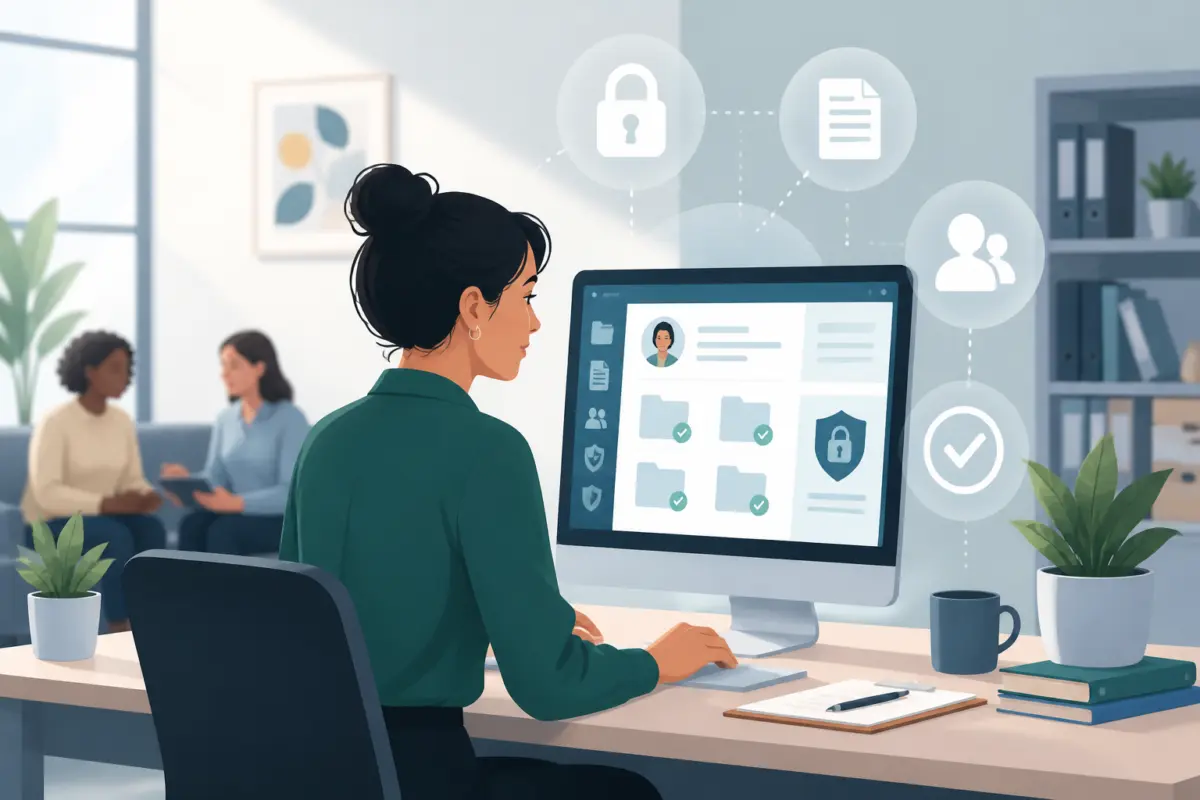
Protecting these clients requires more than traditional clinical empathy; it demands the strict embedding of robust information governance into daily practice. High-demand social work roles across healthcare systems, private practices, and community agencies can no longer treat cybersecurity as an afterthought or an IT department’s sole responsibility. Instead, safeguarding sensitive psychological evaluations, intake histories, and family assessments must be treated as a primary duty of care.
To prevent catastrophic healthcare data breaches and maintain the sacred bond of professional trust, contemporary practitioners must master three core information governance disciplines:
- Deploying uncompromising, HIPAA-compliant encryption across all communications and storage devices.
- Strictly refusing consumer-grade Artificial Intelligence (AI) tools for case notes and administrative summaries.
- Securing explicit, documented consent before sharing sensitive records with external parties or navigating the delicate boundaries of digital footprints.
By evaluating the financial fallout of data breaches, adhering to professional codes of ethics, and maintaining absolute transparency with patients, the modern social worker can forge a proactive security posture that protects both the client and the integrity of the profession.
Detailed Chronology of Digital Transformation and Vulnerability in Social Work
The integration of digital technology into social work did not happen overnight; it evolved through distinct phases that progressively heightened the stakes of data security.
Phase 1: The Transition from Paper to Electronic Records (Early 2000s)
For decades, social work relied heavily on physical manila folders stored in locked metal filing cabinets. While physical break-ins were a theoretical risk, client data was largely insulated from remote, automated threats. The passage of the Health Insurance Portability and Accountability Act (HIPAA) in 1996 laid the groundwork for privacy, but the true digital pivot occurred throughout the 2000s and 2010s as agencies digitized intake files to streamline billing, improve cross-agency coordination, and expand remote service delivery.
Phase 2: The Mobile and Remote Work Expansion (2010s–2020)
As smartphones, tablets, and laptops became ubiquitous, social workers stepped out of traditional office environments. Practitioners began managing crisis calls from their cars, drafting clinical notes on home computers, and transmitting sensitive updates via standard email clients. This mobility severed the physical security perimeter of the agency office. Unencrypted laptops left in vehicles, unsecured home Wi-Fi networks, and personal smartphones mixing work and personal data quickly emerged as primary vectors for accidental data exposure.
Phase 3: The Cybersecurity and AI Era (2020–Present)
The COVID-19 pandemic accelerated telehealth and virtual care models by a decade, cementing digital infrastructure as the lifeblood of social services. However, this hyper-connected reality coincided with a massive global surge in sophisticated cybercrime. Healthcare and social service networks became prime targets for ransomware gangs and malicious hackers seeking to exploit strained systems.
Simultaneously, the explosive rise of consumer-grade generative AI tools—such as OpenAI’s ChatGPT—tempted overwhelmed practitioners to use public platforms to draft case summaries, organize intake transcripts, and process psychiatric evaluations. This practice introduced a sweeping, invisible compliance threat: the direct ingestion of protected health information (PHI) into unvetted vendor servers, where data is routinely harvested, reviewed by human contractors, and exposed to external breach vulnerabilities.
Supporting Context & Metrics: The True Cost of Inaction
To understand why information governance is non-negotiable for modern social workers, one must examine the staggering economic and human toll of healthcare data breaches.
According to the comprehensive IBM Cost of a Data Breach Report, the healthcare sector suffered an average breach cost of $7.42 million, making it the most expensive industry for data breaches for the twelfth consecutive year. These figures reflect not only direct financial penalties and regulatory fines under federal laws like HIPAA, but also the extensive costs of forensic investigations, credit monitoring services for affected individuals, legal fees, and prolonged operational downtime.
Beyond corporate and institutional losses, the human cost is immeasurable. When a client’s private psychotherapy notes, substance abuse history, or domestic violence disclosures are leaked online, the damage to their personal life, employment prospects, and emotional well-being can be devastating.
The Mechanics of HIPAA-Compliant Encryption
Anyone working in social work or healthcare must use safe, encrypted devices and connections. End-to-end encryption scrambles client intake files and psychotherapy data into unreadable ciphertext during transmission. This cryptographic safeguard is critical: without Advanced Encryption Standard (AES-256) encryption across storage drives and messaging tools, an unencrypted laptop left in a parked car or a intercepted email can expose entire client histories to hostile actors.
Practitioners must maintain absolute separation between personal hardware and work systems. Accessing work emails, client databases, and scheduling software should only occur on dedicated, organization-approved devices equipped with secure, HIPAA-compliant connections. Even during personal travel or vacations, practitioners must evaluate whether checking messages on public Wi-Fi networks puts client data at risk.
The Dangers of Public AI Programs
Public AI programs have taken the world by storm, but they possess zero place in professional social work workflows. Consumer AI tools transmit user prompts directly to vendor servers, where text is routinely saved, logged, and reviewed. Pasting intake summaries, psychiatric evaluations, or family names into an unvetted prompt bar violates federal privacy standards immediately.
A national survey by the National Association of Social Workers (NASW) highlights that while practitioners increasingly explore automation to alleviate administrative burnout, the NASW Code of Ethics demands zero disclosure of protected records to unauthorized external platforms. Organizations must adopt strictly vetted cybersecurity protocols, ensuring that any enterprise AI tools implemented feature zero-retention agreements and explicit data-privacy guardrails.
When a user interacts with a public AI model, that text is saved to the profile history, making it vulnerable to hacker exploitation. Furthermore, internal employees at the AI vendor can review profile logs and user inputs. Practitioners cannot guarantee the ethical standards of third-party software engineers, and unauthorized personnel have no business viewing sensitive clinical material.
Official Standards, Ethics, and Statutory Frameworks
Information governance in social work is anchored by strict professional codes of ethics and international legal statutes.
The NASW Code of Ethics and Digital Boundaries
Standard 1.07 of the NASW Code of Ethics explicitly prohibits gathering client information electronically without informed consent, unless justified by an immediate emergency. In the digital age, this standard extends to the temptation of "cyber-sleuthing"—browsing through a client’s public social media profiles out of curiosity.
Looking through a client’s private or public social posts without a clinical justification risks biasing clinical assessments and severely damaging the therapeutic rapport. However, ethical frameworks recognize necessary exceptions. For instance, if a social worker receives credible reports that a client is posting explicit content related to self-harm or suicidal ideation online, checking the client’s public digital footprint to assess immediate danger constitutes a valid, ethically justified safety intervention.
Conversely, engaging in deceptive tactics—such as creating fake social media profiles to monitor or contact a client—is strictly unethical. Respecting digital boundaries is a core tenet of modern professional conduct.
Consent Protocols for Information Sharing
Social workers frequently encounter scenarios where sharing client information with family members, medical doctors, or external agencies appears beneficial. However, doing so is ethical and legal only when the affected individual grants explicit, documented consent.
Without documented consent, sharing records violates client privacy and destroys the trust built over months or years of clinical work. The only legal and ethical exceptions occur when an individual presents an imminent threat of harm to themselves or others. Furthermore, because social workers are legally mandated reporters, information must be shared without consent when clear signs of child abuse, elder abuse, or severe neglect are identified. While these are extreme scenarios, they remain distressingly common in the field.
International and State Regulatory Frameworks
These mandates are strongly reinforced by state and international statutes. For example, under the United Kingdom’s Data Protection Act 2018, practitioners managing overseas cases must identify a defined lawful basis before handling sensitive personal information. Across broader data protection frameworks globally, confidentiality remains the default rule, with data sharing permitted only when clear statutory safety exemptions apply.
Future Outlook: Building a Proactive Security Posture
The future of clinical social work will inevitably involve more automated systems, not fewer. As artificial intelligence, machine learning, and advanced electronic health records become deeply embedded in healthcare infrastructure, protecting vulnerable populations requires treating information security as a primary duty of care rather than an administrative afterthought.
To successfully navigate this digital frontier, social work agencies and individual practitioners must adopt a proactive security posture:
- Establish Early Transparency: Alleviate client anxiety by communicating information governance practices early. Providing a written privacy notice during the initial intake session explains clearly how notes are stored, who has access, and how confidentiality is maintained. A clear disclaimer at the start of an appointment establishes trust immediately.
- Mandate Ongoing Cybersecurity Training: Agencies must continuously train staff on emerging cyber threats, phishing scams, and secure communication protocols.
- Enforce Enterprise-Grade Compliance: Organizations must transition away from legacy systems and consumer applications, investing instead in purpose-built, HIPAA-compliant enterprise platforms equipped with AES-256 encryption and zero-retention AI capabilities.
- Confirm Permissions in Writing: Always request formal, written consent before sharing client records with family members, medical professionals, or collateral agencies.
By marrying timeless clinical empathy with rigid, uncompromising data governance standards, the social work profession can successfully harness modern technology while shielding vulnerable clients from digital harm and preserving the sacred human trust at the heart of caregiving.