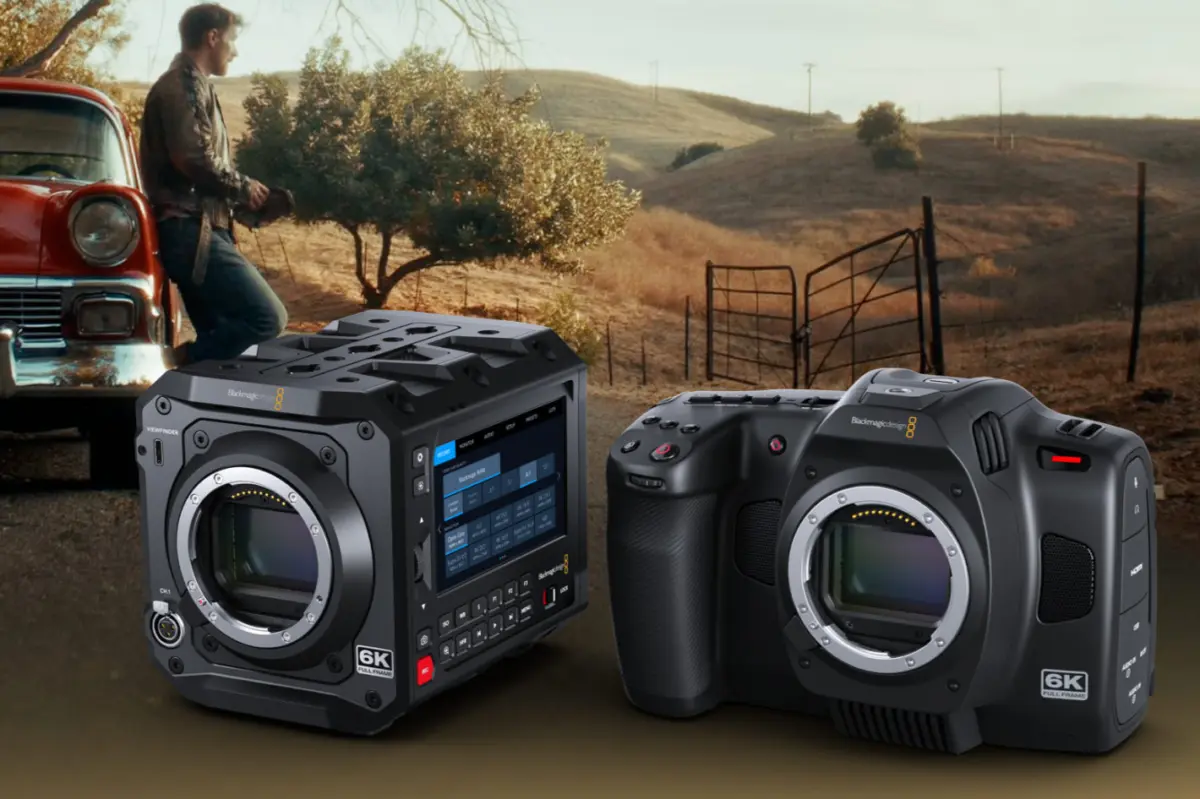
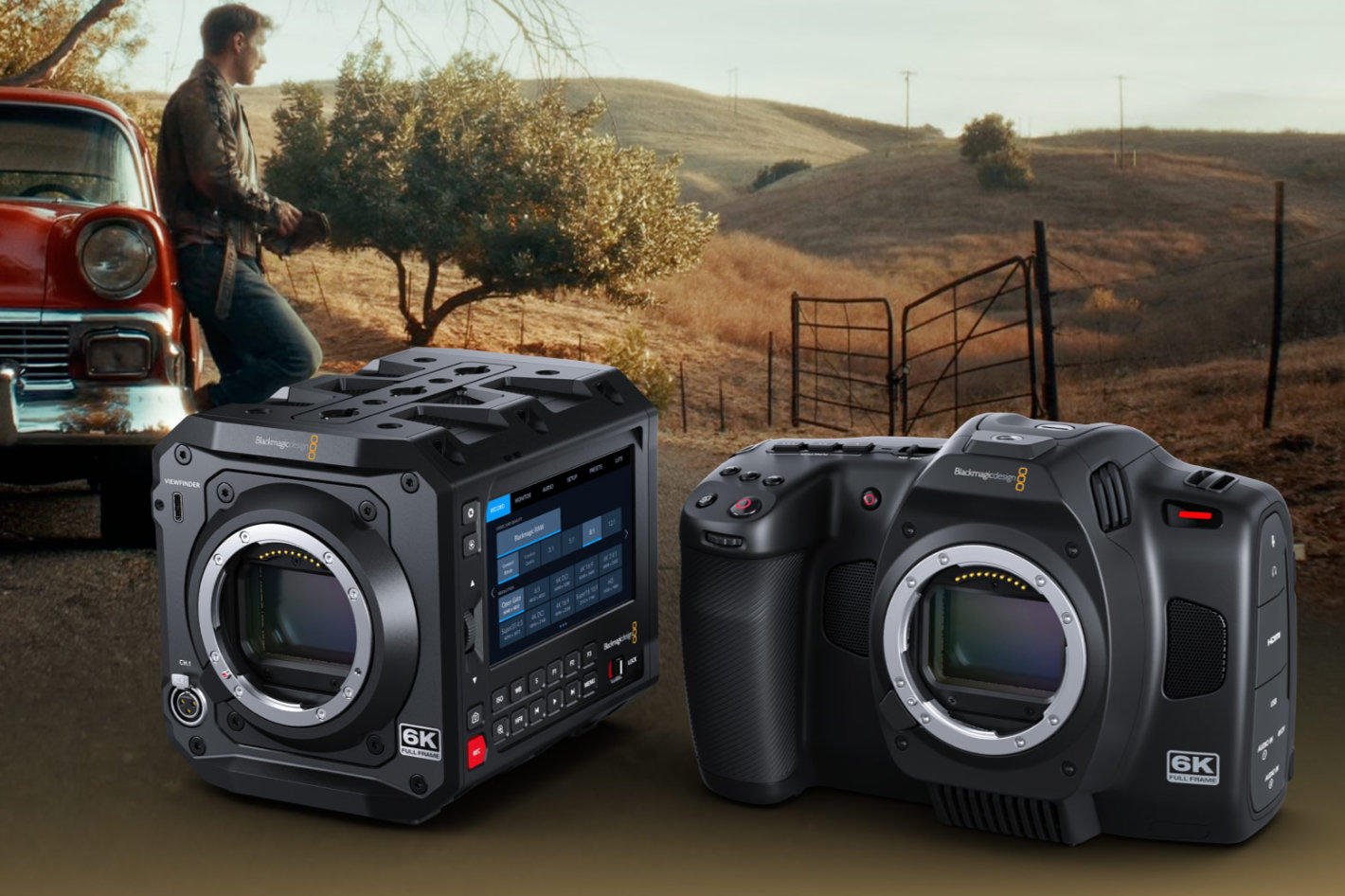
In a move that has sent shockwaves through the digital cinema and professional imaging industries, Blackmagic Design has announced a sweeping, immediate price reduction across its flagship full-frame camera lineup. Effective immediately, the Australian manufacturer has slashed the prices of its Blackmagic Cinema Camera 6K and the newly released, highly versatile Blackmagic PYXIS 6K by up to 41%.
This aggressive pricing strategy recalibrates the entry point for high-end, large-format cinematography. The Blackmagic Cinema Camera 6K, which previously retailed at $2,715, is now available for an unprecedented $1,595. Concurrently, the modular, box-style PYXIS 6K has seen its entry price plummet from over $3,000 down to $1,995 for both the L-Mount and EF-Mount configurations, while the high-end PL-Mount variant has been reduced to $2,195.
Historically, full-frame digital cinema cameras capable of shooting uncompressed or high-bitrate RAW formats were the exclusive domain of well-funded production houses and specialized rental boutique agencies. By lowering the financial barrier of entry to under $1,600, Blackmagic Design is not merely adjusting its product positioning; it is democratizing elite imaging tools. This calculated maneuver directly challenges established giants like Sony, Canon, and Panasonic, whose comparable full-frame hybrid and cinema offerings remain positioned at significantly higher price points.
Detailed Chronology: The Evolution of Blackmagic’s Disruptive Pricing
To understand the magnitude of this price drop, one must examine the timeline of Blackmagic Design’s market interventions. Since the introduction of the original Blackmagic Cinema Camera 2.5K in 2012, the company has consistently leveraged a "disruptor-first" business model.
  2012                     2018                     2023                     2026
   |                        |                        |                        |
   +-- Original BMCC 2.5K   +-- Pocket Cinema 4K     +-- Cinema Camera 6K     +-- Massive Price Cut
       Disrupts indie           Brings 4K RAW to         Full-Frame L-Mount       Slashes up to 41%
       filmmaking               the masses               redefines value          across 6K lineup
The Full-Frame Pivot
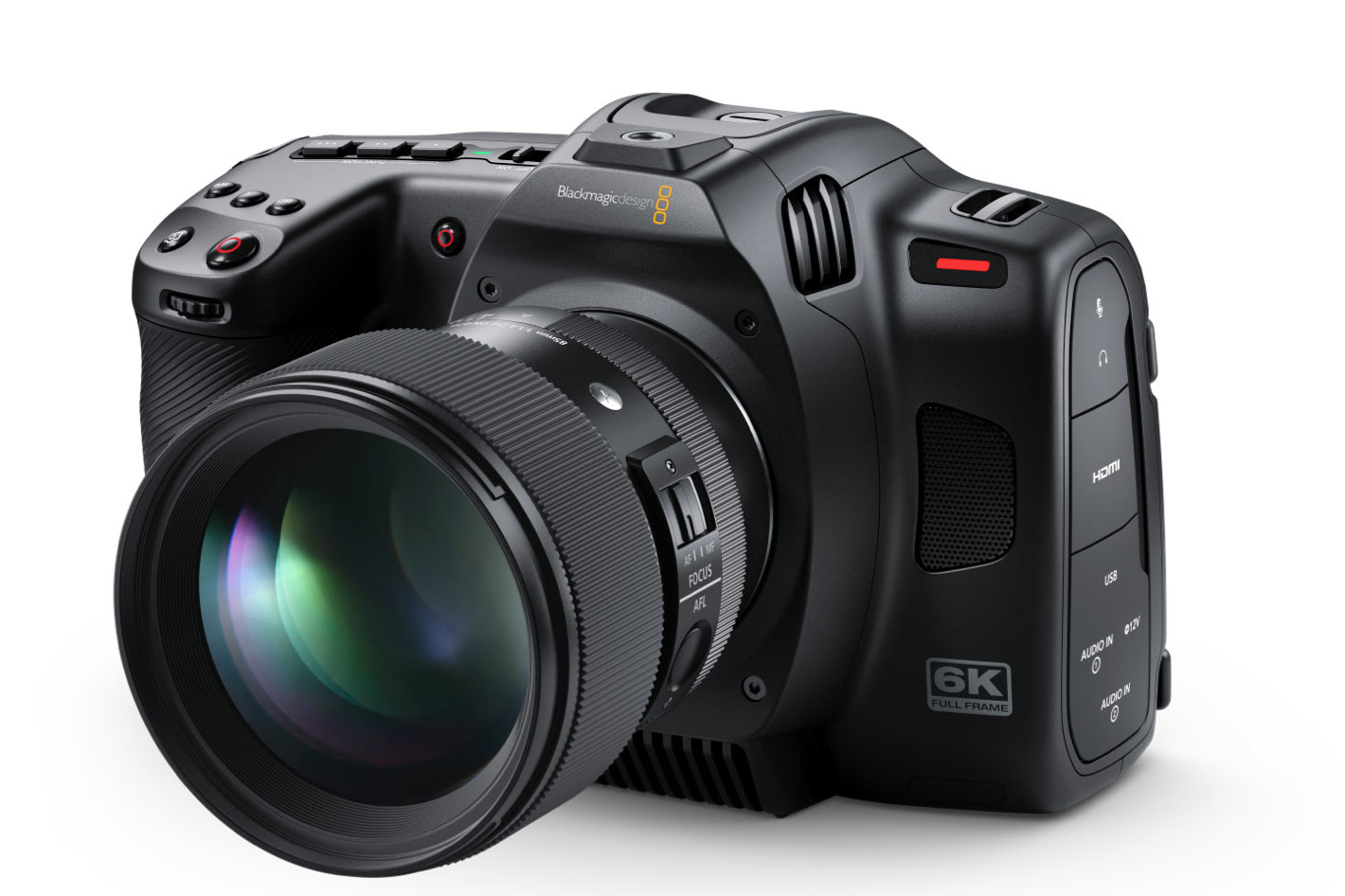
In late 2023, Blackmagic departed from its long-standing reliance on Super 35 and Micro Four Thirds sensors by launching the Blackmagic Cinema Camera 6K. Sporting a massive full-frame sensor and utilizing the Leica-Panasonic-Sigma L-Mount alliance, the camera was met with critical acclaim but faced stiff competition from hybrid mirrorless cameras that offered autofocus and in-body image stabilization (IBIS).
The PYXIS Revelation
Recognizing the demand for a dedicated "box" form factor suitable for rigging, gimbals, and studio environments, Blackmagic announced the PYXIS 6K. The PYXIS was designed to bridge the gap between indie filmmaking and high-end commercial workflows, offering professional connectivity, dual CFexpress slots, and native integration into broadcast environments.
The Component Breakthrough
According to manufacturing insiders, the transition from initial production runs to high-volume manufacturing often yields cost-saving efficiencies. Blackmagic Design has successfully negotiated bulk component procurement contracts and optimized its manufacturing pipelines. Rather than absorbing these supply-chain savings to pad corporate profit margins, the company has chosen to pass these discounts directly to consumers—a strategy designed to capture market share and lock creators into the wider Blackmagic ecosystem, which includes DaVinci Resolve and their proprietary Blackmagic RAW (.BRAW) workflow.
Despite the drastic reductions in price, the internal specifications and build quality of these camera systems remain completely unaltered. Both the Cinema Camera 6K and the PYXIS 6K are built around a premium, high-performance 6K full-frame sensor.
Sensor Dynamics and Resolution Metrics
The heart of these cameras is a custom 36 x 24mm full-frame sensor with a native resolution of 6048 x 4032. This expansive canvas allows cinematographers to capture images with an incredibly shallow depth of field, maximizing the unique aesthetic characteristics of large-format glass.
+-----------------------------------------------------------------------------+
|                         6K FULL-FRAME SENSOR MODES                          |
|                                                                             |
|  [6048 x 4032] Open Gate 3:2 -------------------------> Up to 36 fps        |
|  [6048 x 2520] Anamorphic 2.4:1 ----------------------> Up to 60 fps        |
|  [4096 x 2160] DCI 4K --------------------------------> Up to 60 fps        |
|  [2112 x 1184] Super 16 Windowed ---------------------> Up to 100 fps       |
|  [1920 x 1080] HD Windowed ---------------------------> Up to 120 fps       |
+-----------------------------------------------------------------------------+
Open Gate 3:2: By utilizing the full sensor area, filmmakers capture a tall 3:2 image. This is highly advantageous for modern multi-platform delivery, allowing editors to extract both horizontal 16:9 cinematic master files and vertical 9:16 social media crops from a single source file without losing resolution.
True 6:5 Anamorphic: Unlike cropped sensor formats, the 6K full-frame sensor supports true 6:5 anamorphic shooting without center cropping. This preserves the authentic oval bokeh, barrel distortion, and expansive horizontal flares characteristic of classic anamorphic cinematography.
Super 35 Windowing: For operators utilizing legacy Super 35 lenses, the sensor can be windowed instantly, creating a seamless "close-up" match to the wider open-gate footage.
Dual Native ISO and Low-Light Performance
To combat noise in challenging lighting scenarios, the sensor features dual native ISO architecture.
Base ISO 400: Optimized for controlled studio lighting, commercial sets, and bright exterior day shoots, maximizing dynamic range.
High Base ISO 3200: Engineered for low-light run-and-gun documentary work, nighttime exterior shoots, and ambient light environments.
Maximum ISO 25,600: Provides usable imagery in near-total darkness, backed by Blackmagic’s Generation 5 Color Science, which handles highlight roll-off and skin tones with film-like characteristics.
Lens Mount Versatility
By offering three distinct physical mount options for the PYXIS 6K, Blackmagic ensures compatibility with virtually any lens catalog in existence:
L-Mount: The native mount for the Cinema Camera 6K and a key variant of the PYXIS. It offers a short flange distance, allowing adapters for almost any vintage or modern lens system (including Leica, Panasonic, Sigma, Canon FD, and Minolta Rokkor).
EF-Mount: Designed for operators who have heavily invested in Canon’s ubiquitous DSLR and cinema lens ecosystem, providing electronic iris control and metadata transmission.
PL-Mount: The industry standard for high-end cinema. This robust mechanical locking mount allows secure attachment of heavy, professional cinema glass from Zeiss, ARRI, Cooke, and Angénieux.
Official Statements & Industry Insights
The pricing adjustment is not a clearance sale of obsolete inventory; rather, it is a strategic repositioning of active, cutting-edge products.
In an official statement addressing the global price adjustment, Grant Petty, CEO of Blackmagic Design, highlighted the company’s ongoing commitment to hardware democratization:
"We have been working hard to secure improved pricing on some parts, so we can now pass that on to our customers through a lower price. This price reduction allows even more customers to buy a professional full-frame cinema camera giving them a whole new way to tell their stories. This will be exciting!"
The Supply Chain Equation
Industry analysts point out that Blackmagic Design’s unique vertical integration allows it to navigate market pressures differently than traditional camera manufacturers. Because the company also develops DaVinci Resolve—the post-production industry’s gold standard for color grading and editing—every camera sold acts as an entry point into the Blackmagic software ecosystem.
By lowering the hardware barrier to entry, Blackmagic secures long-term loyalty. Creators who shoot on Blackmagic cameras are highly likely to edit in Resolve, purchase DaVinci Resolve Studio licenses, buy hardware control panels, and invest in Blackmagic’s cloud collaboration workflows.
Future Outlook: Redefining the Indie Film and Broadcast Landscape
The long-term implications of this price drop will likely reshape several sectors of the media production industry.
                      INDIRECT MARKET IMPACTS

   Indie Productions                 Film Education               Rental Houses
+-----------------------+       +---------------------+       +-------------------+
| Can now bypass rental |       | Film schools can    |       | Must adjust daily |
| houses and purchase   | ----> | deploy full-frame   | ----> | rates to remain   |
| full-frame A-cameras  |       | kits on tight scale |       | viable options    |
| outright.             |       | budgets.            |       | for indie clients.|
+-----------------------+       +---------------------+       +-------------------+
Pressure on Competitors
At $1,595, the Blackmagic Cinema Camera 6K is now cheaper than many crop-sensor (APS-C) mirrorless hybrid cameras on the market. Competitors like Sony (with the FX30 and FX3) and Canon (with the EOS R5 C and C70) will face intense pressure to justify their premium pricing, particularly to budget-conscious independent filmmakers, documentarians, and content creators.
Increased Accessibility for Film Education
Historically, film schools and universities had to stretch budgets to provide students with large-format cinema cameras, often settling for consumer-grade mirrorless systems. At under $2,000, academic institutions can now equip entire classrooms with industry-standard, box-style cinema cameras (PYXIS) and full-frame sensors, elevating the quality of student productions and better preparing them for professional sets.
Showcasing at IBC
Blackmagic Design has confirmed that both the PYXIS 6K and Cinema Camera 6K will be showcased live at the upcoming IBC exhibition in Amsterdam. Located at Stand 7.C49, the Blackmagic booth is expected to be a primary destination for broadcasters, cinematographers, and production engineers eager to evaluate these newly repositioned systems in person.
With this dramatic price drop, Blackmagic Design has reaffirmed its role as the ultimate disruptor of the digital cinema landscape. By combining high-end full-frame performance, versatile lens mounts, and deep ecosystem integration with unprecedented affordability, the company has effectively rewritten the rules of camera acquisition for the foreseeable future.