Executive Overview
The landscape of professional broadcast and live video production is undergoing a profound paradigm shift. Historically, capturing high-end, multi-camera content required massive capital investments, extensive studio footprints, and large, highly specialized crews. Today, however, a confluence of advanced robotics, high-fidelity imaging sensors, and artificial intelligence is democratizing the industry. Leading this technological transition is PTZOptics, which is set to showcase its latest innovations at the IBC2026 exhibition on Stand 1.B07.
At the center of PTZOptics’ exhibition is the public debut of its flagship Rise 4K Broadcast PTZ Camera. Initially launched to critical acclaim, the camera will be demonstrated live for the first time, offering attendees a hands-on look at its capabilities ahead of its highly anticipated Q4 2026 shipping window.
By integrating premium 4K optics, precise brushless robotic movement, and an intelligent software ecosystem, PTZOptics aims to address the primary pain points of modern media organizations: the need to capture more angles, automate repetitive operations, and deliver cinematic, broadcast-grade output with minimal staff.
Through interactive demonstrations, including a fully operational "Test Drive" zone and a compact live multicamera studio, the company is positioning itself not merely as a hardware manufacturer, but as an architect of unified, intelligent production workflows.
Detailed Chronology: The Road to IBC2026 and the Live Demonstration Showcase
The journey of the Rise 4K camera represents a calculated evolution for PTZOptics. Known historically for producing reliable, mid-tier PTZ cameras for houses of worship, corporate spaces, and education, the company has systematically moved up-market. The development of the Rise 4K marks its definitive entry into premium tier-one broadcast and high-end live event production.
Stand 1.B07: A Working Production Ecosystem
Rather than presenting its hardware as isolated units on pedestals, PTZOptics has designed its IBC2026 presence around real-world utility. Visitors to Stand 1.B07 will step into a highly optimized, compact multicamera studio. This environment is built to mimic the real-world constraints faced by modern corporate video teams, digital publishers, podcasters, and educational institutions—namely, limited physical space and lean production crews.
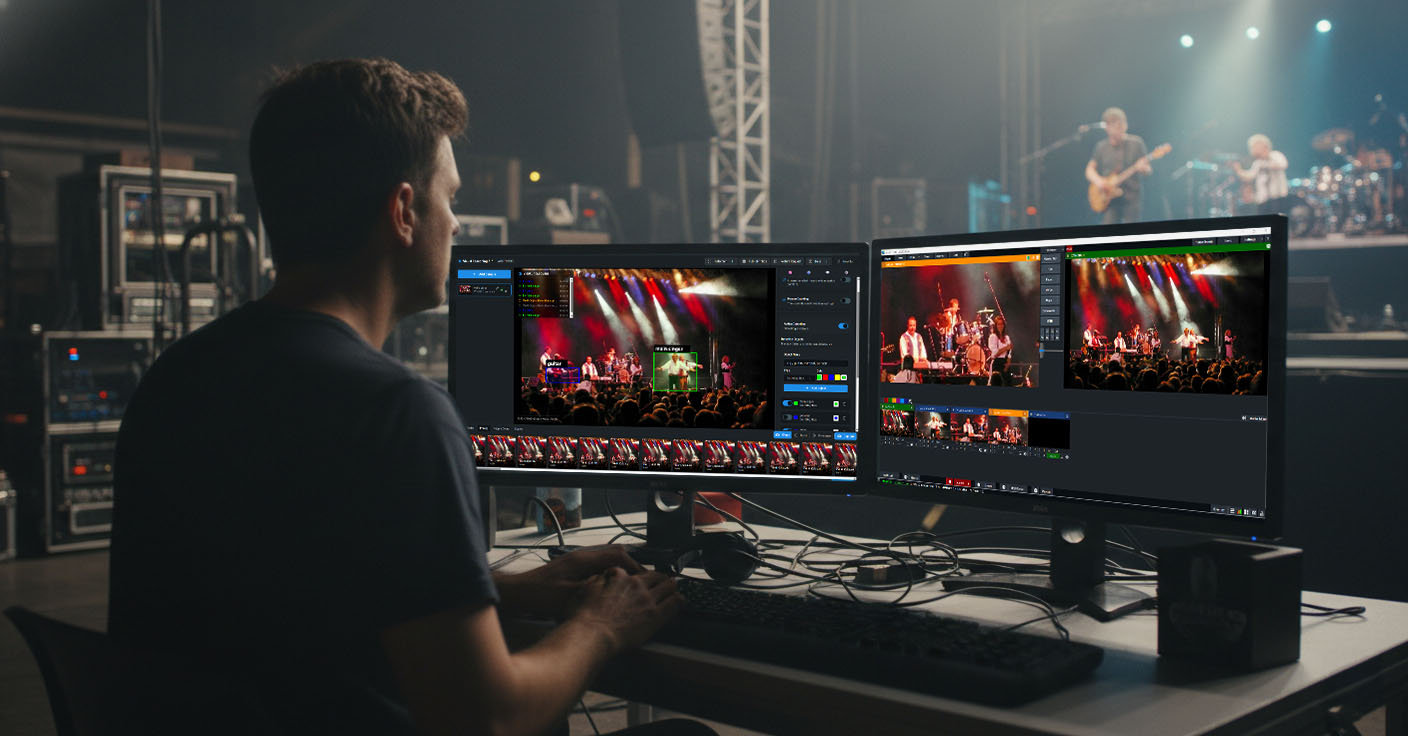
The live studio setup integrates multiple PTZOptics cameras, the company’s proprietary Power+Link system, and advanced automated control systems. Throughout the exhibition, this compact studio will operate continuously, producing live-streamed content, interviews, and mock broadcasts. This real-time proof of concept demonstrates that a single operator can successfully manage complex multi-angle transitions, maintain consistent subject framing, and execute professional-grade tracking shots without an on-floor crew.
The "Test Drive" Interactive Experience
To bridge the gap between technical specifications and practical usability, PTZOptics is hosting an interactive "Test Drive" experience. This initiative allows broadcast engineers, technical directors, and content creators to compare different control modalities side-by-side.
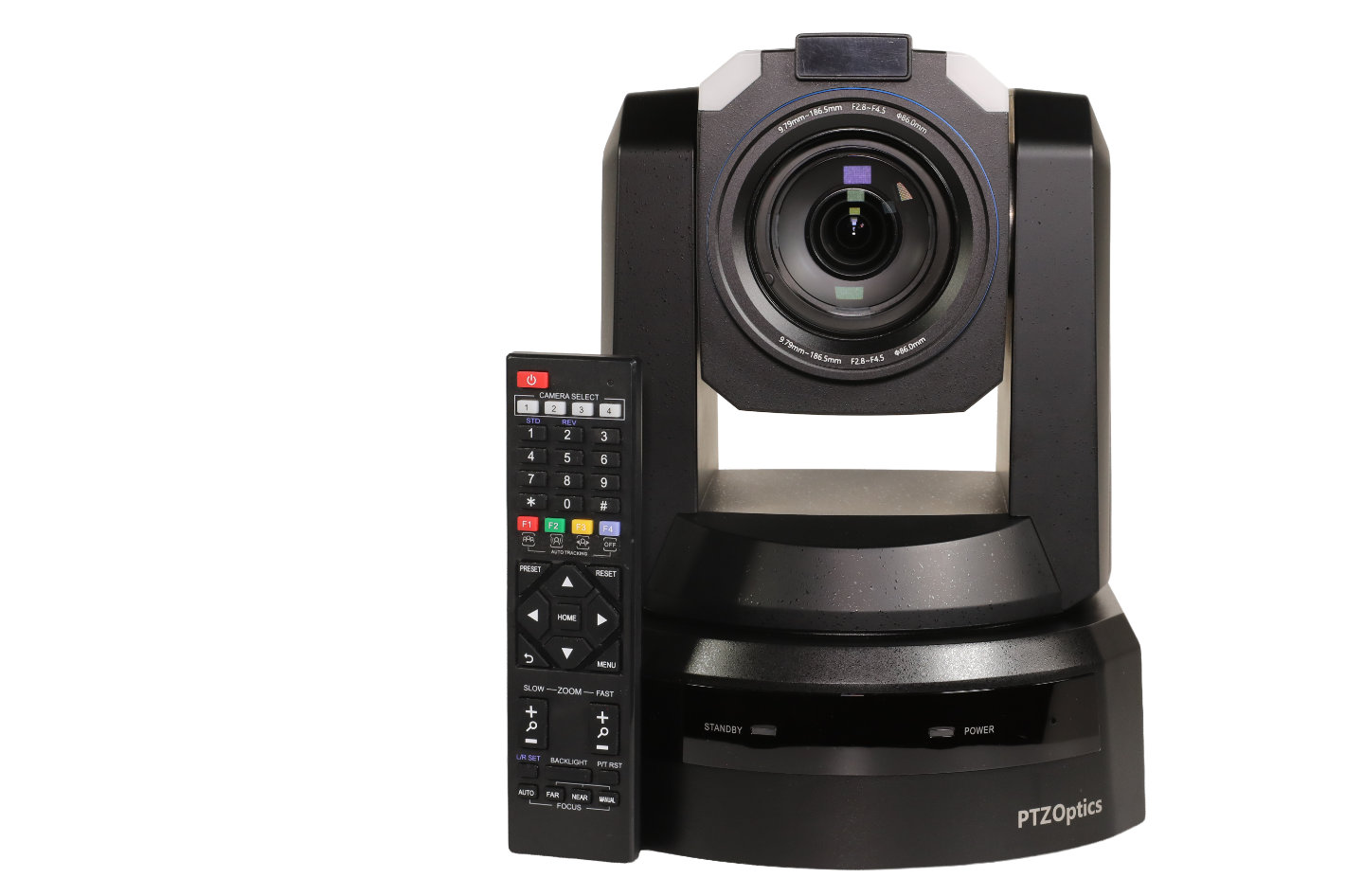
Users can test traditional hardware-based joystick controllers—the industry standard for tactile, low-latency manual operation—and compare them directly against Horizon Web, the browser-based interface built directly into the company’s 4K camera line. This comparison highlights how software-driven automation can complement or, in some cases, replace manual camera operation, providing a pathway for organizations to scale their production outputs without proportionally scaling their labor costs.
Supporting Context & Technical Metrics: Inside the Rise 4K
To understand why the Rise 4K is generating significant interest among broadcast professionals, one must look closely at its underlying hardware architecture and integration capabilities. The camera is engineered to bridge the gap between traditional manual system cameras and robotic pan-tilt-zoom units.
+-----------------------------------------------------------------------------+
|                          PTZOptics Rise 4K Camera                           |
+-----------------------------------------------------------------------------+
|  [ 1" 50MP CMOS Sensor ] ---> [ 4K UHD @ 60fps / 20x Optical Zoom / OIS ]   |
|                                                                             |
|  [ Brushless Motors ]   ---> [ Ultra-Smooth, Silent Robotic Pan/Tilt ]      |
|                                                                             |
|  [ Core Connectivity ]  ---> [ 12G-SDI | SFP+ Fiber | Genlock | Timecode ]  |
|                                                                             |
|  [ Advanced Tracking ]  ---> [ FreeD (Virtual Production) | Auto-Framing ]  |
+-----------------------------------------------------------------------------+
Sensor Physics and Optical Engineering
At the heart of the Rise 4K is a massive 1-inch, 50-megapixel CMOS sensor. In the PTZ category, where smaller 1/2.5-inch or 1/1.8-inch sensors are common, a 1-inch sensor is a major upgrade.
- Low-Light Sensitivity: The larger surface area of each pixel on a 1-inch sensor captures significantly more photons, reducing electronic noise in challenging lighting conditions.
- Dynamic Range: The sensor captures a wider range of highlights and shadows, preserving details in high-contrast environments such as live concerts or theatrical stages.
- Depth of Field: It allows for a shallower natural depth of field, helping to separate subjects from their backgrounds for a more cinematic aesthetic.
Complementing this sensor is a high-performance 20x optical zoom lens system, paired with phase-detect autofocus (PDAF). Unlike traditional contrast-detection autofocus, which can "hunt" for focus and disrupt a live shot, PDAF calculates distance instantly, keeping fast-moving subjects sharp. Additionally, built-in optical image stabilization (OIS) dampens physical vibrations from stage floors, truss mounts, or wind in outdoor environments, ensuring steady footage even at maximum zoom.
High-Precision Robotics
The mechanical movement of the Rise 4K relies on advanced brushless DC motors. Traditional PTZ cameras often use stepped motors, which can produce audible noise and micro-jitters, particularly during slow, sweeping pan-and-tilt movements.
Brushless motors provide silent, incredibly smooth, and highly precise movement. This allows operators to execute slow, cinematic diagonal moves or rapid repositioning with equal ease, ensuring the camera’s physical movement is clean enough to be used live on-air.
| Technical Specification | Feature / Capability | Broadcast Benefit |
|---|---|---|
| Imaging Sensor | 1-inch, 50MP CMOS | Exceptional low-light performance & high dynamic range |
| Video Resolution | Up to 4K Ultra HD at 60 fps | Ultra-smooth, high-definition motion capture |
| Optical Zoom | 20x with Phase-Detect Autofocus | Instant, accurate focusing even at maximum focal lengths |
| Stabilization | Optical Image Stabilization (OIS) | Eliminates high-frequency vibrations from mounts and trusses |
| Drive System | Brushless DC Motors | Silent, ultra-smooth, and highly precise robotic motion |
| Video Outputs | 12G-SDI, SFP+ Fiber, IP | Multi-destination, long-distance, uncompressed routing |
| Synchronization | Genlock & Timecode | Frame-accurate multi-camera sync for live & post-production |
| Tracking Protocol | FreeD Support | Seamless integration with AR/VR and Virtual Production engines |
| Audio Interface | Dual XLR Inputs with 48V Phantom Power | Studio-grade audio embedded directly into the video stream |
Enterprise-Grade Broadcast Connectivity
To fit seamlessly into traditional broadcast environments, a PTZ camera must support standard infrastructure protocols. The Rise 4K includes a comprehensive suite of professional physical connections:
- 12G-SDI: Enables the transmission of uncompressed 4K video at 60 frames per second over a single coaxial cable, reducing cable clutter and latency.
- SFP+ Fiber Connectivity: Allows the camera to plug directly into optical fiber networks, enabling long-distance cable runs over kilometers without signal degradation—crucial for sports stadiums, sprawling corporate campuses, and large-scale live events.
- Genlock and Timecode: Essential for multi-camera environments. Genlock ensures that all cameras in a system scan their sensors in perfect synchronization, preventing frame-matching issues on vision mixers. Timecode ensures frame-accurate synchronization for post-production editing.
- FreeD Camera-Tracking Support: A vital feature for virtual production. FreeD transmits precise mechanical pan, tilt, zoom, and focus telemetry data in real time to rendering engines (such as Unreal Engine), allowing the camera to be used in augmented reality (AR), virtual reality (VR), and green-screen environments.
- Dual XLR Audio Inputs with 48V Phantom Power: Allows high-quality professional microphones to be connected directly to the camera, embedding balanced audio into the video stream and eliminating the need for separate audio embedding hardware.
The Horizon Software Ecosystem: Bridging Hardware and Automation
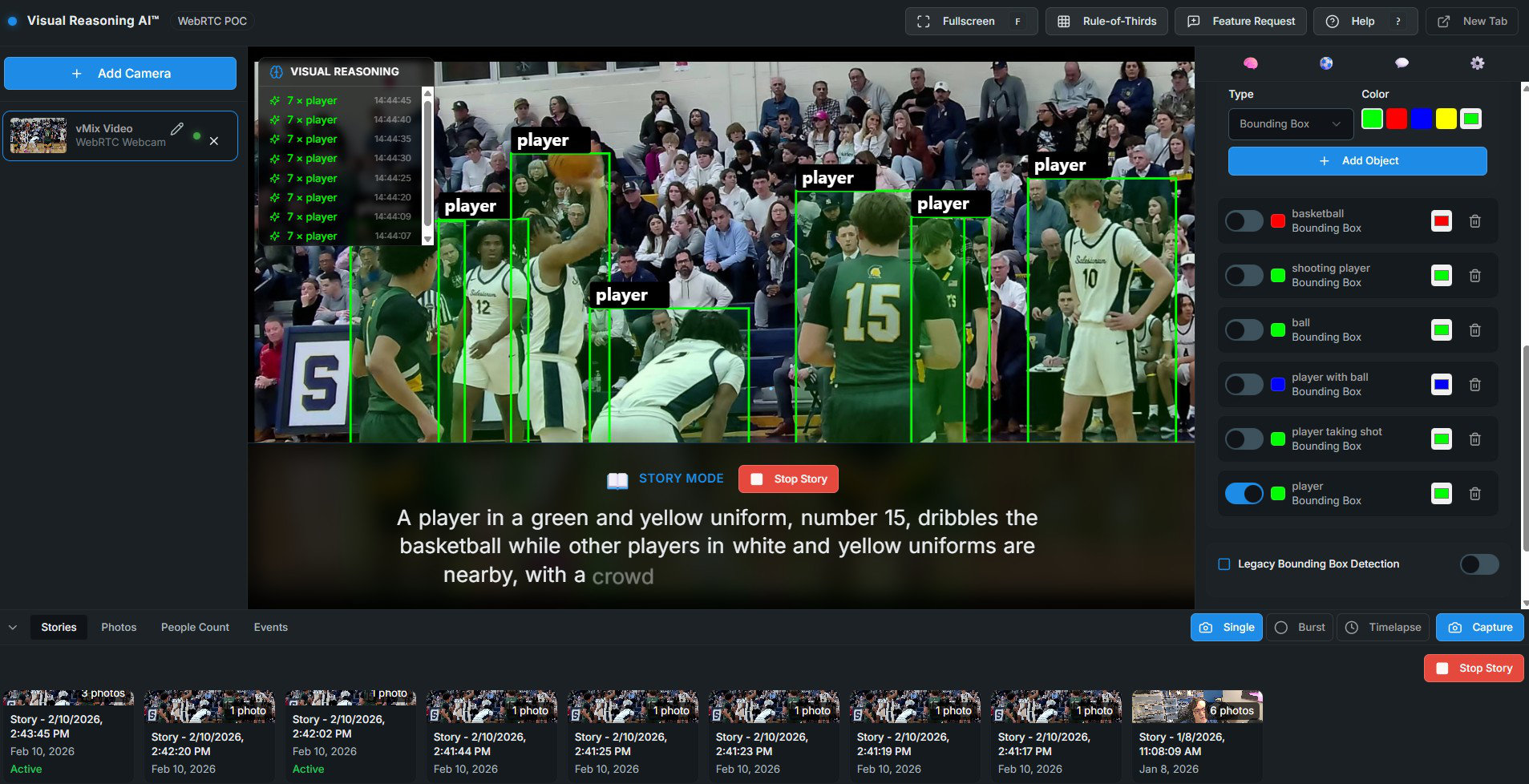
Hardware capabilities are only half of the equation in modern video production. The Rise 4K is supported by PTZOptics’ Horizon Web and Horizon Hub software suites, which convert the camera from a passive capture device into an active, intelligent assistant.
                  +-----------------------------------+
                  |            Horizon Hub            |
                  |     (Desktop Control Suite)       |
                  +-----------------+-----------------+
                                    |
            +-----------------------+-----------------------+
            |                                               |
            v                                               v
+-----------------------+                       +-----------------------+
|      Horizon Web      |                       |      Horizon Web      |
|   (Camera 1 Built-in) |                       |   (Camera 2 Built-in) |
+-----------+-----------+                       +-----------+-----------+
            |                                               |
            v                                               v
+-----------------------+                       +-----------------------+
|  Rise 4K PTZ Camera   |                       |  Rise 4K PTZ Camera   |
|   - Auto-Framing      |                       |   - Auto-Framing      |
|   - Auto-Tracking     |                       |   - Auto-Tracking     |
+-----------------------+                       +-----------------------+
Horizon Web
Embedded directly into the firmware of the Rise 4K, Horizon Web is accessed via any standard web browser, eliminating the need for dedicated software installations. It provides operators with full control over camera telemetry, image adjustments, color grading, and preset configurations.
Importantly, Horizon Web houses the camera’s built-in auto-framing and auto-tracking engines. Utilizing onboard computer vision algorithms, the camera can identify, lock onto, and smoothly track a presenter or performer across a stage without requiring any external hardware, wearable beacons, or dedicated server processing.
Horizon Hub
While Horizon Web is designed for single-camera control, the Horizon Hub desktop application extends these software-based workflow tools across the entire PTZOptics portfolio. Horizon Hub acts as a centralized command center, allowing technical directors to manage multiple cameras simultaneously, synchronize presets, apply global color-grading profiles, and coordinate complex automated movement patterns across a network.
This ecosystem ensures that as an organization’s production needs grow, their control software can scale with them, maintaining a unified user experience.
Official Statements & Strategic Vision
The leadership team at PTZOptics views the IBC2026 showcase as a defining moment for the company, highlighting a design philosophy centered on user-focused integration.
Matthew Davis, Chief Technology Officer at PTZOptics, emphasized the importance of unified design in modern production equipment:
"At IBC, we want to show people what happens when imaging, robotics, connectivity, and software are designed as one integrated production experience. Teams shouldn’t have to change how they work to get broadcast-grade results. Rise 4K is the clearest example of that, and across our stand at IBC2026 we’re showing how we are applying the same thinking to control, automation and scale."
This perspective highlights a common issue in the industry: production teams are often forced to patch together components from different manufacturers, resulting in complex, fragile setups that require constant troubleshooting. By designing the imaging sensor, mechanical robotics, physical connectivity, and control software to work as a single cohesive unit, PTZOptics aims to deliver a more reliable and user-friendly system.
Silke Brown, Director of International Sales at PTZOptics, noted that hands-on experience is critical for understanding the practical value of these integrated workflows:
"IBC gives us the opportunity to move beyond specifications and let people experience complete workflows for themselves. Rise 4K is an important part of our IBC story, but we also want visitors to see the bigger picture. Whether they prefer a joystick, software control, automation, or a combination of all three, our focus is on making professional production more practical and flexible."
Brown’s comments highlight the diverse preferences of modern production teams. By supporting traditional tactile control alongside automated, software-driven workflows, PTZOptics allows organizations to transition to automated production at their own pace, protecting their existing investments in hardware and operator training.
Future Outlook: The Evolving PTZ Landscape
As PTZOptics prepares to ship the Rise 4K in Q4 2026, the broadcast and AV industries find themselves at a crossroads. The demand for video content continues to grow across all sectors, but production budgets and staffing levels are rarely keeping pace.
Historically, robotic PTZ cameras were viewed as secondary choices, reserved for security, basic conferencing, or wide safety shots in broadcast. However, the introduction of large-format sensors, advanced autofocus systems, and high-quality brushless motors has narrowed the performance gap between PTZ units and traditional system cameras.
The Rise 4K is positioned directly within this market shift. With its comprehensive feature set, it challenges higher-priced options from established broadcast brands, offering a compelling alternative for organizations that require professional features—such as Genlock, 12G-SDI, and FreeD tracking—without the premium price tag.
Furthermore, the inclusion of FreeD protocol support positions the Rise 4K as a key tool for the growing virtual production market. As local television stations, corporate media centers, and universities increasingly adopt virtual studios and augmented reality graphics to enhance their presentations, the demand for affordable, tracking-enabled PTZ cameras is expected to rise.
Ultimately, PTZOptics’ presentation at IBC2026 is more than a simple product demonstration; it is a clear indication of where the industry is heading. By focusing on integration, ease of use, and smart automation, the company is helping to shape a future where high-quality, multi-camera video production is more accessible, efficient, and scalable than ever before.