








Executive Overview
Instagram is making a calculated play for the living room. In a move that signals a profound shift in how social media is consumed, the Meta-owned platform has launched a high-profile promotional campaign to spotlight its newly updated connected TV (CTV) application. No longer confined to the vertical real estate of smartphones, Instagram’s content ecosystem—anchored by its massively successful short-form video format, Reels—is scaling up to dominate domestic flat-screen displays.
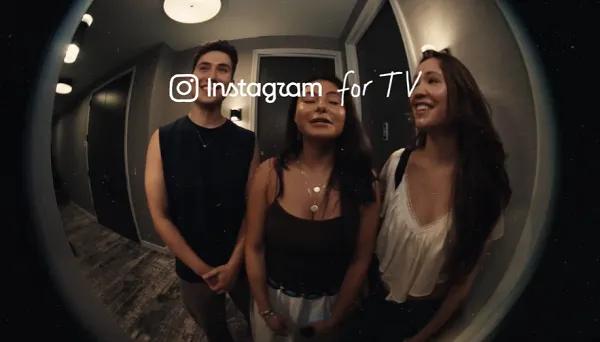
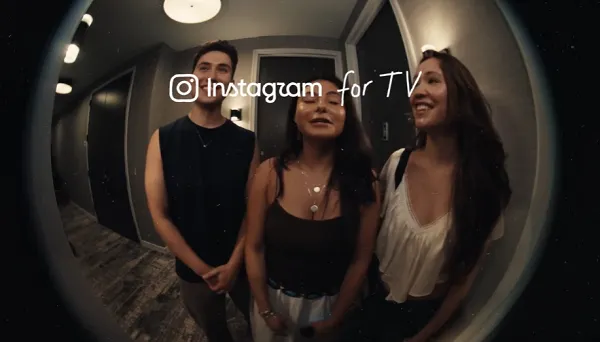
The initiative leverages the star power of prominent creators like Ameya Okomoto, Vikram Thanigaivelan, and Carson Gillaspia to demonstrate practical, communal, and immersive household use cases for the television interface. From group viewing sessions of viral Reels to living room fitness routines, recipe tracking, and travel vlogs, the campaign aims to reframe Instagram from a solitary, pocket-sized distraction into a shared, multi-person entertainment hub.
This rollout represents the latest phase of an aggressive expansion strategy that began on Amazon Fire devices in December, before quickly scaling to Google TV and Samsung Smart TVs. By pivoting to the television screen, Instagram is directly tapping into a surging consumer habit: the migration of short-form video from mobile devices to the living room. Industry metrics underline the timeliness of this move. According to recent data from Google, connected TV viewing already accounts for a significant 15% of all YouTube Shorts consumption in the United States. Meanwhile, Instagram notes that Reels now commands an astonishing 50% of total user time spent within its core mobile application.
Beyond simply mirroring mobile content on a larger display, Instagram is also pushing the envelope on content creation. The platform is actively encouraging creators to develop episodic micro-dramas and live-streamed creator shows specifically tailored for the upgraded TV feed. As social media giants increasingly blur the lines between traditional television broadcasting and user-generated digital content, Instagram’s latest push could fundamentally alter the economics and aesthetics of digital video production.
Detailed Chronology: From Mobile Staple to Living Room Heavyweight
The Genesis of the CTV App
The groundwork for Instagram’s current television push was quietly laid over the winter, though the concept of bringing the platform to the television screen has a checkered history. Years ago, Instagram’s standalone "IGTV" experiment attempted to pioneer long-form vertical video on mobile and stumbled in capturing traditional viewer habits. However, the explosive growth of Reels fundamentally changed the calculus of the platform.
In December, Instagram officially reintroduced its revamped connected TV experience, kicking off the rollout on Amazon Fire devices. This new application was not merely a port of the mobile app; it was engineered specifically for the 10-foot user experience. Navigable via remote control and optimized for high-definition displays, the app prioritized seamless video playback, spatial legibility, and effortless scrolling through high-engagement feeds.
Rapid Multi-Platform Expansion
Following the initial Amazon Fire rollout, Instagram waste no time in widening its footprint. Recognizing that living room ecosystems are fragmented across major tech and hardware manufacturers, the platform quickly secured distribution deals to bring the CTV app to Google TV and Samsung Smart TVs.
This multi-platform deployment was critical to establishing a viable audience base. By making the app accessible out-of-the-box on millions of smart devices currently sitting in living rooms worldwide, Instagram positioned itself as an ubiquitous media player rather than a niche application. The strategy lowered the barrier to entry for users who might otherwise never think to access social media channels on their television sets.
The Creator-Led Promotional Push
With the technical infrastructure firmly established across multiple operating systems, Instagram shifted its focus to consumer adoption and awareness. Collaborating with industry publication AdAge, Instagram deployed a targeted multi-creator promotional campaign designed to educate the public on how to use social media on a television.
Headlined by digital creators Ameya Okomoto, Vikram Thanigaivelan, and Carson Gillaspia, the campaign showcases diverse household scenarios. Okomoto, Thanigaivelan, and Gillaspia step out of the digital ether and into relatable domestic settings, proving that the Instagram CTV app is not just a novelty, but a versatile tool for modern households.
The Evolution into Episodic Content
As the campaign gains traction, Instagram’s ambitions for the living room are expanding beyond short clips. The platform has begun encouraging its network of elite creators to move past traditional bite-sized content and experiment with serialized formats. By nudging creators toward episodic micro-dramas and live-streamed programs designed specifically for the big screen, Instagram is stepping onto turf traditionally owned by streaming services like Netflix, YouTube, and traditional cable networks.
Supporting Context & Metrics: The Shift to Big-Screen Short-Form
The Convergence of Social Video and Connected TV
To understand the gravity of Instagram’s move, one must examine the broader macroeconomic shifts in media consumption. For the past decade, connected TV has been defined by Subscription Video on Demand (SVOD) services like Disney+, Max, and Netflix, alongside Advertising-Based Video on Demand (AVOD) platforms like Pluto TV and Tubi. However, user-generated content (UGC) platforms have increasingly eaten into traditional television viewing time.
YouTube paved the way for this transition. For years, YouTube was viewed primarily as a desktop or mobile destination, but the company has repeatedly reported that its fastest-growing screen is the living room television. This consumer behavior—lounging on a couch while watching digital-first creators on a 65-inch 4K display—has broken down the artificial barriers that once separated "web video" from "TV."
Quantitative Insights from Industry Giants
The appetite for short-form video on big screens is no longer theoretical; it is backed by hard data. During Google’s Q4 earnings call in February 2025, the tech giant revealed a startling metric: connected TV viewing accounted for a full 15% of all YouTube Shorts viewing in the United States. This proves that consumers do not necessarily require traditional 30-minute television programming when they turn on their living room displays; they are increasingly content to consume rapid-fire, algorithmic short-form video in a communal setting.
Instagram is uniquely positioned to capitalize on this exact trend. Within its own ecosystem, Reels has become the undisputed engine of user engagement. Internal Meta data highlights that Reels now accounts for an incredible 50% of all time spent inside the Instagram mobile app. By translating this hyper-engaging short-form infrastructure to the connected TV ecosystem, Instagram is attempting to capture the lucrative living room advertising dollars that have historically flowed to linear television networks.
Changing Consumer Demographics and Habits
The demographic driving this trend skews younger, but it is rapidly expanding. Gen Z and Millennial households frequently treat the television as a shared ambient screen rather than a focal point for appointment viewing. By bringing Instagram to the TV, the platform caters to habits such as:
- The Shared Watch Party: Friends gathering around a screen to browse funny, viral, or shocking Reels together, turning a solitary scroll into a social event.
- The Ambient Living Room: Households utilizing fitness creators to guide living room workouts without needing to prop up a smartphone or laptop on a yoga mat.
- Instructional Multitasking: Home cooks casting recipe tutorials to their kitchen or living room TVs to follow along step-by-step with hands-free convenience.
Official Statements and Industry Insights
While Meta has historically kept its product roadmaps tightly under wraps, the strategic intent behind the Instagram CTV app is laid bare through its marketing initiatives and public disclosures.
Industry analysts point out that Instagram’s partnership with creators for this campaign is a masterclass in behavioral conditioning. By deploying creators like Ameya Okomoto, Vikram Thanigaivelan, and Carson Gillaspia, Instagram is directly addressing a psychological hurdle: convincing users that an app built for the palm of their hand belongs on a wall-mounted display.
"The challenge with bringing a mobile-first app to the television isn’t technological—it’s habituation," notes one digital media strategist. "People are trained to lean in when they use their phones, and lean back when they watch television. Instagram’s campaign is actively teaching audiences how to ‘lean back’ while consuming social video, transforming a personal dopamine hit into a collective household experience."
Furthermore, creators involved in the rollout have emphasized the creative freedom afforded by the new television feed. Unlike the rigid vertical constraints of a smartphone screen, which can sometimes feel cramped for cinematic storytelling, the CTV app encourages a re-evaluation of visual composition. Creators are finding that content shot with cinematic flair translates exceptionally well to the big screen, opening up new avenues for monetization and brand partnerships.
Future Outlook: What Instagram’s Living Room Push Means for the Media Landscape
Redefining the Creator Economy
Instagram’s push into connected TV has massive implications for the creator economy. For years, creators have measured their success in terms of mobile views, algorithmic reach, and tap-through rates. The expansion into CTV introduces a powerful new metric: living room impressions.
As Instagram encourages creators to produce episodic micro-dramas and live shows, the monetization potential shifts dramatically. Brands looking to sponsor creator content will no longer be buying space on a tiny smartphone display; they will effectively be purchasing premium ad slots during household-viewed programming. This could drive up creator earnings, elevate production values across the board, and blur the distinction between independent digital creators and traditional showrunners.
The Battle for Living Room Real Estate
The living room screen is the most valuable piece of digital and physical real estate in media. Tech titans and streaming giants are locked in a fierce turf war to control the home screen interface. By securing native app placement on Amazon Fire, Google TV, and Samsung Smart TVs, Instagram has successfully embedded itself into this high-stakes battlefield.
However, challenges remain. The television interface demands a vastly different user experience than a mobile app. Algorithm design, content discovery, and ad insertion must be meticulously calibrated to prevent user fatigue. If an automated Reels feed becomes too repetitive or difficult to navigate via a standard television remote, viewers will simply default back to traditional streaming services or YouTube.
The Road Ahead
Instagram’s connected TV promotion is more than just a marketing campaign; it is a declaration of intent. As traditional television viewership continues to erode in favor of digital-first platforms, social media apps are evolving into full-fledged entertainment networks.
By successfully marrying the addictive, algorithmic precision of Reels with the communal, high-definition environment of the living room, Instagram is redefining how society consumes media. If the platform can sustain user engagement on the big screen and successfully foster a new era of episodic, creator-led television, the boundary between social media and traditional broadcasting will dissolve entirely—leaving Instagram firmly entrenched at the center of the modern household.