Executive Overview
As artificial intelligence permeates core enterprise operations, global telecommunications providers face a distinct barrier: standard general-purpose AI architectures consistently fall short when navigating highly specialized technical domains. Modern telecom infrastructure relies on a vast, intricate lattice of legacy systems, proprietary network topographies, complex operational support systems (OSS), and dense global engineering standards published by bodies like the GSMA and 3GPP. Generic large language models (LLMs), trained predominantly on public internet text, lack the specialized vocabulary and structural logic required to accurately interpret, optimize, and troubleshoot these environments.
To breach this domain-expertise gap without incurring exponential operational costs, AT&T has engineered Open Telco 2.0 (OTel2.0)—a state-of-the-art, domain-specific AI foundation model designed explicitly for the telecommunications industry. Moving beyond initial open-source initiatives, OTel2.0 demonstrates how global enterprise leaders can build industrial-scale AI systems while controlling operational complexity, performance overhead, and infrastructure expense.
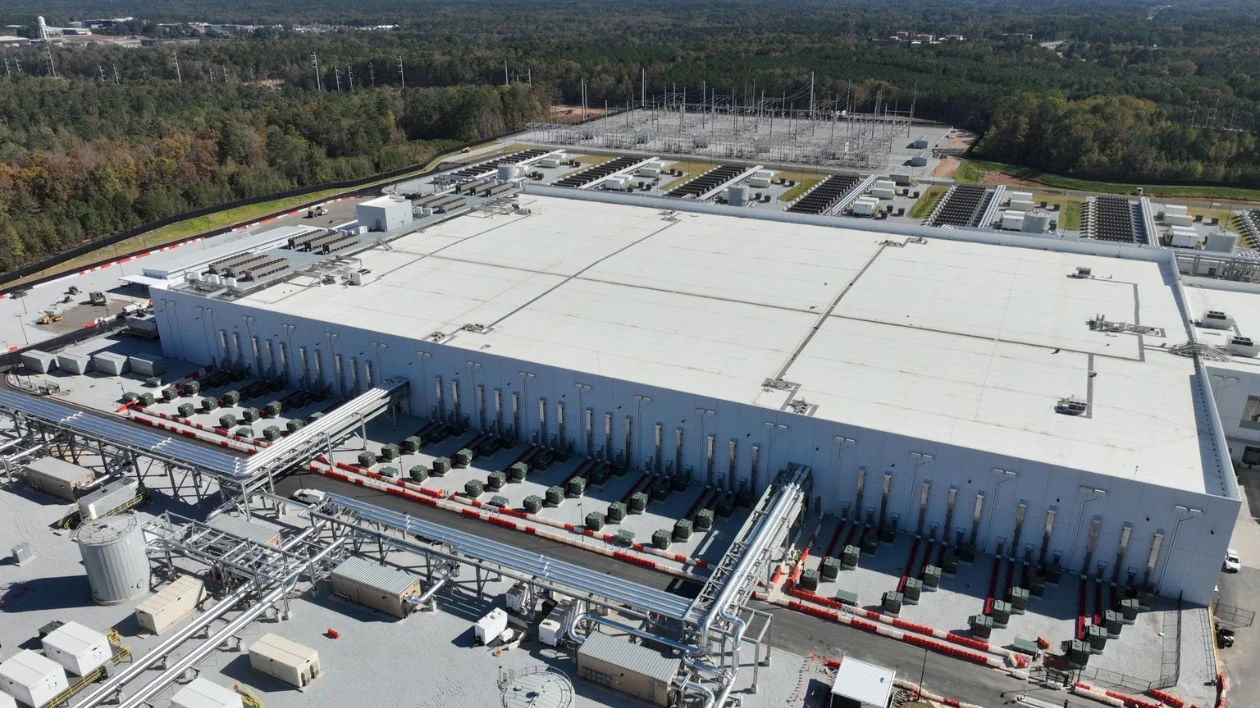
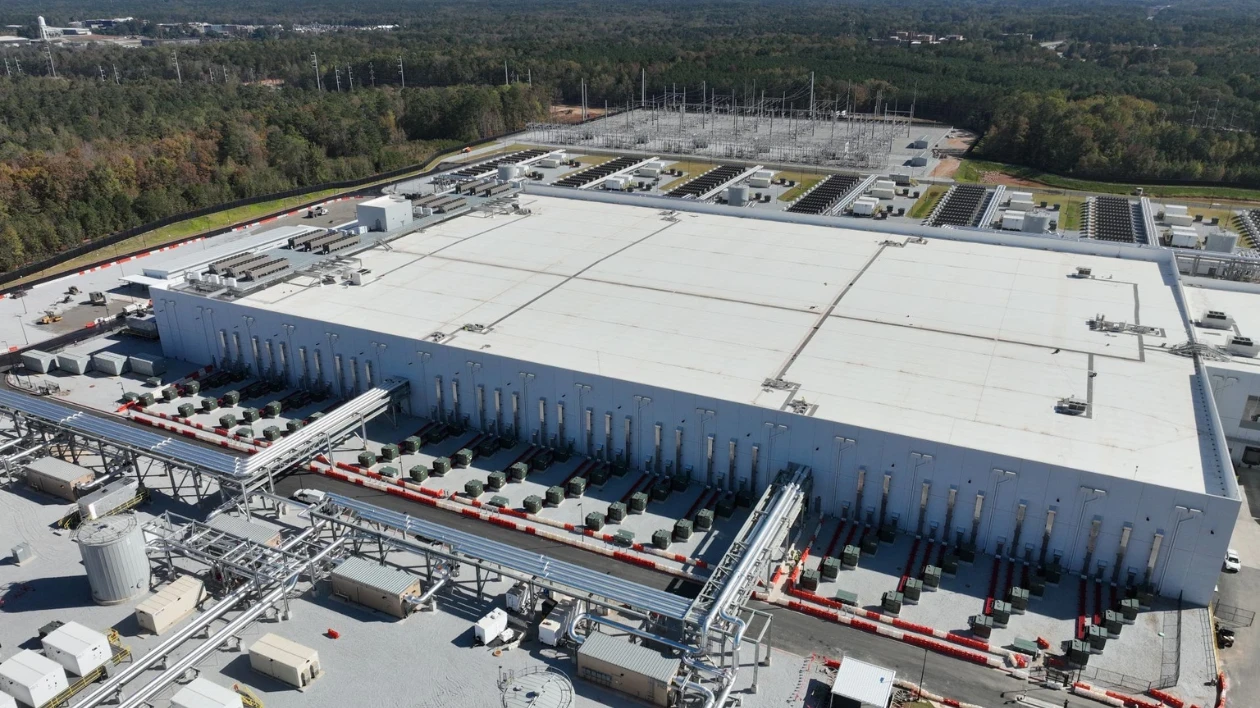
To achieve this scale, AT&T migrated its training and data-generation workflows to Microsoft Foundry Managed Compute, leveraging a heterogeneous hardware pool featuring over 530 high-performance GPUs—including 430 AMD Instinct™ MI300X accelerators alongside NVIDIA hardware. By pairing an open-model multi-architecture strategy (utilizing Microsoft’s Phi-4, OSS-120B, and Google’s Gemma 4) with dedicated, managed hardware provisioning, AT&T successfully processed approximately 1 trillion tokens of domain data and trained OTel2.0 on 400 billion tokens.
This strategic shift away from proprietary, closed-source API models delivered tens of millions of dollars in net savings, cut hardware deployment timelines from weeks to days, and provided a scalable blueprint for domain-specific enterprise AI development.
Detailed Chronology: The Engineering of OTel2.0
Phase 1: The Domain Expertise Friction and the OTel Baseline
The origins of the OTel initiative stemmed from a clear operational challenge: off-the-shelf generative models frequently hallucinated when tasked with analyzing complex telecom protocols, root-cause diagnostics, and network configuration code. To establish an industry baseline, AT&T initially launched OTel 1.0, releasing the weights to the broader technology ecosystem. The community response validated the market demand, driving more than 25 million downloads from developers, network operators, and research institutions worldwide.
However, scaling from OTel 1.0 to OTel2.0 required an exponential increase in dataset complexity and token processing capacity. AT&T needed to ingest, structure, and distill vast volumes of raw technical documentation from the GSMA and internal knowledge bases, combining them with synthetically generated datasets to cover edge-case network failure modes.
[Raw Domain Data: GSMA Docs & Technical Specs]
                      │
                      ▼
[Synthetic Generation Pipeline: Microsoft Phi-4] ──► (~700B Tokens/Month)
                      │
                      ▼
[High-Reasoning Filtering: OSS-120B]
                      │
                      ▼
[Agentic & Workflow Fine-Tuning: Gemma 4]
                      │
                      ▼
[OTel2.0 Core Model Training] ──► (400B Token Final Corpus)
Phase 2: Solving the Infrastructure Bottleneck via Managed Compute
In traditional enterprise AI development, infrastructure management presents a major operational bottleneck. Engineering teams historically had to procure physical hardware, configure bare-metal clusters, manage low-level drivers, and build custom orchestrators—a process that routinely consumed weeks or months before model training could begin.
To accelerate iteration cycles, AT&T partnered with Microsoft to utilize Microsoft Foundry Managed Compute. The platform abstracted backend infrastructure management while granting AT&T direct access to dedicated GPU capacity. Rather than managing hardware lifecycles and cluster orchestration manually, AT&T engineers were able to provision, swap, and scale compute workloads within hours.
Phase 3: Synthesizing One Trillion Tokens at Scale
Building the training corpus for OTel2.0 required processing approximately 1 trillion tokens. Raw documentation provided the structural foundation, but natural language documentation alone was insufficient to teach the model deep operational logic. AT&T deployed Microsoft’s open-weight Phi-4 model to generate synthetic data at scale, running workloads that processed roughly 700 billion tokens per month.
To filter, validate, and structure this data, AT&T integrated OSS-120B for high-reasoning evaluation tasks, while utilizing Gemma 4 within the model development and iteration workflow. The curated, high-density training corpus was ultimately distilled into 400 billion fine-tuning tokens, forming the operational backbone of OTel2.0.
Supporting Context & Metrics
The Economics of Open Models vs. Proprietary APIs
At trillion-token scales, relying exclusively on proprietary frontier model APIs introduces severe financial inefficiencies. API rate limits, unpredictable consumption pricing, and data privacy constraints create substantial headwind for enterprise R&D budget optimization.
By executing open-source models over dedicated, managed compute hardware via Microsoft Foundry, AT&T transformed its cost structure. Generating hundreds of billions of synthetic tokens via open models delivered estimated savings in the tens of millions of dollars compared to equivalent proprietary API calls, while retaining full governance over internal telecommunications data.
Key Project Metrics & Milestone Data
| Architectural Dimension | Metric / Resource | Operational Impact |
|---|---|---|
| OTel 1.0 Legacy Adoption | 25M+ Cumulative Downloads | Validated global enterprise demand for open telecom AI foundation models. |
| Total Hardware Pool | ~530 High-Performance GPUs | Provided multi-node distributed compute capacity across varied cluster topologies. |
| Primary Compute Engine | 430 AMD Instinct™ MI300X GPUs | Enabled large-memory bandwidth processing for synthetic data pipelines. |
| Monthly Token Throughput | ~700 Billion Tokens/Month | Sustained continuous synthetic data synthesis and dataset formatting via Phi-4. |
| Total Ingested Data Volume | ~1 Trillion Tokens | Ingested GSMA standards, technical specs, and synthetic telemetry datasets. |
| Final Trained Dataset Size | ~400 Billion Tokens | High-density fine-tuning corpus optimized specifically for telecom domain logic. |
| Infrastructure Deployment Timeline | Days (down from Weeks) | Accelerated developer feedback loops and experiment iteration speeds. |
Multi-Model Synergy across the AI Pipeline
Rather than relying on a monolithic system, AT&T applied a specialized multi-model matrix across the data preparation and training lifecycle:
+-------------------------------------------------------------------------+
|                      SPECIALIZED MODEL MATRIX                           |
+-------------------+-----------------------------------------------------+
| Model             | Target Workload & Execution Phase                   |
+-------------------+-----------------------------------------------------+
| Phi-4             | High-throughput synthetic data generation & prep    |
| OSS-120B          | Deep logic validation & higher-reasoning tasks      |
| Gemma 4           | Specialized agentic execution & workflow fine-tuning|
+-------------------+-----------------------------------------------------+- Phi-4: Served as the high-throughput engine for data transformation, synthetic query creation, and text normalization.
- OSS-120B: Handled complex reasoning evaluation, verifying that generated synthetic scenarios accurately reflected real-world network physics and protocol interactions.
- Gemma 4: Supported development workflows, testing agentic tool use and fine-tuning interaction loops for network operational software.
Hardware Heterogeneity: Broadening the Enterprise GPU Stack
A critical highlight of the OTel2.0 deployment was its hardware-agnostic architecture. Recognizing that compute availability and cost-efficiency vary across hardware providers, AT&T deployed 530 total GPUs managed via Microsoft Foundry, featuring 430 AMD Instinct™ MI300X GPUs working alongside NVIDIA infrastructure.
The deployment of AMD’s MI300X accelerators proved pivotal for large-scale token processing. Featuring 192GB of HBM3 memory, the MI300X architecture allowed AT&T to host massive model weights across fewer physical nodes, reducing interconnect bottlenecks during large-scale inference and data synthesis runs. This hybrid hardware strategy shielded AT&T from supply-chain constraints and proved that modern AI infrastructure can run efficiently on heterogeneous silicon platforms.
Official Statements & Industry Perspectives
The deployment of OTel2.0 on Microsoft Foundry Managed Compute has drawn strong interest from across the AI hardware, software, and enterprise infrastructure sectors. Executive leadership across participating organizations emphasized how open-source architecture, hardware flexibility, and managed compute environments combine to drive modern enterprise AI deployments.
Mark Austin, Vice President of Data Science and AI at AT&T, emphasized the strategic role of managed infrastructure when operating at massive data scale:
"When you are processing hundreds of billions of tokens, infrastructure becomes part of the problem you solve. Foundry Managed Compute gave us access to GPU capacity at scale so our teams could focus on advancing OTel2.0 instead of managing infrastructure."
From the perspective of open-source ecosystems and developer enablement, Jeff Boudier, Vice President of Product at Hugging Face, highlighted how AT&T’s deployment serves as a baseline strategy for domain-specific foundation models:
"Every company in the world needs to build its own AI, and that is only possible with open models and open source. AT&T is championing this vision, building on open models like Phi-4 and Gemma, and giving OTel back to the community as a telecom AI foundation others can build upon. Microsoft Foundry makes this practical at scale, bringing the latest open models from the Hugging Face collection together with AMD and NVIDIA GPUs in one place, so teams can pick the right model and the right hardware, then deploy in hours instead of weeks."
Future Outlook: The Blueprint for Vertical Enterprise AI
The successful deployment of OTel2.0 marks a shift in how vertical industries design, fund, and deploy artificial intelligence. The traditional reliance on generic multi-billion-parameter closed models is increasingly giving way to focused, domain-specific open models fine-tuned on curated industry data.
1. The Democratization of Domain-Specific Foundation Models
By returning OTel2.0 to the global tech community in partnership with industry organizations like the GSMA, AT&T is establishing an open industry framework for telecommunications intelligence. Globally, mobile network operators (MNOs) can leverage OTel2.0 as a foundation layer, fine-tuning local instances for automated network repair, automated customer service routing, dynamic spectrum allocation, and automated RAN (Radio Access Network) orchestration.
2. Strategic Realignment of Enterprise AI Capital Expenditure
AT&T’s ability to achieve tens of millions of dollars in savings while processing a trillion tokens offers a compelling financial framework for enterprise CTOs and CFOs. As AI initiatives transition from preliminary proof-of-concept budgets to enterprise production run-rates, the combination of open models + managed dedicated GPUs provides a predictable cost model that scales efficiently with data volume.
3. Silicon Diversity as an Enterprise Imperative
The successful operationalization of 430 AMD Instinct MI300X GPUs alongside NVIDIA hardware within Microsoft Foundry signals a shift toward true hardware agility in enterprise AI. Cloud environments that offer fluid model migration across diverse GPU architectures will enable enterprises to optimize workloads dynamically based on pricing, power constraints, and compute availability.
As OTel2.0 transitions into deployment across global telecom networks, it serves as a clear benchmark for vertical AI: proving that domain specificity, open-source collaboration, and managed hardware orchestration form the optimal blueprint for enterprise AI at scale.