Executive Overview
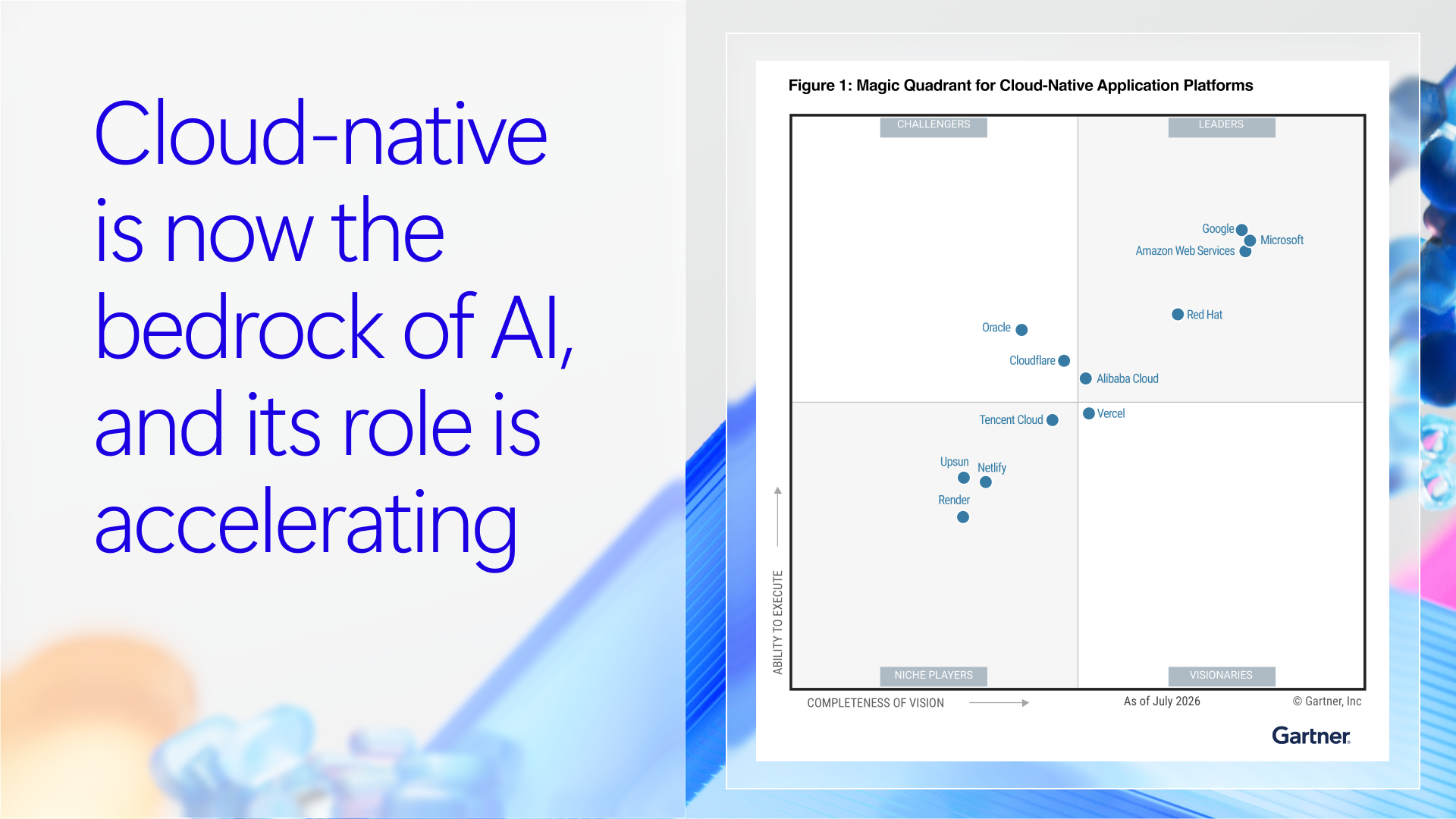
In an era where enterprise technology strategies are being rewritten around artificial intelligence, the infrastructure underpinning modern software development is undergoing its most radical transformation in over a decade. Validating this industry-wide shift, market research firm Gartner, Inc. has officially named Microsoft a Leader in its 2026 Gartner® Magic Quadrant™ for Cloud-Native Application Platforms (CNAP). This marks Microsoft’s third consecutive year occupying the top-right quadrant in this critical enterprise evaluation.
However, behind the repeat recognition lies a fundamental evolution in what a "cloud-native platform" is expected to deliver. While previous years focused heavily on microservice orchestration, elastic scaling, and containerized deployment efficiency, the 2026 benchmark reflects a deeper inflection point: Cloud-Native Application Platforms are no longer merely staging environments for modern web applications. Instead, they have transformed into the core foundational matrix required for enterprise AI transformation.
       +-------------------------------------------------------------+
       |             2026 Gartner Magic Quadrant (CNAP)              |
       |                                                             |
       |   CHALLENGES                           LEADERS              |
       |                                      +------------------+   |
       |                                      |  MICROSOFT       |   |
       |                                      |  (3rd Year)      |   |
       |                                      +------------------+   |
       |   NICHE PLAYERS                        VISIONARIES          |
       +-------------------------------------------------------------+
As organizations race to operationalize generative AI models, autonomous agents, and complex inferencing pipelines, the primary bottleneck is no longer ideation; it is integration. Enterprises face immense hurdles bridging experimental AI models with legacy line-of-business data, maintaining strict governance, enforcing security protocols, and operating at global scale. Microsoft’s platform strategy directly addresses this friction by unifying traditional application modernization, cloud-native execution runtimes, AI orchestration tools, and automated operational observability into a single, cohesive architecture.
Detailed Chronology & Strategic Evolution
To understand the significance of the 2026 Gartner recognition, one must analyze the multi-year architectural evolution that brought cloud-native computing to its current AI-driven paradigm.
+-----------------------------------------------------------------------------------+
|                            EVOLUTION OF CLOUD-NATIVE                              |
+------------------------------------+----------------------------------------------+
| Era                                | Focus / Key Paradigms                        |
+------------------------------------+----------------------------------------------+
| Era 1: Infrastructure & Containers | • Virtualization, early PaaS                 |
| (Pre-2020)                         | • Monolith-to-Microservices transition       |
|                                    | • Basic container management                 |
+------------------------------------+----------------------------------------------+
| Era 2: Managed Serverless & Ops    | • Managed Kubernetes (AKS), serverless apps  |
| (2020–2023)                        | • Elastic auto-scaling, CI/CD automation     |
|                                    | • API management standardization             |
+------------------------------------+----------------------------------------------+
| Era 3: Convergent AI-Native Platform| • Autonomous Agent execution environments    |
| (2024–2026+)                       | • Hardware-isolated microVM sandboxes        |
|                                    | • Model Context Protocol (MCP) native routing|
|                                    | • Agentic ops (Azure SRE Agent integration)  |
+------------------------------------+----------------------------------------------+
Era 1: Infrastructure Abstraction and Early Containerization (Pre-2020)
The cloud-native landscape was historically dominated by basic infrastructure abstraction. Organizations migrated from on-premises virtual machines to Infrastructure as a Service (IaaS) and early Platform as a Service (PaaS) models. The primary goal was lift-and-shift modernization, microservices adoption, and establishing initial continuous integration/continuous deployment (CI/CD) pipelines.
Era 2: Managed Runtimes and API-First Architectures (2020–2023)
As workloads matured, developer focus shifted toward managed container environments, event-driven architectures, and API-first designs. Platform providers competed on elasticity, developer experience, and reducing the operational overhead of Kubernetes cluster management. Microsoft anchored its presence during this period by expanding Azure App Service, introducing Azure Container Apps, and scaling Azure Functions for serverless workloads.
Era 3: The AI Integration Era & The Convergent Platform (2024–2026)
By 2024, the widespread adoption of Large Language Models (LLMs) highlighted a structural flaw in isolated cloud tooling. Developers attempting to build intelligent applications were forced to glue together disparate services—separate vector databases, standalone AI frameworks, isolated container runtimes, and fragmented security policies. This fragmented approach created severe latency, complex authentication barriers, and unpredictable governance risks.
The release of the Gartner® Magic Quadrant™ for Cloud-Native Application Platforms on August 3, 2026—authored by analysts Mukul Saha, Alex Coqueiro, Prasanna Lakshmi Narasimha, and Richard Watson—formally recognized the modern era of convergence. Microsoft’s platform strategy over the preceding 24 months systematically closed the gap between raw compute and AI orchestration. By embedding specialized runtimes for AI agents, integrating the Model Context Protocol (MCP), and pairing security guardrails directly into the hosting environment, the platform transformed into a unified engine for intelligent applications.
Technical Deep-Dive: The Azure Cloud-Native & AI Architecture Stack
Microsoft’s cloud-native app platform achieves its industry positioning through a tightly coupled suite of services engineered to serve both legacy codebases and non-deterministic AI agent systems.
+----------------------------------------------------------------------------------+
|                          MICROSOFT AZURE PLATFORM STACK                          |
+----------------------------------------------------------------------------------+
| DEVELOPER & AI TOOLING                                                           |
| GitHub Copilot  |  Microsoft Foundry  |  Foundry Agent Service                    |
+----------------------------------------------------------------------------------+
| APPLICATION RUNTIMES & EXECUTION                                                 |
| Azure App Service | Azure Container Apps | Azure Container Apps Sandboxes | Azure Functions |
+----------------------------------------------------------------------------------+
| GOVERNANCE, INTEGRATION & OBSERVABILITY                                          |
| Azure API Management (AI Gateway) | Azure SRE Agent | Azure Monitor & App Insights |
+----------------------------------------------------------------------------------+
| SHARED AZURE FOUNDATION                                                          |
| Identity (Entra) | Networking | Security (Defender) | Confidential Computing     |
+----------------------------------------------------------------------------------+
1. Unified Runtimes for Hybrid Workloads
- Azure App Service & App Service Managed Instance: Serves as the enterprise backbone for traditional web applications. The introduction of App Service Managed Instance allowed organizations to lift and shift legacy, highly complex Windows and .NET applications into fully managed PaaS environments without requiring complete application rewrites.
- Azure Container Apps & Express Tier: Built on top of open-source serverless technology, this service runs microservices, APIs, background jobs, and AI inferencing workloads without forcing developer teams to manage complex Kubernetes YAML manifests or cluster nodes. The Express deployment feature enables developers to push code directly from local environments to production endpoints in seconds.
- Azure Functions: Provides event-driven compute capabilities. It bridges existing systems with modern AI logic through more than 1,400 pre-built enterprise connectors, simplifying retry logic, state control, and identity management across heterogeneous corporate data estates.
2. Specialized Execution Environments for Autonomous AI Agents
Autonomous AI agents present novel compute challenges: they generate runtime code on the fly, execute unpredictable workflows, and interact directly with enterprise APIs. Standard containers are often ill-equipped to safely manage these dynamic execution profiles.
- Azure Container Apps Sandboxes: To address the risk of executing untrusted, dynamic code generated by LLMs, Microsoft engineered isolated microVM environments. These sandboxes execute code within hardware-enforced boundaries. State persists even when an agent pauses, protecting core infrastructure while granting agents the operational compute freedom they require. This technology acts as the underlying execution engine for the Microsoft Foundry Agent Service.
- Model Context Protocol (MCP) Native Support: Through integration with Azure Functions and Azure API Management, applications can standardize how LLMs contextually connect with backend data stores, corporate databases, and external web services without bespoke custom integration layers.
3. AI-Aware API Management & Gateway Controls
As AI usage surges, API endpoints experience unprecedented traffic spikes, non-standard request payloads, and complex access flows. Azure API Management acts as an AI Gateway, offering:
- Semantic Caching: Reducing latency and token consumption by serving cached responses for functionally identical semantic prompts.
- Token Rate Limiting & Quota Enforcement: Preventing cost overruns by capping model token consumption based on user role, enterprise department, or application type.
- Model Load Balancing: Dynamic routing across region-distributed LLM deployments to maintain uptime during demand spikes.
4. Agentic Operations (SRE Agent & Security)
Managing cloud-native environments at scale requires operational intelligence that matches application complexity. Azure SRE Agent integrates into Azure Monitor and Application Insights, acting as an autonomous telemetry monitor that investigates incidents, pinpoints root causes across complex microservice graphs, and executes auditable remediation workflows automatically.
Supporting Context & Industry Metrics
The enterprise shift toward unified cloud-native and AI platforms is underscored by real-world deployments across various industries, demonstrating tangible efficiency and operational gains.
+------------------------------------------------------------------------------------+
|                         ENTERPRISE IMPACT & IMPACT METRICS                         |
+--------------------+---------------------------------+-----------------------------+
| Enterprise Organization| Solution Deployed              | Documented Outcome / Metric |
+--------------------+---------------------------------+-----------------------------+
| Planet DDS         | Azure App Service Modernization | Provisioning time reduced   |
|                    |                                 | from 6 weeks to 1 day       |
+--------------------+---------------------------------+-----------------------------+
| Commerzbank        | Azure Container Apps & Ava Agent| 30,000+ monthly AI chats;   |
|                    |                                 | 75% autonomous resolution   |
+--------------------+---------------------------------+-----------------------------+
| Ghassan Aboud Group| Azure Container Apps & Foundry  | Unified Ragin AI multi-     |
|                    |                                 | sector customer agent       |
+--------------------+---------------------------------+-----------------------------+
| Levi Strauss & Co. | Microsoft Foundry Platform      | Streamlined enterprise workflow|
|                    |                                 | and rapid decision analytics|
+--------------------+---------------------------------+-----------------------------+
| Hexaware / Replit  | Azure OpenAI & Developer Stack  | Democratized app building   |
|                    |                                 | across non-technical staff  |
+--------------------+---------------------------------+-----------------------------+
Key Industry Deployments
- Planet DDS (Healthcare Software): The dental practice management software provider modernized its software infrastructure using Azure App Service. By abstracting lower-level cloud plumbing, the organization reduced software environment provisioning times from six weeks down to a single day, allowing engineering teams to reallocate capital and talent toward product feature development.
- Commerzbank (Financial Services): The major European banking entity deployed its agentic banking platform on Azure Container Apps. Its customer-facing AI agent, Ava, processes over 30,000 complex customer interactions per month, autonomously resolving 75% of queries without human intervention, while maintaining compliance with stringent European banking regulations.
- Ghassan Aboud Group (Conglomerate): Operating across diversified markets including healthcare, logistics, and retail, the group built its unified Ragin AI customer platform on Azure Container Apps, processing multi-channel customer workflows through a single cloud control plane.
- Levi Strauss & Co. (Retail & Apparel): Implemented Microsoft Foundry to unify disparate retail telemetry, streamlining supply chain decision-making and automated inventory management across global operations.
Official Statements & Stakeholder Perspectives
Industry leaders and corporate executives emphasize that success in the current technological wave requires a robust, integrated foundation rather than isolated experimental software.
"A clean cloud architecture is a prerequisite for AI. You can’t build on top of a weak foundation."
— Mike Gibson, Chief Technology Officer, Planet DDS
Microsoft’s official narrative surrounding the Gartner recognition emphasizes that cloud platforms are entering a practical operational phase:
"We are proud of this recognition. More importantly, we believe it reflects a shift we see across industries. Cloud-native application platforms are no longer where organizations build and run modern applications. They are becoming the foundation for AI transformation… The challenge is not a shortage of AI ideas. It is turning those ideas into production systems that can connect to existing applications and data, perform reliably at global scale, and meet security standards."
— Microsoft Cloud Platform Leadership Team
In its research disclosure accompanying the Magic Quadrant publication, Gartner outlines the scope and limitations of its evaluation framework:
"Gartner does not endorse any company, vendor, product or service depicted in its publications, and does not advise technology users to select only those vendors with the highest ratings or other designation. Gartner publications consist of the opinions of Gartner’s business and technology insights organization and should not be construed as statements of fact."
— Gartner Research Methodology Disclaimer (August 3, 2026)
Future Outlook: The Next Frontier of Application Development
As software engineering enters the late 2020s, the boundary between traditional application architecture and artificial intelligence will effectively disappear. Strategic trends highlight several major shifts that will define the next phase of cloud-native computing:
+---------------------------------------------------------------------------------+
|                       EMERGING ARCHITECTURAL TRAJECTORIES                       |
+---------------------------------------------------------------------------------+
| 1. Fully Autonomous Software Life Cycle                                         |
|    From Copilot-assisted coding to agentic auto-remediation (Azure SRE Agent).  |
+---------------------------------------------------------------------------------+
| 2. Hardware-Isolated Multi-Agent Swarms                                         |
|    MicroVM sandboxing becoming standard for enterprise untrusted code execution|
+---------------------------------------------------------------------------------+
| 3. Standardized Agent Protocols                                                 |
|    Universal adoption of Model Context Protocol (MCP) across middleware & APIs |
+---------------------------------------------------------------------------------+
1. From Human-Written Microservices to Autonomous Agent Networks
Applications will increasingly be composed of dynamic multi-agent swarms capable of executing non-deterministic tasks. Platforms will be judged on how effectively they isolate runtime risks (via technologies like microVM sandboxing) and provide low-latency agent-to-agent communication channels.
2. Autonomous Platform Operations (AIOps / Agentic SRE)
Human operational teams are hitting complexity limits in multi-cloud microservice topologies. Tools like the Azure SRE Agent indicate a future where platform health monitoring, telemetry evaluation, security patching, and scaling are managed primarily by autonomous agents operating within auditable policy guardrails.
3. Unified Developer Tooling & App Modernization
With code generation natively embedded into development lifecycle tools through platform extensions like GitHub Copilot app modernization, the cost and timeline associated with refactoring legacy enterprise codebases will continue to plummet. Organizations will no longer need to choose between maintaining mission-critical core systems and building modern AI applications—the platform will merge these two streams into a continuous modern architecture.
Microsoft’s positioning in the 2026 Gartner® Magic Quadrant™ for Cloud-Native Application Platforms highlights its momentum in this converging market. By unifying cloud infrastructure, application runtimes, operational safety controls, and specialized agentic execution environments, the enterprise platform is moving beyond simple application hosting to serve as the runtime engine for the AI-driven enterprise.