Executive Overview
While public attention concerning the explosive expansion of digital infrastructure typically fixates on active construction sites—cranes slicing through skylines, massive concrete foundations being poured, and server halls rising from the earth—a profound transformation is quietly taking place far away from the public eye. The data center industry is growing not just by building, but by hoarding.
Driven by an unprecedented surge in demand for artificial intelligence (AI) compute capacity and cloud infrastructure, data center operators, real estate investment trusts (REITs), and private equity firms are engaging in data center land banking. This strategy involves aggressively purchasing and securing undeveloped parcels of real estate years, and sometimes decades, before any ground is actually broken.
The metrics tell a staggering story of a market pivoting away from immediate development toward preemptive acquisition. In the past year alone, sales of prospective data center land have skyrocketed by an astonishing 141%. Furthermore, capital allocation reflects this shift: the share of overall data center development spending devoted strictly to land acquisition surged from 19% in 2025 to 30% by 2026.
Yet, this multi-billion-dollar game of real estate chess is not without peril. As developers race to lock down prime tracts near power substations and fiber-optic backbones, they are colliding headfirst with a rising tide of community pushback, strict zoning hurdles, and regulatory roadblocks. From municipal moratoria to political withdrawals, the practice of land banking is redrawing the battle lines between Big Tech and local populations, raising critical questions about resource allocation, market monopolization, and the long-term sustainability of digital growth.
Detailed Chronology: From Opportunistic Acquisitions to a Capital-Driven Gold Rush
To understand how data center land banking became the defining real estate trend of the mid-2020s, it is necessary to trace the evolution of site selection within the digital infrastructure sector.
- The Pre-Boom Era (Pre-2023): Just-in-Time Real Estate
Historically, the data center industry operated on a "just-in-time" real estate model. Operators would identify immediate market demand—often driven by enterprise cloud adoption or hyperscale expansion—secure a specific site with pre-existing or easily obtainable zoning approvals, and immediately initiate construction. Accumulating vast portfolios of speculative, unzoned, or raw open space with no immediate utility was largely viewed as an inefficient use of capital. Real estate was simply an input cost for an active build, not an asset class in its own right. - The AI Inflection Point (2023–2024): The Scramble for Power and Space
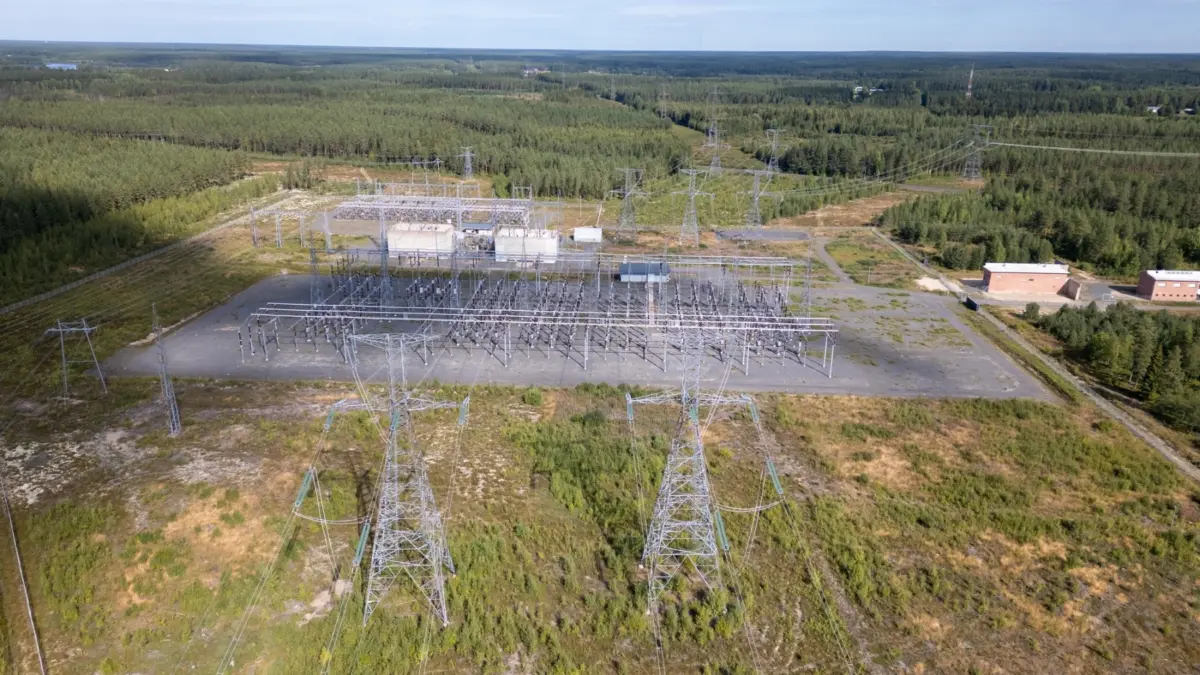
The public debut and rapid commercialization of generative AI models fundamentally altered computation requirements. Suddenly, standard multi-megawatt facilities were being dwarfed by multi-hundred-megawatt campuses designed to train massive large language models. Operators realized that power availability—specifically proximity to electrical substations and high-voltage transmission lines—was becoming a scarce commodity. Developers began looking further ahead, realizing that whoever controlled the acreage closest to grid capacity controlled the future of compute. - The Land Banking Surge (2025–2026): A 141% Explosion
By 2025, traditional data center hubs like Northern Virginia’s "Data Center Alley" were facing severe grid constraints and land scarcity, forcing operators to look outward into secondary and tertiary markets. This desperation translated into a feeding frenzy. Data center land deals surged by 141%, establishing land banking as a formal institutional strategy. By 2026, land acquisition commanded nearly a third (30%) of all data center development spending, up dramatically from 19% just a year prior. Investors realized that even if a facility could not be built immediately due to supply chain bottlenecks or grid queues, owning the dirt meant locking out competitors. - The Regulatory Backlash (Present Day): Moratoria and Community Resistance
As word spread of massive corporate land holdings sitting vacant while local housing costs rose and grid fears mounted, public sentiment soured. Communities across the United States and Europe began pushing back. Incidents such as high-profile corporate withdrawals (exemplified by Amazon Web Services pulling out of certain disputed developments) and the implementation of strict municipal and state-level moratoria on facilities exceeding 50 MW signaled that raw land ownership was no longer a foolproof golden ticket.
Supporting Context & Metrics: The Financial Mechanics of Land Banking
In the broader real estate sector, land banking is a well-worn playbook. Investors have long purchased strategic parcels anticipating urban sprawl or infrastructure developments, holding them until values appreciate before selling to developers. However, applying this methodology to the capital-intensive, highly specialized data center ecosystem introduces unique financial dynamics.
Why Land Banking Appeals to Investors
From a purely financial perspective, land banking offers an asymmetric risk-reward profile that is deeply alluring to institutional capital:
- Low Holding Costs: Unlike a completed data center—which incurs massive depreciation, maintenance, security, and technology-refresh costs—undeveloped land is relatively cheap to hold. Property taxes and basic maintenance on raw acreage are minimal in most jurisdictions.
- Optionality and Hedging: If market conditions shift, technological paradigms evolve, or a specific site proves unviable for a data center, the land can often be repurposed or sold off for industrial, commercial, or residential use. Investors are not locked into a single technological bet.
- Superior Short-Term Risk Profiles: Building a physical data center requires hundreds of millions, sometimes billions, of dollars, with a multi-year timeline before generating an operating profit. Long-term Yield-on-Cost (YOC) metrics are notoriously difficult to predict in a rapidly changing technological landscape. Land banking bypasses construction risk entirely, allowing investors to capture capital appreciation without exposing themselves to supply chain inflation or construction delays.
The Macro-Metrics of the Shift
| Metric | Historical Baseline (Pre-2024) | Current Market Status (2025–2026) |
|---|---|---|
| Primary Driver of Land Purchase | Immediate construction & deployment | Speculative holding, grid access hoarding |
| Share of Development Spend on Land | ~15% – 19% | ~30% |
| Year-Over-Year Land Deal Growth | Incremental / Steady | +141% surge |
| Primary Bottleneck Addressed | Construction delays | Power grid queues & site scarcity |
Despite these financial advantages, data center land banking acts as a double-edged sword. While it shields investors from immediate operational liabilities, it concentrates real estate assets in the hands of well-capitalized tech giants and private equity funds, effectively pricing out smaller enterprises and independent developers.
Official Statements & Industry Perspectives
The rapid pivot toward land banking has sparked intense debate among industry executives, municipal leaders, and financial analysts regarding its long-term viability and ethical implications.
Industry analysts emphasize that land has effectively joined energy and water as the primary bottleneck restricting the digital economy. As Christopher Tozzi, a prominent technology and infrastructure analyst, notes:
"What does seem certain is that if data center land banking becomes a widespread, enduring practice, it will likely fuel even more opposition to data center expansion, given the likely public perception that data center companies are ‘hogging’ land they may not even use. Large, well-funded data center companies and investors will gain an edge, leveraging their capital to secure real estate and flexibility unavailable to smaller businesses."
Real estate brokers specializing in digital infrastructure report that institutional investors are no longer asking if land is zoned for immediate use, but rather how close it is to major power transmission infrastructure.
Conversely, local government officials and community advocates view the trend with deep skepticism. Municipal leaders in states like New York, Virginia, and California have increasingly voiced frustration over vast swaths of agricultural or industrial acreage being locked up by corporate entities that have no definitive timeline for job creation or economic contribution. One municipal planner from a suburban East Coast county, speaking anonymously due to ongoing zoning litigation, remarked:
"We are seeing speculators buy up hundreds of acres around our local substations. They aren’t paying payroll taxes, they aren’t hiring local workers, and they are freezing out traditional commercial developers who want to build facilities that benefit the immediate community. It feels less like economic development and more like digital squatter’s rights."
Future Outlook: Will Land Banking Endure or Backfire?
As the data center industry navigates an increasingly fluid operational landscape, the long-term viability of land banking remains a subject of intense speculation. Will hoarding acreage prove to be a masterclass in strategic foresight, or an expensive miscalculation?
Factors Threatening the Land Banking Strategy
- Regulatory Shifts and Moratoria: If state and national governments continue to implement strict moratoria on data center developments—driven by concerns over grid stability, water consumption, and carbon footprints—the premium values currently commanded by land near power infrastructure could evaporate overnight. Land that is priced steeply today because of its proximity to a grid hookup could plummet in value if regional authorities cap power allocations for digital infrastructure.
- The Rise of On-Site Power Solutions: The industry is actively experimenting with alternative energy models, including modular nuclear reactors (SMRs), on-site hydrogen fuel cells, and dedicated microgrids designed to bypass public utility constraints entirely. If data centers successfully transition toward generating their own power on-site rather than relying on traditional grid hookups, the strategic advantage of banking land solely for its proximity to existing electrical substations will be significantly diminished.
- Permitting and Zoning Volatility: Local zoning boards are wising up to speculative land banking. Municipalities are beginning to introduce "use-it-or-lose-it" clauses, sunset provisions on zoning approvals, and higher tax assessments for undeveloped industrial land held by out-of-state corporate entities.
Conclusion
Data center land banking is a symptom of a digital gold rush driven by the insatiable demands of artificial intelligence and cloud computing. By treating real estate as a strategic reserve rather than a platform for immediate construction, investors have found a low-risk way to hedge against skyrocketing demand and infrastructure bottlenecks.
However, this high-stakes game carries significant systemic risks. By artificially inflating land prices, locking up critical regional acreage, and exacerbating community resentment, land bankers may be laying the groundwork for an even harsher regulatory backlash. Whether these multi-million-dollar land banks transform into the foundational fortresses of the next-generation digital economy or turn into costly, un-zonnable tracts of stranded capital will depend entirely on how governments, utilities, and communities choose to respond to the relentless march of the server rack.