By Shane Snider
Senior News Writer, Data Center Knowledge
August 13, 2026
Executive Overview
In a massive strategic maneuver designed to reshape the landscape of artificial intelligence infrastructure, tech titan Nvidia has forged sweeping partnerships with six premier financial institutions: Apollo, BlackRock, Blackstone, Brookfield, Goldman Sachs, and KKR.
Together, these entities plan to establish advanced financing platforms engineered to mobilize over $500 billion of third-party capital for AI infrastructure over time.
While the headline-grabbing figure suggests an unprecedented wave of liquidity destined for the AI ecosystem, industry experts warn that the initiative represents a fundamental shift in bottlenecks rather than a silver bullet for data center deployment.
By creating specialized financing vehicles—featuring usage-linked revenue models and targeted residual-value support from Nvidia—the initiative significantly lowers the barriers to acquiring high-end GPUs and moves heavy hardware spending off operators’ balance sheets.
However, analysts point out that mountains of capital cannot bypass the physical realities of modern engineering. With the primary financial choke point easing, the real battleground for AI dominance is hurtling toward power availability, interconnection queues, transformer lead times, and permitting red tape.
Nvidia Is Financing the Compute Layer
Transforming GPU Procurement and Capital Structures
The newly minted agreements change how AI compute is underwritten, rather than altering the underlying material costs of construction. According to Stephen Sopko, practice lead at HyperFrame Research, treating compute as an underwritable asset backed by usage-linked revenue fundamentally alters the financial architecture of data centers.
"Treating compute as an underwritable asset with usage-linked revenue lowers the cost of capital and moves GPU spend off the operator balance sheet," Sopko explained.
Traditionally, data center operators and cloud service providers had to shoulder the massive upfront capital expenditures (CapEx) required to procure tens of thousands of advanced graphics processing units. Under the new frameworks, long-duration, usage-linked financing vehicles provide AI labs, enterprises, and neo-cloud providers with alternative pathways to fund Nvidia-based infrastructure without crippling their internal liquidity.
The Mechanics of Residual-Value Support
A critical component of Nvidia’s strategy is its residual-value support. Capped at 25% of an individual investment opportunity and evaluated on a strict project-by-project basis, this financial backstop gives conservative lenders a predictable framework to price GPU depreciation—a variable that has historically been notoriously difficult to model given the rapid cadence of semiconductor innovation.
By absorbing a calculated fraction of the residual risk, Nvidia is helping operators reach financial close faster and with far less internal balance sheet exposure.
Yet, as Sopko astutely observes, this is less of a pure demand-creation story and more of a strategic indicator: "I read it as Nvidia telling the market where it expects the bottleneck to move next."
Money Can’t Clear the Grid Queue
The Physical Limits of Growth
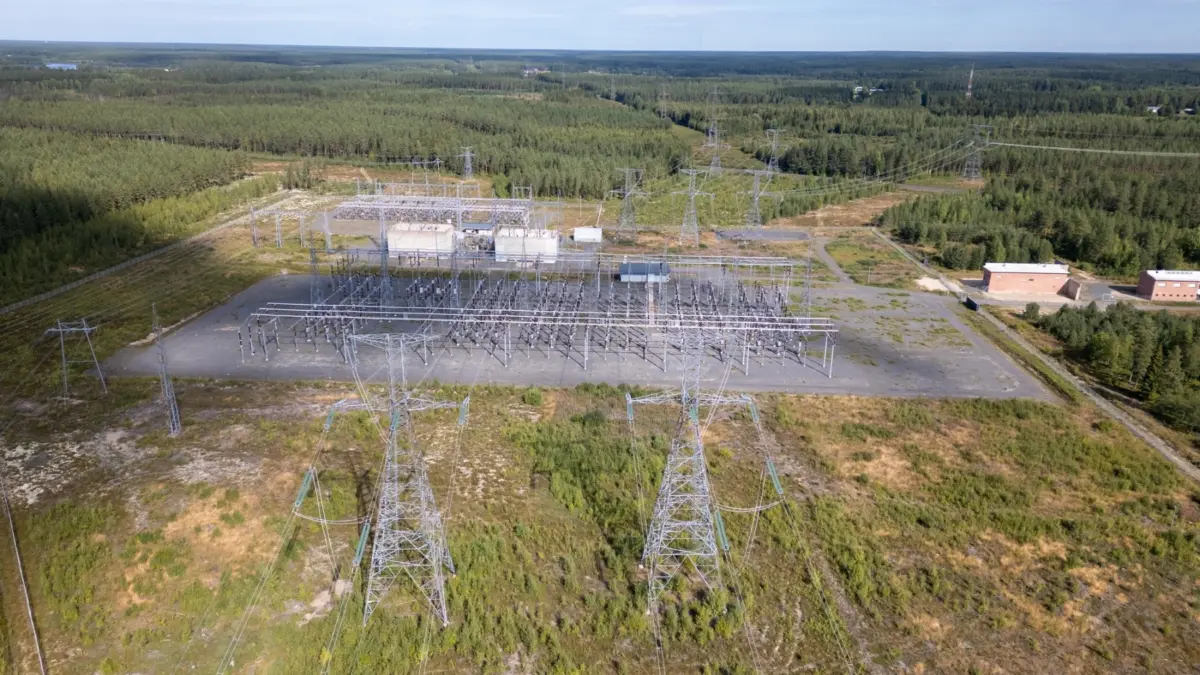
Even as financial engineering clears the path for silicon procurement, the physical world continues to push back. Money alone cannot manufacture power transformers, accelerate electrical substation approvals, or magically clear multi-year utility interconnection queues.
Nvidia has increasingly recognized that its long-term viability depends on matching its processing power with reliable energy. To combat this, the chipmaker has pursued aggressive vertical integration strategies:
- The DSX Architecture: A standardized AI-factory design that integrates compute, networking, software, advanced liquid cooling, power, and facility infrastructure into a unified blueprint.
- Flexible Grid Integration: Collaborations with entities like Emerald AI and major energy providers to build AI factories capable of dynamically adjusting their computing loads in response to real-time grid conditions.
The IREN Partnership: A Case Study in Scale
A prime illustration of this model is Nvidia’s landmark partnership with data center operator IREN, which outlines plans to deploy up to 5 gigawatts (GW) of Nvidia DSX-aligned AI infrastructure across IREN’s active pipeline.
This partnership exemplifies the exact dynamic facing the industry: while the GPUs and underlying compute hardware can be financed effortlessly through the new capital platforms, the physical facility still has to be energized.
Sopko forecasts that siting and project starts will become severe constraints throughout 2027 and 2028. Because the new financial mechanisms are purpose-built to clear the gate of capital, they risk creating a dangerous timing mismatch.
"Financed silicon arriving ahead of energization would turn the bottleneck into a utilization problem rather than a demand problem," Sopko warned.
In this scenario, an operator might possess all the necessary financing and thousands of top-tier GPUs, yet remain entirely unable to generate operational revenue because the local utility cannot supply the megawatts required to turn them on.
Power-Ready Projects Gain Leverage
The New Currency: Substations and Interconnects
As capital stops being the primary gatekeeper for AI development, the hierarchy of valuable assets in the data center industry is undergoing a radical inversion.
A developer starting from scratch—holding only raw land and a future interconnection request—faces a vastly inferior investment proposition compared to an operator that already possesses:
- Executed interconnection agreements.
- Existing brownfield substations.
- Contracted, reliable power generation sources.
"Power-ready sites, brownfield substations, and executed interconnect agreements become the scarce input once capital stops being the gate," Sopko emphasized.
Expanding Grid-Edge Collaborations
To mitigate these stark realities, Nvidia is pushing deeper into energy market collaborations. Alongside its work with Emerald AI, Nvidia is coordinating with major energy producers—including AES, Constellation, Invenergy, NextEra Energy, Nscale Energy & Power, and Vistra.
These partnerships aim to pioneer AI factories that double as flexible grid assets, helping stabilize local energy grids rather than merely draining them. However, bridging the gap between gigawatt-scale power demand and sluggish utility infrastructure timelines remains an uphill battle.
The $500B Target vs. The Buildout Reality
Dissecting the Memorandum of Understanding
While the headline figure of $500 billion commands attention, industry veterans urge caution. This staggering sum represents a multi-year financing target that the platforms are designed to mobilize over time, rather than an immediate pool of committed cash or direct spending by Nvidia.
Furthermore, the foundational arrangements signed with Apollo, BlackRock, Blackstone, Brookfield, Goldman Sachs, and KKR are currently structured as memorandums of understanding (MOUs). Final, binding financing structures remain subject to definitive commercial agreements.
Industry Skepticism: Circular Financing and Market "Hyperventilation"
Jack E. Gold, president and principal analyst at J.Gold Associates, argues that fundamental structural questions deserve far more scrutiny than the headline numbers have received thus far. Gold points out the ambiguity surrounding who is actually driving the demand for this capital and how closely tied Nvidia’s financial backing is to future equipment purchases.
"Another case of circular financing that has been the strategy of Nvidia for a while," Gold noted, raising concerns about systemic risk if market conditions shift.
Gold’s primary anxiety centers on what happens to the broader ecosystem if AI enterprise demand or project revenue economics experience a downturn after billions in debt and equity have already been deployed:
"If the demand does soften, and the borrowers can’t pay back the financing due to low revenues, who gets left holding the bag, and for how much?"
While acknowledging that the global demand to scale AI data centers is entirely authentic, Gold cautions against unchecked exuberance: "I worry that the market may be hyperventilating. I’d like to see a more nuanced and conservative approach."
Future Outlook: Navigating the 2027–2028 Horizon
As the data center industry looks toward the late 2020s, the implications of Nvidia’s capital mobilization initiative will ripple across every facet of the digital infrastructure ecosystem.
- For Hyperscalers and Neo-Clouds: Access to capital will no longer be the primary limiting factor for expansion. Instead, success will be defined by an organization’s real estate portfolio, utility relationships, and speed-to-power metrics.
- For Utilities and Regulators: The pressure to modernize grid infrastructure, expedite interconnection studies, and integrate massive industrial loads will intensify exponentially.
- For Investors: The shift toward usage-linked compute financing opens up sophisticated asset-backed investment avenues, but demands rigorous due diligence regarding project-level power security and long-term revenue sustainability.
Nvidia has successfully removed the financial friction from the AI compute layer, ensuring that hardware acquisition will not stall the artificial intelligence revolution. Yet, by doing so, it has cast an uncompromising spotlight on the physical constraints of the modern world.
Until electrons flow as freely as capital, the true measure of an AI data center’s success will not be found in the amount of financing secured, but in the kilowatts delivered to the server rack.