By Nathan Eddy
Berlin, Germany
Executive Overview
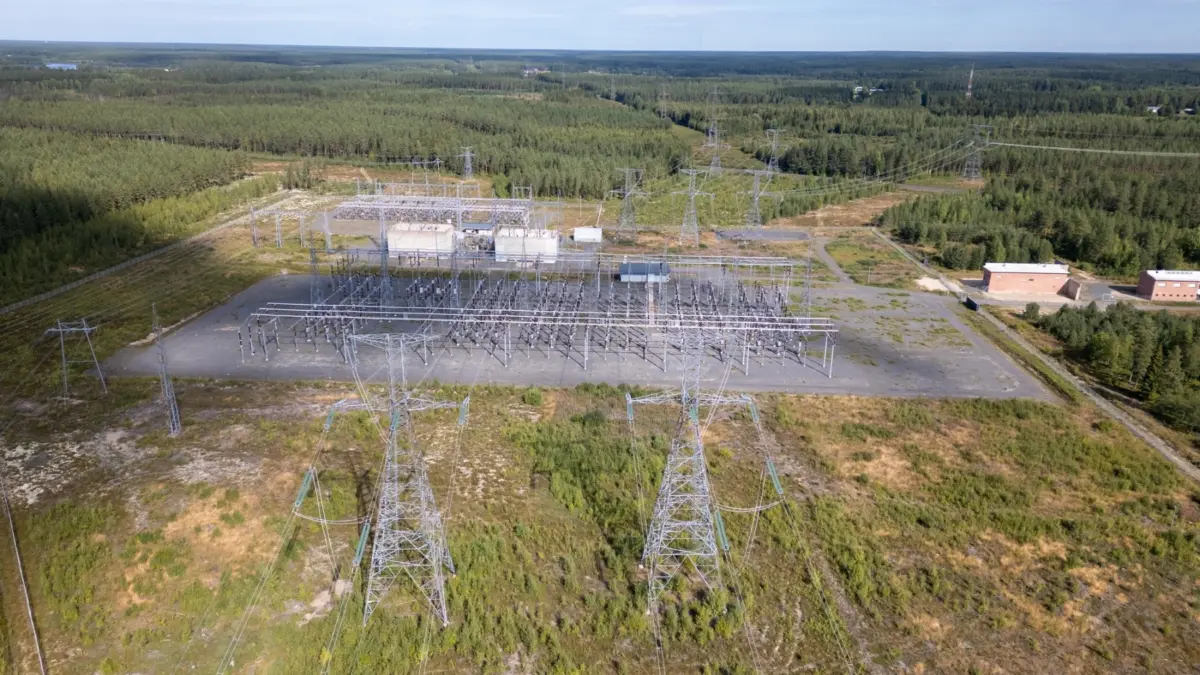
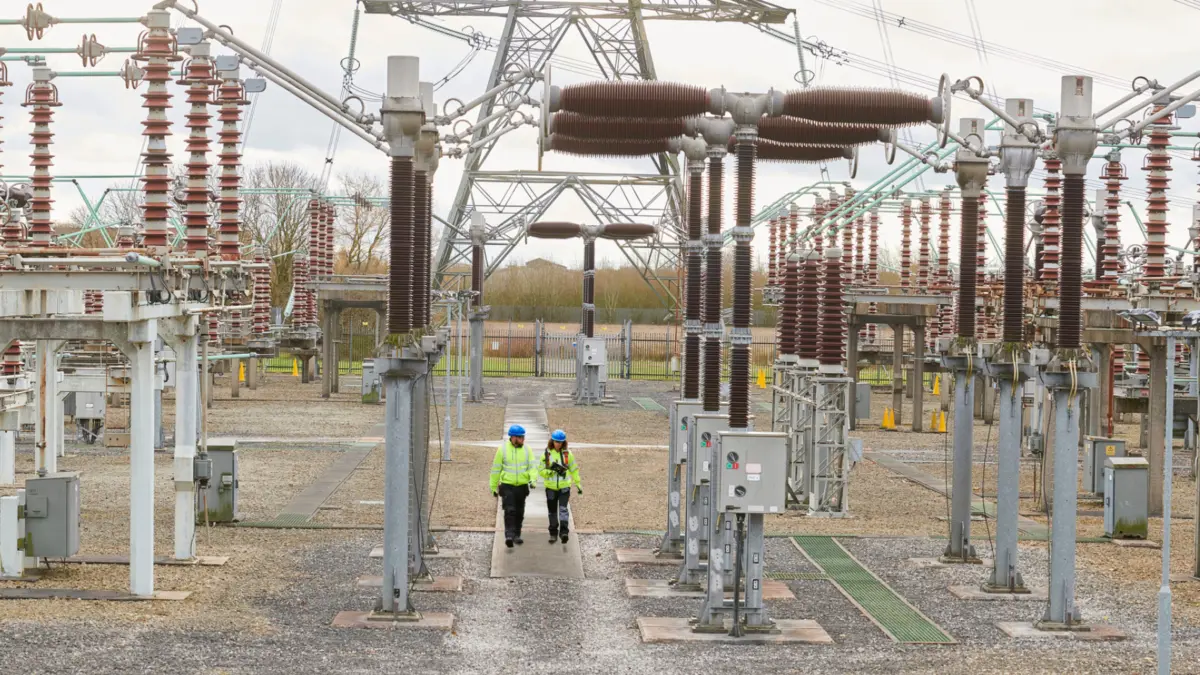
Great Britain’s energy landscape is facing an unprecedented reckoning. Driven by the explosive growth of artificial intelligence, cloud computing, and massive hyper-scale data architectures, contracted demand offers for the nation’s electrical grid skyrocketed from 41 gigawatts (GW) in November 2024 to an astonishing 125 GW by June 2025.
Of this massive pipeline, data centers alone account for approximately 73 GW. This unprecedented surge has overwhelmed transmission networks, created severe bottlenecks, and threatened to derail the country’s decarbonization timelines.
In response, energy regulator Ofgem has introduced a sweeping, high-stakes proposal designed to unclog the transmission queue. At the heart of this strategy is a refundable Data Centre Commitment Fee paired with stringent deliverability milestones. Under the proposed framework, large-scale data center developments would no longer secure grid access merely by applying first. Instead, developers must prove their projects are commercially mature, financially robust, and operationally viable before locking down critical power capacity.
While the initiative aims to purge speculative applications clogging the system, it risks creating a polarized, two-tier market. Major hyperscalers and established operators with deep capital reserves stand to benefit, while smaller developers and new market entrants face steep financial barriers and potential operational delays. As the consultation period moves toward its September 16 deadline, the data center industry is grappling with a new reality: getting a project built in Great Britain will no longer depend simply on a place in line, but on hard proof of delivery.
Detailed Chronology: From First-Come-First-Served to "Prove-It"
For decades, Great Britain’s electricity transmission network operated on a chronological, first-come, first-served basis. Developers submitted connection applications, secured a spot in the queue, and reserved capacity while they slowly worked out land acquisition, financing, and technical designs.
For standard industrial developments, this legacy model worked adequately. However, the dawn of the generative AI era completely upended traditional power demand metrics.
The AI Gold Rush and Queue Saturation
Between late 2024 and mid-2025, a wave of speculative data center proposals flooded the grid queue. Attracted by favorable digital infrastructure ecosystems and proximity to European fiber hubs, developers rushed to secure capacity. Many applications were speculative—preliminary flags planted by entities hoping to flip land rights or secure grid access ahead of actual capital deployment.
By mid-2025, total connection requests reached 125 GW, nearly tripling in less than eight months. With data centers making up 73 GW of that total, grid operators realized the existing queue was heavily distorted. Nonviable, speculative applications were blocking credible projects, delaying regional network planning, and pushing back critical connections needed for the UK’s broader energy transition.
The Ofgem Intervention
Recognizing that the queue had become a speculative parking lot rather than a functional development pipeline, Ofgem intervened. The regulator launched a formal consultation on a targeted policy intervention: requiring large data center developments to put serious financial skin in the game.
Instead of treating grid capacity as a free or low-cost commodity, Ofgem proposed shifting the system to a "proof-of-delivery" model. Under this framework, maintaining a place in the queue requires continuous validation of project momentum, stripping away capacity from developers who cannot demonstrate a realistic, funded path to completion.
Supporting Context & Metrics: Financial Hurdles and Market Realities
The centerpiece of Ofgem’s proposal is the Data Centre Commitment Fee, which carries significant financial implications for developers.
Breaking Down the Costs
Ofgem has proposed setting the commitment fee between £237,500 and £712,500 per megawatt (MW)—roughly equivalent to $315,000 to $946,000 per MW. According to independent analyses by law firm Walker Morris, this fee represents approximately 2.5% to 7.5% of average total project development costs.
To contextualize these numbers:
- For a standard 50 MW data center campus, the security requirement would range from £11.8 million to £35.6 million.
- For a massive 100 MW hyperscale facility, the financial commitment jumps to between £23.8 million and £71.3 million.
This capital outlay must be provided alongside existing transmission security requirements. While the fee is fully refundable upon successful project energization, it is entirely forfeited if the developer exits the queue early or fails to meet established milestones.
International Parallels: The Global War on Speculative Load
Great Britain is not alone in grappling with speculative grid congestion driven by AI demand. Regulators and grid operators worldwide are scrambling to protect existing ratepayers from the costs of unverified load growth:
- In the United States, regional transmission organization PJM Interconnection has proposed requiring future large-load customers—primarily data centers—to secure dedicated generation capacity or accept mandatory curtailment during resource shortages.
- Similar measures are being explored across major European markets, where transmission system operators (TSOs) are increasingly intolerant of "phantom demand" freezing grid connections.
Official Statements and Industry Perspectives
The regulatory pivot has triggered intense debate across the European digital infrastructure sector. Industry stakeholders acknowledge the necessity of clearing grid bottlenecks, but they warn against the unintended consequences of financial gatekeeping.
Balancing Diligence with Accessibility
Kristina Lesnjak, EMEA research manager at DCByte, offered a nuanced view of the proposals in an interview with Data Center Knowledge. She emphasized that while the shift from chronological queuing to deliverability-based prioritization is necessary, the execution must be transparent and fair.
"These proposals aim to make the grid queue less about who applied first and more about who can demonstrate a credible path to delivery," Lesnjak noted. "This will rule out many of the more speculative projects for prioritization straightaway, benefiting viable developments."
However, she cautioned that drawing a hard line between a speculative project and a legitimate, albeit smaller, development is fraught with difficulty. Without clear, objective benchmarks, the process risks favoring well-capitalized incumbents at the expense of market innovation.
"The process has to be transparent and set clear milestones for developers, for what evidence is required and when," Lesnjak added. "The goal should be to free up capacity from projects that are unlikely to proceed while giving serious schemes a fair opportunity to prove they can deliver."
The Threat of a Two-Tier Market
One of the most pressing concerns raised by legal and market analysts is the emergence of a two-tier data center market in Great Britain.
Hyperscalers—such as Amazon Web Services, Microsoft, Google, and major institutional operators—routinely maintain massive balance sheets capable of absorbing multimillion-pound commitment fees across multiple portfolios. For these tech giants, tying up tens of millions of pounds in refundable escrow accounts is simply the cost of doing business.
Conversely, regional developers, independent operators, and emerging market entrants often rely on phased funding models. For these players, locking up millions in capital years before a spade hits the ground can cripple cash flow and make project financing economically unviable.
"This could lead to a two-tier market, with strategic, fast-tracked projects at the head of the queue and non-strategic schemes heavily delayed," Lesnjak warned. "This could benefit those major operators and hyperscalers with an existing presence in the UK over smaller players and new entrants."
Future Outlook: Reshaping Site Selection and Power Strategy
Ofgem’s proposed commitment fee and deliverability milestones will fundamentally alter how data centers are planned, financed, and built across Great Britain. As traditional grid connections become harder and more expensive to secure, developers are forced to rethink their long-term power strategies.
1. Geographic Diversification
Historically, data center development has concentrated heavily around major digital hubs, particularly the Greater London area and key connectivity corridors. However, grid congestion in these traditional regions is acute.
Faced with steep commitment fees and transmission bottlenecks, developers will increasingly look beyond saturated markets. Northern England and Scotland—regions with high renewable energy generation capacity but lower baseline industrial demand—may see a surge of interest. By shifting development to these areas, operators can tap into stranded or underutilized green energy assets.
2. Creative Power Procurement and Off-Grid Solutions
The days of selecting a land parcel first and worrying about power procurement later are effectively over. Power strategy must now drive site selection from day one.
Smaller developers, in particular, will need to innovate to survive the new regulatory environment. This includes:
- Consortium Financing: Smaller operators may band together to co-finance regional generation assets, sharing the financial burden of power infrastructure.
- Hybrid and Microgrid Models: Combining non-firm grid connections with behind-the-meter generation—such as advanced solar, wind, battery energy storage systems (BESS), and localized small modular nuclear reactors (SMRs)—will become standard practice.
- Behind-the-Meter Colocation: Integrating data centers directly with power generation facilities allows operators to bypass traditional transmission queues entirely, mitigating regulatory risk.
3. Regulatory Evolution Beyond September
As the consultation window closes on September 16, Ofgem will review industry feedback to refine the commitment fee thresholds and milestone requirements. The final framework will set a powerful precedent for utility regulation across Europe.
Ultimately, Ofgem’s intervention marks the end of an era of unfettered, speculative expansion in Great Britain’s digital infrastructure sector. While the transition will be painful for some developers, it establishes a necessary filter to ensure that the nation’s finite electrical capacity supports projects capable of delivering real economic and technological value. For the data center industry, the message is clear: the era of holding grid capacity on speculation is over. From now on, you have to prove it.