Executive Overview
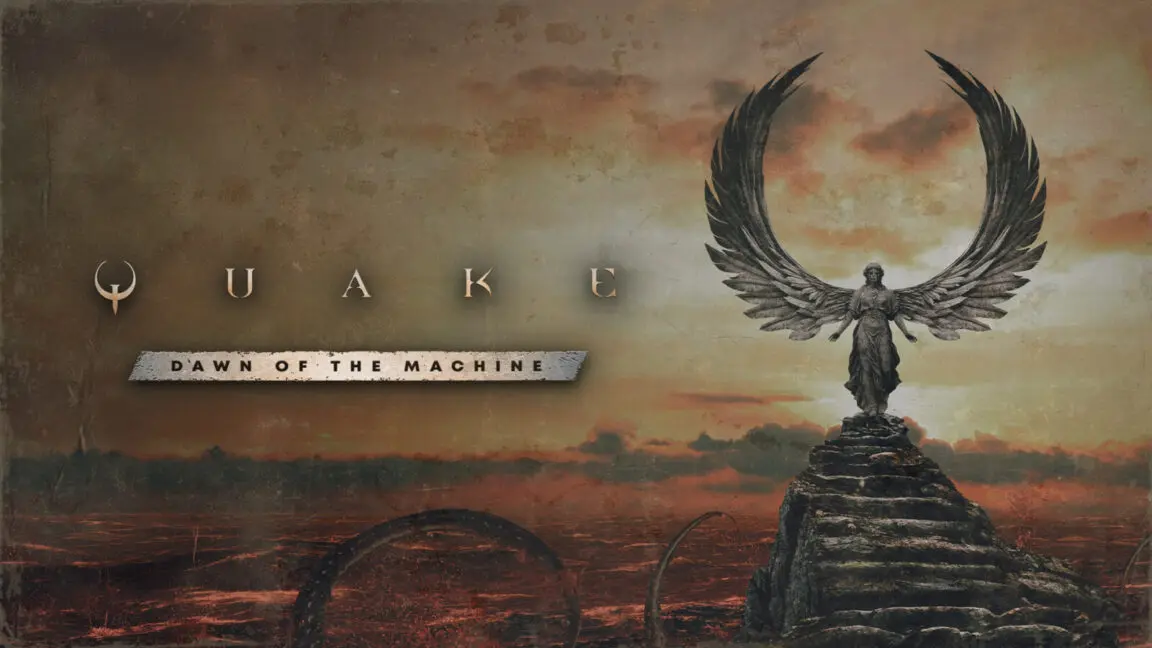
Nearly thirty years after its original release reshaped the landscape of interactive entertainment, id Software’s seminal first-person shooter, Quake, continues to receive official, high-caliber content updates. In an industry where technological obsolescence is swift and backward compatibility is frequently treated as an afterthought, the latest expansion for Quake—a time-bending, labyrinthine campaign titled Dawn of the Machine—serves as a masterclass in longevity.
Released as a completely free update for existing owners across virtually every modern gaming ecosystem, this new expansion demonstrates that classic game design, when paired with thoughtful stewardship, can rival modern releases in depth, creativity, and player engagement.
However, this triumphant release arrives under a complex and sobering industry umbrella. The launch coincides with severe economic contractions and restructuring across the gaming sector, most notably Microsoft’s sweeping layoffs affecting original Quake developer id Software. Yet, thanks to the collaborative efforts of studios like MachineGames—which has taken the lead in keeping the Quake torch burning—the franchise is experiencing a profound renaissance.
By blending retro-FPS mechanics with modern progression systems, spatial puzzles, and metroidvania-style exploration, Dawn of the Machine bridges the gap between 1996 PC gaming history and contemporary design philosophy. This report examines the mechanics of the new campaign, the studio dynamics behind its creation, the bittersweet industry climate of its release, and what this enduring legacy means for the future of classic PC gaming preservation.
Detailed Chronology: The Evolution of Quake’s Modern Renaissance
To fully appreciate the scope and ambition of Dawn of the Machine, one must trace the trajectory of Quake’s modern revival. When id Software released the original Quake in June 1996, it revolutionized the medium. It introduced fully realized 3D environments, pioneering true multi-directional look mechanics, and established a dark, Lovecraftian aesthetic that set it apart from its predecessor, Doom. Furthermore, its robust modding community and groundbreaking multiplayer infrastructure laid the structural foundation for modern eSports and online PC gaming.
For decades, official content for Quake trickled to a halt as id Software shifted its focus toward subsequent franchises like Doom, Rage, and Quake Champions. While the modding community—spurred by legendary map-makers and custom engine developers—kept the game alive through ambitious total conversions and community-curated episodes, official corporate investment in the 1996 classic seemed permanently retired.
The Remaster Era and MachineGames’ Intervention
The turning point for official modern support arrived in August 2021, when Bethesda Softworks and id Software, in collaboration with Nightdive Studios, launched a comprehensive, cross-platform remaster of Quake. This new version brought widescreen support, up to 4K resolution, enhanced character models, dynamic lighting, cross-play multiplayer, and an integrated curation of classic and newly commissioned add-ons.
Crucially, the remaster served as a blank canvas for studios within the Bethesda/Microsoft family to experiment with the timeless Quake toolkit. Chief among these was MachineGames, the Swedish studio internationally acclaimed for its work on the modern Wolfenstein series. MachineGames demonstrated an innate understanding of Quake’s atmospheric dread and fast-paced spatial combat, previously contributing acclaimed episodes like Dimension of the Past and Dimension of the Machine.
Dawn of the Machine: The Latest Chapter
The newly released campaign, Dawn of the Machine, represents the studio’s most ambitious structural experiment within the Quake universe to date. Moving away from standard linear level design, the campaign casts players once again as the battle-hardened Ranger, plunging them into a reality where time itself has fractured.
According to official design briefs and developer blogs, the premise revolves around a labyrinthine dimension where time folds back onto itself. This creates a non-linear, looping structural matrix where a player’s actions and visits in the present actively reshape the future layout of the levels.
[Present Exploration] ---> [Temporal Shift / Rune Acquisition] ---> [Altered Future Map Layout] ---> [Unsealed Paths & Secrets]Players must hunt for specialized runes scattered throughout the shifting environments. Collecting these artifacts unlocks previously sealed pathways, revealing entirely new routes, hidden combat encounters, and long-buried secrets.
Moreover, Dawn of the Machine introduces persistent health and ammunition upgrades that carry over across the campaign’s progression arc. This injects a modern sense of character progression and resource management into Quake’s classic, high-octane gunplay, transforming a traditional arcade-style shooter into a cerebral puzzle box of exploration and survival.
Supporting Context & Metrics: The Resurgence of Retro-Classic Ecosystems
The success of Quake‘s modern expansions does not exist in a vacuum. Over the past half-decade, the gaming industry has witnessed a fascinating bifurcation: while triple-A budgets have ballooned into the hundreds of millions of dollars with perilous financial stakes, classic PC gaming ecosystems have experienced a quiet, highly profitable cultural resurgence.
The Remaster Economics
Titles like Age of Empires II: Definitive Edition and the remastered Quake series have proven that retro games do not need to be completely remade from the ground up to capture modern audiences. Instead, by lowering barriers to entry—offering seamless cross-play, modern control options, and free, integrated content updates—publishers can cultivate long-tail engagement metrics that rival newly launched live-service games.
- Platform Accessibility: By making Dawn of the Machine available entirely free of charge to anyone who already owns Quake on Steam, GOG, PlayStation 4, PlayStation 5, Xbox One, Xbox Series X/S, and Nintendo Switch, Bethesda has maximized goodwill within the player base.
- Retention Through Curation: Integrating community maps and developer-led expansions directly into the game’s native campaign selection menu ensures that players do not have to jump through complicated technical hoops (such as manually editing command-line arguments or downloading third-party source ports) to experience new content.
Industry Pressures and Studio Realities
Beneath the celebratory atmosphere of new content releases lies a turbulent corporate landscape. Recent investigative reports from outlets like Ars Technica have highlighted the profound human cost of Microsoft’s aggressive reorganization of its Xbox division.
Significant layoffs have struck id Software, the legendary studio that birthed Quake, Doom, and Wolfenstein. While id Software’s primary focus in recent years has centered on the modern Doom reboot series (culminating in titles like Doom Eternal and subsequent announcements), the loss of veteran talent at the studio casts a long shadow over the future of id’s intellectual properties.
Fortunately, MachineGames—the studio primarily responsible for steering the recent renaissance of Quake content—has managed to weather the immediate storm of restructuring better than some of its sibling studios, though industry analysts warn that further contractions across the broader Xbox organization remain likely in the coming months.
This juxtaposition creates a complex industry paradox: while the creative output of these classic franchises has arguably never been healthier or more imaginative, the artists, programmers, and designers crafting these experiences operate under an increasingly precarious corporate climate.
Official Statements and Developer Insights
The design philosophy behind Dawn of the Machine emphasizes a delicate balance between respecting the nostalgic purity of 1996 code and pushing the boundaries of what an aging game engine can achieve.
In statements released alongside the update, the development team elaborated on the challenges of constructing a looping temporal dimension within the confines of Quake’s classic mechanics:
"As the battle-hardened Ranger, players survive a labyrinthine dimension where time folds back onto itself, creating a unique looping structure where each visit in the present reshapes the future."
This quote underscores a core tenet of MachineGames’ approach to retro game design: they refuse to treat retro assets merely as nostalgia-bait. Instead, they leverage the constraints of the original engine to foster creative problem-solving. By introducing a metroidvania-style progression loop where health upgrades, ammunition limits, and spatial backtracking dictate the flow of combat, the developers have modernized the gameplay loop without diluting the distinct kinetic feel that fans have cherished for nearly three decades.
Furthermore, industry commentators have pointed out that projects like Dawn of the Machine serve as vital training grounds for younger developers entering the industry. Working within the technical limitations of older engines forces programmers and level designers to prioritize pure gameplay mechanics, pacing, and spatial awareness over graphical fidelity—skills that often become obscured in modern, ultra-high-budget development pipelines.
Future Outlook: What Lies Ahead for Quake and Retro-FPS Preservation
As we look toward the horizon of the interactive entertainment industry, the trajectory of Quake offers valuable lessons on digital preservation, community cultivation, and intellectual property management.
The Preservation Imperative
With video game history increasingly threatened by digital storefront closures, shifting licensing rights, and the deprecation of online servers, official remasters that preserve original source code while enhancing modern compatibility are more important than ever. The fact that a gamer who purchased Quake digitally years ago can boot up their console or PC today and instantly access a brand-new, professionally crafted campaign at no additional cost sets a gold standard for consumer respect in the modern gaming landscape.
Potential for Future Content
Given the critical and commercial success of expansions like Dimension of the Past, Dimension of the Machine, and now Dawn of the Machine, the appetite for official Quake content is demonstrably insatiable. While the organizational restructuring at Microsoft and id Software introduces a degree of unpredictability regarding future long-term projects, the collaborative framework established between Bethesda, MachineGames, and external remaster specialists proves that the franchise does not require an active, multi-year blockbuster development cycle to remain vibrant.
Whether future updates will continue to explore experimental temporal mechanics or venture into entirely new stylistic territories remains to be seen. However, one reality is indisputable: the Ranger’s journey through the dark, surreal corridors of the Quake universe is far from over.
Conclusion
Dawn of the Machine is much more than a nostalgic nod to the past; it is a vital, mechanically inventive addition to one of the most important shooters in video game history. By fusing the lightning-fast, skill-based gunplay of 1996 with intricate, time-bending spatial puzzles and persistent progression systems, MachineGames has once again proven themselves master custodians of id Software’s legacy.
Even as the industry navigates a period of severe economic anxiety, layoffs, and corporate restructuring, the enduring brilliance of Quake reminds us of why we fell in love with interactive entertainment in the first place: tight controls, imaginative level design, and an unwavering commitment to pure, unadulterated gameplay. As long as developers continue to find new ways to fold time, twist dimensions, and challenge players within those classic dark corridors, Quake will remain timeless.