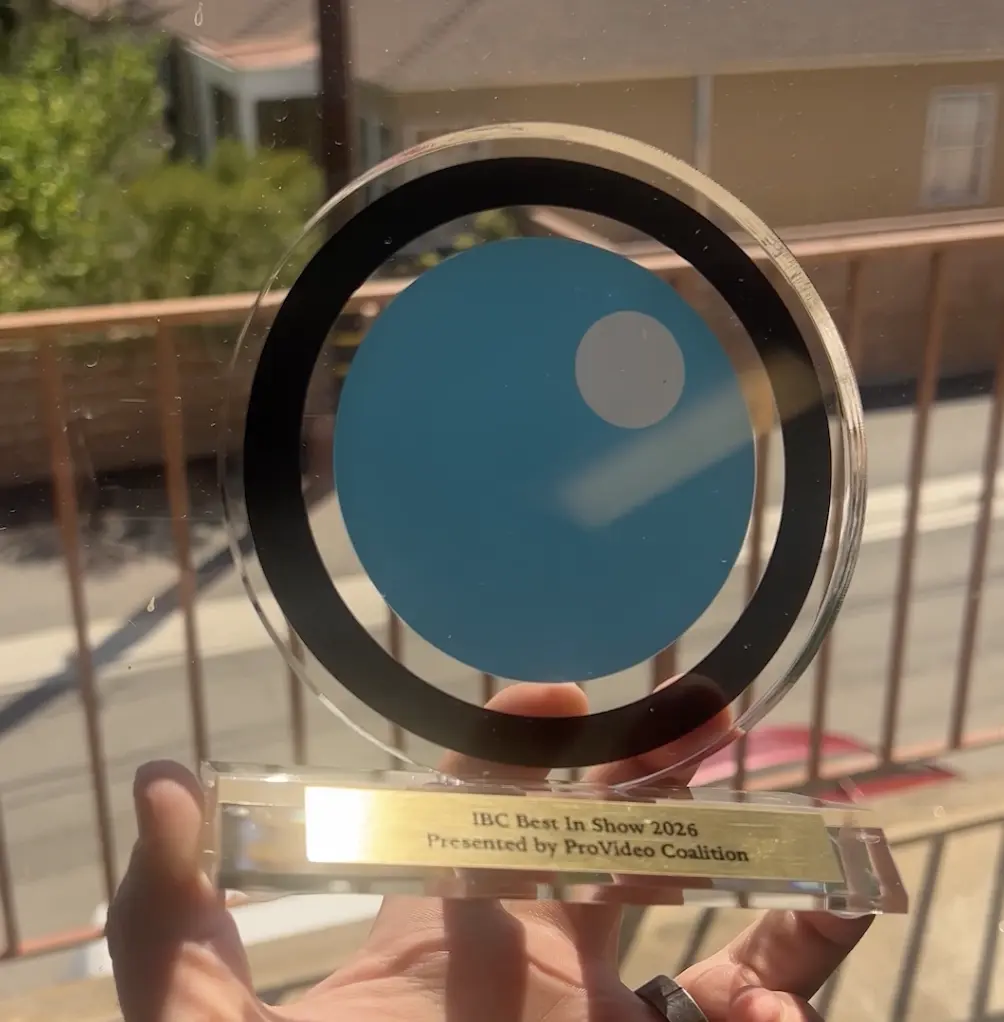
The halls of the RAI Amsterdam for IBC 2026 buzzed with an energy that differed markedly from the speculative hypestorms of previous years. Rather than chasing abstract concepts or bloated pixel counts, the industry’s leading innovators focused on solving concrete, day-to-day headaches for broadcasters, cinema crews, and independent creators. The editorial team at ProVideo Coalition spent days evaluating hundreds of new releases, analyzing everything from massive IP-routing infrastructures to ultra-compact filmmaking tools that fit into a jacket pocket.
The consensus among analysts and field professionals alike is clear: the most impressive technologies of 2026 are those that respect the user’s time, optimize bandwidth, and eliminate traditional points of failure. Here is an in-depth, investigative breakdown of the five products that earned ProVideo Coalition’s prestigious Best in Show awards at IBC 2026.
Executive Overview: The Pragmatic Turn in Media Technology
For nearly a decade, the media and entertainment (M&E) sector has been caught in a relentless cycle of format transitions—from HD to 4K, SDR to HDR, and SDI baseband to IP-based transport. However, at IBC 2026, a distinct paradigm shift emerged. The industry has entered a refinement phase. The priority is no longer just "more data," but rather "smarter data management."
The award winners of 2026 reflect this transition. In the workflow sector, the focus has shifted toward maximizing the efficiency of high-speed protocols like Thunderbolt 5 and simplifying the complex migration to SMPTE ST 2110 IP networks. In production monitoring and lighting, manufacturers are democratizing high-end features—such as daylight-viewable 2,800-nit displays and high-fidelity 3,000-watt LED engines—making them accessible and reliable under harsh real-world conditions. Meanwhile, the democratization of camera movement and stabilization has culminated in pocket-sized cinema systems capable of matching the color space and dynamic range of industry-standard A-cameras.
Detailed Chronology of Innovation: The Five Best in Show Winners
1. Best Workflow Breakthrough (Tie): OWC Thunderbolt 5 Dock with Dual HDMI
+-----------------------------------------------------------------------------+
|                      OWC THUNDERBOLT 5 DOCK WITH DUAL HDMI                  |
+-----------------------------------------------------------------------------+
|  [Front Panel]                                                              |
|  - SD Card Reader (SD 4.0)       - microSD Card Reader                      |
|  - 1x USB-A (10Gb/s)             - 1x USB-C (Thunderbolt 5 / 120Gbps)       |
|                                                                             |
|  [Rear Panel]                                                               |
|  - 2x Dedicated HDMI 2.1 Ports   - 2x Downstream Thunderbolt 5 Ports        |
|  - 1x 2.5Gb Ethernet Port        - 140W Host Power Delivery                 |
+-----------------------------------------------------------------------------+
A truly great dock is defined by its invisibility. It should seamlessly bridge your computer and your peripherals without introducing latency, connection drops, or thermal throttling. Other manufacturers have struggled to balance the massive bandwidth demands of modern high-speed storage arrays and multi-monitor setups. OWC has solved this dilemma with its new Thunderbolt 5 Dock with Dual HDMI.
Technical Architecture and Bandwidth Management
Built upon Intel’s Barlow Ridge Thunderbolt 5 controller, this dock leverages the protocol’s asymmetric bandwidth capability. While standard bidirectional mode delivers up to 80Gbps in both directions, the OWC dock can dynamically allocate up to 120Gbps of downstream bandwidth to display-heavy workflows.
Standard Bidirectional Mode:
[Host] <========= 80 Gbps =========> [Dock]

Asymmetric Bandwidth Boost (Display Heavy):
[Host] ========= 120 Gbps ========> [Dock] (Downstream)
[Host] <======== 40 Gbps ========= [Dock] (Upstream)
By integrating two dedicated, native HDMI 2.1 ports directly into the silicon layout, OWC allows editors to run dual 8K displays at 60Hz on compatible computers. Crucially, because these HDMI ports utilize dedicated internal routing, they do not siphon off the high-speed PCIe lanes required by the downstream Thunderbolt 5 ports. This means editors can run a dual-monitor editing suite while simultaneously capturing footage from a high-speed NVMe RAID array at speeds exceeding 6,000 MB/s—all through a single cable.
Thermal Design and IO Versatility
Recognizing that fan noise is the enemy of the audio suite, OWC designed a weighted, fanless aluminum enclosure. The chassis acts as a giant heatsink, dissipating the heat generated by the 140W Power Delivery module and the high-speed controller without the need for active cooling.
The front panel provides immediate access to SD and microSD 4.0 card readers, alongside USB-A and USB-C ports. The rear panel rounds out the workstation with 2.5Gb Ethernet and additional downstream Thunderbolt 5 ports, providing a neat, single-cable desktop solution for high-end digital imaging technicians (DITs) and editors.
2. Best Workflow Breakthrough (Tie): AJA FS8
+-----------------------------------------------------------------------------+
|                                  AJA FS8                                    |
|                      1RU Hybrid SDI / IP Processor                          |
+-----------------------------------------------------------------------------+
|  [Inputs]                                                                   |
|  - 12G-SDI (Up to 8 Channels)   --->   [ Frame Sync & Color Conversion ]    |
|  - SMPTE ST 2110 (50 Gbps IP)  --->   [ 459x448 Routing Matrix ]           |
|                                                                             |
|  [Outputs]                                                                  |
|  - Up to 4 Channels of Ultra HD / 8 Channels of HD                          |
|  - Dante, MADI, and ST 2110-30 Audio Integration                            |
+-----------------------------------------------------------------------------+
The transition from baseband SDI infrastructure to IP-based SMPTE ST 2110 is one of the most complex undertakings a broadcast facility can face. It requires massive investments in network switches, specialized engineering knowledge, and a delicate balancing of audio-to-video synchronization. The AJA FS8 addresses these challenges by packing an astonishing array of processing power into a compact 1RU chassis.
Processing Power in a Single Rack Unit
The FS8 is a hybrid processing powerhouse, supporting up to four channels of Ultra HD (4K) or eight channels of HD frame synchronization, format conversion, and color processing. This density is unprecedented. It allows mobile broadcast trucks (OB vans) and master control rooms to replace up to four separate conversion and synchronization devices, drastically reducing power consumption, heat generation, and rack footprint.
Comprehensive Audio and IP Routing
Where the FS8 truly shines is in its hybrid routing architecture. It acts as a bidirectional gateway between traditional 12G-SDI equipment and modern IP networks, supporting up to 50 gigabits of IP throughput directly over its SFP network interfaces.
Its internal audio matrix is massive: a 459-by-448 channel routing engine capable of mapping audio seamlessly across SDI-embedded channels, SMPTE ST 2110-30 IP audio, Dante, and MADI. Every single channel features independent sample-rate conversion, preventing the sync issues that often plague mixed-protocol environments.
Region of Interest (ROI) and Diagnostic Utilities
AJA has also integrated four independent 4K Region of Interest (ROI) scalers. These allow operators to take a single high-resolution camera feed, crop out specific portions of the image, and scale them to independent outputs—effectively turning one camera source into multiple distinct angles.
Combined with a comprehensive, browser-based web interface and robust physical network diagnostic tools, the FS8 demystifies IP workflows, making it an indispensable tool for live production teams.
3. Best Value Innovation: Atomos Shinobi 7 II
+-----------------------------------------------------------------------------+
|                             ATOMOS SHINOBI 7 II                             |
+-----------------------------------------------------------------------------+
|  - Screen: 7-inch Touchscreen (1920 x 1200)                                 |
|  - Brightness: 2,800 Nits Daylight-Viewable                                 |
|  - Exposure: EL Zone False Color System & Waveform                          |
|  - Connectivity: HDMI In/Out, USB-C Camera Control                          |
|  - Calibration: On-Device (Direct hardware LUT generation)                  |
|  - Power: Dual NP-F Slots, USB-C PD, or DC Input                            |
+-----------------------------------------------------------------------------+
For years, independent filmmakers and small-scale production teams have faced a frustrating compromise when choosing an on-camera monitor. Affordable options often suffered from dim backlights, inaccurate color rendering, and flimsy plastic builds. High-end, daylight-viewable production monitors, on the other hand, easily cost thousands of dollars. The Atomos Shinobi 7 II shatters this dynamic by offering professional-grade monitoring and camera control for just $499.
Daylight-Viewable Panel and Color Accuracy
The centerpiece of the Shinobi 7 II is its high-brightness, 7-inch touchscreen panel. Pushing a massive 2,800 nits of brightness, the monitor remains completely legible under direct, midday sunlight without requiring a bulky sun hood.
Unlike budget monitors that wash out or shift color profiles at maximum brightness, the Shinobi 7 II maintains color accuracy across its dynamic range, supporting high-bit-depth HDR monitoring pipelines.
Deep Camera Integration and Professional Exposure Tools
The Shinobi 7 II is more than a passive display; it serves as a central control hub for your camera rig. Through USB-C and HDMI connection protocols, the monitor supports camera control for a wide range of mirrorless and cinema cameras. Operators can adjust focus via touch, change exposure parameters, trigger recording, and adjust camera settings directly from the monitor interface.
| Feature | Shinobi 7 II Specification | Production Benefit |
|---|---|---|
| Peak Brightness | 2,800 Nits | Complete outdoor visibility without a hood |
| Exposure Control | EL Zone False Color & Waveforms | Highly accurate, stop-based exposure metering |
| Calibration | Direct On-Device (Hardware-based) | Consistent color fidelity without computer assistance |
| Power Options | Dual NP-F, USB-C PD, DC Input | Versatile power configurations for any rig |
Furthermore, the inclusion of Ed Lachman’s EL Zone false color system—which maps exposure values directly to stop-based increments rather than arbitrary IRE percentages—makes setting accurate exposures intuitive for directors of photography.
With built-in 3D LUT support, real-time waveform monitoring, and direct on-device color calibration (requiring no external computer link), the Shinobi 7 II represents an unmatched value proposition in the professional monitoring landscape.
4. Greatest Innovation: Creamsource C3
+-----------------------------------------------------------------------------+
|                              CREAMSOURCE C3                                 |
|                        3,000W Full-Color LED Fresnel                        |
+-----------------------------------------------------------------------------+
|  - Engine: 7-Color BCGLARD LED Array                                        |
|  - Output: 10,000 Lux @ 10 Meters (Full Spot)                               |
|  - Beam Angle: Motorized Zoom (18° Spot to 60° Flood)                       |
|  - Color Fidelity: CRI 98 / TLCI 98 (92%+ Rec. 2020)                        |
|  - Chassis: IP65 Weatherproof with Integrated Ballast (45 kg)               |
+-----------------------------------------------------------------------------+
Traditional high-output lighting has long relied on HMI (Hydrargyrum Medium-arc Iodide) fixtures. While powerful, HMIs are hot, fragile, power-hungry, and limited to a single color temperature. LED alternatives have emerged, but they historically struggled to match the raw punch and optical precision of a true Fresnel glass lens. The Creamsource C3 changes the game, merging the physical performance of a massive traditional Fresnel with the absolute color control of modern solid-state technology.
The 7-Color BCGLARD Engine
At the heart of the C3’s performance is its proprietary BCGLARD (Blue, Cyan, Green, Lime, Amber, Red, Deep Red) seven-color LED engine. By utilizing seven distinct emitter wavelengths rather than standard RGBW arrays, the C3 fills in the spectral gaps that often lead to muddy skin tones and inaccurate color rendering.
The fixture covers more than 92 percent of the massive Rec. 2020 color space, while maintaining a typical CRI and TLCI rating of 98. This ensures that whether you are lighting a subtle, warm interior or a highly saturated sci-fi fantasy environment, the color remains exceptionally pure and consistent.
Motorized Optical Control and Extreme Output
Generating 3,000 watts of raw LED power, the C3 features a motorized optical assembly that moves a physical glass Fresnel lens. This allows gaffers to adjust the beam angle from a tight 18-degree spot to a wide 60-degree flood.
At full spot, the fixture projects an impressive 10,000 lux at a distance of ten meters. The light pool behaves exactly like a traditional tungsten or HMI Fresnel: it produces clean, single-source shadows, a beautifully smooth edge roll-off, and works perfectly with traditional barndoors.
Spot Mode (18°):
[C3 Fixture] =========== 10,000 Lux @ 10m ===========> [Intense, Focused Beam]

Flood Mode (60°):
[C3 Fixture] =======================================> [Wide, Even Wash]
Ruggedized Construction for Virtual and Practical Sets
Despite its immense power, the C3 is built for the rigors of modern film sets. The ballast is entirely integrated into the IP65-rated weatherproof housing, eliminating the need for heavy external control boxes and messy head cables.
While the 45-kilogram fixture requires sturdy support, its protective external cage is designed for easy rigging, manual panning, or remote DMX/RDM control, making it a natural fit for both virtual production volumes and traditional location shooting.
5. Grand Prize: DJI Osmo Pocket 4P
+-----------------------------------------------------------------------------+
|                            DJI OSMO POCKET 4P                               |
+-----------------------------------------------------------------------------+
|  [Dual Optical Array]                                                       |
|  - Camera A: 20mm-equivalent Wide Lens (D-Log 2, 17 Stops Dynamic Range)     |
|  - Camera B: 60mm-equivalent Telephoto Lens                                 |
|                                                                             |
|  [Stabilization & Tracking]                                                 |
|  - 3-Axis Mechanical Gimbal                                                 |
|  - Multi-Object Intelligent Tracking (Vehicles, Products, Animals)          |
|                                                                             |
|  [Workflow Integration]                                                     |
|  - Magnetic ND Filter Compatibility                                         |
|  - Professional D-Log 2 Color Profile Pipeline                              |
+-----------------------------------------------------------------------------+
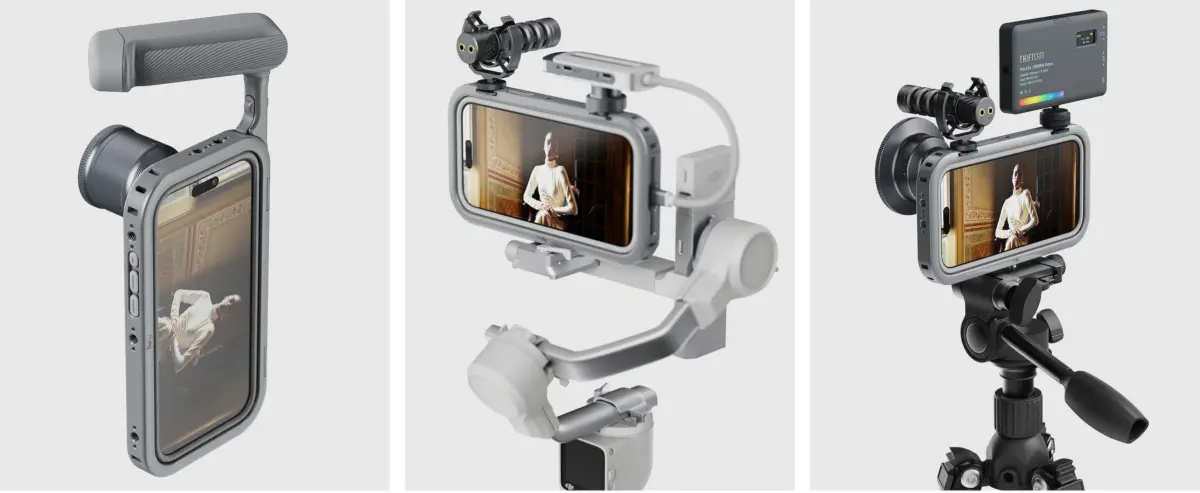
The announcement of the DJI Osmo Pocket 4P was met with immense excitement at IBC 2026. While previous iterations of the Pocket series were viewed as high-end consumer vlogging devices, the "4P" designation marks a definitive leap into professional cinema workflows. DJI has packed an unprecedented level of imaging performance, optical versatility, and automation into a device that literally fits into your pocket.
Dual-Lens Cinematic Architecture
The most significant physical evolution of the Pocket 4P is its dual-lens configuration. Rather than relying on a single wide-angle lens and digital crop, the 4P features two distinct, prime optical systems on its stabilized head: a 20mm-equivalent wide lens and a 60mm-equivalent telephoto lens.
This gives filmmakers the ability to instantly switch from an expansive establishing shot to a tight, cinematic portrait or product detail, without any loss of optical resolution or depth-of-field characteristics.
17 Stops of Dynamic Range and D-Log 2 Integration
The wide-angle camera sensor features an advanced architecture that delivers a claimed 17 stops of dynamic range when shooting in DJI’s professional D-Log 2 color profile. This matches the highlight recovery and shadow retention capabilities of many high-end cinema cameras.
As a result, footage shot on the Pocket 4P can be seamlessly integrated into color grading timelines alongside footage from Alexa, RED, or Sony Venice systems, making it an excellent option for capturing high-quality B-roll, insert shots, or discreet pick-ups.
Next-Generation Tracking and Mechanical Stabilization
The Pocket 4P’s 3-axis mechanical gimbal is paired with a highly upgraded, on-board AI processing chip. Tracking is no longer limited to basic facial recognition. The device can now lock onto and track:
- Moving vehicles in high-speed chases
- Products on a rotating tabletop turntable
- Animals moving unpredictably through frame
- Specific structural details on a building
This allows solo operators, travel documentary crews, and commercial filmmakers to capture complex, multi-axis moving shots that would normally require a dedicated camera operator, a focus puller, and a massive stabilizer rig.
Supporting Context & Metrics: Industry Trends Driving Adoption
The products recognized at IBC 2026 are not operating in a vacuum. They are direct responses to the macroeconomic and technical pressures currently shaping the media and entertainment landscape.
The High-Speed Storage Bottleneck
As production pipelines transition to 8K and high-frame-rate 4K RAW capture, the local workstation bottleneck has shifted from processing power to data bandwidth. A single stream of 8K uncompressed footage can easily saturate a standard USB-C or Thunderbolt 4 connection.
By delivering true Thunderbolt 5 support, OWC is facilitating a massive jump in external drive performance, allowing editors to work directly off high-speed RAID arrays without needing to transfer footage to local internal drives first.
Max Interface Bandwidth Comparison:
Thunderbolt 4: [████████████████████] 40 Gbps
Thunderbolt 5: [████████████████████████████████████████] 80 Gbps (Up to 120 Gbps)
The Cost of IP Transition
For years, the sheer cost of transitioning to IP video routing kept smaller broadcasters locked into legacy HD-SDI infrastructures. Upgrading required not only new routing switchers but also expensive external color correctors, frame synchronizers, and audio embedders/de-embedders.
By consolidating all of these functions into a single 1RU, multi-channel system, the AJA FS8 significantly lowers the financial barrier to entry, accelerating the global transition to SMPTE ST 2110.
Official Statements: Industry Leaders Weigh In
Speaking on the floor of IBC 2026, industry representatives highlighted the philosophy behind these award-winning designs.
Larry O’Connor, Founder and CEO of OWC, emphasized the importance of workflow reliability:
"We designed the Thunderbolt 5 Dock to solve a simple but critical problem: editors shouldn’t have to choose between display resolution and storage speed. By separating the display lanes from the data lanes, we’ve created a device that lets professionals push their hardware to the absolute limit without hitting a performance wall."
Nick Rashby, President of AJA Video Systems, discussed the design philosophy behind the FS8:
"The transition to IP can be incredibly daunting for engineering teams. With the FS8, our goal was to build a bridge between the old world and the new. By putting frame synchronization, color processing, multi-channel conversion, and complex audio routing into a single, intuitive system, we are making the migration to ST 2110 achievable for facilities of any size."
Reflecting on the Grand Prize win, a DJI Product Manager noted:
"With the Osmo Pocket 4P, we wanted to move beyond the vlogging space and deliver a tool that DP’s and cinema crews would genuinely want in their camera bags. Adding the 60mm lens and our D-Log 2 color science means that this pocket-sized camera can now hold its own alongside massive cinema rigs on a professional set."
Future Outlook: What These Technologies Tell Us About Tomorrow
The innovations showcased at IBC 2026 paint a clear picture of where production technology is headed over the next five years.
                      FUTURE PRODUCTION PIPELINE

  [ Capture ]              [ Processing ]           [ Monitoring & Post ]
  DJI Osmo Pocket 4P       AJA FS8                  Atomos Shinobi 7 II
  (Ultra-mobile,           (High-density            (On-set HDR reference)
   17-stop D-Log 2)         SDI/IP routing)                 │
        │                        │                          ▼
        ▼                        ▼                  OWC Thunderbolt 5 Dock
  Creamsource C3           SMPTE ST 2110            (High-speed TB5 storage
  (High-fidelity LED)      IP Broadcast Network      & dual 8K editing suite)
The Rise of Ultra-Mobile Professional Imaging
The success of the DJI Osmo Pocket 4P signals a future where the physical size of a camera is no longer a limiting factor for image quality. As sensor technology and optics continue to shrink, we will see highly specialized, ultra-mobile cameras taking on roles that were once reserved exclusively for traditional, heavy camera packages. This will lead to more dynamic, intimate cinematography, particularly in documentary, action, and independent narrative filmmaking.
Unified IP Broadcast Ecosystems
Devices like the AJA FS8 are paving the way for a future where the distinction between local and remote production disappears. As IP conversion becomes cheaper, more compact, and more reliable, live events will increasingly be mixed, colored, and broadcast from remote centralized hubs located thousands of miles from the actual venue, drastically reducing the carbon footprint and travel costs of modern sports and news broadcasting.
Democratized High-End Tools
Finally, products like the Atomos Shinobi 7 II and the Creamsource C3 demonstrate that the gap between high-end Hollywood productions and independent creators is closing rapidly. When a $499 monitor offers daylight-viewable exposure accuracy and an LED fixture can go toe-to-toe with a massive HMI Fresnel, the playing field is leveled. Ultimately, the future of filmmaking will be decided not by who has the biggest budget, but by who has the most compelling story to tell.