Executive Overview
The digital commerce landscape is undergoing a profound structural evolution, driven by the rapid maturation of generative artificial intelligence, shifting cross-border logistics expectations, and the decentralization of digital retail channels. In this week’s comprehensive briefing, we examine the critical platform updates, infrastructure enhancements, and capital maneuvers reshaping how merchants operate, market, and fulfill orders globally.
From major foundational software updates like WooCommerce 11.0 to massive venture capital infusions into social commerce giants like Whatnot—which recently secured a landmark $545 million Series G funding round—the velocity of change in ecommerce technology has rarely been higher. Key trends dominating this cycle include the rise of agentic commerce, wherein large language models (LLMs) and autonomous agents interact directly with catalog layers; the compression of global supply chains, exemplified by Cainiao’s new three-day cross-border shipping lanes; and the convergence of post-purchase monetization with real-time decisioning engines like Rokt’s Brain V4.
Merchants are no longer merely adapting to digital storefronts; they are managing complex, multi-channel ecosystems where automation, predictive modeling, and privacy-first data strategies are prerequisites for survival. This report provides an in-depth breakdown of the latest product releases, strategic partnerships, and financial investments defining the current frontier of digital commerce.
Detailed Chronology of Platform Releases and Technology Updates
Core Infrastructure and Platform Upgrades
WooCommerce 11.0: Optimizing Orders and Checkout Recovery
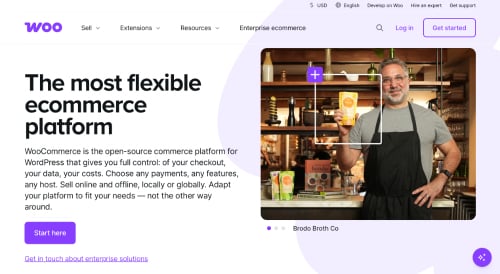
As one of the world’s most widely deployed open-source ecommerce platforms, WooCommerce has rolled out version 11.0, focusing heavily on database query efficiency and conversion optimization. The update introduces a redesigned order-screening architecture that dramatically accelerates query speeds. For high-volume merchants, this optimization resolves persistent server timeouts and minimizes empty search counts during peak traffic events. Furthermore, WooCommerce 11.0 embeds advanced Checkout Recovery tools designed to run native multivariate testing on abandoned-cart messaging, empowering store owners to systematically evaluate consumer behavior and fine-tune recovery communications.

Adobe Commerce Integrates Catalog Agent for LLM Discovery
Adobe has bolstered its enterprise-grade Adobe Commerce ecosystem (built on Magento) by introducing the Catalog Agent. This innovative feature transforms standard product detail pages into structured, machine-readable data layers optimized specifically for AI crawlers and LLM-powered discovery engines. By synthesizing existing product attributes, real-time inventory levels, dynamic pricing matrices, and relational product data, Catalog Agent ensures that enterprise merchants remain visible as consumer search behavior shifts away from traditional search engines toward conversational, AI-driven product discovery interfaces. Additionally, Adobe expanded its ecosystem footprint by releasing a powerful creative and productivity plugin for ChatGPT, granting users direct access to over 70 tools from Adobe’s suite—ranging from automated photo editing to PDF generation—straight within conversational chat workflows.
Kibo Commerce Unveils Unified Agentic Platform
Kibo Commerce has released the latest iteration of its composable commerce and order management system, featuring a model-agnostic agentic AI framework. Designed to integrate seamlessly with any major large language model, the architecture is structured around five core operational pillars: configure, explain, analyze, engage, and optimize. This unified model bridges the gap between front-end customer engagement and back-end order management, giving enterprise brands unprecedented autonomy in automating complex workflows.
Fulfillment, Logistics, and Global Supply Chain Innovations
Cainiao Launches 3-Day Cross-Border Delivery Service
Addressing the perpetual consumer demand for faster international shipping, Cainiao Group—the global logistics arm of Alibaba—has officially launched a guaranteed three-day door-to-door parcel delivery service spanning 15 key international trade lanes. This ambitious service leverages Cainiao’s vertically integrated logistics infrastructure, harmonizing air cargo networks, localized ground transportation, automated customs clearance procedures, and advanced fulfillment hubs to drastically compress cross-border transit times for global merchants.
ShipBob Introduces Anthropic-Verified AI Fulfillment Suite
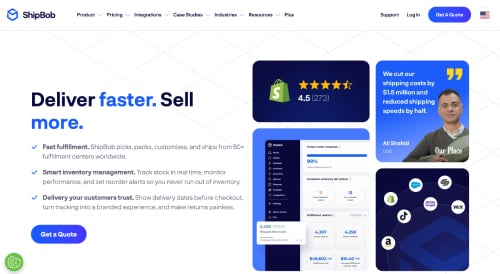
Fulfillment provider ShipBob has overhauled its supply chain technology stack by introducing a comprehensive AI suite embedded across both its merchant-facing dashboard and warehouse floor operations. Anchored by the Model Context Protocol (MCP), ShipBob’s AI suite connects live operational data directly to artificial intelligence systems. Merchants can now interact with their supply chain operations conversationally via a dedicated Claude connector or through "Bobby," ShipBob’s embedded in-dashboard AI agent, marking a significant leap forward in warehouse automation and inventory visibility.
Marketing, AI Automation, and Conversion Tools
AI Bulk Listing Generator Targets Multi-Ecosystem Sellers
To alleviate the administrative burden of catalog management, the newly launched AI Bulk Listing Generator enables merchants to automate the creation of thousands of product listings within minutes. By importing structured product spreadsheets, users can generate rich, brand-consistent listings at scale. The platform provides native compatibility across a broad spectrum of major ecommerce ecosystems, including Shopify, WooCommerce, Etsy, Amazon, eBay, BigCommerce, and Wix.
Minty Launches Shopify App to Capture High-Intent Browser Traffic
AI-powered shopping companion Minty has bridged the gap between passive browsing and transactional conversion by launching a dedicated Shopify application. The integration allows merchants to connect their storefronts directly to Minty’s rewards and cashback network. When high-intent shoppers browse and subsequently exit a site without purchasing, Minty surfaces targeted cashback incentives across mobile environments, AI chat interfaces, and Chrome and Safari browser extensions.
Knowband Expands PrestaShop Arsenal with CRM and SEO Modules
Plugin developer Knowband has rolled out three critical enhancements for the 160,000-plus merchants utilizing the PrestaShop ecosystem. The Form Studio module allows store owners to deploy limitless customized contact and survey forms; the WhatsApp Business API CRM Module automates order confirmations, delivery tracking, and live customer service chat widgets; and the specialized Blog Module delivers an SEO-optimized publishing framework designed to capture organic search traffic.
Wunderkind and Cordial Partner on Autonomous Marketing
Digital marketing leader Wunderkind has announced a strategic partnership with cross-channel messaging platform Cordial. By fusing Wunderkind’s proprietary identity graph—which identifies anonymous website traffic—with Cordial’s advanced messaging orchestration and AI predictive models, brands can execute highly targeted, autonomous marketing campaigns across email, SMS, and other direct channels without manual segmentation.
Wayy.ai Secures $2M Pre-Seed Funding for Virtual Salesperson
Solopreneurs and small business owners have a new operational ally following the $2-million pre-seed funding round (led by Zero to One Ventures) secured by Wayy.ai. The platform functions as an automated "AI co-founder," handling complex sales workflows, prospect identification, and investor outreach. This allows lean founding teams to redirect their focus toward core product development and service delivery.
Eyeota and Zeotap Data Integrate into Amazon Demand-Side Platform (DSP)
In response to tightening global data privacy regulations, audience data provider Eyeota and identity solutions firm Zeotap Data have partnered to integrate their global audience ecosystems into the Amazon DSP. Advertisers can now leverage intent, behavioral, and interest signals to target qualified consumer segments across Amazon properties—including Prime Video and Twitch—in a fully privacy-compliant manner.
Social Commerce, Live Shopping, and Monetization
Whatnot Secures Landmark $545 Million Series G Funding
Live-shopping giant Whatnot has completed a massive $545 million Series G funding round, co-led by prominent investors ICONIQ, Lightspeed, and Avra. Driven by exploding consumer adoption, Whatnot announced that its gross merchandise volume (GMV) for August 2026 alone surpassed its entire annual GMV for 2025. The fresh capital will be deployed to accelerate international market expansion, refine seller tools, and deepen machine learning integration.
Rokt Unveils Brain V4 for Real-Time Checkout Decisioning
Post-purchase monetization platform Rokt has rolled out Brain V4, an advanced AI engine designed to optimize the final checkout experience. Drawing on real-time transactional, contextual, and consumer data, Brain V4 applies sophisticated machine learning auctions and ranking guardrails to instantly determine the most relevant cross-sell offers, product recommendations, and tailored experiences for every individual buyer.
Markable Introduces Advanced Video Editors and 3D Visuals for Creators
Social commerce platform Markable has launched two distinct AI-powered tools aimed at content creators: an automated video editor and a 3D visual generator. The video editor instantly converts raw footage into shoppable video content while automatically optimizing creator appearance, lighting, background aesthetics, and voiceover generation. Simultaneously, the 3D visual tool transforms static product images into hyper-realistic collages and marketing assets tailored for social media conversion.
Supporting Context & Metrics
To contextualize these technological leaps, market data from late 2026 indicates a structural shift in how capital and consumer attention are distributed across digital retail:
- Cross-Border Expectations: Consumer tolerance for international shipping delays has evaporated. With Cainiao’s new three-day trade lanes, logistics standards are shifting toward domestic fulfillment speeds for global goods.
- Agentic AI Adoption: The integration of platforms like Kibo Commerce, Adobe Commerce’s Catalog Agent, and ShipBob’s MCP-anchored suite highlights that B2B and B2C merchants are rapidly transitioning from static software interfaces to autonomous, API-driven agentic architectures.
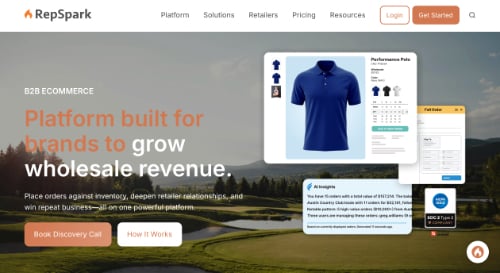
- Capital Concentration: Venture capital continues to flow heavily into proven high-growth sectors, underscored by Whatnot’s $545 million Series G and RepSpark’s $22 million growth equity investment from Headlight Partners to scale its B2B specialty retail platform.
Official Statements and Industry Insights
Industry leaders emphasize that the current technological wave is defined by integration and autonomy rather than isolated point solutions.
Regarding the intersection of logistics and AI, representatives from ShipBob noted that anchoring their fulfillment infrastructure with the Model Context Protocol allows merchants to "shift AI from a reactive chat toy into an active, autonomous operational partner on the warehouse floor."

On the enterprise discovery front, Adobe’s product development team stressed the urgency of machine-readable data layers: "As LLMs supplant traditional search engines as the primary touchpoint for consumer product discovery, merchants who fail to structure their catalogs for AI crawlers risk complete digital invisibility."
Similarly, the leadership team at Whatnot pointed to their record-shattering transaction volume as proof that "interactive, community-driven commerce is no longer an alternative channel—it is the primary engine of modern retail discovery."
Future Outlook: What Merchants Must Prepare For
As we look toward the remainder of 2026 and into 2027, ecommerce merchants must proactively adapt to three defining technological imperatives:
- AI-First Catalog Optimization: Merchants must ensure their product data architectures are fully optimized for LLM crawlers. Utilizing tools like Adobe’s Catalog Agent or bulk listing generators will become mandatory to maintain visibility across conversational search interfaces.
- Unified Omnichannel Orchestration: Point solutions are rapidly being replaced by unified, agentic platforms—such as those offered by Kibo and WooCommerce—that bridge the gap between inventory management, customer engagement, and automated recovery workflows.
- Privacy-Centric Personalization: With third-party cookies largely phased out, reliance on first-party identity graphs, clean-room data partnerships (such as Eyeota and Zeotap within Amazon DSP), and real-time checkout decision engines like Rokt Brain V4 will separate thriving brands from stagnant competitors.
By embracing these automated, high-speed, and deeply integrated technologies, merchants can not only insulate their operations against macroeconomic volatility but also position themselves to capture the next wave of digital consumer demand.