Executive Overview
The landscape of immersive imaging is undergoing a rapid, high-stakes transformation. As spatial computing headsets transition from niche enthusiast novelties to mainstream productivity and entertainment platforms, the demand for ultra-high-resolution, high-dynamic-range content has reached an all-time high. Against this backdrop, DJI has officially unveiled the Osmo 360 II—a direct successor to last year’s pioneering Osmo 360.
The Osmo 360 II represents a significant technological leap forward, introducing headlines features such as 16K 360° timelapse capabilities, user-replaceable protective lens covers, and a massive dynamic range expansion to 14.5 stops. By doubling the brightness range of its predecessor, this new iteration positions itself as a formidable competitor to Insta360’s dominant product ecosystem.
However, the launch of this hardware is not merely a story of technological triumph; it is also a narrative caught in the crosshairs of global trade disputes. Due to escalating regulatory scrutiny and ongoing legislative efforts within the United States targeting Chinese technology companies, the Osmo 360 II will not be officially available in the U.S. market at launch. This geographic exclusion sets up an intriguing market dynamic, where one of the world’s most advanced consumer imaging tools is locked out of one of its largest consumer markets.
Detailed Chronology: The Road to the Osmo 360 II
[Late 2025: Osmo 360 Launch] ──> [Early 2026: Technical Pivot to Spatial Resolution] ──> [Sept 2026: IFA Berlin Debut] ──> [Late 2026: Global Launch (Excluding USA)]The development of DJI’s 360-degree camera lineup has moved at a breakneck pace. To understand the arrival of the Osmo 360 II, one must trace the timeline of its evolution:
- Late 2025: The Foundation: DJI launched the original Osmo 360, marking its official entry into the dedicated dual-lens panoramic action camera market. While praised for its stabilization and software integration, professional creators noted limitations in dynamic range and lens durability.
- Early 2026: The Spatial Computing Boom: The widespread adoption of high-fidelity spatial headsets, such as the Apple Vision Pro and Meta Quest series, exposed a critical bottleneck: standard 5.7K or even 8K 360-degree footage lacked the pixel density required to prevent the "screen-door effect" when magnified across a user’s entire field of view. DJI engineers pivoted to prioritize extreme sensor-resolution output and advanced temporal stitching.
- September 2026: The IFA Berlin Showcase: DJI chose the prestigious IFA 2026 consumer electronics exhibition in Berlin to debut the Osmo 360 II to the public. Located at Booth No. H20-129 in Hall 20, the camera became an immediate focal point for European and Asian distributors, showcasing live demonstrations of its modular lens design and low-light capabilities.
- Late 2026: Divided Global Rollout: The camera is scheduled for a broad commercial release across European, Asian, and Middle Eastern markets within a fortnight of its IFA debut. Concurrently, DJI confirmed that U.S. distribution channels would remain closed indefinitely due to ongoing regulatory hurdles, forcing American creators to look toward import markets or alternative domestic brands.
Supporting Context & Metrics: Deconstructing the Hardware
To appreciate the engineering achievements of the Osmo 360 II, it is necessary to examine the raw metrics and structural upgrades that differentiate it from both its predecessor and its contemporary rivals.
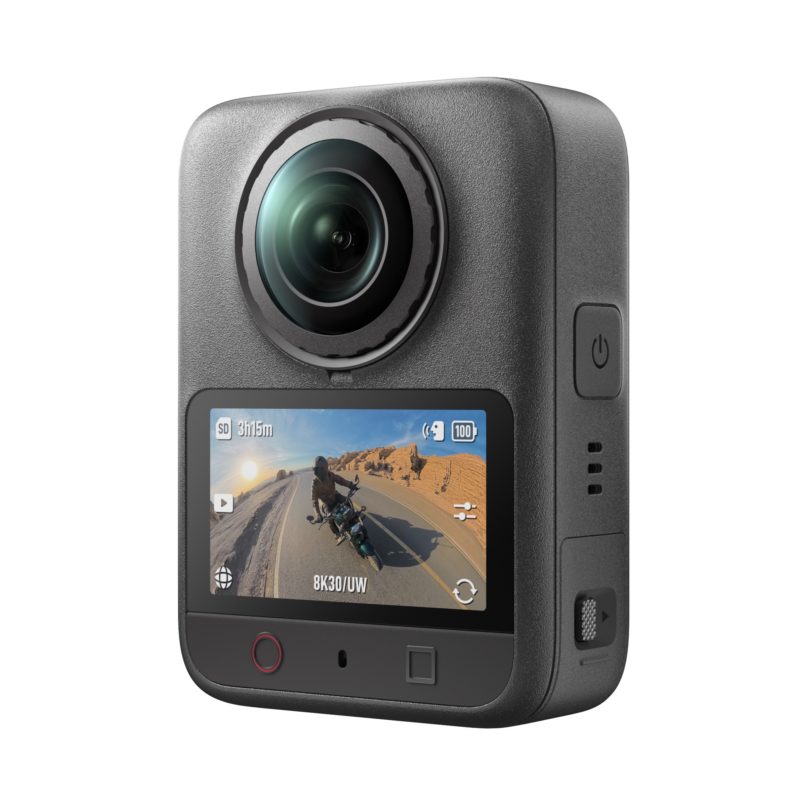
| Feature / Metric | DJI Osmo 360 (Gen 1) | DJI Osmo 360 II | Industry Standard (Avg) |
|---|---|---|---|
| Max Timelapse Resolution | 8K | 16K | 8K |
| Dynamic Range | 11.5 Stops | 14.5 Stops | 12 Stops |
| Lens Modular Design | Fixed (Factory Repair) | User-Replaceable | User-Replaceable |
| Dual/Single Lens Versatility | Yes | Yes (Enhanced Ultra-Wide) | Yes |
| U.S. Market Availability | Restricted | Banned at Launch | Unrestricted |
1. The Power of 16K Timelapse and Spatial Fidelity
While standard video recording on the Osmo 360 II operates at highly optimized, production-ready resolutions, the inclusion of a dedicated 16K 360° timelapse mode is a calculated play for the future of digital preservation and virtual reality.
A 16K spherical frame contains roughly four times the pixel data of an 8K frame. When viewed on a traditional flat monitor, this resolution is imperceptible. However, when projected inside a head-mounted display (HMD) like the Apple Vision Pro, this density becomes transformative. It allows users to zoom into specific quadrants of the panoramic sphere without experiencing pixelation or compression artifacts, making it an invaluable tool for architectural documentation, landscape cinematography, and immersive art installations.
2. Sensor Performance and the 14.5-Stop Dynamic Range
Perhaps the most significant improvement for daily operators is the sensor’s expanded dynamic range, which now tops out at 14.5 stops. In practical terms, this represents a complete doubling of the camera’s brightness range capacity.
Standard Action Camera Range:   [████████████░░░] (11-12 Stops - Blown Highlights / Muddy Shadows)
Osmo 360 II Dynamic Range:      [███████████████] (14.5 Stops - Balanced Sky & Shadow Detail)
In 360-degree videography, controlling lighting is notoriously difficult; because the camera captures every direction simultaneously, creators cannot hide light fixtures or avoid shooting directly into the sun. A dynamic range of 14.5 stops ensures that even when shooting in harsh midday sun, the camera can preserve delicate cloud details in the sky while simultaneously resolving shadow detail in dark, ground-level environments (such as during ice climbing or deep-woods mountain biking).
3. Modular Engineering: User-Replaceable Lenses
One of the primary vulnerabilities of any 360-degree camera is its exposed, bulbous lenses. Unlike standard action cameras with recessed flat glass, 360-degree lenses protrude outward to capture a hemispherical field of view.
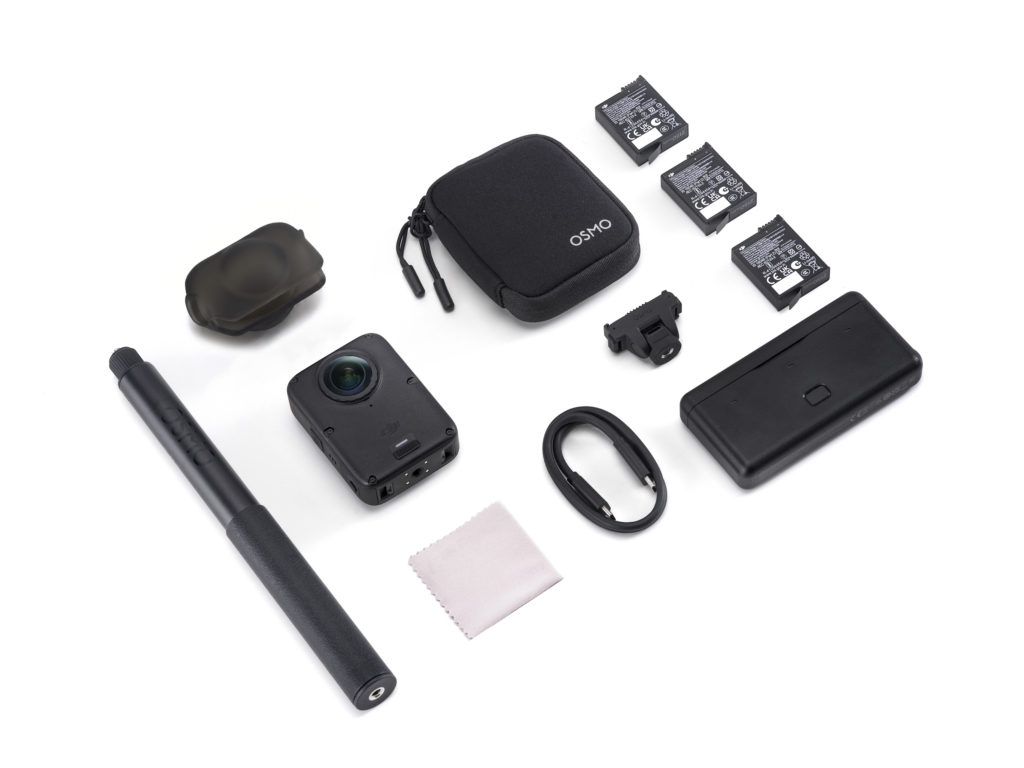
Addressing a major pain point of the original model, DJI has implemented a user-replaceable lens cover system. If a lens is scratched during rugged outdoor activities, creators no longer face the costly and time-consuming prospect of sending the entire unit back to a DJI service center. This modularity matches the physical reliability standards set by competitors like Insta360, making the camera viable for high-impact sports, motorcycle mounting, and industrial inspections.
Post-Production Workflows and the NLE Ecosystem
The high-resolution files generated by the Osmo 360 II require a robust post-production pipeline. For professional editors, capturing 360-degree footage is only the first step; the true creative work occurs during the "reframing" process, where a spherical video is mapped down to a standard 16:9 frame, allowing the editor to program virtual pan, tilt, and zoom movements.
[Raw 360° Dual-Lens Footage]
       │
       ▼ (Stitching via DJI Studio)
[Stitched Equirectangular Master File]
       │
       ▼ (Imported to Non-Linear Editor / NLE)
┌─────────────────────────────────────────┐
│ Final Cut Pro / Premiere Pro            │
│  └─ Keyframe Toolbox (Reframing plugin) │
└─────────────────────────────────────────┘
       │
       ▼ (Virtual Pan, Tilt, & Zoom applied)
[Polished 16:9 Action Sequence]
With the release of the Osmo 360 II, software developers are already updating their tools to accommodate the massive data throughput. For instance, post-production utilities like Keyframe Toolbox—a popular reframing solution for Apple’s Final Cut Pro—have recently added specialized 360° Reframing support. This integration allows editors to manipulate the high-fidelity files of the Osmo 360 II natively within Final Cut Pro, bypassing complex external stitching software and maintaining maximum image clarity during virtual camera movements.
Official Positions and the Geopolitical Backdrop
The launch of the Osmo 360 II cannot be analyzed in a technological vacuum. The decision to withhold the camera from the United States at launch is a direct consequence of a deepening regulatory rift between Washington D.C. and Shenzhen.
The Legislative Impasse
Over the past several years, U.S. lawmakers have systematically targeted DJI under national security, data privacy, and economic protectionist frameworks. Legislative vehicles such as the Countering CCP Drones Act and various Federal Communications Commission (FCC) regulatory updates have sought to ban DJI products from utilizing U.S. communications infrastructure.
While these bills primarily target DJI’s enterprise and consumer drone divisions, the broader corporate sanctions have severely complicated the import, marketing, and sale of any new DJI hardware within the United States. Rather than risk inventory seizures, legal battles, or incomplete software ecosystems, DJI has opted to focus its launch efforts on friendlier regulatory environments in Europe, Asia, and Latin America.
Corporate Strategy
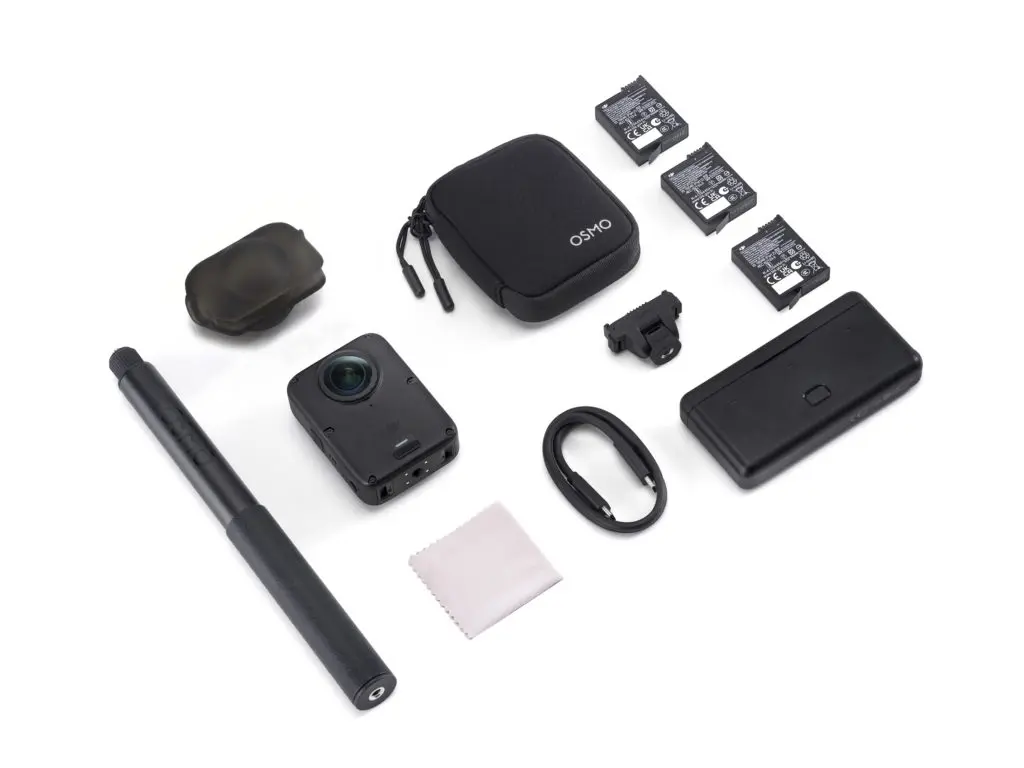
DJI’s official communications emphasize a commitment to global innovation while quietly navigating these geopolitical headwinds. At IFA Berlin, company representatives focused strictly on the technical merits of the device, showcasing the versatility of the Adventure Combo—a retail bundle that includes extended-life batteries, a reinforced selfie stick, and specialized mounting brackets designed for extreme vehicular and outdoor use.
When pressed on U.S. availability, DJI representatives pointed to their regional distribution networks, reiterating that while the product remains unavailable in the U.S. at launch, they continue to monitor global regulatory landscapes to bring their imaging technology to as many creators as possible.
Future Outlook: Immersive Media and the Next Decade of Capture
The release of the DJI Osmo 360 II highlights a broader industry trend: the convergence of action-camera ruggedness with professional-grade cinema metrics. As we look toward the future, several key developments are likely to shape this product segment:
- The Democratization of Spatial Content: As virtual reality headsets become more affordable and ergonomically viable, the line between "video creator" and "spatial environment designer" will blur. Cameras like the Osmo 360 II will become standard tools for capturing real-world environments for virtual exploration.
- AI-Assisted Tracking and Reframing: The onboard computational power of the Osmo 360 II already enables advanced subject tracking and night-mode optimization. Future software updates will likely leverage on-device machine learning to automatically identify the most compelling action in a 360-degree scene, presenting editors with pre-reframed draft sequences.
- The Rise of Secondary Import Markets: The exclusion of the U.S. market will inevitably foster a robust gray market. American professional creators, particularly those producing high-end VR content, are expected to utilize international parcel forwarding services and third-party importers to acquire the Osmo 360 II, despite the lack of official local warranty support.
- Competitive Retaliation: The introduction of 14.5 stops of dynamic range and 16K timelapses will force competitors, most notably Insta360 and GoPro, to accelerate their own hardware roadmaps. This healthy competition will drive down prices and push the boundaries of what small-format sensors can achieve.
Ultimately, the DJI Osmo 360 II is a testament to what is technically possible when high-end optical engineering meets consumer-grade action hardware. While geopolitical barriers may limit its geographic footprint, its impact on the standards of immersive filmmaking will undoubtedly be felt worldwide.