Executive Overview
On September 4, the Visual Effects Society (VES) marked a historic milestone in the entertainment technology sector by hosting its inaugural Women Who Lead Summit. Held at the Skirball Cultural Center in Los Angeles, the sold-out event convened more than 250 global industry leaders, creative visionaries, and technical pioneers. The summit served as the flagship gathering for the VES’s Women Who Lead initiative, a program launched earlier this year to address persistent gender disparities and foster systemic equity within the visual effects (VFX) and entertainment technology ecosystems.
Designed to transcend the superficiality of traditional corporate networking, the summit offered an intimate, high-impact venue for unfiltered dialogue, tactical knowledge sharing, and strategic alliance building. Over the course of two keynote addresses and two executive panels, speakers addressed the core challenges facing women in VFX—ranging from systemic barriers in career advancement to the unique trials of navigating heavily male-dominated technical and engineering roles. By focusing on actionable strategies, the event provided attendees with tangible frameworks to champion the next generation of diverse talent, restructure risk-mitigation strategies in studio hiring, and leverage emerging technologies to democratize storytelling.
+-----------------------------------------------------------------------------+
|                        VES WOMEN WHO LEAD SUMMIT                            |
|  Date: September 4                                                          |
|  Location: Skirball Cultural Center, Los Angeles, CA                        |
|  Attendance: 250+ Global Industry Professionals (Sold Out)                  |
|  Structure: 2 Keynotes | 2 Panel Discussions | Strategic Networking Sessions|
+-----------------------------------------------------------------------------+
Detailed Chronology
The agenda of the Women Who Lead Summit was strategically designed to balance personal narrative with macroeconomic and technical analysis, taking attendees on a journey from personal leadership development to industry-wide systemic reform.
+-------------------------------------------------------------------------+
|                            SUMMIT TIMELINE                              |
+-------------------------------------------------------------------------+
|  [08:30 AM] - Breakfast & Networking                                    |
|  [09:30 AM] - Opening Fireside Chat: Barbara Muschietti                 |
|  [10:45 AM] - Panel 1: Opening Doors for the Next Generation            |
|  [12:00 PM] - Networking Luncheon                                       |
|  [01:30 PM] - Panel 2: Storytelling Empowered by Technology             |
|  [02:45 PM] - Closing Keynote: Brit MacRae (KINO)                       |
|  [04:00 PM] - Closing Remarks & Future Outlook                          |
+-------------------------------------------------------------------------+
Opening Fireside Chat: Navigating Discomfort and Creating Agency
The summit commenced with an opening fireside chat featuring acclaimed film and television producer Barbara Muschietti (IT, IT: Chapter Two, IT: Welcome to Derry, They Will Kill You, Ride or Die). Moderated by Janet Muswell Hamilton, VES (Vice President of Visual Effects at HBO), the conversation bypassed standard industry platitudes to explore the realities of high-budget genre filmmaking.
Muschietti emphasized that waiting for permission or traditional career pipelines is no longer a viable strategy for underrepresented filmmakers. Instead, she urged women to aggressively "create their own opportunities" by developing proprietary IP and mastering the financial mechanics of production.
A central theme of the dialogue was the psychological resilience required to lead massive, VFX-heavy productions. Muschietti spoke candidly about the necessity of "getting comfortable with being uncomfortable," framing discomfort not as a signal of inadequacy, but as an inherent byproduct of creative innovation and leadership. She highlighted how collaborative trust between producers, directors, and VFX supervisors is the primary defense against production bottlenecks, particularly when managing complex, asset-heavy pipelines under tight studio deadlines.
Panel 1: Opening Doors for the Next Generation of Leaders
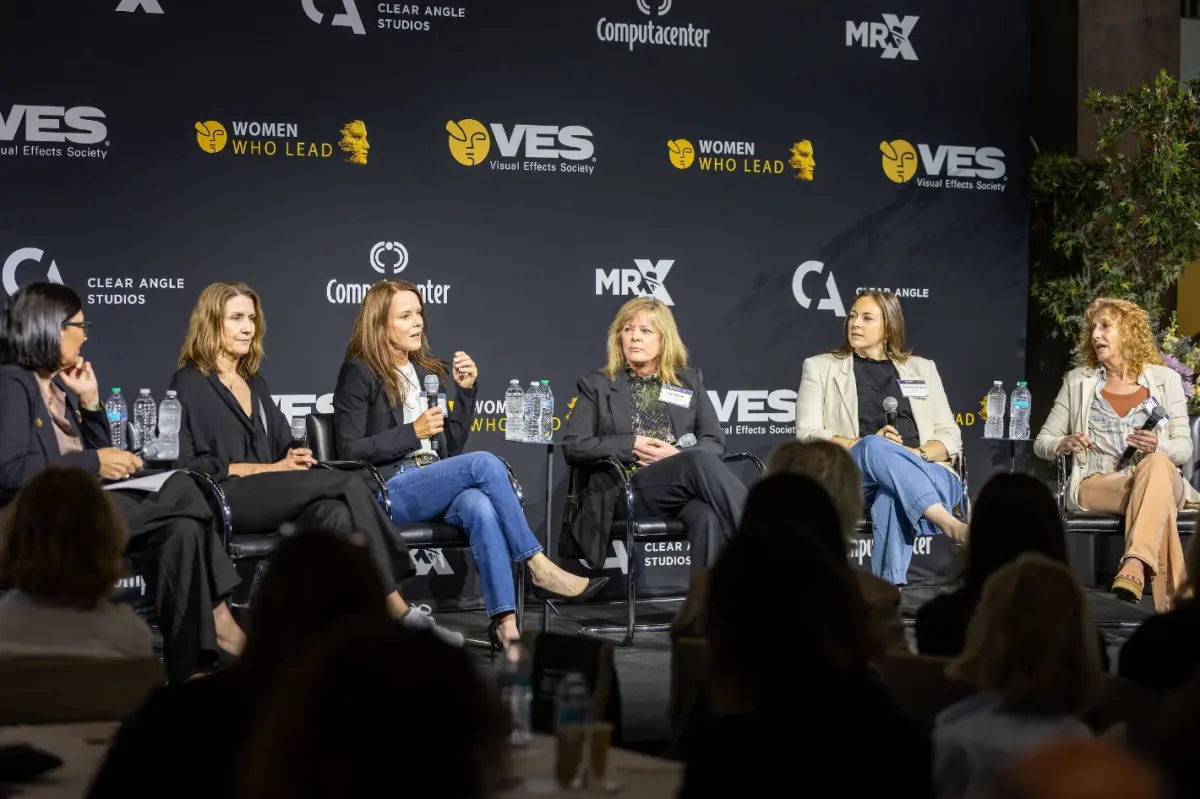
Following the opening keynote, the focus shifted from individual leadership to institutional accountability. The summit’s first panel, "Opening Doors for the Next Generation of Leaders," also moderated by Janet Muswell Hamilton, assembled an unprecedented coalition of top-tier studio VFX executives:
- Jennifer Bell (Universal Pictures)
- Kathy Chasen-Hay (Paramount Pictures)
- Anne Putnam Kolbe (Netflix)
- Christine Mansfield (Disney)
- Lori J. Nelson (Warner Bros. Pictures)
+------------------------------------------------------------------------+
| PANEL 1: "OPENING DOORS FOR THE NEXT GENERATION OF LEADERS"            |
+------------------------------------------------------------------------+
| Focus Areas:                                                           |
|   • Deconstructing the systemic pipeline bottleneck for female VFX talent|
|   • Strategies for accelerating the promotion of female VFX Supervisors  |
|   • Mentorship vs. sponsorship: Active advocacy in studio boardrooms   |
|   • Standardizing equitable hiring practices across major studio rosters|
+------------------------------------------------------------------------+
This panel addressed the systemic bottlenecks that prevent mid-career female professionals from ascending to the highest ranks of VFX leadership, particularly the coveted role of overall VFX Supervisor. The panelists analyzed the distinction between mentorship (offering advice) and sponsorship (actively using executive capital to secure roles for candidates behind closed doors).
The discussion also highlighted the critical need for studios to diversify their vendor bidding lists and demand greater diversity from the VFX houses they contract. By establishing transparent career progression pathways and demystifying the studio-side hiring process, the panelists outlined how major studios can actively dismantle the "old boys’ club" dynamic that historically dictated high-budget VFX appointments.
Panel 2: Storytelling Empowered by Technology
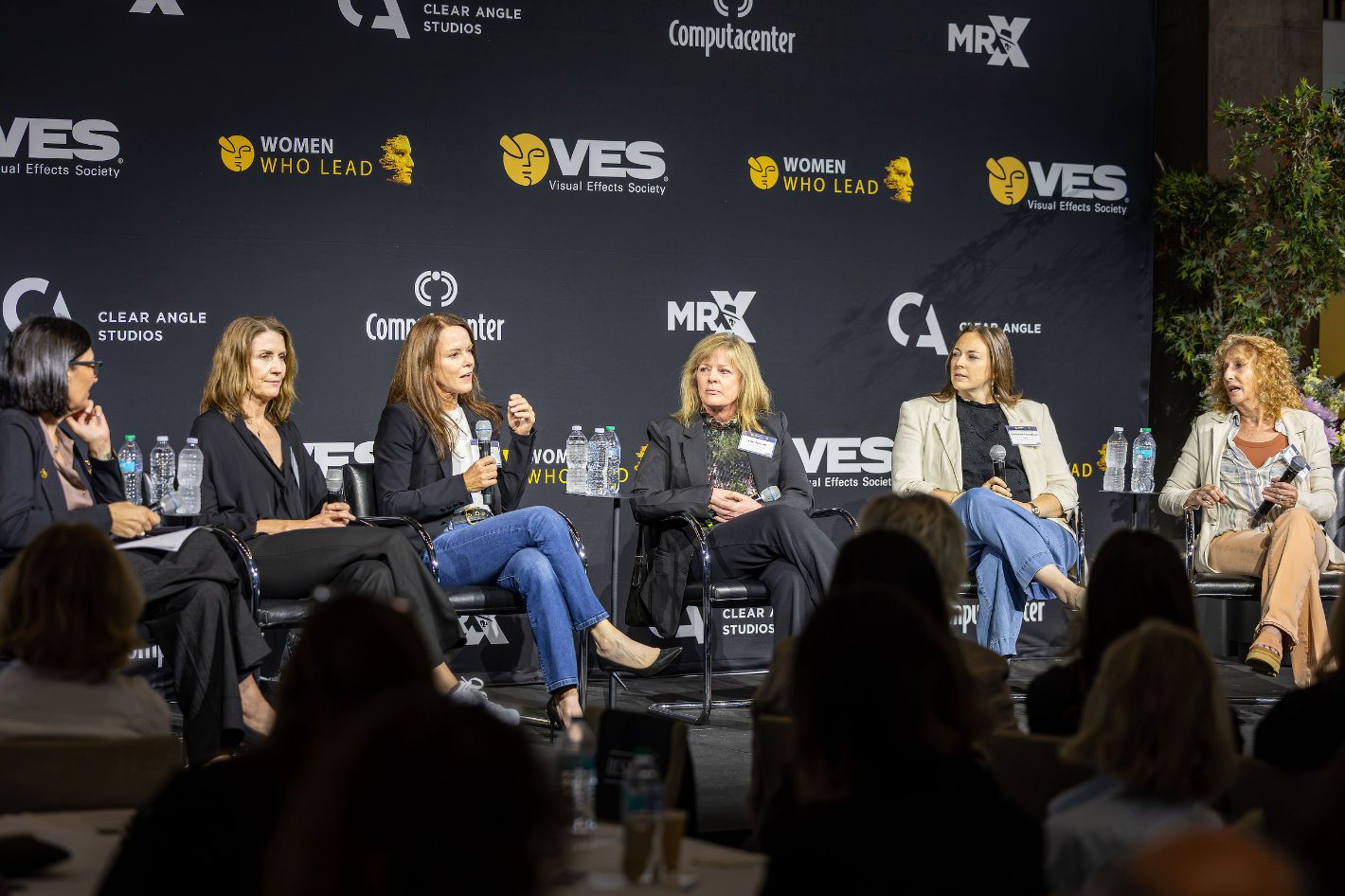
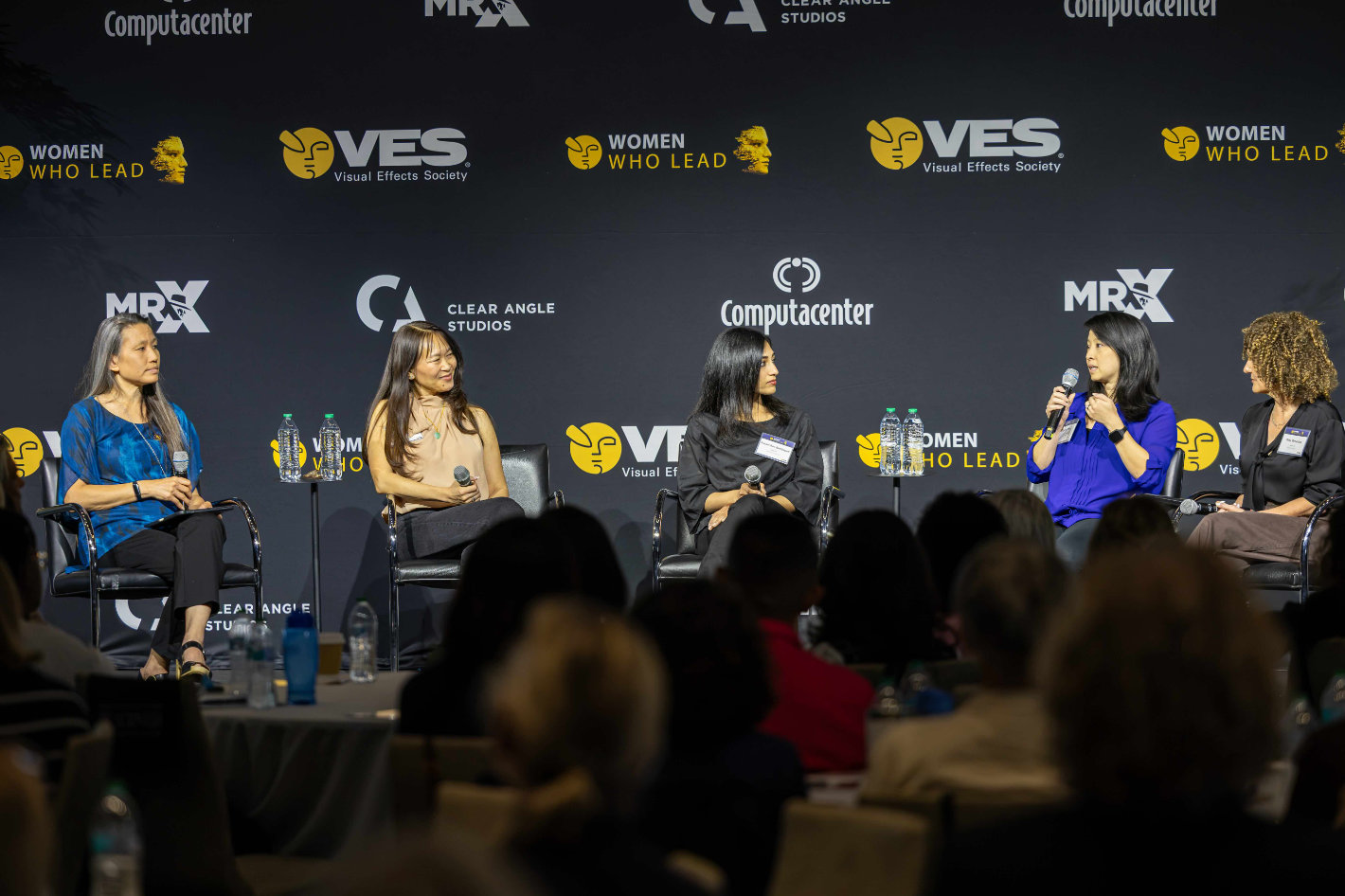
After a networking luncheon, the afternoon session shifted to the technological frontier. The second panel, "Storytelling Empowered by Technology," was moderated by Annie Chang (Vice President of Creative Technologies at NBCUniversal). The panel featured:
- Dina Benadon (Co-Founder, Super 78)
- Pavani Boddapati (VFX Supervisor, Weta FX)
- Emily Hsu (Producer, Epic Games)
- Connie Wailan Siu (Chief Operating Officer, Promise)
This panel explored how emerging technologies—including real-time rendering engines, generative AI, virtual production, and cloud-based collaborative pipelines—are reshaping the creative landscape.
+------------------------------------------------------------------------+
| PANEL 2: "STORYTELLING EMPOWERED BY TECHNOLOGY"                        |
+------------------------------------------------------------------------+
| Focus Areas:                                                           |
|   • Demystifying real-time engines (Unreal Engine) & virtual production|
|   • Navigating the gender gap in technical director (TD) & R&D roles   |
|   • The ethical integration of AI tools in creative pipelines         |
|   • Overcoming bias in technical gatekeeping and software engineering  |
+------------------------------------------------------------------------+
The speakers addressed the dual-edged sword of these innovations: while they lower the barrier to entry for independent creators, they also present new technical gatekeeping mechanisms. The panelists shared their experiences navigating heavily male-dominated engineering and software development environments.
Boddapati detailed her experience leading massive teams on visually complex films like Avatar: The Way of Water, demonstrating that technical mastery and creative vision must be integrated to lead modern VFX crews effectively. The panel concluded with a call to action for educational institutions and software developers to make technical VFX tools more accessible and to actively encourage young women to pursue pipeline engineering, coding, and technical director (TD) tracks.
Closing Keynote: Disrupting Hollywood’s Risk-Averse Model
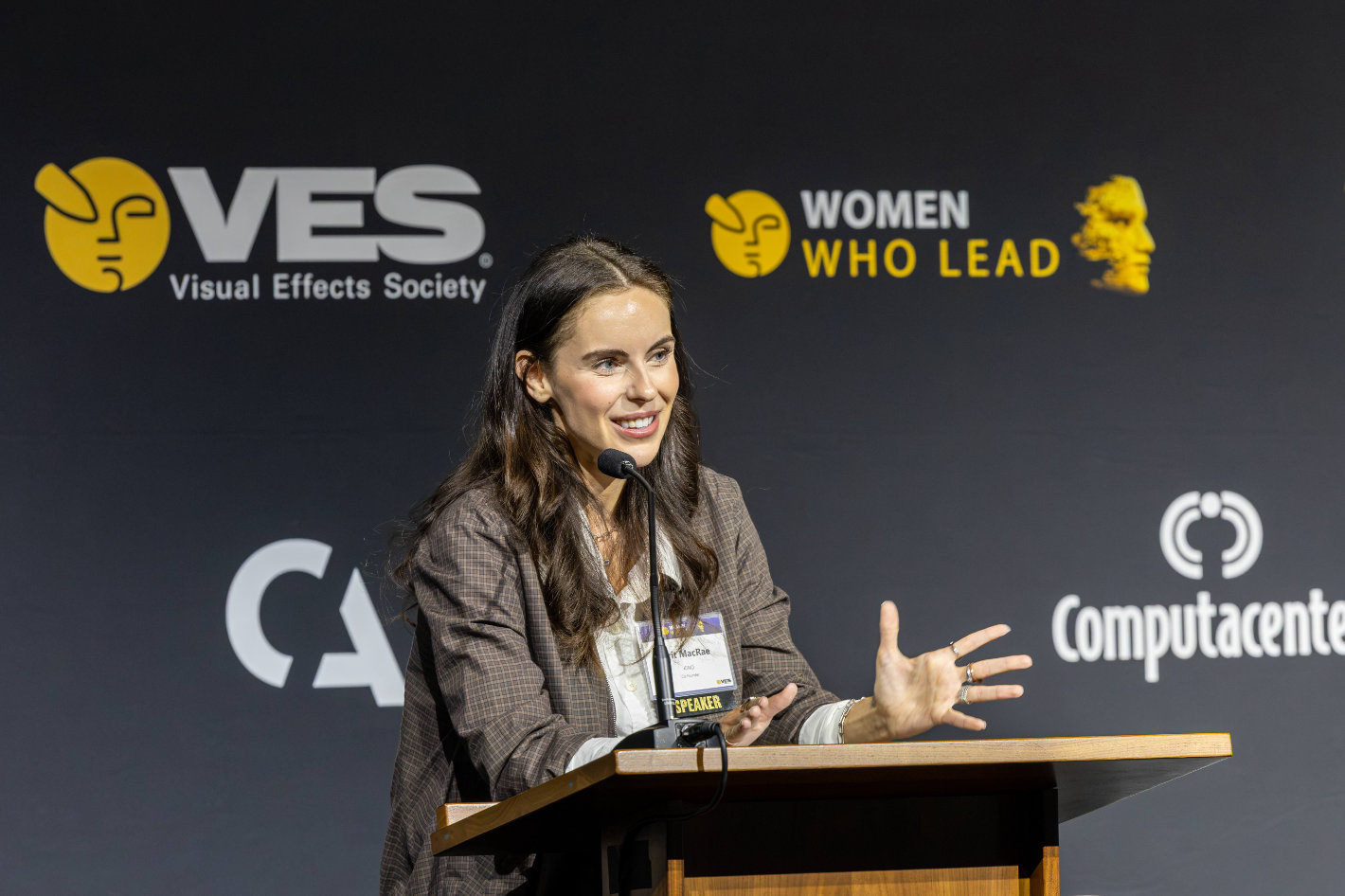
The summit concluded with a keynote from Brit MacRae, co-founder of KINO, a venture-backed technology and independent film community. MacRae’s address focused on the economic structures of modern entertainment, challenging Hollywood’s traditional risk-mitigation strategies.
MacRae argued that the industry’s reliance on legacy intellectual property and repetitive hiring practices is driven by a deep-seated fear of financial failure. However, she posited that this extreme risk aversion ultimately stifles creative innovation and perpetuates systemic inequality by locking out diverse voices who are deemed "untested" or "financial risks."
Through KINO’s model of leveraging technology to democratize film financing and audience engagement, MacRae demonstrated how independent financing structures can bypass traditional gatekeepers. She urged the audience to view risk not as an obstacle to be avoided, but as a necessary variable in the equation of creative and financial success.
Supporting Context & Metrics
To understand the significance of the VES Women Who Lead Summit, it is essential to examine the broader macroeconomic and demographic trends characterizing the visual effects industry.
The VFX Gender Disparity
Historically, the visual effects sector has lagged behind other film production departments in gender diversity. While fields such as costume design, production design, and casting have achieved relative gender parity, VFX remains highly skewed toward male professionals, particularly in leadership and highly technical roles.
According to data tracking industry-wide representation:
- VFX Supervisors: Women represent fewer than 10% of overall VFX Supervisors on top-grossing theatrical releases.
- Technical Directors & Pipeline Engineers: In deep-tech roles (software development, pipeline engineering, research & development), female representation drops to less than 15%.
- Production Management: Conversely, women make up over 60% of VFX Producers, Coordinators, and Production Managers.
This stark division highlights a structural bottleneck: women are highly visible in the administrative, organizational, and logistical sectors of VFX production, yet remain underrepresented in creative decision-making (VFX Supervisors) and core technological development (pipeline and software engineering).
VFX Gender Representation Gap by Role Type:

Administrative/Production (VFX Producers, Coordinators, Managers):
██████████████████████████████  60%+ Female

Technical Engineering (TDs, Pipeline Developers, R&D):
███████  15% Female

Creative Leadership (VFX Supervisors):
████  10% Female
The Post-Strike Macroeconomic Climate
The launch of the VES Women Who Lead initiative in early 2024 arrived during a period of transition for the entertainment industry. Following the historic SAG-AFTRA and WGA strikes of 2023, global production volumes contracted as studios reevaluated their spending, consolidated pipelines, and adjusted to shifting streaming economics.
In a contracting market, studios often default to legacy hiring rosters, relying on established talent to minimize financial risk. This shift can inadvertently stall diversity initiatives. The VES Summit addressed this dynamic directly, framing diversity not as a corporate social responsibility (CSR) metric, but as a strategic asset. Diverse creative leadership and technical teams bring varied perspectives to problem-solving, helping to optimize production pipelines and reduce costly post-production delays.
Official Statements
The sentiment of the summit was encapsulated in a detailed reflection by Neishaw Ali, VES, Chair of the VES’s Women Who Lead Committee, and the Founding Partner, CEO, and Executive Producer of SPINVFX. Ali’s statement highlighted the emotional and professional resonance of the gathering:
"Thank you to everyone who gave so generously of their time, support, and energy to make this event possible. I can’t remember the last time I left an event feeling this hopeful and inspired about what lies ahead for our industry. There was something incredibly powerful about the honesty and openness of our speakers—their willingness to be real, vulnerable, and forthright created a connection that could be felt throughout the room.
It reminded me why I fell in love with this industry in the first place and, more importantly, why I still believe so deeply in its future. I walked away reenergized, inspired, and incredibly proud of what we created together. It feels like we started something special."
Strategic Analysis of Leadership Reflections
Ali’s emphasis on honesty, vulnerability, and openness points to an evolving leadership paradigm within the VFX industry. Traditionally, the VFX production environment has operated under high-stress, top-down management structures, often leading to burnout and high turnover rates.
By championing a leadership style that values transparency and mutual support, the Women Who Lead initiative is laying the groundwork for a more sustainable production culture. Vulnerability in this context is not a sign of weakness; rather, it is a tool for building trust, improving team collaboration, and creating psychological safety on VFX production teams.
Future Outlook
The inaugural Women Who Lead Summit was designed to be an ongoing catalyst for structural change. To maintain momentum, the Visual Effects Society and its committee are focusing on several key areas of growth.
1. Institutionalizing Mentorship and Sponsorship Pipelines
The VES aims to transition the insights from the summit into structured programs. This includes establishing formal sponsorship pipelines that connect mid-career female VFX professionals (such as Sequence Supervisors, CG Supervisors, and VFX Producers) with studio executives who can advocate for their promotion to overall VFX Supervisor roles.
2. Expanding Technical Education and Outreach
Recognizing the gender gap in technical VFX disciplines, the initiative plans to partner with academic institutions, animation schools, and software developers (such as Epic Games and Autodesk). The goal is to create specialized workshops, scholarships, and bootcamps aimed at training young women in real-time technologies, coding, pipeline architecture, and virtual production.
3. Developing Standardized Industry Metrics
In collaboration with major studios, the VES Women Who Lead committee is exploring the development of standardized diversity metrics and hiring guidelines. By providing studios and VFX vendors with clear benchmarks for tracking gender representation across all levels of production, the initiative aims to foster accountability and make equitable hiring a standard industry practice.
4. Globalizing the Initiative
While the inaugural summit was held in Los Angeles, the VES operates as a global society with sections worldwide—including Vancouver, London, Toronto, Montreal, New York, and Sydney. Future iterations of the Women Who Lead summit and its localized satellite events are planned for these major production hubs, ensuring that the push for gender equity is supported globally.
+------------------------------------------------------------------------+
|                     FUTURE INITIATIVES ROADMAP                         |
+------------------------------------------------------------------------+
|  • Launch of Global Studio Sponsorship Program                         |
|  • Technical Bootcamps (Virtual Production & Pipeline Engineering)     |
|  • Expansion of Summit to London, Vancouver, and Toronto Chapters     |
|  • Annual Benchmark Report on Gender Representation in VFX            |
+------------------------------------------------------------------------+
By combining executive-level advocacy with technical training and global outreach, the Visual Effects Society’s Women Who Lead initiative is positioning itself to help drive the next phase of growth in the entertainment technology industry. The success of this inaugural summit demonstrates that fostering a more equitable, innovative, and resilient VFX community is a shared priority for leaders across the global entertainment landscape.