Executive Overview
In the upper echelons of the tech startup ecosystem, a striking cultural pivot is underway. Founders who once made their fortunes by accelerating our migration into digital silos—building apps that keep our eyes glued to glowing screens, optimizing solitary routines, and offshoring human interaction to algorithms—are staging a profound about-face.
Brynn Putnam and Tristan Walker are prime examples of this elite cohort. Having achieved what most entrepreneurs only dream of—creating high-value, category-defining companies that attracted lucrative acquisitions by corporate giants—they are back in the arena. Putnam famously built the connected-fitness phenomenon Mirror, selling it to Lululemon for $500 million in cash. Walker founded Walker & Company Brands, a premier grooming enterprise tailored for men of color, which he successfully exited to Procter & Gamble.
Today, Putnam and Walker are tackling completely different sectors: Putnam is developing Board, an interactive touchscreen table engineered for multi-player physical game pieces and gestures, while Walker has launched Heirloom Craft, a venture scaling fine-trade craft schools. Yet despite their vastly disparate business models, both startups share an identical, counter-cultural North Star: bringing people back together, offline, sharing the exact same physical room.
They are not alone. A wave of seasoned entrepreneurs—including Bonobos founder Andy Dunn, The Wing co-founder Audrey Gelman, and even WeWork’s controversial co-founder Adam Neumann—are pivoting away from pure-play digital software to invest heavily in the infrastructure of human connection.
This resurgence is far from arbitrary. It arrives at a historical crossroads defined by a dual crisis: a global loneliness epidemic officially classified by the World Health Organization, and a deep-seated consumer fatigue with generic, hyper-digital experiences. As artificial intelligence threatens to displace knowledge work and further isolate the modern workforce, these veteran founders are betting their next acts—and millions in venture capital—on a simple, radical premise: the future belongs to those who can engineer a return to physical community.
Detailed Chronology & Founder Profiles
To understand this sweeping shift toward analog spaces, one must trace the career arcs of the founders leading the charge. For many of them, their latest ventures are direct reactions to the personal and professional trajectories that defined their earlier successes.
Brynn Putnam: From Solo Screens to Shared Spaces
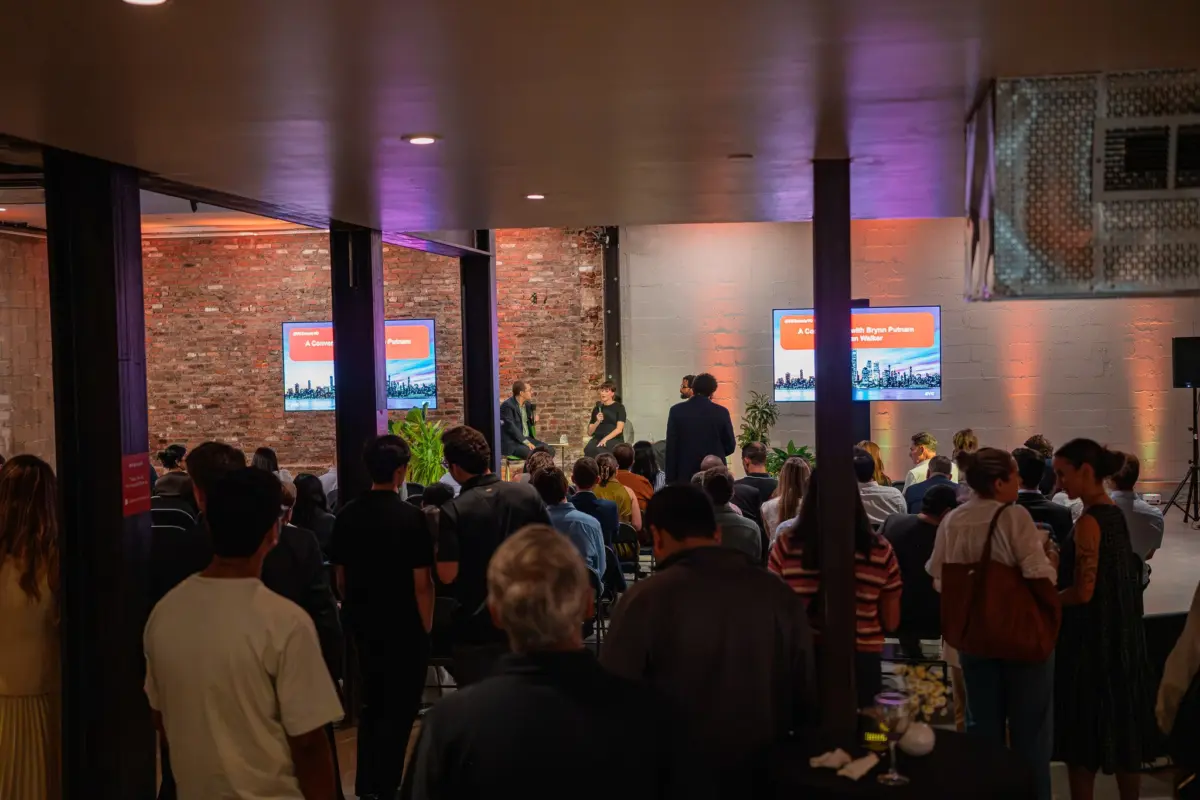
During a recent StrictlyVC evening event in New York’s West Village, Brynn Putnam offered a candid reflection on the genesis of her first breakthrough, Mirror. At the time, Putnam was a trained ballerina running brick-and-mortar boutique fitness studios while pregnant with her first child. Seeking a way to maintain her fitness routine at home, she utilized technology to bring the studio experience into her living room via a sleek, interactive screen.
Mirror was explicitly built around the self. As Putnam described it, the technology was designed to work on "myself, my body, my fitness, my reflection."
Fast forward a few years, and Putnam’s domestic reality has fundamentally shifted. Now a mother of five in a blended family, her household expanded rapidly from three people to seven. Suddenly, she confronted an entirely different domestic friction point: a glaring lack of products designed to let people of wildly different ages, physical abilities, and technological literacy levels play and interact together.
This realization sparked the creation of Board. The company’s flagship product is a 24-inch touchscreen table built specifically to sit flat among a group of people. Eschewing traditional handheld controllers, joysticks, and buttons that erect learning curves, Board utilizes physical game pieces and spatial gestures. If a player places a miniature spaceship on the screen, the system triggers an action; if a player lays down a knife icon, it performs a virtual cut. This engineering allows a young child and a grandparent to sit side-by-side, sharing an intuitive, frictionless gaming experience.
"It wasn’t a movement from digital to analog so much as: How can we use tech to bring people together rather than take them apart?" Putnam explained.
Tristan Walker: Preserving Mastery in the Age of AI
Tristan Walker’s journey into the physical realm stems from an equally potent catalyst: acute anxiety over the societal impacts of artificial intelligence. While studying at Stanford Business School, Walker interned at Twitter before founding Walker & Company Brands. After five years of scaling the grooming brand—ultimately selling it to P&G—he observed the escalating encroachment of AI on knowledge-based professions.
Walker founded Heirloom Craft out of a profound fear that AI is "stealing knowledge work" and stripping humanity of its tangible, tactile heritage. Concurrently, he stepped in to run Collaborative Holdings, a specialized fund carved out by Collaborative Fund to give founders structural runway.
Through Heirloom, Walker is systematically acquiring and scaling fine-craft trade schools. The initiative launched with a leatherworking school in San Francisco originally founded by Hermès’s first American artisan-ambassador. Walker argues that over the past half-century, the United States has systematically broken the generational chain of master-to-apprentice transmission. By offshoring industrial production and stigmatizing manual trades—treating apprenticeships as a consolation prize for those unable to secure four-year university slots—society has lost its transmission of true craftsmanship, encompassing leatherworking, watchmaking, and fine fragrance design.
Andy Dunn and Audrey Gelman: Evolving the Social Fabric
The migration toward physical infrastructure is equally visible in the work of Andy Dunn and Audrey Gelman.
Dunn, best known for disrupting menswear with Bonobos, has spent the last five years developing Pie. Initially launched as a friend-matching app, Pie has iteratively transformed into what Dunn terms a "social life operating system." The platform is anchored by "Community Homes"—permanent digital hubs designed to coordinate recurring offline social groups, such as neighborhood run clubs and community watch parties.
Audrey Gelman’s trajectory offers a cautionary yet resilient tale. Her previous venture, The Wing, pioneered exclusive physical co-working and social clubs for women. However, the enterprise collapsed during the COVID-19 pandemic, battered by operational hurdles and internal employee criticisms regarding equitable workplace culture.
Undeterred, Gelman has reimagined the core concept of female-centric gathering spaces with her current venture, the Six Bells Countryside Inn. Located in New York’s Hudson Valley, the 11-room guesthouse hosts immersive monthly events, such as elaborate murder-mystery dinners. Professional actors seed the crowd, and by the time dessert is served, a scripted "murder" takes place. While the narrative conceit is intentionally lighthearted and theatrical, its sociological impact is profound. According to field reports, guests routinely linger in the inn’s bar past midnight, bonding with total strangers and trading phone numbers.
Supporting Context & Metrics: The Macro Forces Driving Change
The simultaneous pivot of so many high-profile entrepreneurs into physical, community-centric businesses is not a random market anomaly. It is being fueled by converging psychological, macroeconomic, and systemic trends.
1. The Global Loneliness Crisis
In June of last year, the World Health Organization’s Commission on Social Connection formally classified chronic loneliness as a defining global health challenge. The WHO estimated that roughly one in six people worldwide are clinically affected by loneliness, linking the condition to an estimated 870,000 deaths annually. The medical community increasingly equates the health hazards of chronic isolation to smoking 15 cigarettes a day. Founders addressing this market are tapping into an urgent, systemic public health deficit.
2. Consumer Fatigue with Digital Homogenization
Digital fatigue is reaching a fever pitch. According to a Harris Poll survey commissioned by Marriott Bonvoy, two-thirds of American consumers are actively prioritizing experiential investments—such as travel, immersive workshops, and group retreats—over material goods. Furthermore, an identical percentage reported that modern retail shopping feels overwhelmingly generic, with online storefronts and physical high-street shops bleeding together into a monotonous sea of sameness.
3. The Gen Z and Gen Alpha Apprenticeship Renaissance
Tristan Walker’s thesis regarding the revaluation of trade skills is supported by shifting educational metrics. Approximately half of Gen Z and Gen Alpha cohorts express skepticism toward the traditional four-year college path, driven by skyrocketing tuition costs and the ubiquity of white-collar automation.
At Heirloom’s inaugural San Francisco leatherworking campus, more than half of the enrolled students are not career-switchers or retirees looking for a hobby; they are young tech workers seeking what Walker describes as a "phones-down creative outlet." The tactile, rigorous nature of working with physical materials offers a psychological sanctuary from the ephemeral, intangible nature of software engineering.
Official Statements & Industry Perspectives
The philosophical underpinnings of this movement were laid bare during recent industry gatherings, most notably at TechCrunch’s StrictlyVC events in New York’s West Village. Here, founders unpacked the shifting paradigms of venture creation.
Discussing the cultural degradation of manual skills, Tristan Walker pulled no punches regarding American educational and industrial policy:
"For fifty years, the U.S. has broken the chain from master to apprentice. We offshored production and stripped the prestige from manual skill to the point that apprenticeships became something people did when they couldn’t get into a four-year college. Heirloom is a wager that this paradigm is actively reversing."
Brynn Putnam emphasized that technology’s ultimate utility should not be isolation, but spatial cohesion. Reflecting on the design philosophy of Board, she noted:
"How can we use tech to create a shared experience? It wasn’t a movement from digital to analog so much as how can we use tech to bring people together rather than take them apart."
Financial Landscape: Venture Capital and the "Togetherness" Economy
Despite the philosophical weight of these missions, building businesses rooted in physical spaces and human gathering introduces complex economic realities. Software scales exponentially with minimal marginal costs; physical spaces do not. Rent, human labor, inventory, and architectural constraints place natural caps on rapid scaling.
Nevertheless, venture capitalists are cautiously testing the waters:
- Board: Brynn Putnam’s three-year-old gaming hardware startup has raised approximately $35 million in venture funding, reporting thousands of units sold.
- Pie: Andy Dunn’s social-infrastructure platform has secured $24 million in backing as it transitions into a social operating system.
- Six Bells Countryside Inn: Audrey Gelman’s boutique guesthouse model has raised roughly $3.8 million.
- Heirloom Craft: Founded just 11 months ago, Walker’s trade school venture has kept its initial funding rounds private.
Dwarfing these early-to-mid-stage investments is real estate entrepreneur Adam Neumann’s latest residential venture, Flow. Marketed around the identical premise of solving urban loneliness and community fragmentation through physical residential architecture, Flow has raised more than $450 million—predominantly from Silicon Valley powerhouse Andreessen Horowitz—pushing its valuation past the $2.5 billion mark. Neumann’s outsized capital raise dwarfs the rest of the sector combined, signaling that institutional investors recognize the colossal market potential of community-engineered real estate.
Future Outlook: Can Togetherness Become a Scalable Asset Class?
As the dust settles on the initial hype cycles of Web3, the metaverse, and early generative AI applications, the venture capital community faces a reckoning. The central question remains: Can "togetherness" legitimately establish itself as a durable, highly scalable investment category?
Skeptics argue that engineering serendipity and getting strangers to show up for one another in physical rooms, while socially commendable, fundamentally lacks the hyper-scalable compounding economics of SaaS platforms. A leatherworking school in San Francisco, an 11-room inn in the Hudson Valley, and a boutique touchscreen table are bound by the unforgiving laws of physical logistics.
Yet, the pedigree of the entrepreneurs championing this wave cannot be ignored. Putnam, Walker, Dunn, Gelman, and Neumann have all built high-profile, real-world brands before. They understand consumer psychology, brand narrative, and operational execution. Having successfully anticipated where cultural and technological pucks were heading in past decades, their collective pivot to the physical world suggests a powerful leading indicator.
Whether consumers will vote with their wallets and follow these founders back into the physical room will become clear over the next one to two years. If successful, these ventures may well prove that the ultimate antidote to an increasingly synthetic, automated world is the irreproducible magic of human beings occupying the exact same space, at the exact same time.