Executive Overview
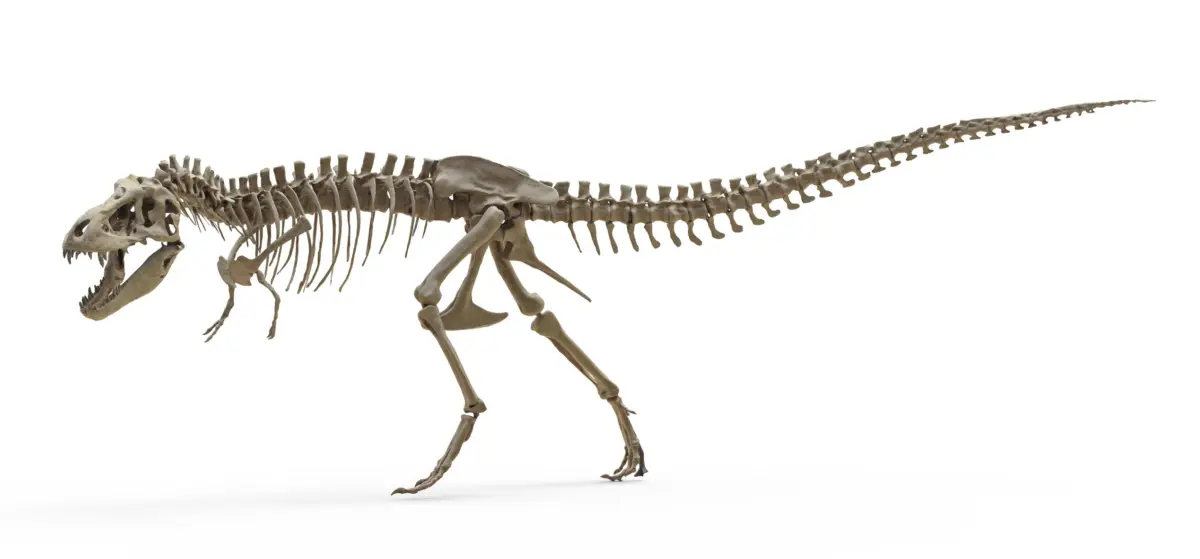
For nearly a century, the scientific consensus surrounding the metabolism of the undisputed king of the Cretaceous, Tyrannosaurus rex, underwent a sweeping evolution. Once pigeonholed as a sluggish, cold-blooded, tail-dragging reptile forced to bask for hours in the morning sun before mustering the energy to hunt, T. rex was later reimagined through the lens of modern paleontology as an active, high-octane predator—an image popularized by cinematic milestones like Jurassic Park. Yet, a fundamental question eluded scientists: Did this apex predator rely on internal physiological heat (endothermy) to power its high-energy lifestyle, or was it dependent on ambient environmental conditions?
Now, a groundbreaking study published in Science Advances bridges this long-standing knowledge gap. Led by a team of geochemists at the University of California, Los Angeles (UCLA)—including Randon J. Flores and Robert A. Eagle—researchers have successfully measured the internal body temperature of T. rex with unprecedented precision. Utilizing an advanced geochemical technique known as "clumped isotope thermometry" on remarkably preserved tooth enamel, the research team discovered that T. rex maintained a steady core body temperature averaging approximately 36°C (96.8°F). This thermal signature places the tyrant lizard firmly in line with the body temperatures of modern African and Asian elephants, offering compelling new evidence that these gargantuan theropods were physiologically equipped to manage their own internal temperatures.
This discovery does more than just update a textbook entry on dinosaur physiology; it fundamentally alters our understanding of how massive extinct animals interacted with their environments. By combining these dental temperature measurements with high-resolution late Cretaceous climate models and computer-generated "virtual species" geographic tracking, the UCLA team revealed that T. rex was not only warm-bodied, but possessed a physiological adaptability that allowed it to thrive across vastly diverse climates—from the humid floodplains of the North American interior to the polar extremes of the Arctic.
Detailed Chronology: The Quest to Decode Dinosaur Metabolism
To understand the magnitude of the UCLA team’s findings, one must trace the winding historical trajectory of dinosaur paleontology.
From Sluggish Reptile to Dynamic Hunter
During the late 19th and early 20th centuries, paleontologists classified dinosaurs as classic ectotherms ("cold-blooded" animals). Because of their reptilian lineage and massive bulk, scientists assumed T. rex functioned much like an oversized crocodile or lizard, reliant entirely on external thermal sources. This paradigm dictated that a multi-ton predator would move slowly, conserving energy and waiting for optimal environmental warmth before striking.
By the 1960s and 70s, the "Dinosaur Renaissance" spearheaded by researchers like Robert Bakker challenged this dogma. Pointing to bone microstructures, predator-prey ratios, and anatomical similarities with modern birds (the direct descendants of theropod dinosaurs), scientists argued that dinosaurs were active, high-metabolism creatures. However, proving endothermy definitively remained an elusive goal. Bone growth rings and skeletal proportions offered only indirect clues, leaving room for alternative hypotheses, such as "gigantothermy"—the idea that an animal could stay warm simply due to its sheer physical bulk retaining heat, without a high internal metabolic furnace.
The Isotope Roadblock
In the decades that followed, researchers turned to geochemistry, specifically analyzing the ratios of oxygen isotopes ($^18textO$ to $^16textO$) preserved in fossilized bones and teeth. The underlying theory was sound: the ratio of oxygen isotopes incorporated into biogenic minerals varies systematically with body temperature.
Yet, this method ran into a brick wall. Oxygen isotope ratios in dental and skeletal tissue are not solely determined by temperature; they are also heavily influenced by the isotopic composition of the water the animal drank during its lifetime. Because reconstructing the precise hydrological makeup of ancient meteoric water in a lost ecosystem is virtually impossible, early oxygen isotope studies yielded ambiguous and often contradictory results regarding dinosaur thermoregulation.
A Geochemical Breakthrough
The turning point came when UCLA researcher Robert A. Eagle pioneered the application of "clumped isotope thermometry" to paleontological specimens, initially testing the method on Jurassic sauropods over a decade ago.
Unlike traditional isotope ratios that measure the relative abundance of a single isotope, clumped isotope thermometry looks at molecular bonding. Specifically, carbonate minerals ($textCO_3$) within tooth enamel incorporate rare, heavy isotopes of carbon and oxygen ($^13textC$ and $^18textO$). At higher temperatures, these heavy atoms tend to disperse randomly throughout the mineral crystal lattice. At lower temperatures, however, they preferentially bond—or "clump"—together.
Because tooth enamel forms and mineralizes inside a living organism at a constant core body temperature, the frequency of these clumped heavy-isotope bonds acts as an unalterable molecular thermometer. Crucially, this method is completely independent of the isotopic composition of the water the animal drank, effectively bypassing the roadblock that had stymied generations of paleoclimatologists and paleontologists.
Supporting Context & Metrics: Inside the Hell Creek Laboratory
Armed with clumped isotope thermometry, Flores, Eagle, and their colleagues set out to analyze the dental architecture of T. rex.
Material and Preservation Integrity
The research team secured three exceptional T. rex teeth provided by the Natural History Museum of Los Angeles County. All three specimens originated from Montana’s famed Hell Creek Formation, a geological treasure trove that preserves the final chapters of the Cretaceous period immediately preceding the Chicxulub asteroid impact.
- Specimens 1 and 2: Belonged to a juvenile/young adult T. rex estimated to have weighed in excess of three tons.
- Specimen 3: An isolated partial tooth derived from a separate individual.
- Control Group: Five teeth from contemporary crocodilians that shared the same rivers and floodplains as the tyrant lizards.
A critical hurdle in any geochemical analysis of 66-million-year-old fossils is proving that deep-time diagenesis—the chemical alterations caused by millions of years of groundwater leaching and burial pressure—hasn’t overwritten the original biological signal. The UCLA team implemented rigorous protocols to authenticate their samples:
- Targeting Enamel: They focused exclusively on tooth enamel, a bio-mineralized tissue vastly more resistant to post-mortem chemical alteration than porous bone or dentin.
- Internal Isotopic Contrasts: They found that enamel and dentin within the exact same teeth displayed distinctly different isotopic signatures. If groundwater had systematically altered the teeth after burial, both tissues would share uniform chemical profiles.
- Spectroscopic Verification: Infrared spectroscopy demonstrated that the fossilized enamel closely mirrored the structural characteristics of modern alligator enamel, with matching carbonate content and expected predator-level carbon isotope dietary signals.
Thermal Readings: The Numbers
With diagenesis ruled out, the team calculated the crystallization temperatures locked inside the enamel:
- The two teeth from the juvenile T. rex yielded internal temperatures of 37.3°C and 35.9°C.
- The tooth from the second individual registered at 34.7°C.
Averaged together, T. rex maintained a mean core body temperature of 36.3°C (± 2.5°C). To contextualize this metric:
- Modern African and Asian elephants maintain an average internal temperature of approximately 36°C.
- Large flightless birds, such as ostriches and emus, fall comfortably within the same thermal margin of error.
- Smaller flying birds operate at noticeably higher temperatures, averaging above 41°C.
- Contemporary crocodilians analyzed from the same Hell Creek fossil beds averaged 30.9°C, aligning perfectly with the modern reptile strategy of behavioral thermoregulation (basking and water shuttling to maintain ranges between 30°C and 35°C).
Environmental Baseline and Gigantothermy
To establish whether T. rex was actively generating its own metabolic heat or merely soaking up a warm Cretaceous climate, the team reconstructed the environmental baseline of the ancient Hell Creek ecosystem.
They analyzed clumped isotopes in fossilized freshwater mussels retrieved from the same stratigraphic layers. These mussels primarily record warm-season water temperatures, which averaged roughly 26°C.
Furthermore, the researchers deployed a high-resolution late Cretaceous climate model (operating on a 60-kilometer grid) under both hot and cold scenarios. Even under the most extreme warming scenarios, peak summer temperatures in Hell Creek hovered around 33°C, with mean annual temperatures sitting near 21°C.
Because T. rex routinely registered core temperatures significantly higher than its ambient environment, passive thermal equilibrium was mathematically insufficient. While a multi-ton juvenile T. rex naturally benefits from gigantothermy (retaining heat due to low surface-area-to-mass ratios), its measured temperatures outpaced standard scaling models for cold-blooded animals of equivalent weight. The researchers argue this points strongly toward homeothermic endothermy—active metabolic heat production—though they acknowledge that disentangling precise metabolic pathways in extinct megafauna remains a complex frontier.
Geographic Mapping and Physiological Flexibility
Understanding that T. rex maintained a stable, elevated body temperature opened a new avenue of inquiry: How far across climatic boundaries could this apex predator roam?
To map the geographic potential of T. rex, the UCLA team constructed a computational "virtual species" model. They integrated thermal tolerance datasets harvested from 465 species of living mammals and birds—organisms capable of maintaining stable body temperatures across environmental extremes ranging from -13°C to 43.6°C. They combined these biological parameters with the thermal range measured in T. rex teeth (34.7°C to 37.3°C) and seasonal rainfall projections derived from their late Cretaceous climate simulations.
The resulting habitat suitability model was projected across a geographical map of late Cretaceous North America, accounting for the fluctuating shorelines of the Western Interior Seaway—the shallow epicontinental sea that split the continent in two.
Key Geographic Insights:
- Pervasive Habitability: The model concluded that T. rex was physiologically equipped to inhabit virtually the entirety of North America, from southern subtropical zones to high northern latitudes.
- Fossil Record Bias: While known T. rex fossil sites cluster heavily in areas predicted by the model to have high habitat suitability, these sites represent only a fraction of its total potential range. The researchers emphasize that fossil distribution reflects geological preservation and collection biases rather than the true biological limits of the animal.
- Polar Adaptability: High thermal suitability at latitudinal extremes aligns seamlessly with recent fossil discoveries of tyrannosaurids in Arctic Alaska, as well as specimens recovered from the Trans-Pecos region of Texas.
- Heat Limits Uncrossed: The team calculated a combined heat-and-humidity stress index (representing lethal physiological thresholds for modern endotherms) and found that these catastrophic limits were never breached anywhere within their Cretaceous climate simulations.
This cold tolerance provides robust theoretical support for the hypothesis that the T. rex lineage migrated into North America from Asia via the Bering Land Bridge during periods of global cooling.

Future Outlook: The Next Frontier in Paleontological Geochemistry
Despite the robustness of the data, the researchers are careful to note the current limitations of their study. To protect the integrity and aesthetic value of the museum specimens, sampling was restricted to small portions of each tooth. Consequently, individual samples may represent isolated snapshots of growth rather than a continuous multi-year record.
While multiple spatial samples from the juvenile teeth yielded statistically consistent results, future investigations will aim to capture high-resolution, intra-tooth sequential sampling. This technique could potentially reveal seasonal fluctuations in body temperature, shedding light on whether T. rex exhibited physiological dormancy or metabolic adjustments during harsh winters.
Nevertheless, if these findings withstand wider academic scrutiny, they permanently reshape our perception of the tyrant king. T. rex emerges not as a sluggish reptile of convenience, but as a warm-bodied, metabolically sophisticated apex predator endowed with the physiological versatility to dominate environments ranging from humid southern floodplains to chilly northern realms.
Buoyed by the success of clumped isotope thermometry, the UCLA research team is already setting its sights on broader horizons. Their immediate objective is to apply this geochemical tool across a wider array of dinosaur lineages, mapping the evolutionary origins and distribution of warm-bloodedness across the Mesozoic world.
Reference:
Randon J. Flores, Robert A. Eagle, et al., Science Advances (2026). DOI: 10.1126/sciadv.aeb7653