In the modern digital economy, the bridge between an obscure digital storefront and a seven-figure enterprise is rarely built on complex product engineering or astronomical advertising budgets. More often than not, it is constructed out of well-chosen words. For digital entrepreneurs and marketing veterans who have generated cumulative seven-figure revenues online, the secret to predictable customer acquisition consistently points back to a single discipline: high-converting copywriting.
Having founded and sold a digital marketing agency and currently serving as a partner in Copyblogger—a premier seven-figure course and community—industry insiders understand that exceptional copywriting is not an exercise in literary eloquence. In fact, artistic flair frequently gets in the way of sales. Great copywriters write with clarity and conciseness, prioritizing tangible financial return over stylistic praise. By shifting the objective from crafting beautifully turned phrases to engineering measurable return on investment (ROI), modern copywriters can dramatically accelerate their career trajectory.
This comprehensive guide details the ten foundational principles that separate struggling scribes from high-earning copywriters. By decoding customer psychology, weaponizing competitor research, establishing bulletproof writing processes, and ethically leveraging artificial intelligence, writers can build resilient content ecosystems that generate reliable leads and revenue.
Detailed Chronology & Strategic Breakdown: The 10 Pillars of High-Converting Copy
1. Talk Directly to Your Customers
The fundamental mandate of any copywriter is to capture a prospect’s attention, establish institutional trust, introduce a viable solution, dismantle lingering objections, and orchestrate a conversion. To achieve this, a deep and intimate understanding of the target audience is non-negotiable.
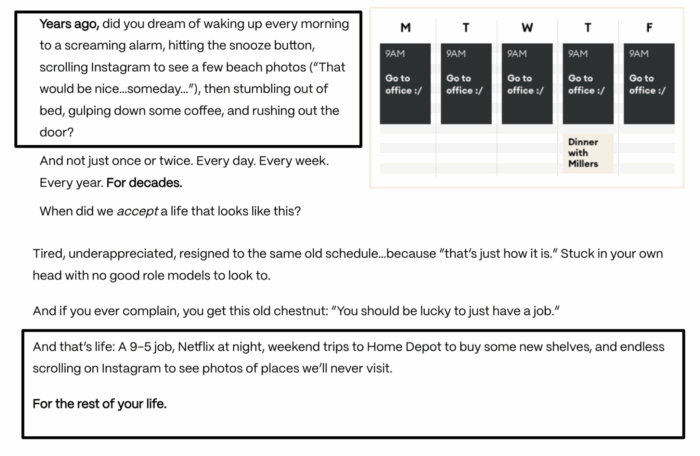
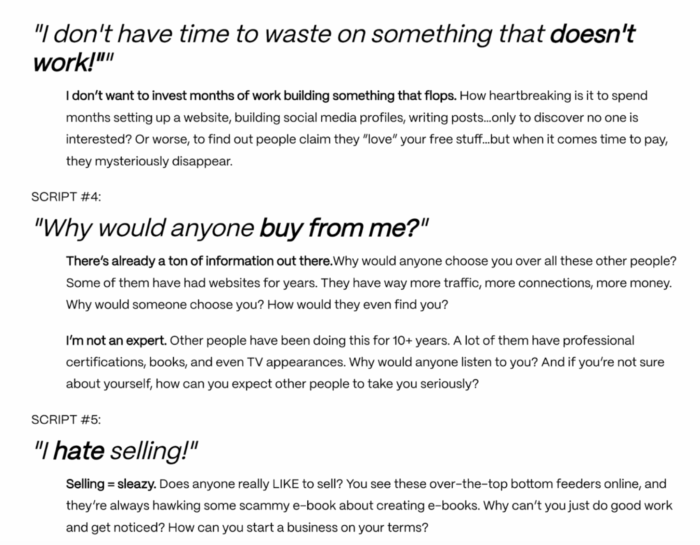
Industry veterans routinely study masterclasses in customer alignment, such as Ramit Sethi’s landing page for his signature program, Earnable. Rather than relying on tired, generic hooks like "here is how to make more money," Sethi immediately captures attention by mirroring the exact mundane and frustrating realities of his ideal customer: the 9-to-5 grind, evening television routines, weekend errands at the hardware store, and endless social media scrolling.
When you reflect a prospect’s exact reality back to them, you prove that you understand their pain. This validation demonstrates that the product was explicitly designed to solve their specific problem.
Tactical Execution for Customer Research
Realistically, copywriters working on tight agency deadlines rarely have the luxury of conducting dozens of live interviews before a project due date. To circumvent this constraint, professionals deploy alternative research workflows:
Interview Sales Representatives: Speak directly with the client’s sales team to uncover frontline insights regarding recurring objections and dominant pain points.
Analyze Sales Call Transcripts: Download recorded discovery and sales calls, ingest the transcripts into large language models like ChatGPT, and prompt the AI to extract primary customer pain points and objections.
Mine Niche Communities: Visit specialized subreddits and Facebook groups. If writing for a weight-loss brand, comb through weight-loss forums to absorb the exact emotional language, slang, and desires of active buyers. Feed these threads into AI tools to map out precise psychological triggers.
2. Reverse-Engineer Your Competitors
The path of least resistance to high-converting copy involves studying those who have already spent substantial time and capital testing the market. Competitor research prevents writers from starting with a blank slate.
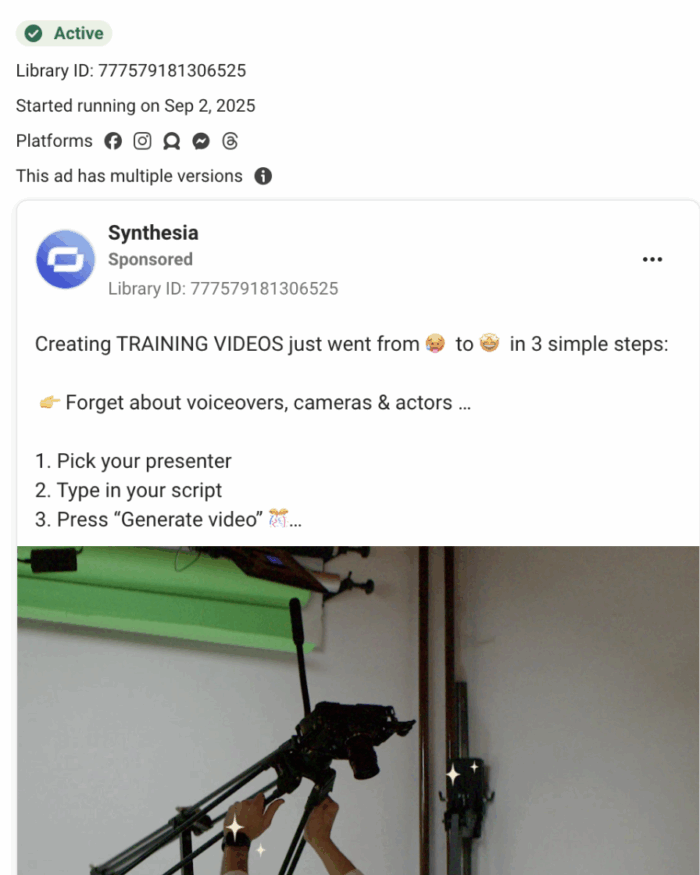
The most efficient starting point is the LinkedIn or Meta Ads Library. Because paid advertisements require financial backing, companies iterate rapidly to find winning angles. Advertisements that run continuously over extended periods generally highlight validated, high-performing pain points. For example, studying active enterprise software ads reveals exact operational inefficiencies—such as the revenue lost due to messy, unmanaged Customer Relationship Management (CRM) data—which can be integrated into fresh email campaigns or sales letters.
3. Build and Maintain a Swipe File
Professional copywriting relies heavily on pattern recognition. Building a personal "swipe file"—a curated archive of high-performing headlines, persuasive landing pages, and engaging ad copy—provides an endless reservoir of inspiration.
In addition to maintaining a personal collection, aspiring writers should regularly study established repositories like SwipeFile.com, curated by veteran copywriter Neville Medhora. Reviewing copy validated by industry veterans trains the eye to recognize structural frameworks that consistently compel cold audiences to take action.
4. Establish a Repeatable Writing Process
Amateur writers stare at blank pages waiting for divine inspiration. Professionals rely on systems. Copywriting is ultimately the strategic assembly of pain points, objection handling, and clear calls to action (CTAs).
Establishing a rigid writing workflow ensures that critical elements are never omitted. For long-form content like SEO blog posts, a standardized process might look like this:
Drafting: Write freely without self-censorship, focusing entirely on getting arguments onto the page.
Refinement & Polish: Strip away filler words, tighten sentences, and verify that the content serves a clear conversion goal.
A reliable process banishes writer’s block and guarantees structural integrity across every piece published.
5. Practice Writing Through Real-World Projects
Theory is useless without execution. The fastest way to master copywriting is through deliberate, high-stakes practice. Rather than writing arbitrary exercises, writers should build demand for their own products or services.
Aspiring LinkedIn ghostwriters should build their personal profiles first. Those aiming to write SaaS blog content can build functional micro-tools using no-code platforms like Lovable and market them independently. Others have launched dropshipping stores to learn the nuances of marketing psychology firsthand—discovering early on that writing for purchase intent yields vastly superior financial results compared to writing merely for general traffic. Building demand for your own ventures provides verifiable case studies when pitching prospective clients.
6. Embrace AI as a Co-Pilot (For the Right Use Cases)
While artificial intelligence should never be trusted to generate authentic, emotionally resonant brand copy from scratch, it serves as a powerful collaborative partner when deployed for specific tasks:
Pain Point Discovery: Prompt AI to list common frustrations associated with specific industries to jog memory and guide research.
Sentence Phrasing: Paste convoluted passages into LLMs with the prompt: "Can you rewrite this passage with more clarity?" to discover fresh sentence structures.
Sourcing Expert Perspectives: When writing outside your core domain of expertise, use AI to unearth real-world quotes, LinkedIn posts, and insights from recognized industry authorities to add external credibility to your work.
7. Master One Platform Deeply
Different digital channels demand unique structural mechanics. Thought-leadership content thrives on LinkedIn, whereas actionable, step-by-step frameworks dominate long-form search engine optimization (SEO) blogs.
By mastering the specific algorithmic nuances, audience expectations, and conversion mechanics of a single platform, a copywriter can dramatically elevate the ROI of their content. Proving deep platform mastery gives professionals the leverage required to command premium retainers.
8. Measure and Prove the ROI of Your Work
Subjective opinions on copywriting are ubiquitous; data is definitive. To escape the trap of subjective client revisions, professional copywriters tie their output directly to revenue metrics.
Channel-Specific Measurement Frameworks:
Social Ghostwriting (LinkedIn/Twitter): Do not equate vanity metrics (likes) with revenue. Evaluate the quality of commenters. If your client sells B2B enterprise software, attracting high-level decision-makers (such as Sales Directors) indicates success, whereas engagement from junior staff signals a misaligned angle. Always recommend adding "How did you hear about us?" conversion fields to capture social attribution accurately.
Blog Content: Partner with clients to establish conversion tracking via Google Analytics 4 (GA4). Traffic volume is meaningless if it fails to attract target buyers. Demonstrating that an SEO article directly influenced enterprise demo requests allows copywriters to justify top-tier compensation.
Sales Pages & Email Funnels: Directly query clients for baseline conversion rates and revenue generated from specific promotional sequences to establish clear historical benchmarks for your work.
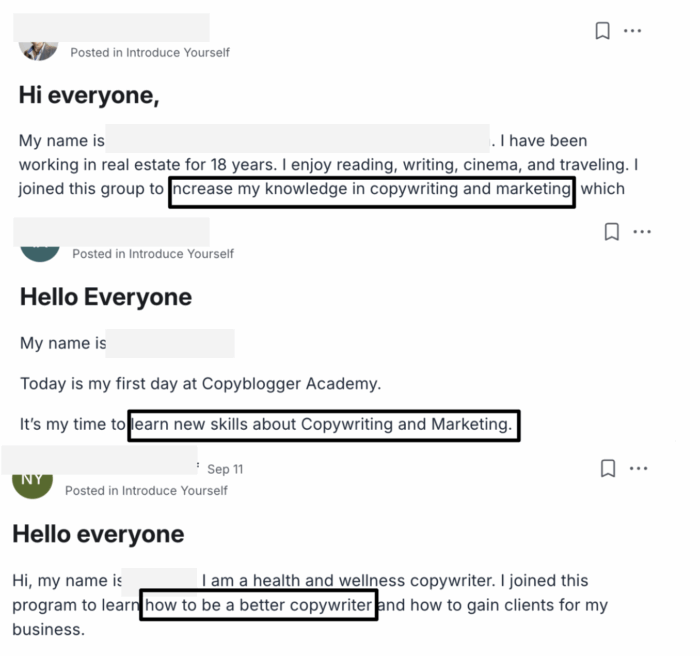
9. Join a Community and Seek Relentless Feedback
Isolation is the enemy of professional growth. Learning from the mistakes of others accelerates skill acquisition while sparing writers the pain of costly trial and error.
However, joining a general group is insufficient; writers must actively share drafts, analyze critiques, and carefully weigh feedback based on the credibility of the source. Finding an environment where feedback comes directly from proven, multi-figure marketers is the ultimate accelerator for a budding copywriter’s career.
10. Be Impatient with Action, Patient with Results
Echoing the philosophy of noted investor Naval Ravikant, elite copywriters practice radical urgency regarding execution combined with radical emotional detachment regarding immediate outcomes.
Writers must push themselves to create, test, and optimize daily while committing to a multi-month or multi-year horizon before expecting life-changing financial returns. Consistency combined with iterative improvement is an unbeatable formula for long-term digital success.
Supporting Context & Industry Metrics
The modern content landscape has undergone a profound shift. Traditional content marketing—built on the premise of chasing algorithmic shares and high-volume, low-intent web traffic—is rapidly losing efficacy. Contemporary businesses require eco-systems that turn content into cash.
Industry data demonstrates that companies prioritizing structured audience research, customer pain-point alignment, and rigorous conversion tracking experience significantly lower customer acquisition costs (CAC) compared to those relying solely on generic paid traffic. As algorithmic saturation increases across LinkedIn, organic search, and email inboxes, the marginal value of mediocre writing has dropped to zero, while the premium commanded by elite, ROI-driven copywriters has reached historic highs.
Official Statements & Industry Perspectives
Reflecting on the evolution of digital publishing, industry leaders emphasize that technical writing skill must always be subservient to commercial acumen.
"Becoming a better copywriter doesn’t mean you write more eloquently. In fact, the opposite is often true. Great copywriters are clear, concise, and ultimately convert readers into customers," notes the leadership team at Copyblogger.
By focusing relentlessly on the economic impact of written assets rather than artistic vanity, modern content creators transform themselves from commoditized contractors into indispensable business growth partners.
Future Outlook
Looking toward the horizon, the copywriting profession is splitting into two distinct camps: the commoditized writers who rely heavily on unedited artificial intelligence output, and the strategic revenue-engineers who treat copywriting as a core pillar of business development.
As AI tools democratize basic sentence generation, the intrinsic value of human copywriters will shift further upstream toward deep customer empathy, proprietary research synthesis, and cross-platform strategic distribution. Those who master the ten foundational rules outlined in this playbook—treating copywriting not as art, but as a systematic, data-backed vehicle for customer acquisition—will dominate the digital economy for the next decade.