Executive Overview
The European enterprise technology landscape is undergoing its most profound structural realignment in decades. Following Broadcom’s high-profile acquisition of VMware, the resulting pivot toward mandatory bundled subscriptions and strict per-core pricing models has fundamentally disrupted long-standing budgetary assumptions. For European Chief Information Officers (CIOs), the challenge has evolved far beyond a casual search for a cheaper hypervisor. Today, infrastructure decision-making requires a rigorous, data-driven methodology that weighs total cost of ownership (TCO), application compatibility, disaster recovery validation, and stringent regional data sovereignty mandates.
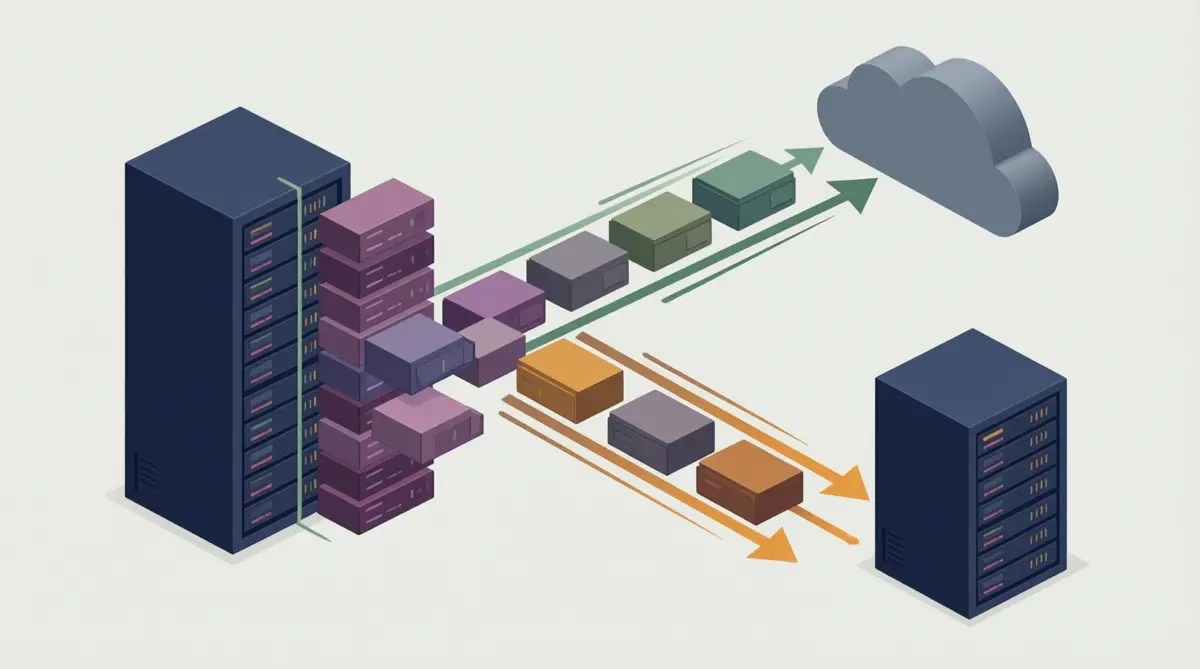
No longer simply shopping for a direct VMware replacement, European enterprises are mapping the entire competitive field. This comprehensive evaluation spans on-premises hyperconverged infrastructure (HCI) vendors, pan-European cloud providers, and container-native virtualization platforms. Organizations are discovering that a successful transition demands a clean separation of workloads: isolating systems that must remain on local, sovereign hardware from those ideally suited to scalable, multi-tenant cloud ecosystems. This report investigates the driving forces behind the European VMware exodus, evaluates the leading alternatives, analyzes five-year TCO implications, and outlines actionable frameworks for migration risk mitigation.
Detailed Chronology: The Regulatory and Financial Catalyst
To understand the urgency driving European infrastructure teams, one must examine the confluence of financial and regulatory pressures that materialized between 2023 and 2026.
The Post-Acquisition Licensing Shock
For decades, VMware’s perpetual licensing model allowed enterprise IT departments to amortize hardware and software expenditures across predictable multi-year cycles. When Broadcom finalized its acquisition of VMware, the subsequent restructuring dismantled many of these familiar frameworks. Enterprise customers faced a rapid transition toward subscription-only bundles and core-based pricing metrics.
While VMware’s engineering platform continues to deliver robust technical performance, the sudden escalation in renewal costs forced infrastructure teams to ask a question they hadn’t seriously considered in years: What is the alternative?
The Convergence of Data Sovereignty
Simultaneously, Europe’s regulatory environment has grown increasingly strict. Driven by the General Data Protection Regulation (GDPR), the aftermath of the Schrems II ruling, and evolving national cybersecurity directives, European enterprises face unprecedented legal liabilities regarding where their data resides, who holds administrative access, and how data traverses international boundaries.
Crucially, these compliance mandates operate independently of virtualization choices. However, when combined with Broadcom’s licensing shifts, they created a powerful compounding effect. CIOs realized that migrating away from VMware was not merely a cost-cutting exercise; it was an opportunity to architect a modern, legally compliant, multi-cloud and sovereign infrastructure foundation.
Supporting Context & Metrics: Evaluating the Competitive Landscape
The field of credible VMware competitors in Europe has expanded dramatically. Today’s enterprise shortlists generally divide into two distinct operational categories: software-defined on-premises HCI vendors and pan-European cloud infrastructure providers.
Leading Global HCI Vendors
For organizations whose workloads demand local processing, low latency, or strict physical control, hyperconverged infrastructure remains the preferred deployment model.
- Sangfor HCI: Emerging as a top-tier contender on enterprise shortlists, Sangfor combines compute, storage, and networking into a unified, highly resilient stack. Unlike architectures that require disparate point solutions for security and management, Sangfor integrates security natively into the platform. Recognized as a Representative Vendor in the 2026 Gartner Market Guide for Cloud Infrastructure Sovereign Solutions, Sangfor addresses the acute sovereignty concerns of European buyers while delivering predictable licensing models.
- Huawei: Leveraging its deep telecom and heavy-infrastructure heritage, Huawei offers massive scalability and operational depth. While its proprietary architecture demands careful evaluation regarding hardware lock-in, it remains a compelling option for organizations already operating extensive Huawei networking gear.
- ZStack: Backed by enterprise cloud architectures and extensive industry validation, ZStack offers robust HCI and cloud portfolios that appeal to mid-market and enterprise buyers seeking subscription-based flexibility.
Pan-European Cloud Providers
For workloads that do not require on-premises hardware, sovereign cloud platforms offer an alternative consumption model.
- OVHcloud: Headquartered in France, OVHcloud stands as Europe’s largest homegrown cloud provider. It serves as a natural landing zone for workloads exiting local data centers that benefit from elastic cloud scalability without foreign jurisdictional exposure.
- Exoscale: Operating out of Switzerland, Exoscale focuses tightly on secure, highly sovereign cloud infrastructure. Its localized compliance models resonate deeply with enterprises operating under strict Swiss and European financial data regulations.
Licensing and Market Positioning Matrix
| Category | Market Position | Licensing & Pricing Model | Built-in Security | EU Presence & Sovereignty Profile |
|---|---|---|---|---|
| Sangfor HCI | Global enterprise HCI vendor | Simplified, converged subscription | Native, integrated stack | Growing European footprint, Gartner recognized |
| Huawei | Global telecom-rooted HCI vendor | Enterprise licensing, hardware-tied | Varies by deployment | Established enterprise presence |
| ZStack | Enterprise cloud & HCI vendor | Subscription-based | Varies by deployment | Emerging European deployments |
| OVHcloud | Pan-European cloud provider | Consumption-based IaaS | Provider-managed | Headquartered in France, pan-European datacenters |
| Exoscale | Sovereign cloud provider | Consumption-based IaaS | Provider-managed | Headquartered in Switzerland, regional data residency |
Note: Enterprise architects must verify current pricing models, feature sets, and localized support scopes directly with vendors prior to finalizing procurement contracts.
Official Statements and Industry Insights
Industry analysts and academic institutions have closely monitored this infrastructural migration. According to frameworks published by the Communications of the ACM, enterprise migration drivers consistently center on four primary pillars: cost optimization, digital modernization, disaster recovery enhancement, and post-acquisition risk management.
Furthermore, enterprise guidance highlights the danger of treating all workloads uniformly. As noted in recent enterprise decision frameworks, a successful migration strategy requires balancing five-year Total Cost of Ownership (TCO) against application support matrices, migration risks, and clear, testable exit criteria.
Real-world deployments validate these analytical frameworks. For instance, ENAIP Friuli Venezia Giulia, an educational and vocational training institution in Italy, faced severe scalability and performance bottlenecks with its legacy infrastructure. By deploying Sangfor’s HCI and aDesk Virtual Desktop Infrastructure (VDI), the institution successfully modernized its operations, enhanced system security, and automated backups without requiring a complete infrastructural redesign. This practical success illustrates why enterprise-grade alternatives are gaining traction across diverse European sectors.
Future Outlook: TCO, Risk Mitigation, and Container-Native Horizons
As European enterprises look toward the remainder of the decade, the post-VMware strategy is maturing from reactive replacement to proactive, multi-layered architecture design.
Five-Year TCO and Exit Costs
A superficial comparison of software license quotes is insufficient for budgeting a platform migration. Finance and infrastructure teams must construct comprehensive five-year financial models incorporating four distinct cost buckets:
- Migration Execution: Initial professional services, data transfer fees, and dual-run operational overlaps.
- Steady-State Operations: Ongoing licensing, power, cooling, and routine maintenance expenditures.
- Hidden Skills and Operational Costs: Training internal teams on new management interfaces and troubleshooting unfamiliar failure modes.
- Exit and Reversibility Costs: The hypothetical expense of extracting workloads if the chosen replacement platform fails to meet long-term business needs.
Workload Segmentation and Phased Migration
Smart migration planning dictates that workloads must be segmented based on complexity, dependencies, and recovery time objectives (RTOs). Low-complexity systems and disposable test environments should serve as initial migration pilots. High-risk production databases and legacy applications require meticulous staging, explicit downtime limits, and guaranteed rollback capabilities.
Crucially, engineers must test live migration paths—such as moving from VMware to KVM-based destinations—during rehearsal phases. Verifying guest boot sequences, storage I/O performance, and network configurations prior to final cutover prevents costly production outages.
Container-Native Virtualization: The Next Frontier
For organizations already embracing cloud-native development, container-native virtualization platforms like KubeVirt and OpenShift Virtualization represent a powerful alternative exit path. By running virtual machines directly inside Kubernetes clusters, enterprises can unify their operational tooling. However, container alignment does not eliminate the fundamental work of application refactoring, rigorous testing, and data validation.
Conclusion
The shift away from legacy VMware dominance in Europe marks a watershed moment for enterprise IT strategy. The decision to migrate is no longer driven purely by frustration over rising license fees, but by a strategic imperative to secure data sovereignty, optimize long-term operational costs, and build resilient, flexible digital infrastructure.
By systematically evaluating global HCI vendors like Sangfor, leveraging pan-European sovereign cloud providers, and enforcing rigorous pilot testing and TCO modeling, European CIOs can navigate the post-VMware era successfully. The ultimate metric of success is not merely a successful hypervisor boot, but an agile, fully recoverable, and legally compliant enterprise platform ready to support the next decade of digital innovation.