
Executive Overview
The global ecommerce ecosystem is undergoing a profound structural metamorphosis. For decades, online retail has been bound by traditional digital interfaces—search bars, fixed shopping carts, static landing pages, and predictable checkout funnels. Today, that framework is yielding to an interconnected, agentic architecture defined by artificial intelligence, conversational shopping experiences, and borderless payment infrastructure.
This week’s roundup of global product releases and strategic corporate partnerships underscores a pivotal reality: merchants can no longer afford to view technology stacks through a purely siloed, domestic lens. From supply chain titans like FedEx and DHL deploying intelligent automation to handle complex cross-border logistics, to fintech giants like Visa, Mastercard, and Ant International establishing security and authentication standards for AI shopping agents, the underlying plumbing of commerce is being entirely rewritten.

Simultaneously, major platforms are breaking out of traditional confines. Amazon is introducing advertising to conversational engines like ChatGPT; Instacart and Shipt are rolling out multimodal AI shopping assistants that parse text, photos, and recipes; and high-growth startups are carving out foundational marketplaces and trust layers to protect brand integrity against predatory AI scraping and unverified bots. For retailers, wholesalers, and direct-to-consumer brands alike, navigating this landscape requires immediate adaptation. This report offers an exhaustive analysis of the latest tools, strategic shifts, and infrastructural changes shaping the future of digital retail.
Detailed Chronology of Product Releases and Strategic Alliances
1. Global Logistics, Shipping, and Fulfillment Innovations
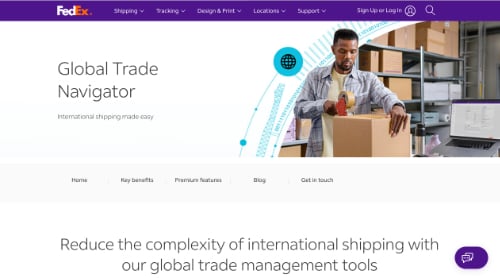
- FedEx Introduces Global Trade Navigator: In a major push to simplify the notoriously complex mechanics of international shipping, FedEx Corp. has rolled out its Global Trade Navigator suite. Designed to minimize compliance friction, the toolkit includes a self-service Trade Planner on FedEx.com that requires no initial user login. For Shopify merchants, a dedicated Duty and Tax application enables storefronts to display guaranteed duty and tax calculations directly at checkout, eliminating post-delivery surprise fees for consumers. Furthermore, Global Trade APIs allow enterprises to programmatically integrate product classifications, estimated duties, taxes, and international regulatory checks into their native systems. The updated Ship Manager further supports compliance by letting customers review Harmonized System (HS) code classifications, exact customs values, and country-of-manufacture details before dispatch.
- DHL and Alibaba.com Partner on AI-Powered Logistics: DHL Group and Alibaba.com have forged a strategic partnership aimed at revolutionizing supply chain operations for small and medium-sized enterprises (SMEs) engaged in international trade. The initiative centers on integrating DHL Global Forwarding’s logistics infrastructure directly into Alibaba.com’s agentic AI platform, Accio. As the initial rollout feature, Accio will interface natively with DHL’s quotation and booking systems, allowing business buyers to pull real-time freight forwarding quotes, evaluate alternative shipping pathways, and secure bookings without leaving the AI environment.
- TopDawg Integrates with Temu for Enhanced Multi-Channel Dropshipping: Wholesale supplier network and dropshipping platform TopDawg has announced a live integration with Temu. This development allows eligible merchants with an active Temu seller account to connect their marketplace storefront directly to TopDawg’s inventory pool. Retailers can leverage U.S.-based suppliers to source products, prepare automated listings, maintain live inventory visibility, and seamlessly route order fulfillment through vetted domestic vendors.
2. The Rise of AI Agents, Payments, and Trust Infrastructure
- Ant International Partners with Visa and Mastercard on AI Payment Standards: As automated software agents assume an increasingly active role in commercial transactions, the risk of unverified or fraudulent bot behavior has escalated. Ant International, the Singapore-based financial technology firm operating the Alipay+ wallet gateway, has partnered with credit card giants Visa and Mastercard to establish a unified payment standard for AI agents. The collaboration focuses heavily on "know your agent" protocols—building universal security frameworks that link every autonomous purchasing agent to a verified legal entity while continuously monitoring agent behavior for irregularities.
- Mastercard Launches Agent Connect and Expands Agent Suite: Expanding its footprint in the agentic commerce space, Mastercard has introduced Agent Connect alongside an expanded Agent Suite for Merchants. Agent Connect provides a single, streamlined integration point enabling merchants, digital platforms, AI agents, and payment providers to transact securely. Crucially, the platform preserves merchant autonomy: businesses retain total control over pricing rules, product fulfillment, customer relationships, brand experiences, and policy enforcement while choosing which AI ecosystems they wish to engage with.
- M11 Labs Unveils Agentic Trust Platform and OpenMarket: Addressing the critical trust gap between brands and autonomous shopping bots, agentic commerce startup M11 Labs has launched an advanced threat-detection platform designed to monitor brand accuracy and mitigate competitor manipulation within AI recommendations. Alongside this security layer, M11 Labs has unveiled OpenMarket, an agentic marketplace and research engine built upon the Universal Commerce Protocol. On OpenMarket, shoppers articulate conversational intent, competing brand agents vie for the recommendation, and M11 Labs performs real-time verification checks on every claim made by the agents.
- Lightsage Secures $4 Million to Build the Growth Stack for AI Agents: Formerly known as Sapient, agent-led growth platform Lightsage has closed a $4 million funding round led by Nexus Venture Partners. The capital will be deployed to expand infrastructure for "agent-led growth," helping internet software companies measure and optimize their visibility across automated answer engines and coding agents. The platform runs large-scale simulations to track where brands appear relative to competitors and analyzes real-world agent traffic patterns to optimize performance.
3. Conversational Advertising and Retail Media Transformations
- Amazon Ads Partners with OpenAI to Pilot ChatGPT Advertising: In a watershed moment for retail media, Amazon Ads has partnered with OpenAI to test conversational advertising integrations inside ChatGPT. The pilot program allows select U.S. advertisers to extend their campaigns beyond traditional retail spaces into ChatGPT’s conversational interface. As consumers explore options, compare product features, and make purchasing decisions within the chat environment, Amazon Ads enables brands to engage target audiences natively during their research phase.
- Mntn and Klaviyo Integrate Connected TV Advertising with CRM Workflows: Connected TV (CTV) ad leader Mntn has joined forces with B2C CRM and email marketing powerhouse Klaviyo. This strategic integration bridges television advertising with digital lifecycle marketing. Marketers can now deploy custom Klaviyo audience segments directly onto Mntn’s Performance TV network. Moreover, specific television ad exposures can automatically trigger tailored email and SMS automation workflows within Klaviyo, closing the attribution loop between linear/streaming TV and direct consumer messaging.
- Telesign and B2Metric Partner for Smarter Conversational Commerce: Digital identity platform Telesign has partnered with predictive analytics firm B2Metric. By combining B2Metric’s behavioral prediction models with Telesign’s secure messaging APIs for WhatsApp and email, the partnership empowers brands to pinpoint exact shopping intent moments and proactively engage consumers through secure conversational channels.
4. Conversational Shopping Assistants and Merchant Insights
- Instacart Introduces "Clementine" and Expands Cart Assistant: Instacart has debuted Clementine, an advanced AI-powered grocery shopping assistant now accessible to North American shoppers across the Instacart Marketplace. Clementine handles complex meal planning and shopping queries in natural language. Simultaneously, Instacart announced new grocery retail partners utilizing Cart Assistant, its white-label AI shopping tool. Cart Assistant allows grocery chains to power a branded, on-site shopping experience utilizing their proprietary catalogs and customer data, driven by the same foundational intelligence powering Clementine.
- Shipt Launches "Ask Shipt" AI Shopping Assistant: Same-day delivery platform Shipt has rolled out its own proprietary AI shopping assistant, Ask Shipt. Integrated directly into the Shipt mobile app and website, the tool allows users to articulate meal ideas, upload recipes, or share food photographs to generate targeted grocery lists. Once a preferred retailer is selected from Shipt’s marketplace, shoppers can access Ask Shipt directly beneath the primary search bar.
- Jungle Scout Launches AI Solutions for Amazon Sellers: Amazon market research leader Jungle Scout has introduced AI Solutions, anchored by two core offerings. Ask Cobalt provides an interactive Q&A interface enabling merchants to query deep brand performance metrics, category trends, and competitor positions in plain English. Additionally, the Jungle Scout MCP pipeline integrates these proprietary datasets directly into external AI workspaces utilized by enterprise teams, including Claude, ChatGPT, Gemini Enterprise, and Microsoft Copilot.
- RankRabbit AI Launches "Reputation AI": Continuing the expansion of its brand visibility suite, RankRabbit AI has launched Reputation AI to automate online review and reputation management for merchants. The platform continuously monitors customer reviews across multiple digital networks in real time, applies sophisticated sentiment analysis to highlight emerging negative trends, and drafts automated review responses for merchant approval.
- SurveyMonkey Releases AI Analysis Suite and Design Tools: SurveyMonkey has launched its comprehensive AI Analysis Suite, enabling users to interrogate survey and form data using natural language prompts. The system automatically categorizes unstructured, open-ended text feedback into distinct thematic clusters. The release is accompanied by automated design toolkits that rapidly generate branded surveys and customized visual themes.
5. Cross-Border FinTech and Social Commerce Infrastructure
- Xflow Enables Global Collections from India: Cross-border payment platform Xflow—backed by heavyweight investors including Stripe, PayPal Ventures, and General Catalyst—has launched dedicated India collection services for global enterprises. The platform allows international businesses to accept payments from Indian customers via local credit cards, bank transfers, and Unified Payments Interface (UPI) systems. Crucially, merchants receive settlements in their home currencies without needing to establish legal corporate entities or navigate complex regulatory compliance burdens within India.
- Mastercard and Flowcart Partner on Social Commerce Payments in East Africa: Mastercard has partnered with WhatsApp-focused ecommerce platform Flowcart to embed secure card payments directly into social commerce flows across East Africa. Initially launching in Kenya with planned expansions into South Africa, Nigeria, and Côte d’Ivoire, the collaboration allows consumers to discover products, converse with merchants, place orders, and execute fully authenticated card payments entirely within a chat interface, eliminating costly redirection to external web browsers.
Supporting Context and Metrics: The Shift Toward Agentic Architecture
The sheer volume of artificial intelligence integration across this week’s product releases signals a definitive shift from passive web browsing to active, agentic commerce. Industry analysts estimate that by the end of the decade, a substantial percentage of online discovery and routine purchasing will be initiated or executed entirely by software agents rather than human consumers navigating static web grids.
This transformation creates acute technical and logistical challenges:
- Trust and Verification Deficits: As highlighted by the launches of M11 Labs’ OpenMarket and Lightsage’s agent platform, brands face a new frontier of competition where invisible AI bots argue for product placement. Ensuring that AI agents provide factual, unmanipulated claims is paramount; otherwise, consumer trust in algorithmic recommendations will collapse.
- Cross-Border Complexities: Global B2C and B2B commerce continues to accelerate, but regulatory hurdles—ranging from Indian localized payment compliance addressed by Xflow to customs classification challenges managed by FedEx’s Global Trade Navigator—remain primary bottlenecks for scaling enterprises. Platforms that automate compliance at checkout conversion points are experiencing massive adoption surges.
- Omnichannel Attribution: The blending of Connected TV advertising (via Mntn and Klaviyo) and conversational ad placements (via Amazon and OpenAI) proves that traditional last-click attribution models are obsolete. Marketers are moving toward fluid, multi-touch attribution systems capable of tracking engagement across chat interfaces, streaming video, and automated email/SMS workflows.
Official Statements and Industry Perspectives
Corporate leadership across the logistics, fintech, and AI sectors have emphasized the transformative nature of these latest deployments:

- On Global Trade and Logistics: Representatives from FedEx noted that the Global Trade Navigator was engineered specifically to "remove the historical opacity surrounding international duties, taxes, and compliance documentation, empowering smaller merchants to compete on a truly global scale." Similarly, leadership at DHL highlighted that connecting forwarding services to Alibaba’s Accio platform "bridges the gap between digital sourcing and physical execution for thousands of underserved SMEs."
- On Agentic Commerce Standards: Addressing the tripartite collaboration between Ant International, Visa, and Mastercard, fintech spokespeople stressed that "the future of frictionless commerce depends entirely on robust trust architectures. We cannot allow automated shopping agents to transact freely without transparent, standardized verification of their underlying corporate and behavioral accountability."
- On Conversational Advertising: Amazon Ads executives noted that piloting conversational ad placements within OpenAI’s ChatGPT represents "a natural evolution of retail media, meeting high-intent shoppers directly within the research environments where they are actively exploring and evaluating product choices."
Future Outlook: What Merchants Must Do Next
As the ecommerce landscape pivots toward automated, conversational, and agent-optimized paradigms, merchants and digital marketing leaders must proactively adapt their operational strategies. Staying competitive over the next 24 to 36 months requires adherence to several critical action items:
- Optimize for AI Readability (AIO): Traditional SEO is no longer sufficient. Brands must ensure their product data feeds, pricing tiers, and catalog descriptions are structured, accurate, and easily parsed by LLMs, retrieval-augmented generation (RAG) engines, and agentic marketplaces like M11 Labs and Jungle Scout. If an AI agent cannot accurately read your specifications, your products will be systematically excluded from automated recommendations.
- Embrace Conversational and Social Checkouts: With Mastercard and Flowcart streamlining WhatsApp-based card payments in emerging markets, and platforms like Amazon and OpenAI piloting in-chat advertising, friction must be aggressively purged from the buying journey. Merchants should evaluate conversational commerce tools that keep customers inside their preferred messaging channels from discovery to final payment settlement.
- Automate International Compliance: Cross-border expansion is no longer reserved for multinational conglomerates. Tools like FedEx’s Global Trade Navigator and Xflow’s local collection infrastructure allow mid-market merchants to offer guaranteed duties, local currency settlements, and seamless alternative payment methods (such as UPI in India) without establishing expensive foreign legal entities.
- Implement Unified Data and Reputation Loops: As automated review management tools (such as RankRabbit AI) and advanced CRM integrations (such as Mntn and Klaviyo) demonstrate, customer sentiment and behavioral data must flow seamlessly across channels. Brands that harness predictive analytics to trigger cross-channel touchpoints will successfully capture consumer attention in an increasingly crowded digital marketplace.