Executive Overview
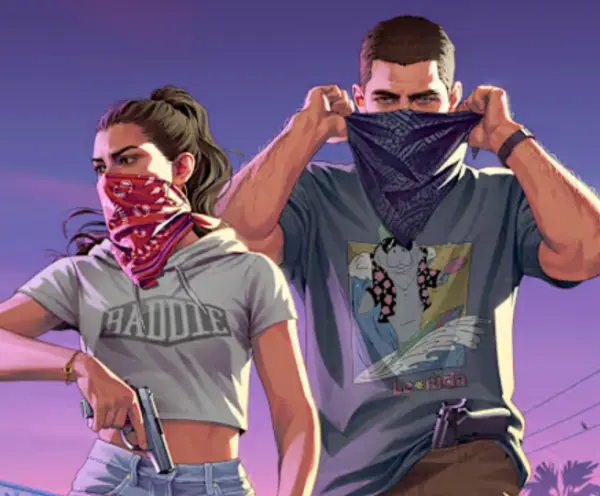
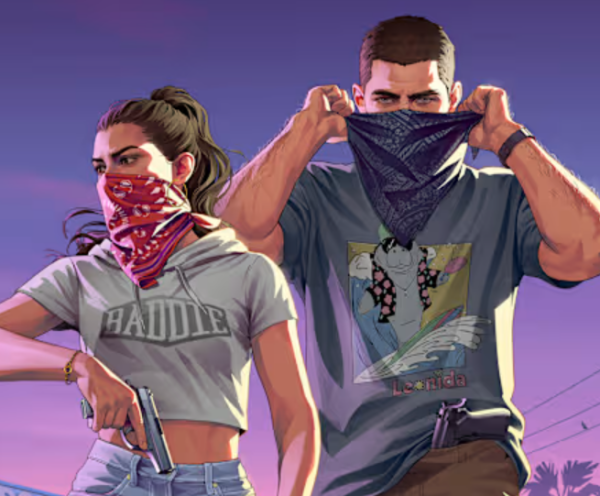
As the video game industry counts down to one of the most anticipated media launches in history, Grand Theft Auto VI (GTA VI) has once again found itself at the epicenter of a massive security breach. Scheduled for an official debut this fall, Rockstar Games and its parent company, Take-Two Interactive, have maintained a notoriously ironclad grip on the title’s marketing rollout. This tightly managed ecosystem was designed to culminate in a planned "Extended Look" gameplay premiere hosted on Netflix later this month.
However, on August 18, millions of eager fans received an unauthorized preview. An anonymous entity operating under the moniker "Cyberleek" began disseminating unreleased gameplay footage across the digital ecosystem. The leaked material spread like wildfire across mainstream social media platforms, triggering an immediate barrage of DMCA takedown notices from Take-Two’s legal representatives. Accompanying the leaked clips was a provocative manifesto criticizing modern gaming industry trends—specifically targeting the gradual industry-wide pivot away from physical media discs. Adding a bizarre financial twist to the security breach, the leaked gameplay videos were aggressively watermarked with promotional advertisements for a speculative Solana-based cryptocurrency token.
In response, Take-Two Interactive has launched a sweeping, highly aggressive multi-platform legal offensive. Utilizing Section 512(h) of the Digital Millennium Copyright Act (DMCA), the publisher has filed a wave of sweeping subpoenas in the U.S. District Court for the Southern District of New York. These legal maneuvers target tech giants Microsoft, Discord, X Corp. (formerly Twitter), and Google/YouTube.
While the publisher’s primary objective is to unmask the individuals responsible for the leak, the breadth of these legal actions has sparked intense debate regarding digital privacy, corporate overreach, and the legal limits of copyright enforcement in modern online communities. This investigative report breaks down the anatomy of the leak, the sweeping scope of Take-Two’s legal dragnet, and the broader implications for digital privacy and intellectual property law.

Detailed Chronology of the Leak and Legal Escalation
The timeline of the August 2024 Grand Theft Auto VI security breach and the subsequent legal retaliation highlights the rapid escalation of corporate intellectual property enforcement in the digital age.
August 18: The Breach and the Manifesto
The incident began when user "Cyberleek" flooded the internet with unauthorized gameplay clips. Unlike previous historical leaks that solely featured raw, early-development builds, this wave of material was meticulously branded. Along with the aforementioned Solana token promotional watermarks, the leaker published a detailed manifesto condemning the current trajectory of the video game industry. Central to their grievances was the decline of physical disk ownership—a thematic critique that ironically accompanied the unauthorized distribution of digital-only media files.
Despite immediate takedown requests issued by Rockstar Games, the clips circulated rapidly across Discord, X, and YouTube. Realizing that standard content moderation and reactive takedowns were insufficient to curb the viral spread, Take-Two mobilized its external legal counsel to pursue the infrastructure providers hosting and channeling the stolen intellectual property.
August 19–20: The First Wave of Subpoenas (Microsoft and Discord)
Represented by the prominent law firm Kirkland & Ellis, Take-Two filed its initial set of DMCA subpoena applications in the U.S. District Court for the Southern District of New York. These filings targeted Microsoft and Discord, seeking exhaustive internal investigation files, device identifiers, IP access logs, and OneDrive content tied to the "Cyberleek" moniker.
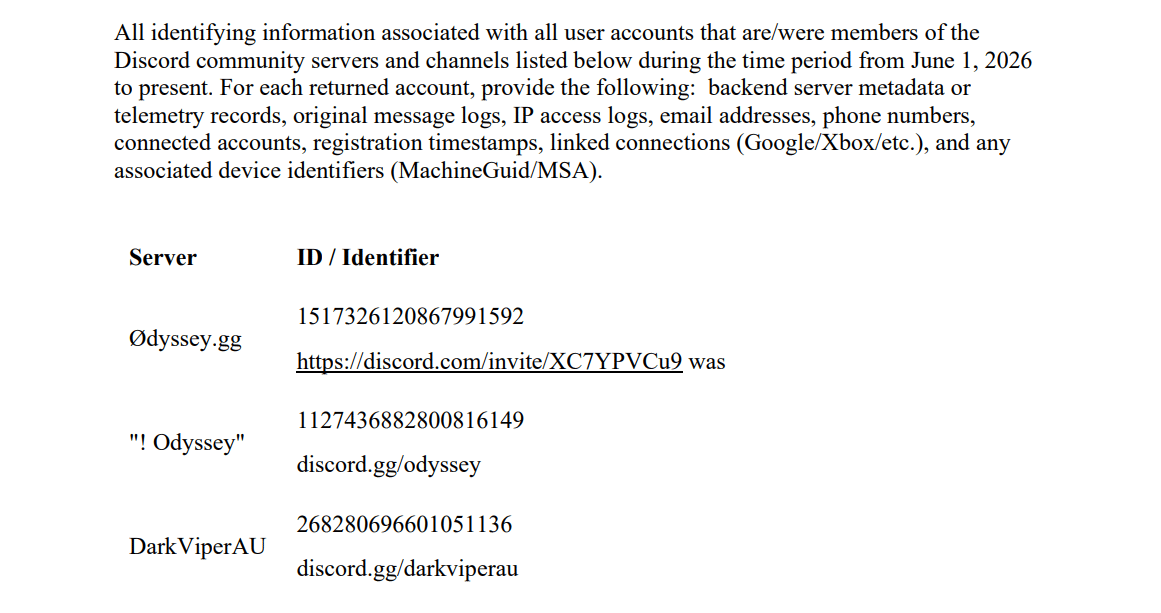
Crucially, the Discord subpoena drew immediate alarm from digital rights advocates and privacy experts. Rather than requesting data on specific, confirmed infringers, the subpoena cast an extraordinarily wide net. It demanded identifying details, registration metadata, and communication histories for every single user account that communicated within three designated Discord servers since June 1. This meant that thousands of ordinary community members—many of whom may have posted nothing more than general gaming commentary—were suddenly caught in a corporate data sweep.
August 21–22: Narrower Filings Targeting X and Google/YouTube
Shortly after the Microsoft and Discord filings, a second legal team—Ruttenberg IP Law—filed a separate batch of DMCA subpoenas targeting X Corp. and Google. These filings were notably more focused than the broad Discord sweep.
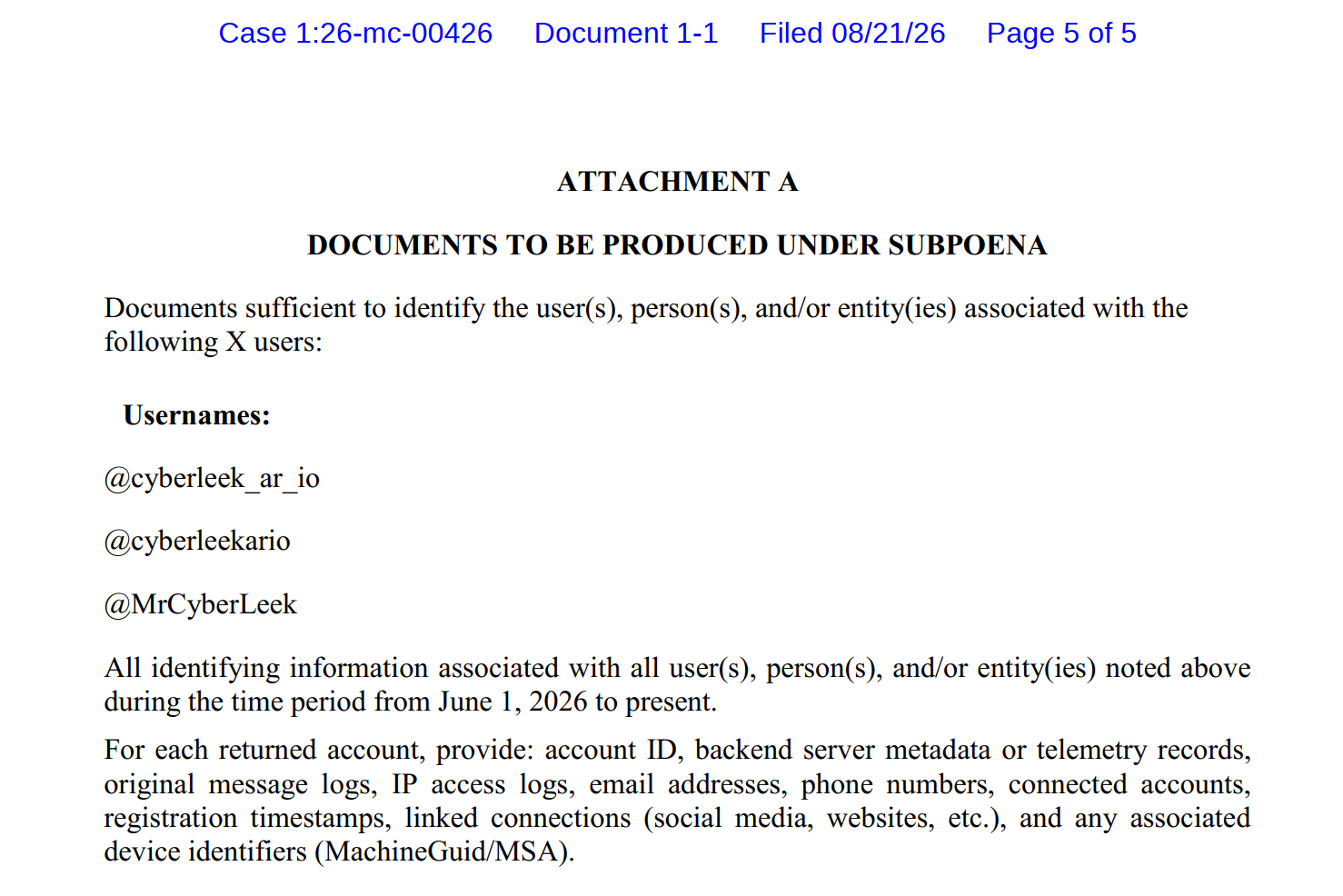
The application directed at X Corp. named three specific user accounts: @cyberleek_ar_io, @cyberleekario, and @MrCyberLeek. For these accounts, Take-Two demanded comprehensive logs, including account IDs, registration emails, phone numbers, connected accounts, IP access logs, and device identifiers dating back to June 1.
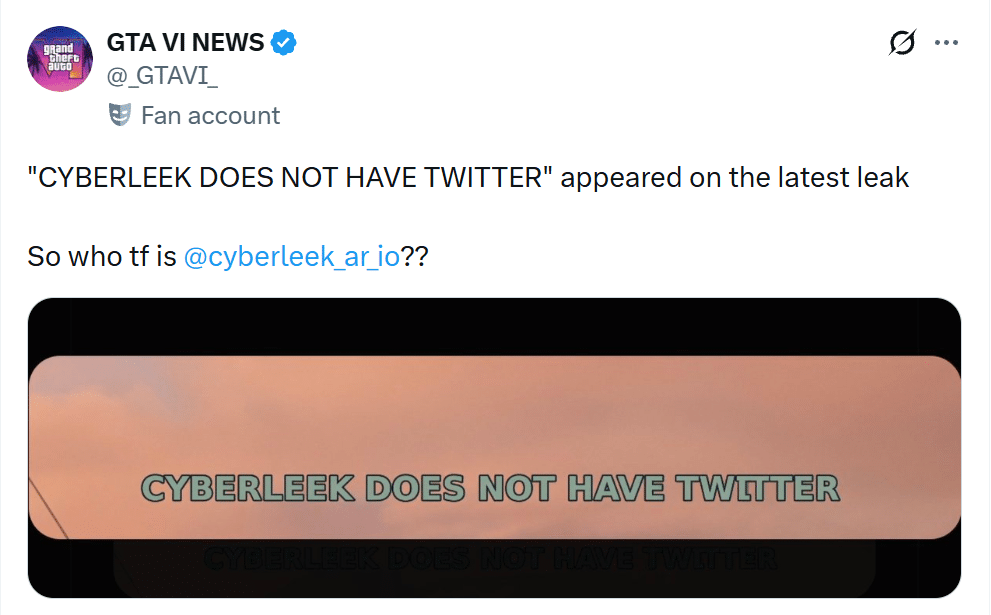
Ironically, the Grand Theft Auto fan community had already flagged these specific X accounts as impostors prior to the subpoena filings. Realizing their identity was being spoofed or exploited, the actual "Cyberleek" entity had even watermarked subsequent leaked videos with the explicit text: "CYBERLEEK DOES NOT HAVE TWITTER." At the time of this writing, all the targeted X accounts have been suspended by the platform, though the legal inquiry into their administrative logs remains active.
Concurrently, the Google/YouTube subpoena focused narrowly on a single unauthorized video file designated by Rockstar’s internal tracking systems as UNAUTH_2026AUG_VIDEO2, alongside three associated channels: CyberLeeks, Surfer24k, and cyberleek_ar_io. Because the user "Surfer24k" also appeared in the logs of the targeted Discord servers, Take-Two’s legal strategy appears intent on cross-referencing metadata across multiple platforms to establish a cohesive identity profile.
Supporting Context & Metrics: Understanding Section 512(h) DMCA Subpoenas
To fully understand Take-Two’s aggressive legal posture, it is essential to examine the legal mechanism being deployed: the Section 512(h) subpoena under the Digital Millennium Copyright Act.
The Mechanics of a DMCA Subpoena
Unlike a traditional civil lawsuit, which requires a lengthy process of filing a complaint, serving a defendant, and moving through discovery and trial, a DMCA subpoena is an administrative shortcut. Under Section 512(h), a copyright holder can compel an internet service provider (ISP) or platform operator to disclose the identity of an alleged copyright infringer.
The procedural requirements are relatively streamlined:
- Application: The copyright holder submits a copy of a formal DMCA takedown notice, a proposed subpoena, and a sworn declaration stating that the purpose of the request is strictly to identify the infringer for copyright protection.
- Court Clerk Issuance: Upon verifying that the paperwork satisfies statutory requirements, a judge signs an order directing the court clerk to issue the subpoena. No judicial ruling on the merits of a copyright infringement lawsuit is required at this stage.
- Compliance: The service provider is legally obligated to hand over the requested user logs and metadata, allowing the copyright holder to determine whether to pursue a formal lawsuit.
Current Status in the Docket
Despite widespread media reports claiming that Take-Two’s subpoenas have already been executed, court dockets reveal a more nuanced reality. While federal judges Andrew L. Carter Jr. and Jennifer L. Rochon have signed orders directing the court clerk to issue the documents, the physical or electronic issuance by the clerk had not been fully finalized at the time of reporting. Consequently, no user data has changed hands yet.
Furthermore, legal scholars point out a vital distinction regarding the scope of these instruments. Section 512(h) subpoenas are legally restricted to targeting alleged infringers directly tied to specific infringing material. Whether this statutory authority extends to sweeping up thousands of uninvolved users within a multi-thousand-member Discord community remains a fiercely contested point of law.
Official Statements and Industry Impact
Neither Rockstar Games nor Take-Two Interactive has issued a public public relations statement addressing the specific details of the ongoing litigation. However, corporate filings and legal declarations submitted by their respective legal counsels provide clear insight into their institutional mindset.
In court filings, Take-Two’s legal representatives explicitly declared that the sole purpose of the subpoenas is "to obtain the identity of an alleged infringer or infringers, and that such information will only be used for the purpose of protecting Take-Two’s rights." This boilerplate language preserves the publisher’s legal right to escalate the matter from administrative data collection into full-scale civil litigation or criminal referral if the severity of the leak warrants it.
The gaming industry reaction has been largely polarized. On one hand, developers and publishers view the protection of unreleased intellectual property as an existential necessity. Multi-hundred-million-dollar development cycles, stock valuations, and marketing campaigns depend heavily on controlled reveals. A catastrophic leak can disrupt years of strategic planning, diminish consumer excitement, and demoralize development teams who spend years perfecting polished experiences.
On the other hand, civil liberties advocates and privacy groups have raised red flags over Take-Two’s methodology. Digital rights organizations argue that utilizing broad, dragnet-style subpoenas to capture metadata from entire online communities sets a dangerous precedent. If a copyright holder can legally compel Microsoft and Discord to hand over the Windows device IDs, IP logs, and personal identifiers of every single participant in a server simply because an infraction occurred within that space, the baseline expectation of digital privacy in online gaming communities is severely eroded.
Future Outlook: What Lies Ahead for Take-Two and the Leakers?
As this high-stakes legal drama continues to unfold, several critical developments are expected in the coming weeks and months:
- Clerk Issuance and Platform Resistance: Once the court clerk officially issues the subpoenas, Microsoft, Discord, X Corp., and Google will be formally served. Major tech platforms frequently challenge DMCA subpoenas that they deem overly broad or invasive. It is entirely possible that intermediary platforms—or individual users acting through legal counsel—will file motions to quash the subpoenas, particularly the expansive Discord and Microsoft requests.
- Motions to Quash: Under federal rules, targeted users or third-party advocacy groups have the legal standing to challenge subpoenas that violate First Amendment anonymity protections or exceed the statutory boundaries of the DMCA. Legal battles over the definition of an "alleged infringer" in mass-membership chat servers could establish landmark case law.
- Potential Civil Litigation: If Take-Two successfully acquires the requested device identifiers, IP logs, and registration emails, the publisher is widely expected to initiate civil lawsuits against the primary architects of the leak. Given the financial stakes of the Grand Theft Auto franchise—which routinely generates billions of dollars in revenue—Take-Two has both the incentive and the financial leverage to pursue maximum statutory damages against commercial-scale intellectual property thieves.
- The Marketing Campaign Proceeds: Despite the disruption caused by "Cyberleek" and the ensuing legal fallout, Rockstar Games remains on track to deliver its heavily anticipated "Extended Look" gameplay premiere on Netflix later this month, leading up to the official global launch of Grand Theft Auto VI this fall.
Ultimately, Take-Two Interactive’s aggressive legal campaign sends an unmistakable message to the gaming underworld: corporate multi-nationals will utilize every tool available in modern jurisprudence to hunt down intellectual property violators. However, as the legal dust settles, the judiciary will ultimately decide whether corporate copyright protection can lawfully cast a net wide enough to snare innocent bystanders in the digital age.