Executive Overview
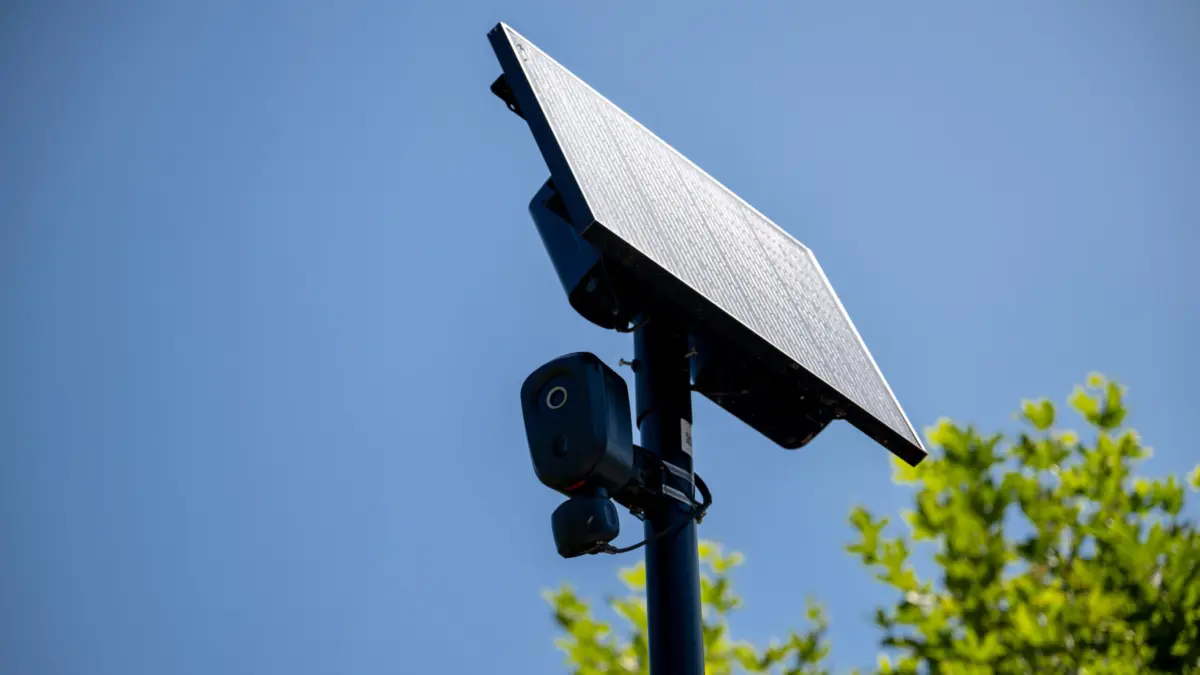
In an era defined by rapid technological integration within public safety, few private entities have scaled as aggressively or sparked as intense a public debate as Flock Safety. Operating a massive nationwide network of approximately 120,000 automated license plate readers (ALPRs) across the United States, Flock has positioned itself as an indispensable utility for law enforcement. The company’s hardware and software ecosystem—frequently marketed as a modernized shield against property crime, vehicle theft, and violent offences—has rapidly transformed the everyday landscape of American streets.
However, this sweeping expansion has come at a significant cost to civic trust. Recent investigative reporting has brought to light a troubling pattern of institutional overreach and systemic abuse, revealing that the very tools purchased to protect communities have been systematically hijacked for personal surveillance, stalking, and harassment by law enforcement personnel. In response to mounting political backlash, public protest, and legislative scrutiny, Flock introduced a suite of platform updates in August 2026 designed to curb unauthorized access. Yet, these measures have proven insufficient, marred by structural loopholes that rely on voluntary compliance rather than hard technological enforcement.
The central friction point in the modern surveillance debate is no longer a binary choice between absolute security and total privacy. Instead, it is a critical evaluation of design choices. Flock’s infrastructure functions the way it does because of intentional corporate decisions regarding data collection granularity, retention periods, cross-jurisdictional sharing, and user verification. Defenders of mass surveillance argue that the utilitarian value of catching a violent criminal outweighs the passive intrusion of recording a citizen’s daily commute. Critics and civil liberties organizations, conversely, contend that accepting this bargain requires sleepwalking into a permanent posture of mass surveillance.
As cities across the country begin re-evaluating their contracts, canceling partnerships, and demanding stricter legislative guardrails, the fundamental question persists: Can public safety technology be engineered with strict, privacy-first parameters, or is the foundational business model of companies like Flock inherently incompatible with an open, free society?
Detailed Chronology
The Evolution of ALPR Technology and Flock’s Rise
Automated license plate readers are not a novel invention; municipalities and toll authorities have utilized optical character recognition (OCR) systems since the 1990s to monitor traffic, collect tolls, and issue administrative citations. However, these legacy systems were typically siloed, localized, and restricted in scope.
Flock Safety revolutionized this landscape by bundling hardware with a cloud-based software platform designed for frictionless inter-agency data sharing. By packaging solar-powered, easily mounted cameras with sophisticated artificial intelligence algorithms that track not just license plates, but vehicle make, model, color, and distinguishing features, the company captured the municipal market. Bolstered by aggressive marketing and venture capital, Flock achieved an eye-watering $8 billion valuation, driven entirely by its promise to build an interconnected national web of vehicle tracking data.
The Stalking Scandal and the Breaking Point
The illusion of secure, restricted police usage shattered in mid-2026. An extensive investigative report published by The Washington Post documented roughly 50 egregious instances where law enforcement officers utilized surveillance networks operated by Flock and its competitors to spy on personal acquaintances, current partners, and former romantic interests.
The accounts detailed systemic vulnerabilities within police oversight. In Wisconsin, a woman discovered that her former boyfriend, a police officer, had queried the Flock database for her vehicle’s location a staggering 179 times. In another jurisdiction, a woman found herself stalked by her own chief of police, realizing with horror that there was no impartial internal authority to whom she could report the abuse. These revelations proved that the software’s architecture—designed for ease of access and rapid intelligence gathering—lacked adequate structural barriers to prevent predatory voyeurism.
August 2026: Platform Updates and Superficial Safeguards
Under intense public scrutiny and facing a tidal wave of reputational damage, Flock announced a series of platform changes last Thursday. The updates aimed to enforce accountability by requiring officers to input a criminal case number before initiating a search and deploying algorithmic flags to detect anomalous search behaviors.
Simultaneously, the company attempted to address data retention concerns by recommending a reduced data retention window of seven days, down from the months or years previously permitted by default. However, privacy advocates immediately pointed out the glaring loophole: Flock does not cross-reference or verify the validity of the case numbers entered by officers. An operator can type in a string of gibberish, bypass the security check, and continue monitoring targets without friction.
Supporting Context & Metrics
To fully understand the scale of Flock’s footprint and the mechanics of the civil liberties debate, it is essential to examine the operational metrics that define the network:
- 120,000+ Cameras: The approximate number of active Flock ALPR devices deployed across hundreds of municipalities, neighborhoods, and commercial corridors nationwide.
- The 90% Rule: Internal Flock data indicates that approximately 90% of all legitimate law enforcement searches occur within the first seven days following an incident. This statistical reality undercuts the justification for long-term, multi-year data hoarding by police agencies.
- $8 Billion Valuation: The financial milestone that underscores the market demand for comprehensive, cross-jurisdictional vehicular surveillance platforms.
- 50 Documented Stalking Cases: A baseline figure identified by investigative journalists exposing how easily accessible panoptical data can be weaponized for interpersonal harassment.
- Zero External Validation: The current structural limitation wherein Flock’s software accepts unverified case numbers without integrating directly into municipal computer-aided dispatch (CAD) or records management systems (RMS).
The Mechanics of Mass Surveillance vs. Targeted Policing
The fundamental design philosophy of modern police-tech platforms rests on data aggregation. When police in City A can effortlessly search historical logs generated in City B, State C, and dozens of private homeowner association cameras in between, the traditional boundaries of local policing dissolve.
Defenders of this model—frequently echoing arguments found in recent commentary across outlets like The Atlantic and various policy blogs—assert that passive data collection is a victimless process until activated by a criminal investigation. They present a utilitarian calculus: if a single child is recovered from a kidnapping scenario or a fleeing armed robber is intercepted because their license plate pinged a camera, the ambient collection of millions of innocent motorists’ daily movements is justified.
Civil liberties advocates reject this framing as a false dichotomy. They argue that the true danger lies in normalizing ambient surveillance infrastructure. Once a society accepts that every movement in public space must be continuously recorded, indexed, and stored by private corporate entities and shared with government agencies, the presumption of privacy in public spaces is effectively extinguished.
Official Statements and Industry Perspectives
The ideological battle lines surrounding Flock Safety highlight a profound philosophical divide between corporate stakeholders, municipal leaders, privacy advocates, and law enforcement agencies.
Garrett Langley, CEO and Founder of Flock Safety:
Langley has consistently defended the company’s mission, emphasizing that the primary objective is to eliminate non-violent crime through data-driven innovation. Responding to the structural critiques leveled by privacy organizations, Langley acknowledged ongoing debates but maintained a firm stance on the utility of the network, stating publicly that he will "probably always have a different view than the ACLU." Flock maintains that its tools are essential modern equivalents to traditional policing methods, updated for an era where criminals utilize vehicles to commit offenses and flee jurisdictions rapidly.
Chad Marlow, Senior Policy Counsel, American Civil Liberties Union (ACLU):
Offering a stark counter-perspective, Marlow has sharply criticized the illusion of corporate self-regulation. In interviews regarding the efficacy of Flock’s August 2026 software updates, Marlow remarked that the only acceptable Flock contract from a civil liberties perspective is "one that is never signed." The ACLU’s official position is that corporate guidelines and voluntary software patches cannot substitute for binding statutory law. Marlow emphasizes that the expansion of municipal surveillance networks represents an unchecked creep of state power that requires legislative bans or rigorous, court-enforced warrants rather than corporate-administered guardrails.
Municipal Leadership and Local Backlash:
Elected officials across various states find themselves caught between anxious police departments—often facing staffing shortages and pressure to reduce crime rates—and constituents mobilizing against over-policing. In several suburban and metropolitan areas, city councils have taken unilateral action, letting contracts expire, voting down new camera installations, or switching to competing vendors who offer more restrictive data-sharing parameters.
Future Outlook
The trajectory of Flock Safety and the broader police-technology sector hangs in a delicate balance. The events of 2026 have exposed the structural vulnerabilities inherent in rapid technological deployment decoupled from robust democratic oversight.
Moving forward, the debate will likely force a reckoning over software architecture and legislative restraint. If technology companies refuse to build verifiable safeguards—such as direct, automated integrations with police records management systems that make bogus case numbers impossible—communities will increasingly take matters into their own hands.
Three primary pathways define the future of the automated surveillance market:
- Strict Legislative Containment: State legislatures and municipal governments may bypass corporate terms of service entirely, passing strict statutory limits that cap data retention at 48 to 72 hours, outlaw cross-jurisdictional sharing except under active emergency declarations (such as Amber Alerts), and mandate strict auditing procedures.
- Technological Redesign: Companies like Flock may be compelled to re-engineer their products from the ground up, transitioning from open-ended data mining networks to tightly restricted, event-triggered emergency response systems. This would appease civil liberties concerns but fundamentally alter the company’s valuation and business model.
- Market Fragmentation and Municipal Pushback: A prolonged public relations crisis could lead to widespread contract cancellations, pushing the industry into a fractured state where only heavily policed or highly conservative jurisdictions retain surveillance networks, while progressive cities ban them outright.
Ultimately, the controversy surrounding Flock Safety serves as a cautionary tale for the integration of artificial intelligence and big data into public safety. Technology should undoubtedly aid in the prevention and solution of crime, but societies must refuse to blindly accept the terms of a bargain that trades fundamental civil liberties for the hollow promise of algorithmic security. Communities are discovering that they possess the power to define their own safety parameters—proving that the future of public surveillance will be shaped not just in corporate boardrooms, but in city halls and voting booths across the nation.