
Executive Overview
The pace of technological transformation across the digital commerce landscape continues to accelerate, driven by rapid advancements in artificial intelligence, shifting consumer behavior, and relentless competition in global supply chains. In this week’s comprehensive industry roundup, we examine a sweeping wave of new product releases, strategic funding rounds, and technological integrations designed to empower merchants, streamline fulfillment, and redefine customer engagement.
From monumental platform updates like WooCommerce 11.0 to massive capital infusions into high-growth social commerce giants such as Whatnot—which recently closed a staggering $545 million Series G funding round—the ecommerce ecosystem is undergoing a structural evolution. Artificial intelligence has decisively transitioned from experimental chat interfaces to deeply embedded operational frameworks. Platforms across the commerce stack are increasingly leveraging machine learning models, autonomous marketing engines, and agentic workflows to reduce friction at every touchpoint, from initial product discovery to post-purchase checkout decisioning.

This report provides an in-depth analysis of the latest tools, platform updates, and strategic partnerships shaping the future of digital retail. By dissecting these developments across core pillars—including platform infrastructure, AI-driven merchandising, logistics, and social commerce—merchants and industry stakeholders can better navigate the complexities of the modern digital marketplace.
Detailed Chronology of Industry Developments
The past week has witnessed a flurry of strategic product launches, major platform upgrades, and significant financial maneuvers. Below is a detailed chronology of the primary announcements impacting online merchants and retail tech stacks.
1. Platform Infrastructure & Core Architecture Updates
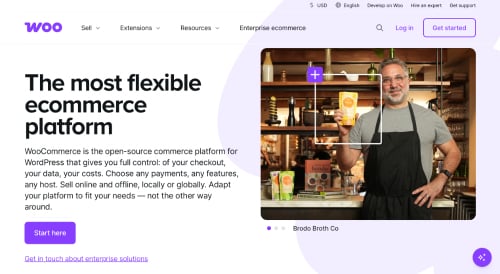
- WooCommerce Releases Version 11.0: The globally ubiquitous open-source ecommerce platform has officially launched WooCommerce 11.0. This major update introduces targeted optimizations to merchant order screens, significantly accelerating query speeds and drastically reducing server timeouts and empty search counts for high-volume stores. Additionally, the release integrates advanced Checkout Recovery functionality, enabling store operators to systematically test and refine abandoned-cart messaging to optimize consumer recovery rates.
- Adobe Commerce Introduces Catalog Agent: Building on its robust Magento foundation, Adobe Commerce has rolled out Catalog Agent, a specialized feature designed to streamline AI product discovery. By leveraging existing commerce attributes—such as inventory levels, pricing tiers, and product relationships—Catalog Agent constructs a machine-readable layer optimized specifically for AI crawlers and large language model (LLM)-powered discovery engines, ensuring rich product detail pages are easily interpreted by emerging shopping agents.
- Kibo Commerce Unifies Agentic Platform: Kibo Commerce announced the next evolution of its composable commerce and order management tools by unifying agentic AI into a single, model-agnostic framework. Capable of connecting to any large language model, the system is engineered around five distinct operational pillars: configuration, explanation, analysis, engagement, and optimization.
2. AI Automation, Merchandising, and Marketing Engines
- AI Bulk Listing Generator Launches: Aimed at solving one of the most tedious operational bottlenecks for digital merchants, the newly launched AI Bulk Listing Generator enables businesses to automate product catalog creation at scale. By importing structured product data via spreadsheets, users can generate thousands of unique, optimized listings in minutes across major ecosystems like Shopify, WooCommerce, Etsy, Amazon, eBay, BigCommerce, and Wix.
- Wunderkind Partners with Cordial: To bridge the gap between anonymous web traffic and multi-channel lifecycle marketing, Wunderkind has forged a strategic partnership with Cordial. By combining Wunderkind’s proprietary identity resolution graph and AI-driven decisioning for unknown site visitors with Cordial’s cross-channel messaging orchestration, enterprise brands can dramatically expand their reachable audience within existing automated workflows.
- Wayy.ai Secures $2M and Launches AI Co-Founder: Designed specifically for solopreneurs and small business owners, Wayy.ai closed a $2 million pre-seed funding round led by Zero to One Ventures. Concurrently, the company launched an AI-powered virtual salesperson tool that automates sales workflows, identifies high-potential prospects, and streamlines outreach to potential partners and investors.
- Adobe Integrates Creativity Suite into ChatGPT: Adobe announced a powerful new creativity and productivity plugin for ChatGPT. Harnessing over 70 tools from Adobe’s creative ecosystem, the plugin enables users to execute complex multi-step workflows—ranging from photo editing and video asset generation to advanced PDF creation—directly within a conversational AI interface.
- Rokt Introduces Brain V4 for Checkout Decisioning: Post-purchase ecommerce platform Rokt launched Brain V4, an advanced real-time AI decisioning engine. By synthesizing consumer, partner, advertiser, contextual, and transaction data instantaneously, Brain V4 deploys machine learning models and intelligent auctions to determine the exact offers, cross-sell recommendations, or creative content displayed to individual shoppers during the critical checkout phase.
3. Supply Chain, Logistics, and Cross-Border Fulfillment
- Cainiao Launches 3-Day Cross-Border Delivery: Cainiao Group, the global logistics arm of Alibaba, has rolled out an accelerated 3-day door-to-door parcel delivery service spanning 15 international trade lanes. The service integrates air cargo, ground transportation, customs brokerage, and fulfillment nodes to dramatically compress cross-border shipping timelines for global merchants.
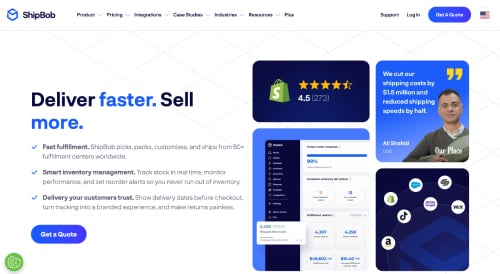
- ShipBob Unveils Anthropic-Verified AI Fulfillment Suite: Fulfillment giant ShipBob introduced a comprehensive AI suite embedded across its entire operational stack, ranging from merchant-facing software to warehouse robotics. Anchored by Model Context Protocol (MCP) standards, the suite allows merchants to interface directly with their live supply chain operations via conversational integrations like Claude or through "Bobby," ShipBob’s proprietary in-dashboard virtual agent.
4. Social Commerce, Retail Media, and Creator Economy
- Whatnot Closes $545 Million Series G Funding: Live-shopping and collector marketplace Whatnot secured a massive $545 million Series G funding round led by prominent investors including ICONIQ, Lightspeed, and Avra. The capital injection will fund expanded seller toolsets, deeper AI integration, and global market expansion, following a milestone month where the platform surpassed its entire 2025 gross merchandise volume by August 2026.
- Markable Expands Social Commerce Suite: Creator-focused platform Markable introduced two powerful tools designed to accelerate social commerce conversion: an AI-driven video editor that transforms raw footage into shoppable videos with automated enhancement and script generation, and a 3D visual collation tool that turns static products into realistic digital photos and interactive collages.
- Minty Launches Shopify App: AI shopping companion Minty released a dedicated Shopify app, connecting merchants directly to its shopper network. The tool surfaces targeted cashback and reward incentives at the exact moment of purchase intent across AI chat interfaces, mobile apps, and browser extensions, helping merchants recapture traffic that would otherwise bounce without converting.
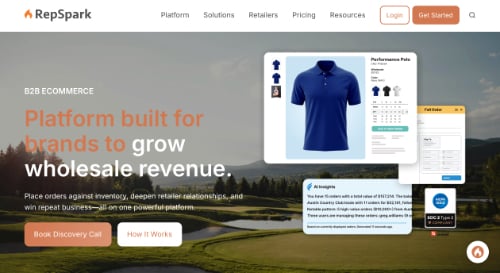
- RepSpark Secures $22 Million for B2B Retail Scaling: B2B wholesale commerce platform RepSpark announced a $22 million strategic investment led by Headlight Partners. The funds will be deployed to expand enterprise product suites, enhance AI-driven wholesale tools, and deepen integration ecosystems for specialty retail verticals like golf, fitness, and footwear.
Supporting Context & Industry Metrics
The convergence of autonomous software agents, generative AI, and high-speed global logistics points to a fundamental recalibration of digital commerce economics. Industry data indicates that merchants who successfully integrate structured, machine-readable data layers—such as Adobe’s Catalog Agent or automated bulk-listing solutions—are significantly better positioned to capture organic visibility as consumers increasingly delegate product discovery to LLM-driven search engines and conversational shopping assistants.
Furthermore, the explosive growth of social commerce and live-streaming marketplaces, underscored by Whatnot’s record-breaking transaction volumes and $545 million capital raise, demonstrates that modern consumers demand hyper-engaging, interactive shopping experiences. Traditional static product detail pages are rapidly being augmented by shoppable video feeds, real-time AI checkout personalization (as enabled by Rokt Brain V4), and instant reward-matching ecosystems like Minty.
On the fulfillment front, Cainiao’s 3-day cross-border shipping initiative and ShipBob’s robotics-integrated AI suite highlight an uncompromising industry push toward operational velocity. In an era where consumer expectations for delivery speed mirror domestic transit times regardless of geographical origin, supply chain automation has shifted from a competitive advantage to a baseline survival requirement.
Official Statements and Industry Perspectives
Industry leaders commenting on this week’s developments emphasized the shift toward autonomous, agentic workflows and frictionless consumer touchpoints.
"The integration of agentic AI and model-agnostic frameworks represents a paradigm shift in how enterprise commerce systems operate," noted representatives from Kibo Commerce regarding their latest platform iteration. "By unifying order management with intelligent, context-aware automation, brands can move beyond static rule-based systems to truly responsive commercial operations."
Highlighting the critical nature of real-time personalization at the end of the customer journey, Rokt executives emphasized the necessity of advanced decisioning engines: "Checkout is the most sensitive and valuable real estate in digital retail. With Brain V4, we are moving past rudimentary product recommendations to deliver an intelligent, contextually aware experience that respects consumer privacy while maximizing transactional value for brands."
On the supply chain side, the deployment of verified AI connectors—such as ShipBob’s integration with Anthropic’s ecosystem—signals a new era of warehouse transparency. Warehouse operators and merchants alike are increasingly embracing natural language interfaces to query live inventory, track complex shipments, and manage automated fulfillment nodes without navigating cumbersome legacy dashboards.
Future Outlook: What Lies Ahead for Digital Merchants
As we look toward the remainder of 2026 and beyond, several clear trajectories are emerging for digital merchants and enterprise technology providers:
- The Rise of Agentic Discovery: As search engines and discovery portals transition from keyword matching to autonomous AI agents, merchants must prioritize structured data optimization. Tools that automatically generate machine-readable catalogs will become indispensable for maintaining visibility in LLM-driven environments.
- Autonomous Operations as Baseline: The proliferation of AI co-founders, automated listing generators, and intelligent fulfillment suites suggests that administrative overhead will shrink dramatically for lean teams. Solopreneurs and SMBs will increasingly harness virtual agents to manage functions that previously required dedicated headcount.
- Frictionless Monetization and Checkout Personalization: Static checkouts are giving way to dynamic, real-time decisioning engines that tailor incentives, cross-sells, and payment options to individual behavioral signals on the fly.
- Globalized Speed: With logistics giants compressing cross-border delivery windows to three days, consumer expectations for international shipping will permanently shift, forcing regional merchants to lean heavily on advanced third-party logistics (3PL) automation to compete.
Merchants who proactively adopt these emerging technologies—balancing operational automation with authentic, engaging social commerce strategies—will be best positioned to capture market share in an increasingly competitive digital economy.