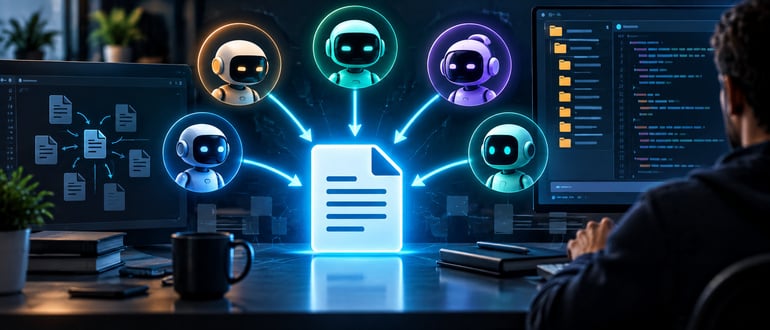
For engineering teams juggling multiple AI coding assistants, the modern repository has quietly become a fragmented landscape of overlapping configuration files. Open a project touched by different developers using different tools, and you are likely to find a chaotic mix of instruction sets: a CLAUDE.md file tailored specifically for Anthropic’s Claude Code sitting alongside an AGENTS.md file designed for Codex, Cursor, and other agentic workflows.
Initially, these files start as clean, intentional copies. But as development accelerates, they inevitably drift. Before long, an autonomous agent attempts to execute a build command or adhere to a testing protocol that quietly became obsolete a month ago. To patch over this friction, many engineering teams have relied on fragile workarounds like symbolic links (symlinks). While functional, symlinks add yet another bespoke maintenance burden to pipelines that are already complex.
That fragmented reality shifted significantly when Anthropic officially rolled out Claude Code version 2.1.277. Announced by Thariq Shihipar of the Claude Code team, the update introduces native support for the industry-backed AGENTS.md specification. Beginning with this version, if Claude Code encounters a directory lacking a local CLAUDE.md file, it will seamlessly fall back to checking for and utilizing AGENTS.md.
This integration marks a critical milestone in the maturation of AI-assisted software engineering. Rather than forcing developers to maintain separate configuration silos for every individual tool in their stack, the software ecosystem is converging on a single, shared standard. However, as enterprise adoption scales, this transition brings both immediate operational efficiencies and subtle technical caveats that platform engineering teams cannot afford to overlook.
Detailed Chronology & Mechanics: How Claude Code Handles AGENTS.md
To understand the operational impact of Anthropic’s update, it is necessary to examine how Claude Code processes instruction files under the hood. According to official Anthropic documentation, the fallback behavior is governed by a precise hierarchy designed to prevent unexpected instruction overrides.
The Default Hierarchy and Fallback Logic
By default, Claude Code reads AGENTS.md exclusively when there is a complete absence of a CLAUDE.md file in the current working directory or any parent directory up the tree.
Exclusive Precedence: If both a CLAUDE.md and an AGENTS.md file coexist in the same root folder, Claude Code will strictly prioritize CLAUDE.md and completely ignore AGENTS.md.
Explicit Imports: If an existing CLAUDE.md explicitly imports an AGENTS.md file, Claude will load it successfully through that import pipeline.
Granular Configuration via /config
To give developers finer control over how instructions are parsed, Anthropic introduced four distinct values for the "Project instructions" setting within the /config interface:
claude-md-or-agents-md (Default): The standard fallback behavior described above. Claude looks for CLAUDE.md first; if absent, it falls back to AGENTS.md.
claude-md-and-agents-md: Forces Claude to load both files simultaneously, reading CLAUDE.md first and appending or integrating instructions from AGENTS.md.
claude-md: A restrictive setting that reads only CLAUDE.md and ignores AGENTS.md entirely, useful for teams maintaining strict segregation of agent instructions.
managed-only: Bypasses local repository files altogether, loading strictly the organization’s centrally managed CLAUDE.md and automatic memory features.
Monorepo Support and Directory Precedence
Modern software architectures frequently rely on massive monorepos containing dozens of microservices, packages, and subdirectories. Claude Code handles monorepos with a structure-aware approach: when Claude opens a file within a nested subdirectory using its Read tool, it checks for that specific folder’s local AGENTS.md file—provided the subdirectory does not house its own CLAUDE.md.
This mirrors the core philosophy of the AGENTS.md specification: placing localized instruction files inside individual packages, where the nearest file to the active code takes precedence.
Supporting Context & Metrics: The Rise of a Shared Ecosystem
To view Anthropic’s adoption of AGENTS.md merely as a feature update is to miss the broader structural shift occurring across the software development lifecycle.
Whose Spec Is It?
While mainstream technical headlines frequently attribute the origin of AGENTS.md to OpenAI, its long-term trajectory is decidedly open. OpenAI initially contributed the AGENTS.md specification to the Agentic AI Foundation—a specialized body housed under the broader Linux Foundation—at its official launch in December 2025.
Significantly, Anthropic contributed its own foundational contribution to the same ecosystem: the Model Context Protocol (MCP), which has rapidly become the universal standard for connecting AI models to secure data sources and developer tools. With both OpenAI and Anthropic acting as founding platinum members of the Agentic AI Foundation, the integration of AGENTS.md into Claude Code is not one corporate vendor bowing to another. Instead, it represents a mature industry standard successfully propagating across the dominant developer tooling of the era.
Ecosystem Scale and Adoption Metrics
The momentum behind the shared instruction format is substantial. Current metrics reported by the official AGENTS.md project registry illustrate rapid enterprise and open-source penetration:
Over 60,000 open-source projects have implemented the AGENTS.md format within their repositories.
More than 30 distinct development tools, IDE extensions, and coding agents now natively parse or support the specification.
For engineering organizations, these figures reflect a fundamental change in how AI tools are deployed. Developers are no longer evaluating a single AI assistant in isolation; they are routinely cycling through multiple agents—utilizing Claude Code for complex refactoring, Cursor or Codex for inline completions, and specialized CLI agents for automated testing. Convergence on a single instruction format is no longer just a convenience; it is an architectural necessity.
Expert Perspectives: The Enterprise View on Agent Governance
The operational reality of managing multiple AI coding assistants was a central theme in discussions with industry analysts. Mitch Ashley, vice president and practice lead for CIO & technology buyers and software lifecycle engineering at The Futurum Group, emphasizes that tooling convergence directly addresses a growing enterprise pain point.
"For most enterprises, running several coding agents at now the permanent state, so convergence on one instruction format matters more than which vendor adopted it," Ashley notes.
Instruction Files as Shadow Governance Artifacts
As AI agents assume greater autonomy—executing terminal commands, structuring database migrations, and drafting pull requests—instruction files have quietly graduated from simple text hints to core infrastructural configurations. Yet, Ashley points out a dangerous blind spot in how most organizations treat them:
"These files are the first governance artifact a team has for agent behavior, and they sit outside the review path that already covers pipeline configuration."
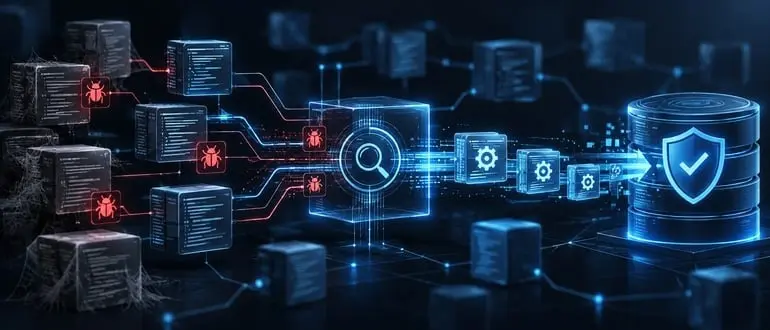
When multiple developers maintain drifting copies of instruction files across disparate branches, the attack surface for accidental misconfigurations grows. An AI agent instructed by an outdated file might inadvertently run deprecated deployment scripts, bypass security scanning protocols, or violate compliance guardrails.
By unifying around a single, shared AGENTS.md file, engineering teams eliminate redundant maintenance cycles and establish a single source of truth. Crucially, this gives code reviewers a centralized place to audit agent permissions and workflows during regular pull request reviews. Ashley offers a clear prescription for engineering leadership: "Give them an owner in platform engineering."
However, Ashley also issues an important reality check regarding the limitations of configuration files. While a shared standard solves local instruction drift, it cannot solve the broader architectural challenges of multi-vendor orchestration. "The harder interoperability problem is agent context and orchestration across vendors, and no shared file fixes that one," he warns.
Before DevOps teams rush to delete existing symbolic links and migrate their repositories wholesale to AGENTS.md, Anthropic’s documentation outlines several crucial edge cases and platform limitations that demand careful pre-testing.
1. The CLAUDE.local.md Interference Trap
In many development environments, engineers use CLAUDE.local.md files to inject personal preferences or local debugging parameters that they do not want checked into global version control. However, Claude Code evaluates CLAUDE.local.md with the exact same weight as a standard CLAUDE.md.
The Risk: If a developer adds a local preference file to their workspace, it will silently override and block Claude from reading the team’s shared AGENTS.md.
The Fix: Teams encountering this behavior must explicitly reconfigure their workspace settings to the claude-md-and-agents-md value within /config.
2. Narrow Naming and Directory Conventions
Despite the flexibility of the AGENTS.md name, support within Claude Code 2.1.277 is surprisingly restrictive regarding naming variations and directory structures:
Claude Code does not read alternative filenames such as AGENTS.local.md or AGENTS.override.md.
It completely ignores files placed within hidden directories, such as .agents/.
Teams that rely on modular skill structures stored in hidden folders will need to maintain alternative loading pathways or keep their primary AGENTS.md strictly in the project root or package directories.
3. Platform Availability and Ephemeral CI Runner Bottlenecks
Deployment environment matters significantly. According to Anthropic’s changelogs and documentation, native AGENTS.md parsing is subject to specific distribution hurdles:
The feature is not yet available across enterprise managed cloud wrappers such as AWS Bedrock, Google Cloud Vertex AI, or Palantir Foundry.
Feature Flag Dependencies: Sessions that fail to fetch live feature flags directly from Anthropic’s servers cannot read AGENTS.md. This notably includes developer sessions operating with telemetry completely disabled.
The Cold Start Problem: The very first session immediately following a fresh installation or an upgrade fails to read AGENTS.md.
Actionable Advice for CI/CD Engineers: Teams utilizing Claude Code within ephemeral, containerized CI runners where dependencies are freshly installed on every build must rigorously test these behaviors. If an ephemeral runner boots up and immediately attempts to parse an un-cached AGENTS.md file without active feature flag connectivity, the agent may execute without project instructions. To bulletproof pipelines against this, engineers should explicitly import AGENTS.md via a baseline CLAUDE.md file as an interim failsafe.
4. Visibility and Observability Discrepancies
For security and compliance tooling that relies on strict observability, transparency is paramount. Claude Code introduces subtle monitoring blind spots when parsing fallback files:
An AGENTS.md file loaded automatically via the default fallback setting does not appear within the /memory interface or the active memory file lists accessible via /context.
Standard InstructionsLoaded telemetry hooks do not fire when an AGENTS.md file is loaded via fallback.
Contrast: Conversely, these hooks do successfully fire if the AGENTS.md file is explicitly imported or referenced via a symlink from within a CLAUDE.md file.
For security operations teams whose governance tooling relies heavily on telemetry hooks to audit agent behavior, this distinction is critical. If automated auditing relies on hooks that fail to trigger during fallback scenarios, compliance blind spots can emerge.
Future Outlook: The Path Forward for Agentic Standardization
Anthropic’s integration of AGENTS.md into Claude Code 2.1.277 represents a mature, pragmatic step forward for the generative AI ecosystem. By leaning into an open, foundation-backed standard rather than retreating into proprietary lock-in, Anthropic has acknowledged a fundamental truth of modern software engineering: developers will never use just one tool.
For platform engineering teams, the roadmap ahead is clear. Transitioning to a unified AGENTS.md standard requires a brief but disciplined operational audit across existing repositories:
Inventory Instruction Files: Conduct a thorough repository scan to count all instances of CLAUDE.md, CLAUDE.local.md, and legacy configuration files.
Establish the Single Source of Truth: Formally adopt AGENTS.md as the primary repository instruction format across all agent tools.
Audit Local Overrides: Identify any developer-specific CLAUDE.local.md files that might inadvertently block fallback parsing in local environments.
Validate CI/CD Pipelines: Test ephemeral runners, cloud-hosted instances, and telemetry hooks to ensure instruction files load reliably without relying exclusively on dynamic feature flag fetches.
Assign Ownership: Designate platform engineering as the formal owner of agent configuration artifacts, bringing them under the exact same peer-review and governance rigor applied to infrastructure-as-code and CI/CD pipelines.
While configuration convergence does not solve the complex multi-vendor orchestration challenges looming on the horizon, it removes a persistent source of friction from day-to-day development. For teams striving to keep autonomous coding agents aligned, accurate, and secure, a single shared file is a powerful place to start.