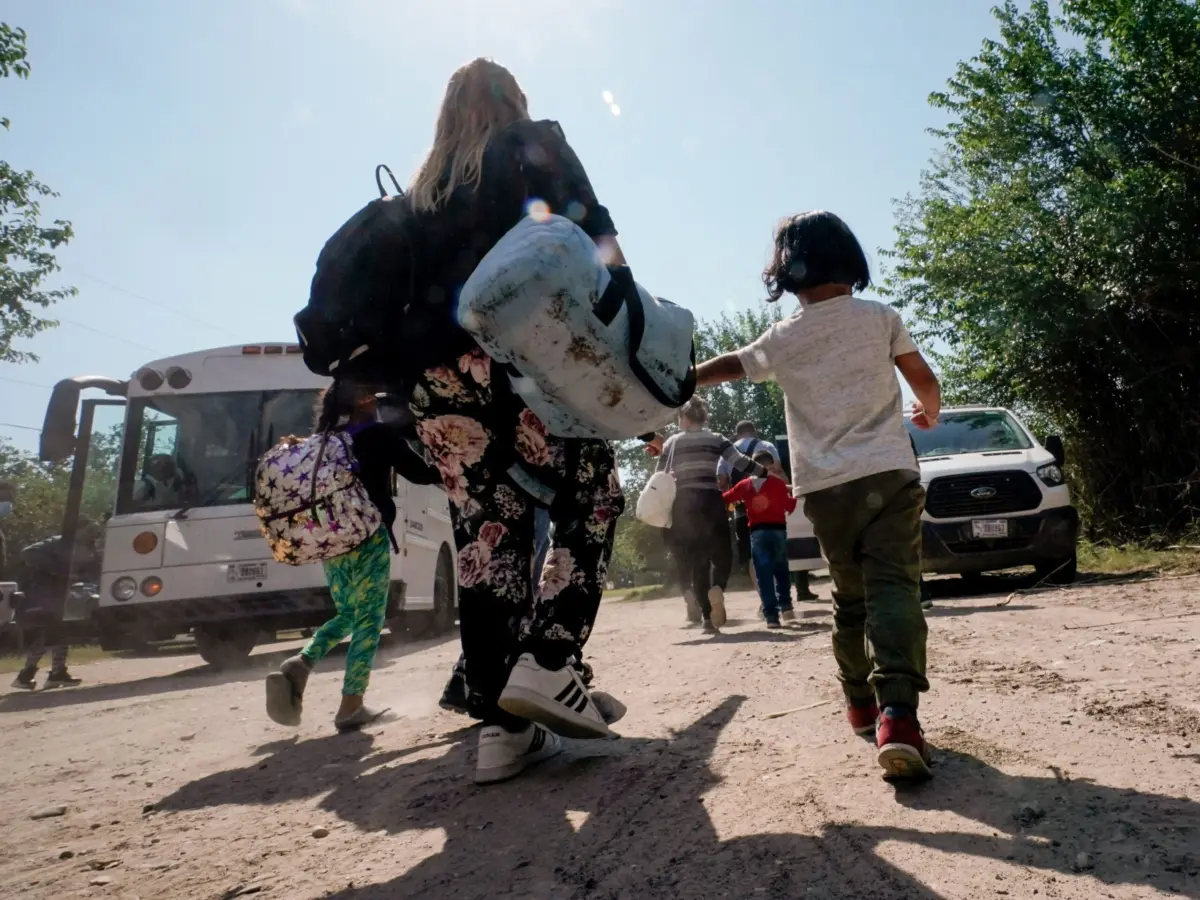
Executive Overview
For over a decade, the United States government has invested heavily in constructing a "virtual wall"—a sprawling, high-tech network of surveillance towers equipped with advanced radar, thermal imaging, and artificial intelligence. Designed to monitor vast and unforgiving stretches of the southern border, this technological fortress was championed as a humane and efficient alternative to physical barriers, promising real-time detection of cross-border movements without the immediate hazards of rugged terrain.
However, a year-long joint investigation by MIT Technology Review and the Times of San Diego, published as part of the special reporting project Dying on Camera, reveals a grim reality. Hundreds of migrants have died of exposure, dehydration, and medical emergencies within sight of these advanced towers, their bodies going unnoticed for weeks or months.
Rather than serving as an infallible safety net, the virtual wall is plagued by systemic operational failures: broken equipment, artificial intelligence algorithms that fail to recognize human movement in harsh environmental conditions, and alerts that are ignored or deprioritized by overworked border agents. Despite these alarming shortcomings, the federal government is poised to triple the size of the virtual wall by 2034, injecting $1 billion into an expansion effort that heavily benefits defense contractors like Anduril.
This report examines the anatomy of these technological and administrative failures, outlines the historical context of data tracking gaps within U.S. Customs and Border Protection (CBP), and presents four critical, actionable reforms the agency must undertake to address accountability, transparency, and human life in the borderlands.
Detailed Chronology of a Surveillance Breakdown
To understand how individuals can perish in plain sight of multi-million-dollar surveillance infrastructure, one must examine the operational timeline of the virtual wall and the systemic blind spots that have accumulated since its inception.
- 2007–2014: The Genesis of the Virtual Wall. CBP formally introduces tracking mechanisms like the Border Safety Initiative Tracking System (BSITS) to document migrant distress and deaths. Concurrently, the agency begins experimenting with stationary and mobile surveillance towers. Early iterations face immediate scrutiny from the Government Accountability Office (GAO) regarding data reliability and a lack of standardized metrics to prove whether the technology successfully deters illegal crossings or aids in apprehensions.
- 2015: Deployment of Advanced Towers. CBP begins installing modern, automated surveillance towers capable of long-range detection. Despite possessing the architectural capability to audit the effectiveness of these towers and cross-reference their operational data with regional mortality rates, the agency fails to conduct comprehensive reviews.
- 2017–2021: Persistent Data Corruption and Missing Metrics. GAO reports reveal that field agents are routinely submitting inaccurate data, such as logging hundreds of apprehensions credited to specific tower models in states where those models do not even exist. While CBP launches the Missing Migrant Program in 2017 to rescue distressed individuals, subsequent GAO audits in 2021 and 2025 find that the program lacks actionable performance metrics to evaluate whether its data collection actually reduces deaths or increases rescues. Furthermore, standardization rules for entering cases into BSITS are only patchily enforced across different border sectors.
- 2024–Present: The Human Toll Exposed. Investigative journalists map nearly 600 surveillance towers using satellite imagery and nonprofit databases—well under the government’s stated count of 800 operational towers. In localized studies, such as a targeted stretch of the New Mexico desert, researchers discover that more than 18 people died within proximity of advanced AI-enabled towers in a single year. Families, human rights advocates, and local lawmakers are left asking a haunting question: Did the cameras see them, and nobody came? Or did nobody see them at all?
Supporting Context & Metrics: The Scale of the Blind Spots
The true magnitude of failures along the virtual wall is obscured by fragmented data collection, institutional opacity, and an absence of unified reporting protocols.

Mapping the Invisible Wall
CBP does not publish a comprehensive, publicly accessible map of its virtual wall. Consequently, researchers have had to rely on independent mapping efforts spearheaded by organizations like the Electronic Frontier Foundation, cross-referenced with satellite imagery to determine approximate installation dates and physical coordinates.
Out of an estimated 800 towers currently active across the southern border, investigative analyses have verified approximately 600. Because exact activation dates and operational status logs remain shielded within federal databases, mortality figures tied to these structures—conservatively tallied at over 1,050 deaths near tower radii—are widely considered undercounts.
The New Mexico Case Study
The statistical abstraction of border mortality becomes starkly human when examined at the regional level. When MIT Technology Review presented New Mexico state representative Sarah Silva with data showing that more than 18 people died in 2024 near surveillance towers within a small stretch of desert in her district, her response underscored the systemic breakdown: "If I were the federal government, I would do an audit, because this feels like it’s not working."
In several documented instances within this region, multiple individuals perished within months of each other, sometimes separated by mere hundreds of feet, despite being in the direct line of sight of advanced artificial intelligence towers. The persistence of these tragedies points to a chilling operational reality: the technology is either misinterpreting human presence, generating alerts that dissolve in backlogs, or failing entirely due to hardware degradation and extreme desert climates.
Official Statements and Institutional Accountability
The expansion of the virtual wall is deeply intertwined with private defense manufacturing. Companies like Anduril have secured lucrative government contracts to design and deploy the latest generation of autonomous surveillance towers. With federal spending projected to reach $1 billion to triple the footprint of the virtual wall over the next decade, financial incentives heavily favor rapid deployment over rigorous post-market evaluation.
Federal oversight bodies have repeatedly flagged these vulnerabilities without prompting structural remediation.

- The GAO Findings: Repeated federal audits—including those published in 2014, 2017, 2021, and 2025—have documented chronic inaccuracies in how Border Patrol agents log technology-assisted apprehensions. Agents are instructed to record when a tower or sensor aids in an interception, but field interviews reveal that data entry is viewed as a burdensome administrative chore rather than a vital metric.
- The Bureaucratic Silence: A former CBP official who served during the Biden administration described the data-collection mandates as "spitting in the wind," noting that the chaotic realities of field operations resist clean metricization. Furthermore, internal assessments of tower efficacy, though completed by CBP as late as 2022, remain classified and unavailable to public scrutiny or independent scientific review.
Future Outlook: Four Essential Reforms for CBP
To transition from passive observation to active accountability, CBP must fundamentally alter how it manages data, investigates fatalities, and evaluates technology. Experts, lawmakers, and civil rights advocates outline four critical steps the agency must take immediately:
1. Conduct a Comprehensive Audit of Deaths Near the Virtual Wall
CBP must initiate a transparent, independent audit cross-referencing regional mortality records, coroner data, and missing persons reports with the operational radiuses and activation timelines of its surveillance towers. Quantifying how many individuals have died within sight of federal infrastructure is the essential first step in diagnosing systemic hardware and response failures.
2. Overhaul Migrant Death Tracking Systems
The fragmented architecture of data collection across municipal, county, state, and federal agencies must be replaced with a unified, transparent reporting standard. While programs like the Missing Migrant Program track distress calls and rescue operations, they must be augmented with performance-driven metrics that measure whether these initiatives are actively reducing fatalities.
3. Enforce Rigorous Tracking of Technology-Assisted Apprehensions
Congress and executive oversight committees require reliable data to justify the multi-billion-dollar investments poured into border surveillance. CBP must mandate and verify accurate logging practices among field agents, ensuring that technology assists are recorded truthfully. Without reliable feedback loops, the virtual wall will continue to expand in an empirical vacuum.
4. Investigate Every Migrant Death as a Potential Surveillance Failure
Currently, when border agents discover human remains, there is no institutional requirement to check whether the deceased passed within view of a surveillance tower, nor is there a protocol to investigate why alerts—if generated—failed to prompt a rescue.
- Preserving Evidence: CBP typically purges tower surveillance footage after 30 days unless an internal review is opened (usually reserved for in-custody deaths). Automatically flagging deaths within surveillance zones would preserve critical video logs.
- Restoring Transparency: Preserving this footage provides grieving families, medical examiners, and independent investigators with the ability to determine whether a life could have been saved, transforming the virtual wall from an unmonitored graveyard of algorithmic oversights into an instrument of genuine humanitarian protection.