Executive Overview
The software development lifecycle (SDLC) is undergoing a profound paradigm shift. For decades, software engineering has been characterized by human-centric processes—from the initial conception of a product feature in a backlog to the meticulous writing of code, peer code reviews, CI/CD pipeline deployments, and ultimate production monitoring. Today, that foundational reality is being challenged by the rapid rise of artificial intelligence agents. Moving far beyond simple code-completion prompts or localized debugging assistants, modern AI agents are being handed multi-step, complex software engineering workflows. They are autonomously picking up tickets, writing comprehensive blocks of code, resolving test failures, and even reviewing and merging pull requests.
However, this massive leap in automation brings an equally monumental question to the forefront: Who is ultimately responsible when an autonomous AI agent completes a development task—or, worse, introduces a critical bug into a production system?
In a recent, highly anticipated video interview with media executive Alan Shimel, Ming Wu, Head of Engineering for Dev AI at Atlassian, tackled this exact dilemma head-on. Wu firmly placed accountability squarely where it has always belonged: with human engineers and leadership. In her conversation, she drew a sharp, illuminating line between the ability to automate work and the obligation to understand and control the result.
As development teams move past isolated coding prompts and begin deploying agents across broader swathes of the SDLC, the industry faces an urgent engineering and philosophical challenge. Organizations must balance the unprecedented velocity of autonomous agents with rigorous governance, absolute visibility, and unwavering human oversight. This article explores Wu’s insights, examining the mechanics of governed agent loops, the integration of AI into legacy tracking systems like Jira, the complexities of shared organizational context, and the long-term outlook for engineering teams striving to scale AI safely and effectively.
Detailed Chronology: The Evolution from Prompts to Autonomous SDLC Loops
To understand the weight of modern AI agent deployment, one must trace the rapid evolution of developer tooling over the past several years.
Phase 1: The Era of Localized Assistance
Just a few years ago, AI in software development was largely reactive and localized. Developers utilized inline code completion tools that acted as glorified auto-complete mechanisms. These models could predict the next few lines of boilerplate code, suggest regex patterns, or help translate a basic algorithm from one language to another. While these tools boosted individual productivity, they operated strictly within the immediate focus of a single engineer’s Integrated Development Environment (IDE). They possessed zero context regarding the broader business logic, architectural constraints, or cross-functional team dependencies.
Phase 2: Chat-Driven Development
As Large Language Models (LLMs) scaled in parameter size and reasoning capabilities, the industry shifted toward chat-driven interfaces. Developers could open a sidebar chat window, paste snippets of code, and ask for refactoring advice, unit test generation, or debugging help. While powerful, this phase still relied entirely on human initiation. An engineer had to spot a problem, formulate a precise prompt, evaluate the output, manually copy-paste the code, and integrate it into the repository. The human remained the absolute bottleneck and driver of every micro-action.
Phase 3: The Dawn of Autonomous Agent Loops
We have now crossed the threshold into Phase 3: autonomous agent loops. Modern AI agents are no longer waiting for prompt-by-prompt instructions. Instead, they are being provisioned with execution environments, access to version control systems, and permissions to interact with project management tools.
Wu describes these advanced systems through the framework of governed agent loops, which combine two powerful and distinct capabilities:
- Autonomous Loops: Unlike traditional scripts that require continuous human triggering, loops allow AI agents to process batches of jobs continuously under predefined operational conditions. An agent can ingest an issue ticket, analyze the codebase, write the necessary changes, run local test suites, fix its own compilation errors, and submit a pull request without human intervention at every single step.
- Governance Frameworks: To prevent these autonomous loops from spiraling into operational chaos, governance supplies the necessary counterbalance. It establishes visibility, immutable guardrails, and automated enforcement policies.
By marrying continuous loops with strict governance, engineering organizations can delegate macro-tasks—such as migrating deprecated API libraries across thousands of repositories or automatically resolving low-severity vulnerability tickets—while maintaining a bird’s-eye view of all agent activities.
Supporting Context & Metrics: Integrating AI into the Fabric of Work Tracking
One of the greatest hurdles in adopting autonomous AI agents is not the intelligence of the models themselves, but the chaotic nature of software engineering workflows. Code does not exist in a vacuum; it is deeply intertwined with product requirements, user feedback, cross-team dependencies, and business timelines.
Why Existing Work-Tracking Systems Matter
For AI agents to be truly useful, they cannot operate as isolated command-line utilities. They need to live where the work happens. This is precisely why platforms like Jira are becoming the primary interface for governed agentic workflows.
As Wu explains, work-tracking systems already serve as the central nervous system for engineering organizations. They record every task, bug report, feature request, and project board across teams and departments. By integrating AI agents directly into these established systems, organizations gain several immediate advantages:
- Contextual Grounding: An agent assigned to a Jira ticket immediately inherits all associated metadata—acceptance criteria, linked customer support tickets, priority labels, and assignee history.
- Audit Trails: Because the work-tracking system logs every state change, comments, and status update, teams retain a complete, historical record of what the AI agent did, when it did it, and which human approved its deployment.
- Workflow Consistency: Teams do not need to learn a completely new dashboard or operational paradigm; AI agents simply step into existing kanban and scrum workflows as non-human contributors.
The Engineering Problem of Shared Context
However, plugging agents into Jira is only the tip of the iceberg. Wu highlights a massive underlying engineering challenge: coordinating shared context.
In a typical enterprise engineering organization, different teams have vastly different priorities, coding standards, architectural guidelines, and business goals. If multiple AI agents are deployed simultaneously across various repositories within the same organization, they run the risk of working at cross-purposes if they do not share a unified understanding of the business intent.
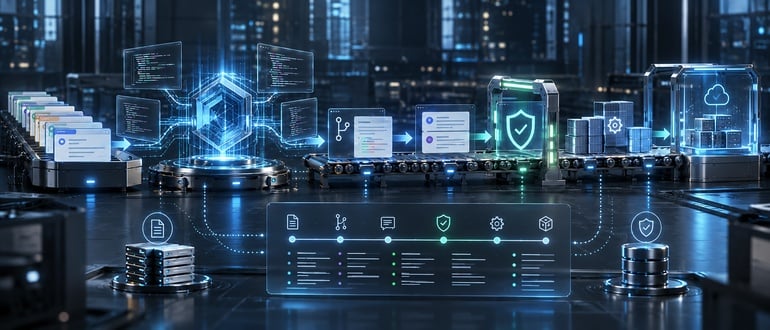
To solve this, engineering leaders are actively building shared context layers. These architectural components feed agents a consistent, real-time understanding of:
- Team-specific priorities and quarterly OKRs (Objectives and Key Results).
- Strict organizational compliance and security requirements.
- Broad business intents and domain-specific terminology.
Without this shared context layer, an autonomous agent might successfully write code that passes all unit tests, yet violates overarching architectural patterns or business logic simply because it lacked visibility into the broader organizational landscape.
Official Statements & Industry Perspectives
Ming Wu’s insights shed light on a rapidly maturing conversation happening across executive boardrooms and engineering floors alike. Her perspective challenges the unbridled techno-optimism that often accompanies generative AI product launches.
"We separate the ability to automate work from the obligation to understand and control the result. That distinction matters as teams move beyond individual coding prompts and start assigning agents larger portions of the software development lifecycle." — Ming Wu, Head of Engineering for Dev AI at Atlassian
Wu’s emphasis on accountability addresses a deep-seated anxiety among engineering leaders. As software systems grow increasingly complex, debugging an outage caused by human error is difficult enough; debugging an outage caused by an autonomous AI agent that wrote code based on probabilistic reasoning is an entirely different operational nightmare.
By insisting that human oversight remain mandatory—even as automation takes over larger portions of the SDLC—Wu establishes a pragmatic framework for adoption. Automation scales execution, but human judgment scales responsibility.
Industry analysts echo this sentiment, noting that enterprise adoption of agentic AI will ultimately hinge on trust, transparency, and traceability. Companies cannot afford a "black box" development process where nobody on the engineering team understands how a critical feature was implemented or why a security vulnerability was inadvertently introduced.
Future Outlook: Scaling Workflows and Measuring True Gains
As organizations look toward the horizon, the conversation around AI in the SDLC is shifting from conceptual experimentation to hard, quantifiable metrics. According to Wu, customers across the technology sector are eagerly asking how to scale these automated workflows while genuinely proving measurable improvements in delivery speed and software quality.
The Adoption Curve Across Industries
The current landscape of AI adoption in software development is bifurcated:
- Digital-Native and Tech Companies: These organizations are aggressively experimenting with autonomous agents, integrating them into CI/CD pipelines, and pushing the boundaries of what automated loops can achieve. They are comfortable operating on the bleeding edge of developer tooling.
- Traditional and Regulated Industries: Enterprises in finance, healthcare, and government are taking a much more measured approach. While intensely interested in the productivity gains promised by AI, these organizations face strict regulatory compliance, audit requirements, and security mandates. For them, governance is not an optional feature—it is an absolute prerequisite before any AI agent is granted write access to a production codebase.
The Harder Question: Assessing Lifecycle Contribution
In the near future, the metric of success for engineering teams will no longer be simply how many lines of code an AI agent can generate, nor how fast a low-priority ticket can be closed.
As Wu points out, completing more automated tasks is only a fraction of the assessment. The much harder, more critical question is: What is the agent’s true, holistic contribution to the entire software lifecycle?
To answer this, engineering leadership will need to track sophisticated metrics, including:
- Defect Escape Rates: Are AI-generated pull requests introducing more bugs into production over time, or are they maintaining/exceeding human quality standards?
- Reviewer Fatigue: Are human engineers spending excessive time untangling and debugging complex AI-submitted code, or are governed agent loops genuinely reducing cognitive load?
- Time-to-Value: Does the integration of autonomous agents actually accelerate the delivery of customer-facing features, or does it simply shift the bottleneck from writing code to reviewing code?
Conclusion
The transition of AI agents from experimental novelties to core contributors within the software development lifecycle is irreversible. However, as Ming Wu and industry leaders emphasize, this transition does not spell the obsolescence of the human software engineer. Instead, it elevates the engineer’s role from a tactical coder to an architectural governor and strategic director.
By building robust governance frameworks, establishing shared context layers, embedding agents into trusted work-tracking systems like Jira, and resolutely anchoring accountability in human hands, the software industry can successfully harness the staggering velocity of AI agents without sacrificing safety, quality, or control.