Executive Overview
The global data center landscape is undergoing the most aggressive, capital-intensive transformation in technological history. According to a landmark market report released by the Dell’Oro Group, worldwide capital spending (capex) on data centers is projected to skyrocket past $3 trillion by 2030. This staggering figure—which represents a near-doubling of the firm’s previous January 2026 forecast—is fueled by an insatiable corporate and sovereign appetite for artificial intelligence (AI) infrastructure.
As hyperscalers, sovereign AI initiatives, and specialized cloud providers race to build the computational backbones required for generative AI, agentic workflows, and massive language model (LLM) training, they are colliding head-on with unprecedented physical constraints. The buildout is no longer merely a software or silicon race; it is a monumental engineering challenge defined by a projected 200+ gigawatts (GW) of global power demand, skyrocketing commodity costs, a complete reimagining of thermal management through advanced liquid cooling, and strategic shifts in where and how power is sourced.
This comprehensive report examines the structural drivers behind the $3 trillion AI capex wave, the operational realities of hardware supply chains, the physical limits of power availability, and the strategic choices facing enterprises navigating this high-stakes technological evolution.
Detailed Chronology: The Escalation of AI Infrastructure Forecasts
To understand the sheer velocity of the current infrastructure boom, one must look at how rapidly projections have been revised upward.
- The Pre-Generative Era (Pre-2023): Data center capex was largely driven by traditional cloud migration, enterprise virtualization, and digital content delivery. Growth was steady, linear, and heavily influenced by standard server refresh cycles. Power requirements per rack typically hovered between 5 kW and 10 kW, easily managed by conventional raised-floor air cooling systems.
- The Generative AI Inflection Point (2023–2024): Following the widespread public deployment of advanced generative AI models, demand for high-performance graphics processing units (GPUs) and specialized AI accelerators spiked exponentially. Hyperscalers scrambled to secure hardware, leading to initial gridlock as supply chains struggled to keep pace. Forecasts began projecting major multi-billion-dollar expansions, though most long-term models underestimated the cumulative compounding effect on supporting infrastructure.
- The Sovereign and Neocloud Acceleration (2025): The market expanded beyond major US cloud providers to include specialized "neoclouds" and government-backed sovereign AI programs. Nations and independent operators began aggressively procuring capacity, recognizing compute independence as a matter of national security and economic competitiveness.
- The $3 Trillion Revelation (2026 and Beyond): In its latest updated outlook, the Dell’Oro Group revised its 2030 projections to cross the $3-trillion threshold. This dramatic upward revision reflects sustained, high-conviction spending guidance from major hyperscale operators, drastically increased global forecasts for total data center power capacity, and persistent inflationary pressures on raw materials and specialized hardware components.
Supporting Context & Metrics: Breaking Down the Numbers
A $3 trillion capital expenditure is an abstract figure until broken down into its constituent technological and economic components. The buildout encompasses far more than just purchasing advanced processors; it represents an entire ecosystem of silicon, networking, power distribution, and real estate.
1. The Composition of Capex
According to market analysts, AI accelerators (GPUs, TPUs, and custom ASICs) will account for roughly one-third of the total $3 trillion spend. However, chips alone are entirely inert without a massive supporting cast:
- Servers and Chassis: Specialized hardware designed to house high-density thermal loads.
- High-Performance Networking: Ultra-low latency fabrics (such as InfiniBand and advanced Ethernet switches) required to cluster thousands of accelerators together to function as a unified supercomputer.
- Storage Infrastructure: High-throughput, low-latency storage tiers capable of feeding petabytes of training data to models without creating computational bottlenecks.
2. Power Requirements and the 200 GW Threshold
The single most definitive metric of the AI infrastructure boom is electrical capacity. The Dell’Oro forecast assumes that global data center power availability will scale to exceed 200 GW. To put this in perspective, a single modern hyperscale AI campus is frequently designed to consume anywhere from 100 megawatts (MW) to over a gigawatt (1 GW) of continuous power—equivalent to the electrical consumption of a mid-sized city.
3. Market Segments and Growth Trajectories
- The Hyperscale Giants: The four largest US cloud providers (often referred to as the hyperscalers) are projected to account for approximately 50% of total global data center capex. Their immense purchasing power allows them to lock in multi-year component supply agreements and secure preferential pricing.
- The Neocloud Explosion: AI-specialized cloud providers and independent model developers represent a hyper-growth segment, with projected compound annual growth rates (CAGR) approaching 60%.
- General-Purpose Resilience: Far from being entirely cannibalized by AI, demand for general-purpose servers is expected to rise concurrently, driven by the explosive growth of inference workloads, agentic AI workflows, and sprawling enterprise data storage requirements.
Official Statements and Industry Insights
Industry leaders across cloud computing, data center engineering, and legal infrastructure consulting offer a nuanced view of the opportunities and risks defining this era.
The Hyperscale Advantage and Supply Chain Pressures
Baron Fung, Vice President at Dell’Oro Group, emphasizes that while AI accelerators are the headline grabber, they represent only one piece of a complex operational puzzle.
"AI accelerators are expected to account for about a third of the $3 trillion in data center capex. AI infrastructure is a major driver," Fung explained to Data Center Knowledge.
Fung notes that the dominance of hyperscalers in the procurement market could inadvertently squeeze out smaller competitors. By utilizing their massive balance sheets to secure long-term component supply commitments, hyperscalers risk tightening overall market supply, driving up lead times and component costs for smaller enterprises and tier-2 providers.
Furthermore, the increasing reliance of these giants on custom silicon and proprietary hardware architectures helps them achieve massive economies of scale. However, this trend places severe margin pressure on traditional server manufacturers.
"Ultimately, the scale and economics of the largest cloud providers could further favor cloud-based infrastructure, encouraging more enterprises to shift workloads to the cloud," Fung notes.
Despite this, Fung anticipates that enterprises will ultimately settle into a hybrid strategy. Highly predictable, heavily utilized AI workloads may eventually migrate on-premises if long-term hardware ownership becomes more cost-effective than renting cloud instances, while variable or experimental workloads will remain elastic within the cloud.
The Physical Realities of Thermal Management
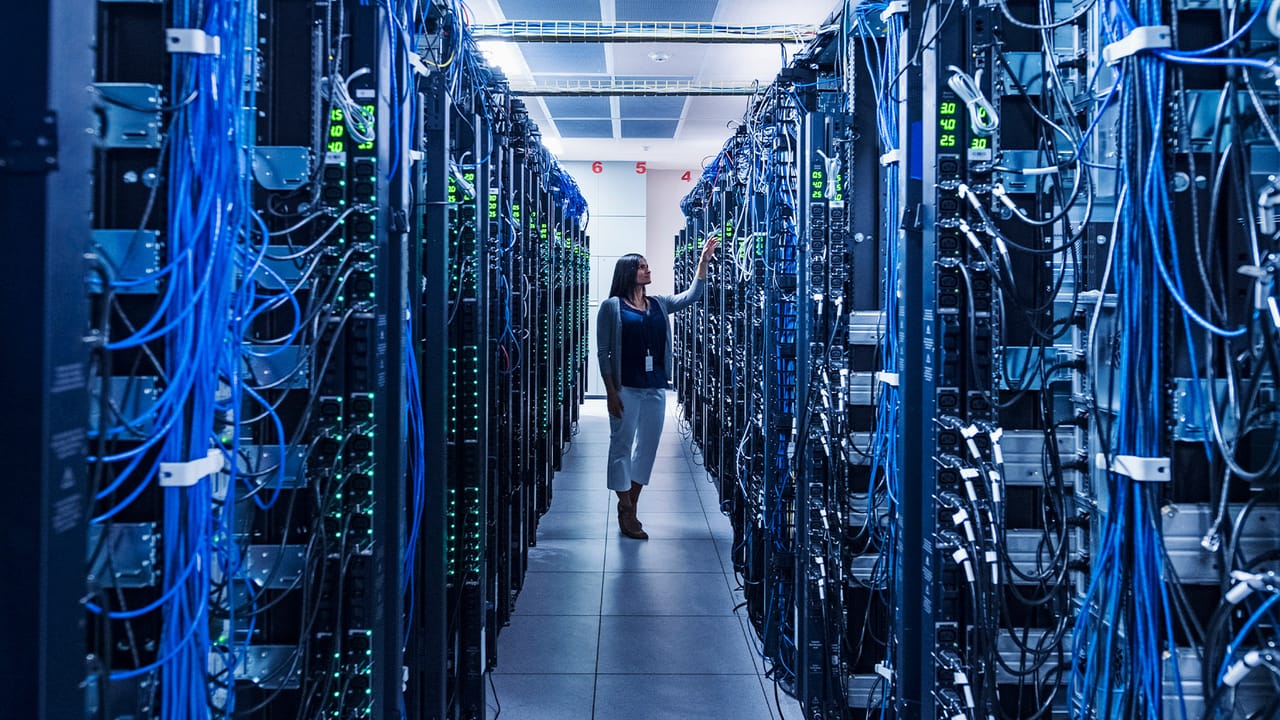
The hardware driving the AI boom generates unprecedented heat loads, necessitating a complete redesign of data center white space. Gordon Johnson, Senior CFD (Computational Fluid Dynamics) Manager at Subzero Engineering, stresses that higher-density deployments demand a holistic physical transformation.
"AI workloads require more electrical power per rack than traditional computing, often requiring a combination of cooling strategies," Johnson told Data Center Knowledge.
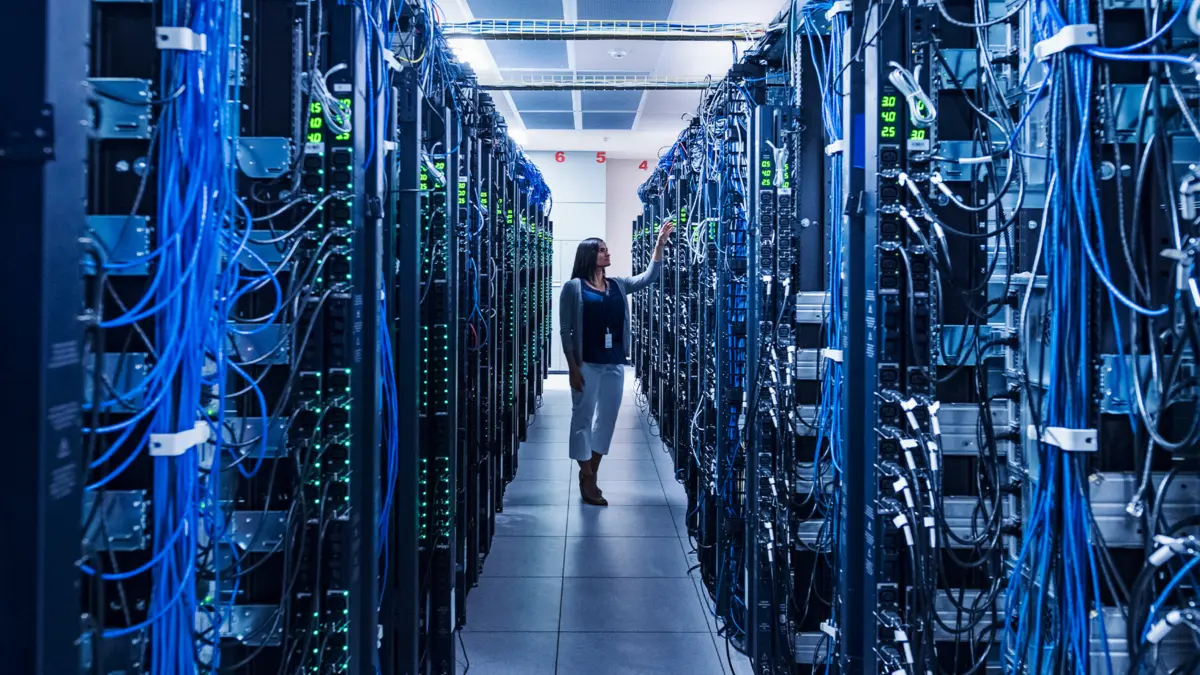
Traditional air cooling, which typically reaches its limits around 10 kW to 15 kW per rack, is entirely unsuited for modern AI clusters where single racks often push 40 kW, 100 kW, or more. Consequently, accelerator deployments are directly triggering massive secondary investments in advanced power distribution units (PDUs), direct-to-chip liquid cooling loops, sophisticated airflow containment systems, and resilient supporting architecture.
Johnson warns operators against falling into the trap of overbuilding:
"The biggest risk is building too much too quickly, so operators must understand where high-density compute is required."
He advises a phased integration approach, carefully matching new cooling modalities with existing legacy infrastructure to avoid catastrophic capital misallocation.
The Power Grid Bottleneck and Siting Economics
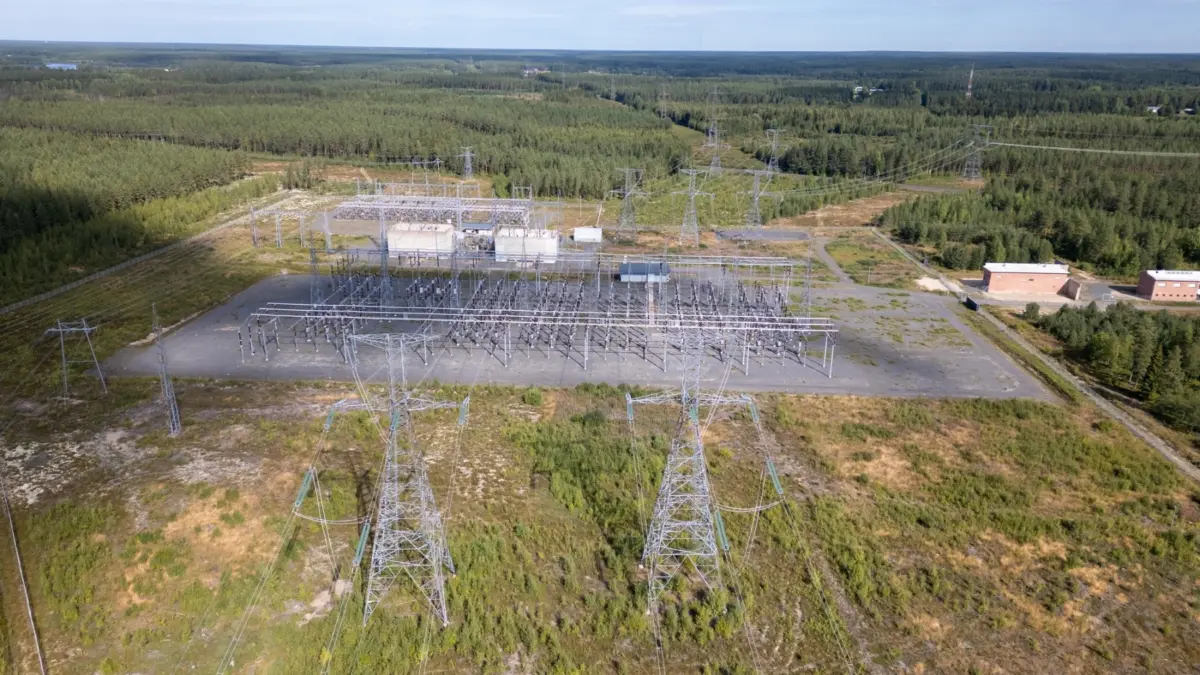
While silicon and cooling are formidable challenges, power availability has emerged as the ultimate bottleneck governing the speed and scale of the AI expansion. Luke Edney, a partner at Norton Rose Fulbright, highlights how energy constraints are fundamentally altering the economics of site selection.
"Power is also changing the economics of projects—the cost and timeline risk associated with power procurement is now a critical factor in site-selection decisions," Edney stated.
In established, legacy data center markets (such as Northern Virginia’s Data Center Alley or Frankfurt, Germany), traditional electrical grid connection timelines can stretch past five years. This severe latency in utility interconnection has forced developers to pivot aggressively toward secondary and tertiary markets offering surplus renewable energy generation, flexible regulatory frameworks, and proactive local utility partnerships.
This insatiable demand for reliable, low-carbon electricity is also serving as a major catalyst for alternative energy exploration. Operators are increasingly looking beyond the traditional grid toward on-site generation, industrial fuel cells, and Small Modular Reactors (SMRs) to guarantee uninterrupted, clean baseload power.
However, Edney cautions corporate leaders against reactionary spending:
"AI investment still needs to be tied to measurable business outcomes, not simply a response to market pressure. Enterprises must balance the risk of falling behind against the financial exposure created by committing too early."
Future Outlook: Navigating the Road to 2030
As the industry marches toward 2030, the trajectory of the $3 trillion data center boom will be shaped by how effectively operators, utilities, and technology providers navigate a series of high-stakes crossroads.
- The Grid Convergence: Collaboration between private tech capital and public utility providers will be paramount. Without innovative regulatory frameworks and accelerated grid modernization, power scarcity threatens to artificially cap the velocity of global AI adoption.
- The Rise of Alternative Power: The commercial viability of nuclear-powered data centers (via SMRs) and advanced microgrids will transition from experimental pilot programs to mission-critical imperatives for gigawatt-scale campuses.
- Cooling Innovation: As chip thermal design power (TDP) continues to climb, liquid cooling will shift from a premium specialty solution to an absolute industry standard, compelling mechanical engineers to rethink water usage, fluid chemistry, and heat rejection methodologies.
- Economic Discipline: Following the initial gold rush of generative AI deployment, corporate boards will increasingly demand rigorous return-on-investment (ROI) metrics. This economic maturation will likely favor flexible, hybrid infrastructure models that balance cloud elasticity with targeted on-premises optimization.
The coming years will test the limits of human engineering, capital deployment, and environmental sustainability. Those who successfully harmonize high-density compute, innovative thermal engineering, and secure power procurement will define the digital architecture of the mid-21st century.