Executive Overview
In the heart of San Francisco, amidst the bustling technology sector, a small group of defiant software engineers and AI evangelists gathered inside a traditional church for a very unconventional ceremony. Complete with somber speeches, a tangible coffin, and an orderly procession, the event was a formal funeral. However, the deceased was not a person; it was the humble mobile application icon.
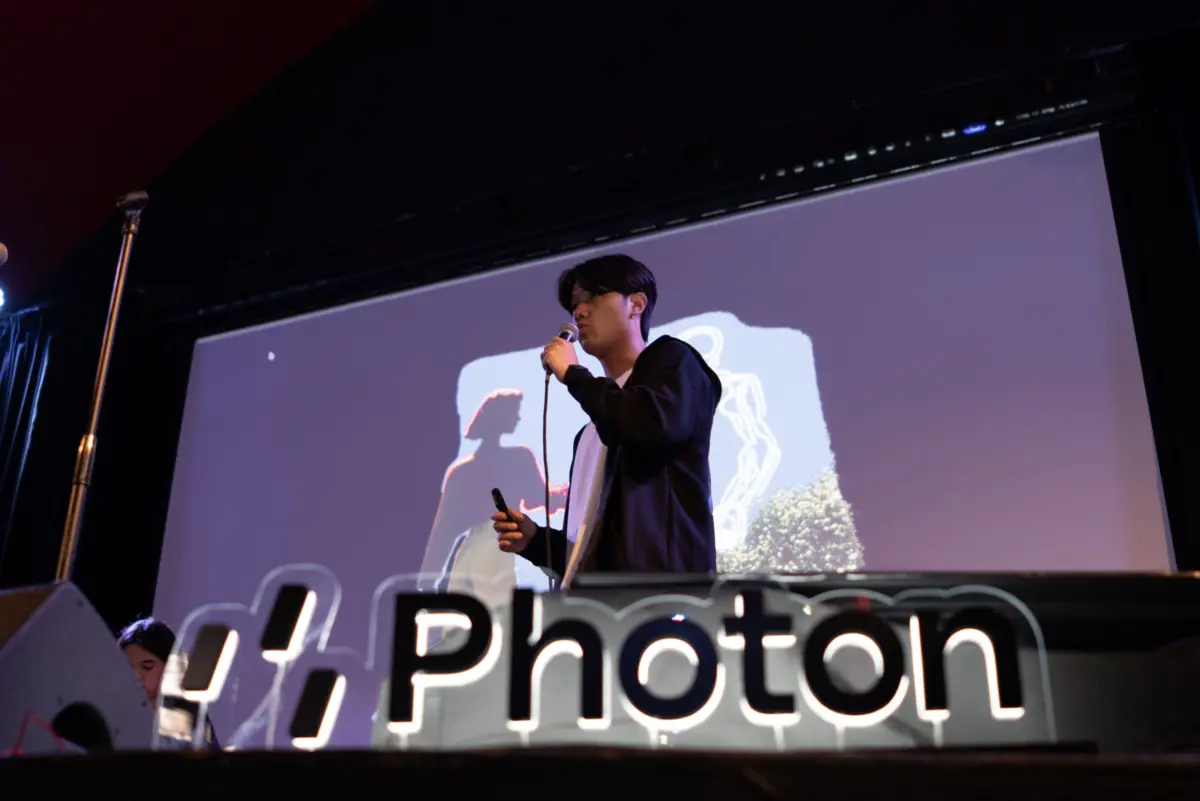
Hosted on September 17 by the AI startup Photon, this theatrical "app funeral" served a dual purpose. It functioned as an avant-garde developer day featuring panels from heavyweights like Vercel, Stripe, and OpenAI, while simultaneously broadcasting a radical thesis: the decades-long era of downloading, installing, and navigating standalone mobile apps is drawing to a close.
In place of traditional software interfaces, Photon believes the future belongs to autonomous AI agents that live natively inside the messaging applications people already use every day—such as iMessage, WhatsApp, Telegram, SMS, and RCS. Rather than forcing users to hunt for a specialized application in an overcrowded app store, fill out forms, and manage a home screen cluttered with dozens of neglected icons, Photon envisions a frictionless paradigm where users simply text an intelligent agent to get things done.
This provocative philosophy is no longer just theoretical. Alongside its headline-grabbing stunt, Photon announced a major milestone: the closing of $4.5 million in seed funding co-led by Gradient and A*, with high-profile participation from Vercel, HongShan, Z Fellows, Llama Ventures, Karman, and notable angel investors. The fresh capital infusion comes on the heels of explosive hypergrowth, with the startup signing up over 40,000 developers and multiplying its revenue tenfold over a compressed four-month window.
As major consumer tech players like Meta introduce wildly popular conversational AI solutions, Photon has carved out a lucrative B2B niche. By supplying the underlying infrastructure, unified APIs, command-line interfaces (CLIs), and robust observability suites, Photon empowers developers to seamlessly deploy their applications over everyday communication channels. As the industry stands at the precipice of a monumental shift in human-computer interaction, this in-depth exploration examines Photon’s rise, its technology, its rapid commercial traction, and its bold vision for an agent-to-agent future.

Detailed Chronology: From Hackathon Project to Industry Disruptor
The Student Origins: Solving the Discovery Bottleneck
The genesis of Photon traces back to the collegiate experiences of its co-founders: Daniel Tian, who previously studied in the elite Management and Technology (M&T) program at the University of Pennsylvania, and Ryan Zhu, who departed high school early and later became a visiting student at MIT’s prestigious Media Lab.
As student developers frequently participating in hackathons, Tian and Zhu built numerous consumer software applications. Yet, every time they launched a new product, they encountered the exact same insurmountable wall: user acquisition and discovery. In a saturated market dominated by tech giants, convincing users to locate an app in the App Store, download a multi-megabyte binary file, create a new account, and establish a fresh habit loop proved exceedingly difficult.
Realizing that the traditional app funnel was broken, the duo began experimenting with alternative distribution channels. Tian engineered a rudimentary bot designed to text his friends back on his behalf over Apple’s iMessage. When they decided to open-source the underlying code repository on GitHub, they received an immediate, overwhelming response. Thousands of developers quickly adopted the repository, signaling an acute, industry-wide demand for conversational utility.
Recognizing that they had stumbled upon a seismic shift in how software could be delivered, the founders made life-altering decisions. Tian dropped out of UPenn, and Zhu left traditional secondary education behind to build out the platform full-time. Today, despite the company’s commercial expansion, the open-source roots of Photon still account for a staggering 98% of its total usage, cementing its grassroots developer appeal.
The Pivot to Enterprise-Grade Infrastructure
While the open-source community provided rapid validation, the founders recognized that building hobby projects on local hardware—such as running agents locally on a personal Mac—was insufficient for serious commercial deployment. Production environments required high reliability, stringent security, and enterprise-grade compliance.

In April of that year, Photon made the strategic decision to transition from a purely open-source project to a managed platform offering paid subscription tiers. This hosted iteration introduced a robust infrastructure boasting 99.95% uptime. Crucially, the platform achieved SOC 2 Type II and HIPAA compliance, instantly unlocking regulated industries such as fintech and healthcare, where data privacy and security are non-negotiable prerequisites.
The culmination of this journey manifested in the San Francisco "app funeral," a masterclass in guerrilla tech marketing. By physically burying app icons in a church, Photon crystallized its core thesis: software delivery must evolve past the constraints of static operating system interfaces.
Supporting Context & Metrics: Explosive Growth and Enterprise Adoption
Photon’s ascent from a viral GitHub repository to a venture-backed infrastructure provider is underpinned by extraordinary operational metrics. Although the startup maintains a policy of keeping exact gross revenue figures private, the velocity of its commercial expansion paints a vivid picture of market demand.
Hypergrowth Indicators
- Revenue Multiplication: Photon’s managed platform grew its revenue by 10x in just four months following the introduction of its tiered subscription model.
- Developer Adoption: Over 40,000 developers have signed up for the platform, leveraging its tools to build and deploy conversational agents.
- Low Attrition: Despite scaling rapidly, the company reports a remarkably low churn rate of less than 3%, indicating deep product-market fit.
- Surging Volume: Messaging traffic running through Photon’s infrastructure experienced a 5x increase in a single month, reflecting compounding usage across client applications.
- Scale of Impact: Combined across its open-source framework and managed cloud offerings, Photon’s underlying technology now reaches millions of end users globally.
Diverse Vertical Integration
Photon’s infrastructure is no longer confined to experimental prototypes; it powers mission-critical operations across a diverse array of industries. Notable customers utilizing the platform include:
- Corgi Insurance: Streamlining insurance quotes and claims processing through conversational interfaces.
- Boardy: Facilitating intelligent social introductions via messaging applications.
- Ditto: Powering next-generation matchmaking and social discovery for Gen Z users.
- Rho: Enhancing business banking and corporate financial management workflows.
- Fliptexts: Delivering sophisticated financial AI assistance directly via text messaging.
- Slashy: Providing AI-first email management clients within everyday communication channels.
Furthermore, Photon has established strategic integration partnerships with foundational technology providers. Vercel utilizes Photon for tools like Eve and ChatSDK, while Nous Research relies on Photon as the default iMessage integration layer for its advanced Hermes agent. Additionally, Photon serves as the foundational infrastructure layer beneath Tencent’s QClaw and NanoClaw projects, alongside robust framework and infrastructure integrations spanning LangChain, Mastra, Convex, Render, Railway, and Telnyx.

Official Statements: The Vision Behind the Movement
The philosophical underpinnings of Photon’s crusade against traditional applications are rooted in user psychology and distribution friction. Co-founder and CEO Daniel Tian articulated this perspective candidly during interviews surrounding the funding announcement and the app funeral event.
"Honestly, it’s going to take a while, but I think, directionally, it’s inevitable," Tian stated, reflecting on the long-term transition from standalone mobile apps to conversational agents.
Users, according to Tian’s thesis, have developed severe "app fatigue." The friction of downloading, updating, and navigating discrete user interfaces for every minor digital task has created an opening for conversational alternatives. By leveraging messaging applications that are already deeply embedded in daily human habits—such as iMessage, WhatsApp, and Telegram—developers can bypass the traditional gatekeepers of the App Store and reach users precisely where they already spend their time.
Vercel, a key investor in the seed round, echoed this sentiment regarding the evolution of software development. As web and mobile architectures converge with generative artificial intelligence, the tooling required to build, monitor, and scale agentic workflows must become as seamless as modern web hosting.
Future Outlook: The Dawn of Agent-to-Agent (A2A) Architecture
While Photon’s current technological offerings focus heavily on bridging the gap between autonomous AI agents and human users (Human-to-Agent communication, or H2A), the startup’s long-term roadmap extends far beyond simple chat-based utilities.

Daniel Tian and the Photon engineering team are actively looking toward a horizon defined by autonomous Agent-to-Agent (A2A) communication. In this emerging paradigm, artificial intelligence agents will not merely converse with human end-users; they will negotiate, collaborate, and transact directly with other specialized agents across decentralized networks.
Envisioning the A2A Ecosystem
To conceptualize this future, consider a common consumer scenario: a user collaborating with a personal AI assistant to plan a complex international vacation. In the traditional app era, the user would need to open a flight-booking app, a hotel reservation app, a car rental app, and a restaurant discovery app, manually transferring data between each siloed interface.
In Photon’s envisioned A2A-to-Person (A2A2P) future, the interaction looks entirely different:
- The Orchestrator: The user instructs their primary personal assistant agent to plan the trip entirely within an iMessage or WhatsApp thread.
- Autonomous Discovery: Rather than requiring human input for every sub-task, the primary assistant intelligently discovers and communicates with specialized third-party agents.
- Delegation and Execution: The travel planner agent automatically pings a flight-booking agent to check real-time seat availability, negotiates with a hotel-booking agent for optimal room rates, and coordinates itinerary details.
- Consolidated Delivery: The specialized agents return their optimized findings back to the orchestrator, which presents a unified, ready-to-approve proposal to the human user via a single text message.
"I think, in the future, agents will be able to find you the agent that can do the right things—so it’s going to be the A-to-A communication layer," Tian explained. "It’s been pretty powerful to observe the whole A-to-A-to-P space."
Challenges and Opportunities Ahead
As Photon deploys its $4.5 million seed war chest, the company faces both immense opportunities and fierce competition. Consumer AI giants like Meta—whose Muse application surged to the number one spot on mobile app charts—are aggressively validating the consumer appetite for conversational interfaces. However, while consumer-facing applications fight for end-user attention, Photon has smartly positioned itself as the picks-and-shovels provider for the entire ecosystem.

By offering a comprehensive suite encompassing unified APIs, extensible channel frameworks, robust CLIs, and enterprise-grade observability tools with strict HIPAA and SOC 2 compliance, Photon is building the critical infrastructure upon which the next generation of software will run.
Whether traditional mobile applications vanish overnight or fade away gradually over the coming decade, one reality remains clear: the ritualistic funeral held in a San Francisco church was more than just a clever marketing stunt. It was a clear warning shot to an entire industry. The era of the static app icon is sunsetting, and the age of fluid, conversational, and agentic software infrastructure has officially begun.