Executive Overview
Deploying thousands of high-end graphics processing units (GPUs) into a modern data center has rapidly become a high-stakes financial gamble. Pouring billions of dollars into cutting-edge silicon yields a colossal waste of capital if the supporting network fabric cannot keep pace with the torrential demands of data movement.
Think of it as pairing a state-of-the-art supercomputer with a legacy 28k or 56k dial-up modem: throughput walls and crippling latency constraints instantly dominate the entire architecture.
As artificial intelligence workloads evolve toward massive training models, complex multi-step inference, and real-time agentic workflows, the networking paradigm inside and between data centers is undergoing a seismic transformation. Traditional enterprise networks—once built predominantly for north-south traffic moving leisurely between users, servers, and storage—are fundamentally unequipped for the synchronized, burst-heavy "collective" traffic inherent to large-scale AI clusters.
To overcome this, industry giants Cisco, Broadcom, and Nvidia are converging on a new generation of 51.2 to 102.4 Tbps-class Ethernet switching silicon. These application-specific integrated circuits (ASICs) feature deeper buffering, advanced real-time telemetry, and sophisticated, adaptive load-balancing strategies designed to keep GPU utilization near peak levels while drastically reducing job completion times (JCT).
"In AI data centers, the network is becoming a primary determinant of cluster efficiency," explains Sameh Boujelbene, Vice President of Research at Dell’Oro Group. "A company can spend billions on GPUs, but if the fabric cannot deliver predictable bandwidth and low tail latency, they did not buy an AI supercomputer; they bought an expensive collection of stranded chips."
Detailed Chronology of the 102.4 Tbps Era
The race toward gigascale AI networking has compressed years of product evolution into rapid-fire release cycles. Understanding how the market arrived at the 102.4 Tbps threshold requires examining the milestones set by the semiconductor industry’s leading players.
Early 2026: The Foundation and Initial Roadmap Unveiled
The opening months of 2026 set the stage for a hardware supercycle. Industry heavyweights began previewing ultra-high-density silicon designed specifically to mitigate packet drops and congestion in deep learning clusters. Cisco officially announced its next-generation Silicon One architecture updates, signaling a strategic pivot toward backend AI cluster fabrics. Concurrently, Nvidia and Broadcom accelerated their timelines for multi-terabit switching silicon to align with surging demand from hyperscalers deploying clusters exceeding 100,000 GPUs.
Mid-2026 (Cisco Live): Detailing Availability and Scale-Out Architecture
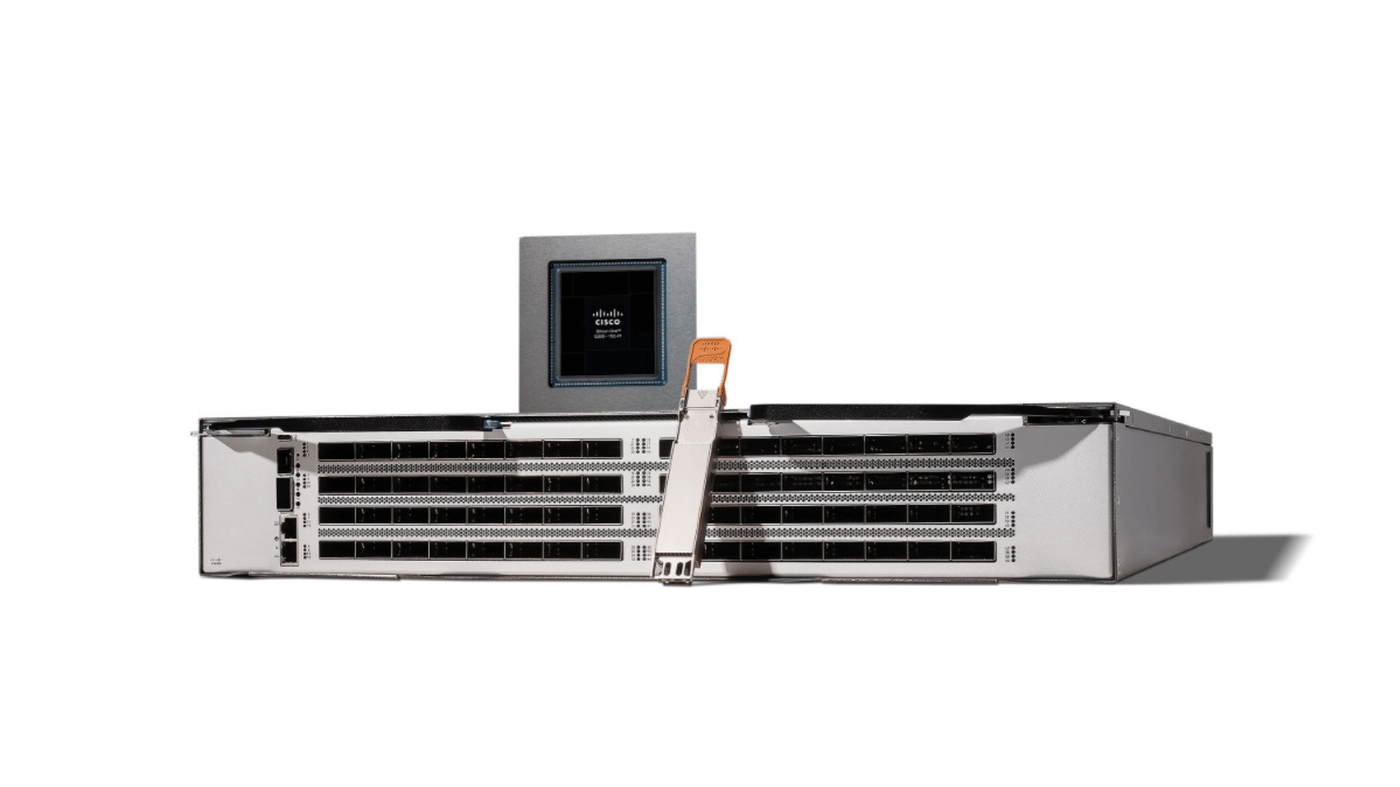
By the time the industry gathered for Cisco Live in June 2026, the focus shifted from abstract roadmaps to hard delivery schedules. Cisco outlined the broad availability timeline for its new Silicon One devices, targeting late-2026 commercial deployments. The spotlight focused heavily on the Silicon One G300, a powerhouse ASIC engineered specifically for scale-out data center fabrics. Delivering an aggregate bandwidth of 102.4 Tbps via 512 lanes running at 200 Gbps per lane, the G300 was introduced as a direct antidote to the unpredictable traffic bursts that throttle deep learning model training.
Q3 2026 and Beyond: Expanding into Scale-Across and Inter-Data Center Optical Links
As the second half of 2026 unfolds, the market focus widens from intra-cluster connectivity to wide-area "scale-across" architectures. Cisco introduced the Silicon One P200, designed to optimize inter-data center connectivity over optical networks. Select customers gained early access to P200 systems, with commercial 28.8 Tbps switches slated for Q3 2026 and full 51.2 Tbps models scheduled to hit the market before the end of the year.
Meanwhile, rival architectures like Broadcom’s Tomahawk 6 and Nvidia’s Spectrum-6 began sampling and shipping to select hyperscale partners, cementing 2026 as the foundational year of the 102.4 Tbps Ethernet switching era.
Supporting Context & Metrics: Scaling Up, Out, and Across
AI infrastructure does not grow in a vacuum; it scales simultaneously along three distinct, complementary vectors. Each dimension imposes vastly different mechanical, thermal, and network requirements on modern data center architecture:
- Scale Up: Packs an unprecedented amount of raw compute power per server or rack, heavily reliant on high-bandwidth, ultra-short intra-node links (such as NVLink).
- Scale Out: Adds horizontal layers of server racks, combining their resources to handle enormous foundational models or concurrent inference jobs. This is the primary domain of 102.4 Tbps top-of-rack and spine switches.
- Scale Across: Connects multiple geographically distributed data centers over high-capacity optical fiber networks, allowing massive clusters to collaborate seamlessly across regional boundaries.
Power, Density, and Thermal Realities
The physical toll of pushing 102.4 Tbps through a single piece of silicon is staggering. Rack densities exceeding 100 kW are rapidly becoming the baseline for modern AI data centers. Traditional air-cooling methods are fundamentally incapable of dissipating the intense thermal energy generated by these high-density networking ASICs.
Consequently, modern high-end switches now incorporate advanced liquid-cooling mechanisms. Much like the cold plates mounted directly to high-end GPUs, Cisco, Broadcom, and their systems integration partners are deploying precision liquid-cooling cold plates attached directly to the network chips within Nexus and modular chassis systems.
"There are differing needs from different customers, so we offer a range of different switches," notes Nick Kucharewski, Senior Vice President and General Manager of Cisco Silicon One. "Some are 100% liquid cooled, some partially liquid cooled, and some only air cooled."
Official Statements and Competitive Landscape
The battle for network dominance has drawn sharp distinctions among the three primary silicon vendors shaping the market: Cisco, Broadcom, and Nvidia.
Cisco Systems: Targeting Agentic AI and Real-Time Visibility
Cisco’s approach centers on its unified Silicon One architecture, bridging internal cluster switching with wide-area optical transport.
- The G300 (Scale-Out): "The Cisco Silicon One G300 chip is designed for scale-out compute to manage the backend networking between racks of GPUs and other devices inside the data center," says Kucharewski. Highlighting the chip’s congestion-avoidance capabilities, he adds, "As congestion can happen randomly, packets are instantaneously redirected to avoid delays and enable GPUs to do more work… The networking enables GPUs to work as a supercomputer. No matter the AI traffic bursts, we can deal with it."
- The P200 (Scale-Across): "The Cisco 9000 with the P200 inside allows optical fiber to operate close to capacity for long periods," Kucharewski explains, emphasizing the role of external High-Bandwidth Memory (HBM) in providing deep buffers to absorb wide-area congestion.
Broadcom: Focusing on FLOPs Utilization and Reliability
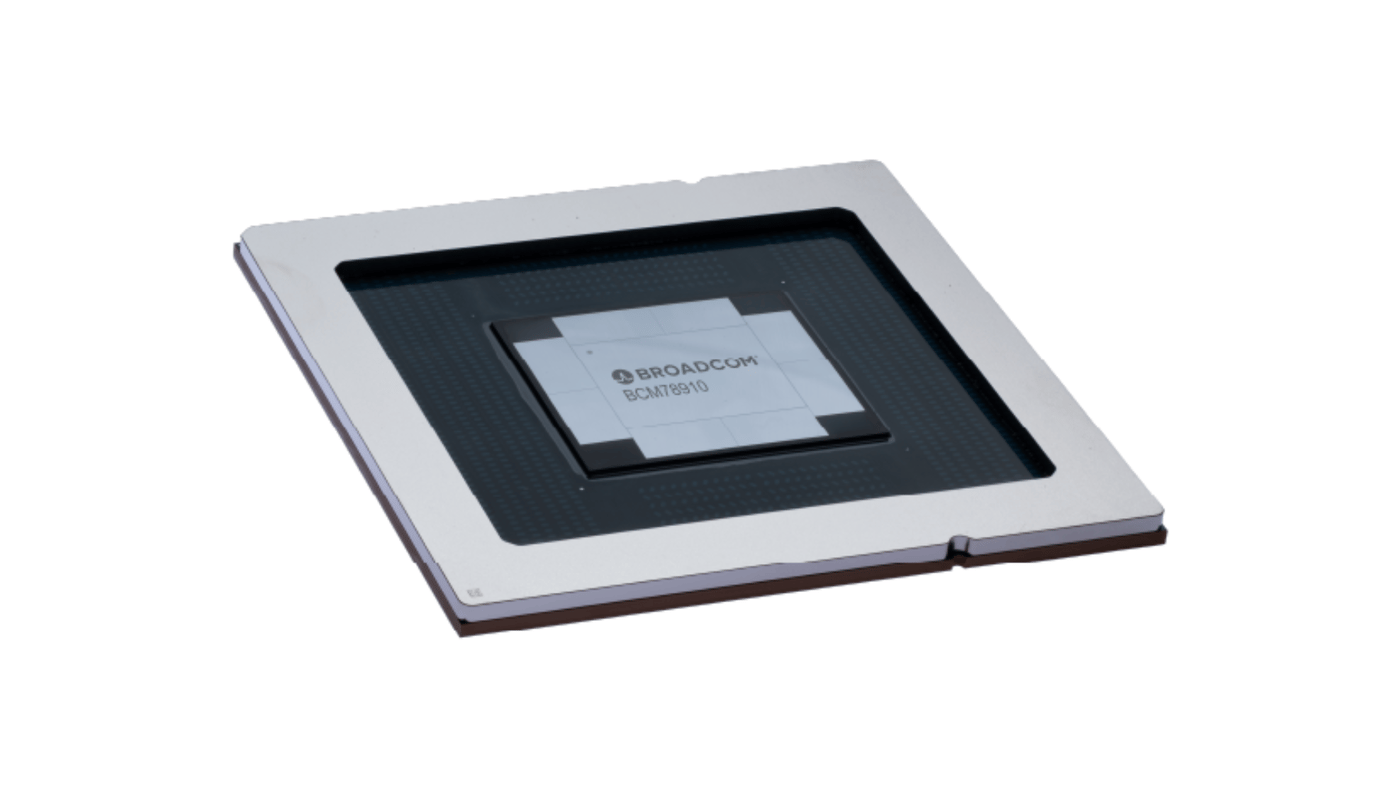
Broadcom’s response to the 102.4 Tbps era is spearheaded by the Tomahawk 6 (BCM78910 Series), which features 512 or 1024 lanes across 64 ports to deliver 1.6T Ethernet routing capabilities.
"By enhancing link stability and energy efficiency, we’re enabling smoother, more cost-effective AI model training," stated Near Margalit, Vice President and General Manager of the Optical Systems Division at Broadcom. "We designed this platform to scale large AI clusters by delivering on the three imperatives for optical interconnect: higher model FLOPs utilization, reduced job interruptions, and improved cluster reliability."
Nvidia: Transforming Ethernet into a High-Performance AI Fabric
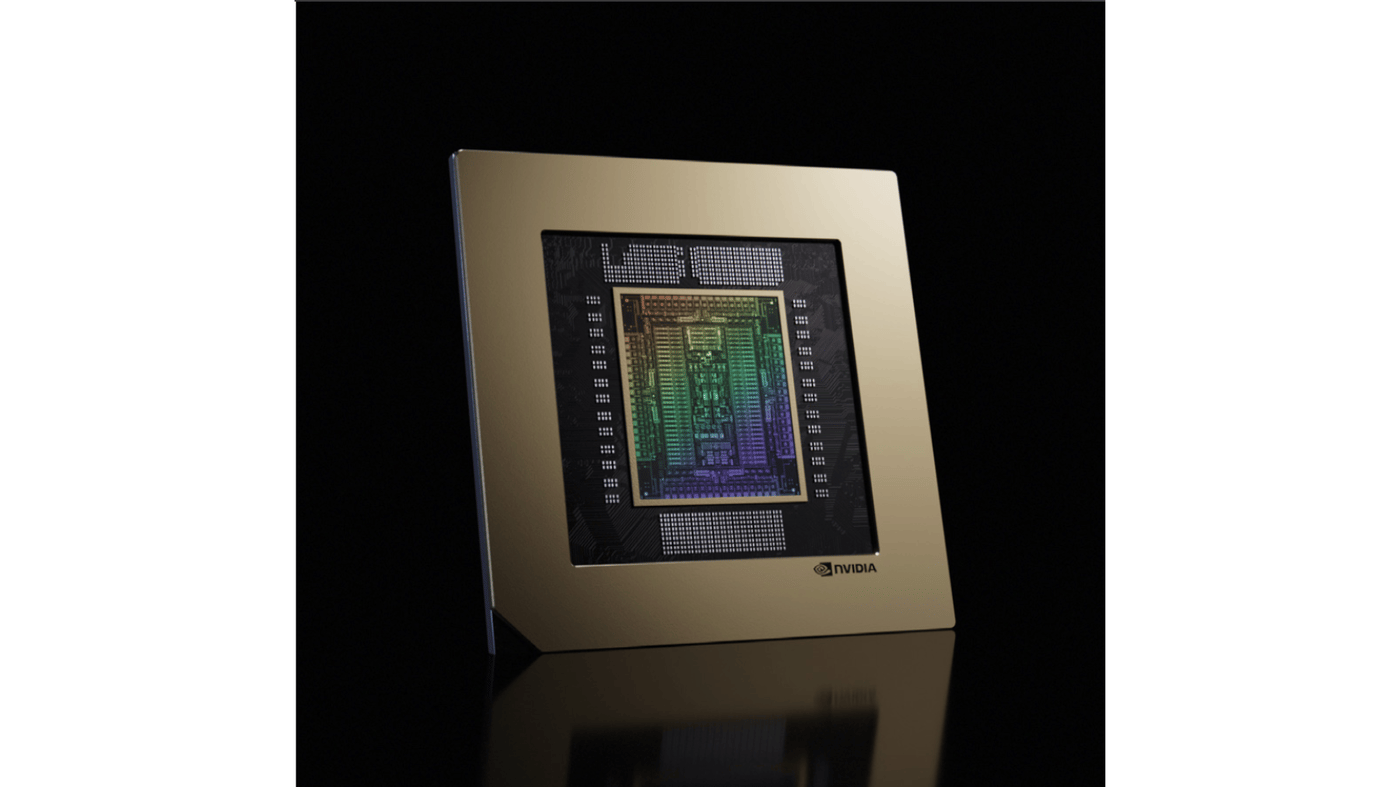
Nvidia approaches the networking bottleneck through its end-to-end Spectrum-X Ethernet Platform, anchored by the Spectrum-6 102.4 Tbps ASIC.
"Ethernet was designed primarily for enterprise applications and north-south traffic moving between users, servers, and storage. It wasn’t created for the synchronized, collective-heavy communication patterns of gigascale AI; Spectrum-X Ethernet changes that," explains Scot Schulz, Senior Director of HPC and Technical Computing at Nvidia. "Purpose-built for AI, it transforms Ethernet into a high-performance scale-out fabric engineered to keep every GPU fed with data."
Future Outlook: Who Buys First, and What Lies Ahead?
For the average enterprise data center, the immediate purchase of 102.4 Tbps switches is unnecessary. Most traditional corporate workloads do not generate the massive, synchronized East-West traffic bursts that justify multi-terabit per-second switching fabrics today.
Market analysts predict that initial adoption will remain concentrated among hyperscale cloud providers, neoclouds, and sovereign AI cloud operators building massive training farms. However, as generative AI models mature and enterprises transition from basic experimentation to production-grade agentic workflows, these high-end networking technologies will inevitably trickle down into mainstream corporate data centers.
"The latest chips and servers are making the network a first-order design decision," warns Dell’Oro Group’s Sameh Boujelbene. "Enterprises do not need to refresh everything overnight, but they do need to stop treating AI networking as an incremental upgrade. For serious GPU deployments, the network has to be designed as part of the compute system—not bolted on afterward."
Ultimately, the trajectory of modern computing is clear. As rack densities climb and cluster sizes push past tens of thousands of processing nodes, network silicon is no longer a peripheral utility. It occupies the absolute critical path of AI infrastructure, serving as the digital superhighway that determines whether multi-billion-dollar GPU investments fulfill their revolutionary promise or stall out in a traffic jam of unrouted data.