





Executive Overview
The rapid, largely unregulated advancement of artificial intelligence has precipitated a profound existential crisis across the global entertainment and creative industries. In what is rapidly coalescing as a defining cultural and legal battleground of the digital era, an alliance of more than 80 prominent actors, comedians, audiobook narrators, and performers has launched a high-profile campaign titled “Save Our Voices Now.”
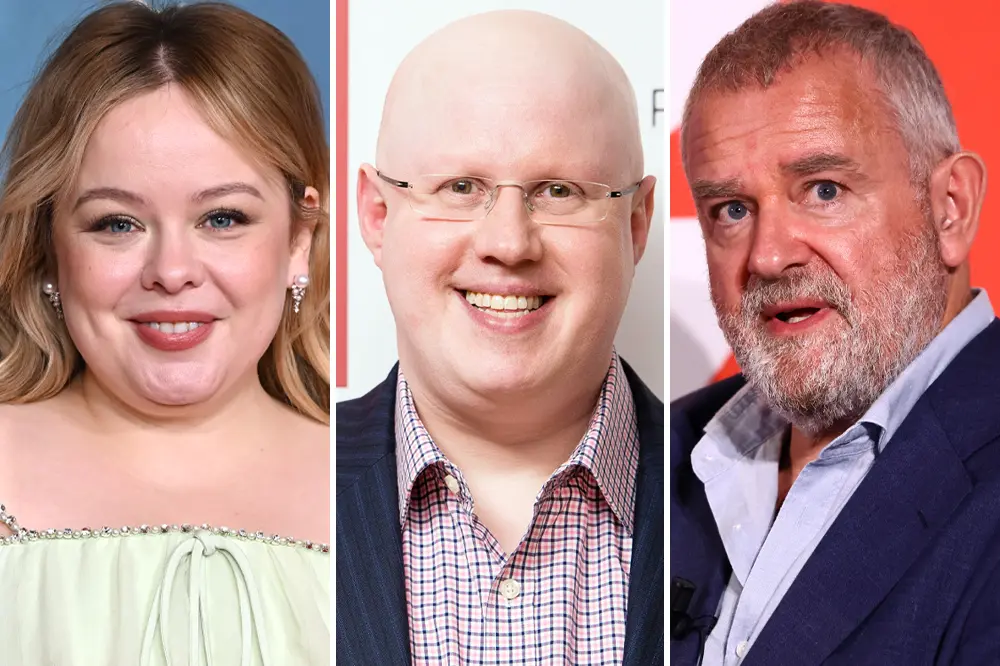
Spearheaded by industry heavyweights including Nicola Coughlan (Bridgerton, Derry Girls), Matt Lucas (Little Britain), Hugh Bonneville (Downton Abbey, Paddington), Luke Evans (The Hobbit), Siobhán McSweeney, Jen Brister, and Pearl Mackie (Doctor Who), the coalition is demanding urgent legislative intervention. Specifically, the group is petitioning U.K. Prime Minister Andy Burnham to enact robust statutory protections that enshrine the legal right of every U.K. citizen to own and control their own vocal identity.
The campaign, co-founded by professional audiobook narrator Alice Sockett, exposes a growing panic within the creative sector: the unauthorized, non-consensual harvesting and replication of human voices by synthetic machine-learning models. As algorithmic voice-cloning technology becomes cheaper, faster, and virtually indistinguishable from organic human speech, industry professionals warn that the very foundation of performance rights, livelihood security, and authentic human connection is under direct attack.
While isolated legal frameworks and voluntary industry guidelines have tentatively begun to address deepfakes and unauthorized likeness usage, artists argue that regulatory bodies are moving at a glacial pace compared to the hyper-accelerated evolution of AI software. The “Save Our Voices Now” movement aims to close these dangerous legal loopholes, transforming vocal protection from a costly, protracted civil litigation issue into an inalienable human right.
Detailed Chronology: The Rise of Synthetic Voices and the Pushback
To understand the urgency behind the “Save Our Voices Now” campaign, one must examine the rapid convergence of generative AI capabilities and the entertainment industry’s vulnerabilities over the past several years.
- Late 2022 to 2023: Generative artificial intelligence achieves mainstream public awareness. Text-to-speech (TTS) and voice-cloning models transition from robotic, synthesized approximations to hyper-realistic neural audio capable of mimicking specific human cadences, regional accents, and emotional inflections with mere seconds of source audio.
- Mid-2023: High-profile strikes by the Screen Actors Guild-American Federation of Television and Radio Artists (SAG-AFTRA) in the United States place digital replicas and AI guardrails at the center of labor negotiations, highlighting a global anxiety that transcends American borders.
- Late 2025: Incidents of unauthorized voice cloning surge across the commercial voiceover and audiobook sectors. Independent creators and voice actors report finding their voices scraped from podcasts, audiobooks, and interviews to train commercial AI models without consent or compensation.
- August 2026: Co-founded by audiobook narrator Alice Sockett, the “Save Our Voices Now” campaign officially launches in the United Kingdom. Bringing together over 80 prominent actors, comedians, and voice professionals, the initiative issues a formal call to action directed at U.K. leadership.
- Late August 2026: Major media outlets, including The Guardian and the BBC, spotlight the campaign. Concurrently, entertainment veterans like Harry Shearer publicly discuss exploring legal preemptions against post-mortem AI voice replication, while estates—such as that of the late Gene Wilder—navigate the complex moral dichotomy of licensing synthetic legacy performances for modern commercial projects like Netflix’s Wonka’s the Golden Ticket.
This timeline underscores an escalating friction between technological innovation and artistic preservation. What began as a niche technological novelty has quickly metastasized into a pervasive commercial threat, compelling artists to organize on a national and legislative scale.
Supporting Context & Metrics: The Anatomy of Vocal Exploitation
The vulnerability of the human voice in the digital age stems from its unique classification under intellectual property law. Unlike physical likenesses, which have long-standing protections under right-of-publicity laws in various jurisdictions, the legal status of an individual’s voice remains a fragmented patchwork globally, particularly in the United Kingdom.
The Vulnerability of Voice Professionals
Voiceover artists, commercial narrators, and audiobook performers find themselves on the front lines of this technological disruption. According to insights shared by campaign co-founder Alice Sockett, unauthorized voice theft is not a theoretical future threat; it is an escalating weekly reality.
When a narration company or tech startup feeds public domain interviews, promotional clips, or published audiobooks into an open-source machine learning algorithm, they can synthesize an infinite amount of speech in a performer’s exact timbre. This synthetic double can then be deployed to narrate competing audiobooks, record corporate advertisements, or voice video game characters—all without hiring, crediting, or compensating the original artist.
The Asymmetry of AI Progress versus Legislative Action
The core argument driving the “Save Our Voices Now” campaign is the staggering asymmetry between technological acceleration and legal governance. Modern AI development operates on an exponential curve, propelled by multi-billion-dollar investments from global tech conglomerates. Conversely, legislative frameworks require painstaking drafting, parliamentary debate, committee reviews, and royal assent.
Artists argue that by the time traditional lawmakers draft a bill addressing last year’s deepfake technology, generative AI has advanced by three generations. This leaves working-class performers—who lack the legal retainers of A-list Hollywood celebrities—completely exposed to economic displacement.
Official Statements: Voices from the Front Lines of the Movement
The campaign has garnered powerful, articulate testimonies from some of the most recognizable faces and voices in British television, film, and comedy. These statements illustrate that the opposition to unregulated AI voice cloning is rooted equally in economic survival and the defense of human dignity.
Hugh Bonneville: Identity and Autonomy
Renowned for his beloved performances in Downton Abbey and the Paddington film franchise, actor Hugh Bonneville offered a poignant reminder of what is fundamentally at stake. Emphasizing the intrinsic connection between personal expression and human identity, Bonneville stated:
"My voice is unique, it’s mine, it’s part of my identity. So is yours. That’s worth speaking up about."
In a telling nod to the digital landscape he is actively resisting, Bonneville deliberately appended a personal certification to his statement: "My quote was handwritten, not created by AI."
Siobhán McSweeney: Preserving the Human Equation
Derry Girls star Siobhán McSweeney delivered one of the campaign’s most comprehensive critiques of unchecked technological advancement, framing the issue as an urgent ethical crisis that requires immediate state control:
"I’m deeply worried that legislation, contracts, working practices and ethics, and artists’ rights are not being considered or protected as quickly as AI technology is progressing. I believe that there is a way to work alongside AI and to use it as a tool that benefits us rather than rendering us obsolete. This is an existential problem and needs to be controlled legislatively as soon as possible. My voice is one of my tools."
McSweeney further emphasized the irreplaceable bond between creator and audience, pointing out that true artistic exchange relies on shared humanity:
"In order to adapt and move with technological advances, I don’t see why we should remove the human from the equation. Our audiences want that human connection. Not AI."
The Broader Industry Divide: Living Legacies vs. Eternal Replicas
While the “Save Our Voices Now” campaign highlights a unified front against non-consensual exploitation, the wider entertainment industry remains deeply conflicted regarding the ethical boundaries of AI voice replication. This schism is most visible in how performers approach post-mortem digital immortality and legacy licensing.
The Preemptive Defense of Living Artists
Many veteran performers are taking active defensive measures to prevent their vocal likenesses from being exploited after they pass away. Notable among them is The Simpsons stalwart Harry Shearer. In an interview with Variety, Shearer revealed that he has actively consulted with legal professionals regarding preemptive measures to secure his vocal estate against unauthorized synthetic generation, describing the proactive defense as a "good idea" in a landscape devoid of federal or national safeguards.
The Estate Paradox: Authorized Nostalgia vs. Ethical Slippery Slope
Conversely, some talent estates view generative AI not as a threat, but as a vehicle for eternal legacy preservation. A recent, high-profile example involves the estate of legendary actor Gene Wilder. Wilder’s wife, Karen B. Wilder, granted official blessing for the actor’s iconic voice to be synthetically recreated to narrate a new Netflix reality series titled Wonka’s the Golden Ticket.
In her official statement defending the production, Karen B. Wilder noted:
"We are delighted that ‘Wonka’s the Golden Ticket’ celebrates the warmth and imagination that he brought to the role, introducing that magic to a new generation while honoring the fans who have cherished it for decades."
While authorized legacy projects may offer comfort to specific families and delight nostalgic audiences, critics within the “Save Our Voices Now” movement argue that such exceptions risk normalizing synthetic performances. This normalization, they warn, can quickly blur the ethical lines, making it easier for bad actors to justify unauthorized cloning under the guise of "celebration" or "tribute."
Future Outlook: What Lies Ahead for Vocal Sovereignty
The launch of the “Save Our Voices Now” campaign marks a critical turning point in the cultural and political discourse surrounding artificial intelligence. As U.K. Prime Minister Andy Burnham and lawmakers face mounting pressure from over 80 high-profile cultural figures, the question of whether personal voice ownership will become a statutory right hangs in the balance.
Moving forward, several key developments will shape the trajectory of this movement:
- Legislative Pressure and Parliamentary Debate: The coalition’s direct appeal to U.K. leadership forces the government to confront the inadequacy of current intellectual property laws. If successful, a U.K. statutory right to one’s voice could serve as a powerful legislative blueprint for the European Union, the United States, and other global jurisdictions.
- Union and Guild Solidarity: Expect labor unions representing actors, musicians, and broadcast professionals to increasingly tie digital replica protections into collective bargaining agreements, potentially penalizing studios and production houses that utilize unauthorized synthetic voices.
- Technological Countermeasures: Beyond legal battles, the software industry may see a surge in demand for cryptographic audio-watermarking tools and "proof-of-human" authentication systems designed to verify authentic vocal recordings and instantly flag synthetic deepfakes.
Ultimately, the “Save Our Voices Now” campaign is fighting for a fundamental principle: that art, expression, and identity cannot be decoupled from the human beings who create them. As Nicola Coughlan, Matt Lucas, Hugh Bonneville, and their peers have made abundantly clear, a voice is far more than a tool of trade—it is the acoustic signature of the human soul, and it is worth protecting at all costs.