Executive Overview
In the fast-moving world of modern aerospace, milestones arrive with dizzying frequency, yet certain achievements manage to fundamentally shift the landscape of commercial spaceflight. On a crisp Tuesday morning before sunrise, SpaceX achieved just such a milestone. Blasting off from Space Launch Complex-40 (SLC-40) at the Cape Canaveral Space Force Station in Florida, a veteran Falcon 9 first-stage booster thundered into the predawn sky, carrying yet another batch of broadband satellites for the company’s ever-expanding orbital network.
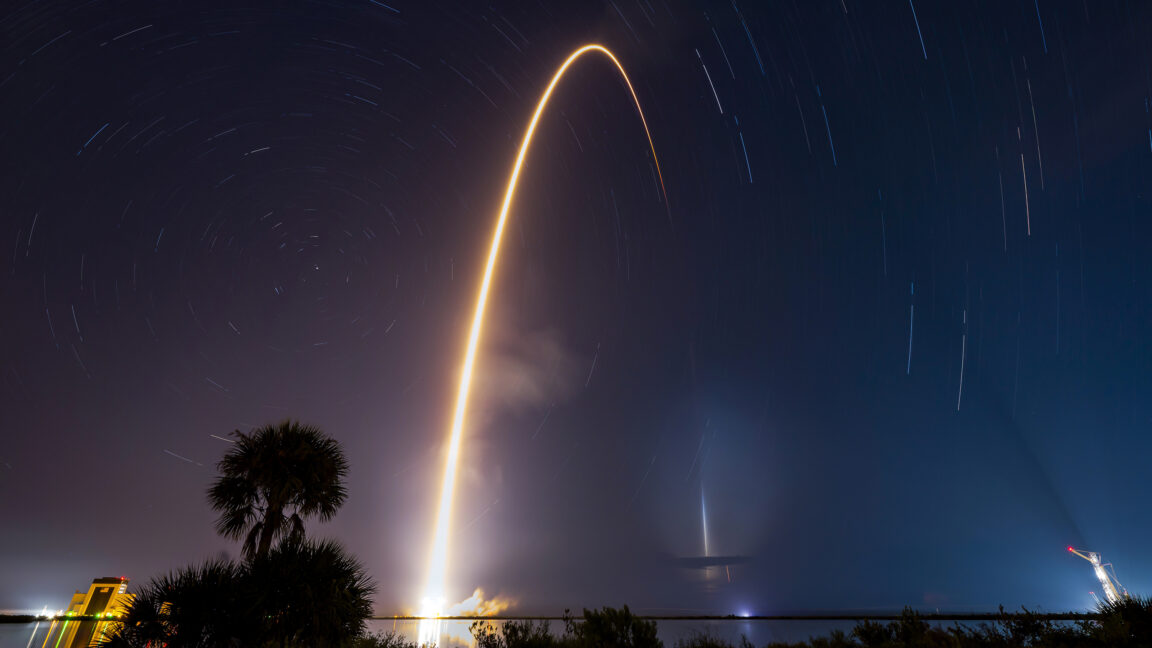
However, this routine-looking mission was extraordinary for two distinct reasons. First and foremost, it marked the 37th flight for this specific fleet-leading first-stage booster—an unprecedented achievement in the history of orbital-class rocketry that shatters previous reusability benchmarks. Second, the precise pre-dawn timing of the launch created a dazzling celestial spectacle, offering skywatchers all along the United States East Coast a rare, vivid glimpse of the Falcon 9 as it roared on a northeast trajectory out of Florida.
Beneath the visual spectacle of the launch, however, lies a profound transition point for the aerospace giant. Tuesday’s mission marks the culmination of an extraordinary era: it is the final Starlink-dedicated mission to be launched on a Falcon 9 rocket from the state of Florida. Having executed approximately 260 Starlink missions from the Sunshine State using its workhorse vehicle, SpaceX is officially closing the book on dedicated internal mega-constellation flights from its East Coast pads. Moving forward, every single Falcon 9 and Falcon Heavy launch originating from Florida will be dedicated entirely to external customer payloads.
This strategic pivot signals a monumental shift in SpaceX’s operational philosophy. As the company prepares to transition its heavy-lift and high-cadence workloads toward its next-generation Starship system, the aerospace industry is bracing for a complex multi-year evolution. While the Falcon 9 remains the most reliable launch vehicle in human history, its days are numbered. Officials ultimately plan to phase out the Falcon fleet in favor of Starship, setting off a scramble among commercial and government customers concerned about the availability of reliable launch services as the decade draws to a close.
Detailed Chronology: The Anatomy of a Record-Breaking Morning
The sequence of events leading up to Tuesday’s historic launch began weeks prior with the meticulous refurbishment and integration of the mission hardware at SpaceX’s Florida processing facilities. SLC-40, nestled within the secure perimeters of Cape Canaveral Space Force Station, has long served as a vital workhorse for the company’s high-frequency launch manifest.
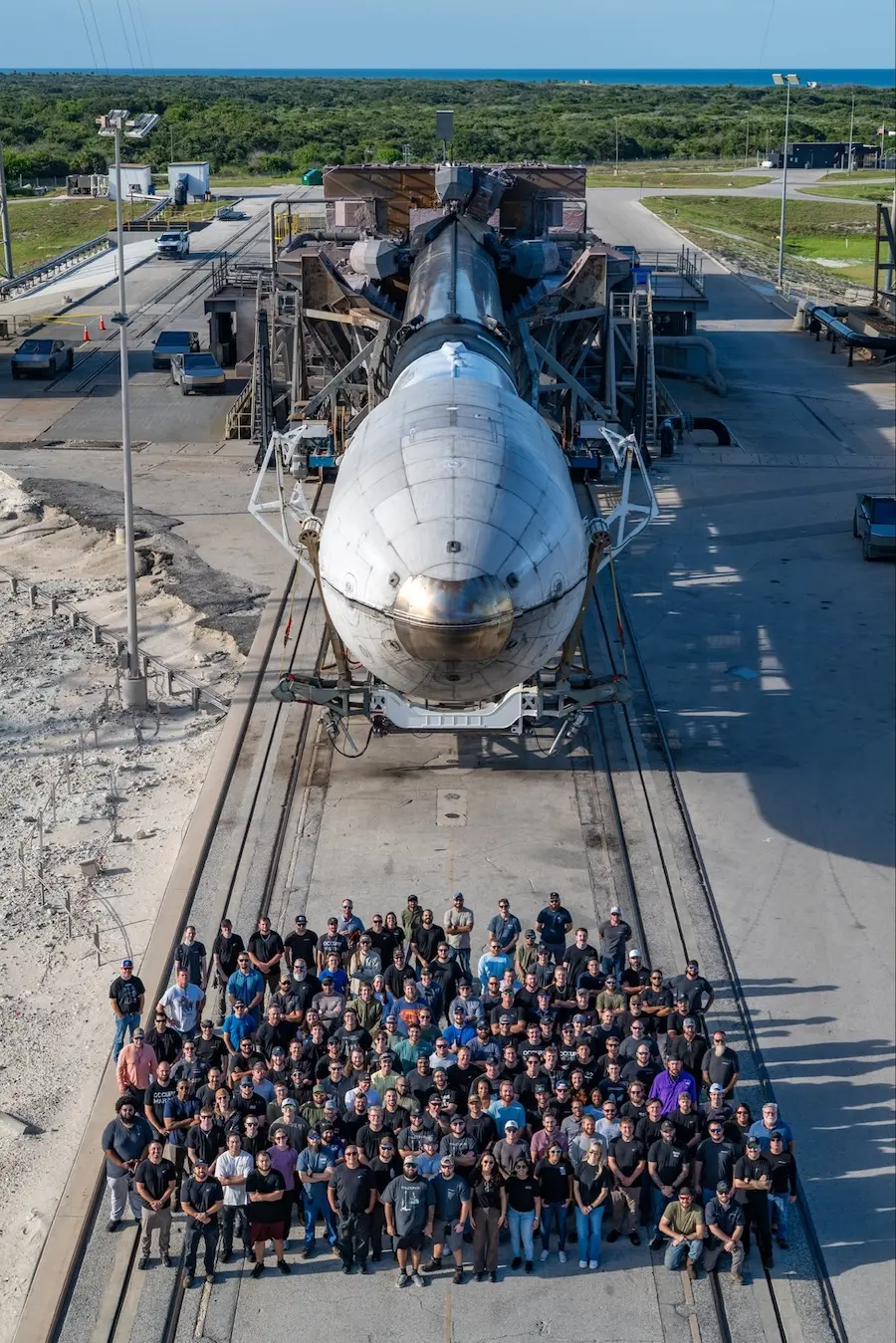
As the countdown clock ticked down through the final hours, engineers and technicians monitored telemetry from the fleet-leading first-stage booster. Having previously flown 36 times, this booster—the undisputed champion of SpaceX’s rapidly maturing reusable rocket fleet—was subjected to rigorous non-destructive evaluation and structural inspections to ensure it could safely undertake its 37th journey to the edge of space.
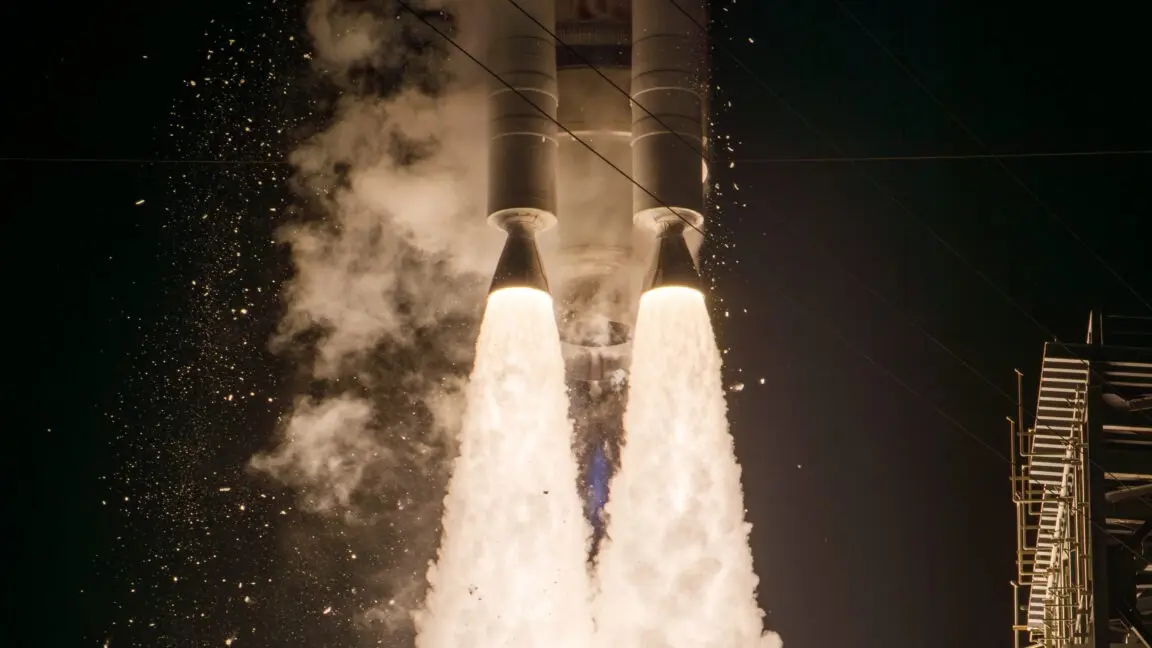
T-zero occurred in the twilight hours shortly before sunrise, a deliberate timing choice dictated by orbital mechanics and the specific plane required for the payload insertion. As the nine Merlin 1D engines at the base of the Falcon 9 ignited, they generated over 1.7 million pounds of thrust, bathing the Florida coastline in a brilliant, flickering amber light. The rocket cleared the tower cleanly, executing a textbook pitch maneuver as it headed northeast over the Atlantic Ocean.
Because the launch occurred precisely during the narrow window when the sun was still positioned just below the horizon while the rocket was rapidly ascending into the upper atmosphere, sunlight illuminated the expanding exhaust plume against the dark backdrop of the morning sky. This rare optical phenomenon—frequently referred to by enthusiasts as a "space jellyfish" or twilight phenomenon—treated residents and astronomy buffs stretching from Florida up through the Carolinas to a breathtaking visual display.
While onlookers gazed upward at the glowing plume, the mission proceeded autonomously through stage separation, fairing deployment, and the eventual, precise landing of the record-breaking first-stage booster downrange on a SpaceX autonomous droneship. For the engineering teams on the ground, the successful recovery and flight data validation of booster number 37 served as a powerful validation of the economic and technical models underpinning rapid, full-scale rocket reusability.
Supporting Context & Metrics: The Falcon 9 Legacy and the Florida Mega-Constellation Era
To truly understand the weight of Tuesday’s launch, one must examine the staggering metrics accumulated by the Falcon 9 program over the past decade. Since its inaugural flight in June 2010, the Falcon 9 has evolved from an ambitious commercial resupply vehicle into the undisputed backbone of global orbital logistics.
The Numbers That Defined an Era
- 37 Flights: The unprecedented record set by Tuesday’s fleet-leading first-stage booster, proving that orbital-class boosters can achieve aircraft-like turnaround and reuse frequencies.
- ~260 Starlink Missions: The total number of dedicated constellation-building flights executed by Falcon 9 rockets launching from Florida pads (SLC-40 at Cape Canaveral and LC-39A at Kennedy Space Center).
- The Most Reliable Vehicle in History: A title earned through hundreds of consecutive successful missions, cementing the Falcon 9’s status as a marvel of modern aeronautical engineering.
For years, the cadence of Florida’s spaceports has been largely dictated by the sheer volume of Starlink launches. SpaceX utilized the Falcon 9 to seed low-Earth orbit (LEO) with thousands of operational satellites, creating the largest satellite constellation in human history. This massive deployment directly enabled the company to provide high-speed, low-latency internet connectivity to millions of residential, maritime, aviation, and enterprise users across the globe.
However, the operational mathematics of the Starlink program are shifting. While Falcon 9 has successfully built out the foundational layers of the constellation, its payload fairing volume and mass constraints mean it cannot scale efficiently to meet the demands of next-generation satellite designs. The physical limitations of the rocket have necessitated a radical reimagining of SpaceX’s manufacturing and deployment pipelines, making the closure of the Florida-based Falcon Starlink launch era a logical, albeit dramatic, operational evolution.
Official Statements: Celebrating Past Triumphs and Looking to the Horizon
The emotional resonance of Tuesday’s milestone was palpable among SpaceX’s leadership and engineering cadre. Speaking shortly after the successful liftoff and booster recovery, SpaceX executives reflected on the grueling path that transformed a fledgling startup into the world’s preeminent launch provider.
"Super proud of this incredible team," remarked senior SpaceX leadership representative Dontchev during post-launch debriefings. Expanding on the historic nature of the morning’s events, Dontchev emphasized the broad societal and technological impacts of the workforce’s collective labor:
"You’ve made Falcon 9 the most reliable launch vehicle in history. You also helped build the largest low-Earth orbit satellite constellation providing connectivity to millions around the world, and you’ve set the foundation for what’s next."
This sentiment captures the dual nature of the milestone: it is simultaneously a celebration of a mature, perfected technology and a mandatory stepping stone toward a radically different future. The "foundation for what’s next" is no longer theoretical; it is rapidly materializing on launchpads and in assembly hangars across Texas and Florida.
With the closure of dedicated Falcon Starlink missions from Florida, the local manifest transforms immediately to accommodate external clients. The very next flight out of the gate is scheduled for August 30, when a heavy-lift Falcon Heavy rocket will thunder off Launch Complex 39A at the Kennedy Space Center, carrying NASA’s highly anticipated Nancy Grace Roman Space Telescope. Following that marquee scientific mission, the manifest calls for a crewed Falcon 9 flight in mid-September, tasked with delivering the next rotation of four professional astronauts to the International Space Station.
Future Outlook: The Starship Transition, Launch Crunches, and Starlink Version 3
As the Falcon 9 begins its deliberate, multi-year twilight phase, the global aerospace industry is watching SpaceX closely to see how the company manages the complex logistical puzzle of transitioning its primary heavy-lift capability to the fully reusable Starship and Super Heavy system.
The Customer Launch Crunch
Official long-term plans dictate that the Falcon 9 will eventually be phased out entirely, at least for commercial operations. This prospective retirement has ignited intense anxiety among commercial satellite operators, civil space agencies, and defense customers who rely heavily on the Falcon family. Industry analysts have frequently pointed out a looming "launch crunch" heading toward the late 2020s, as demand for reliable orbital access outpaces the operational readiness of alternative vehicles. Commercial customers have voiced concerns over potential supply bottlenecks and service gaps if the transition timeline encounters unexpected regulatory or technical delays.
Infrastructure Hurdles at Kennedy Space Center
SpaceX has consistently maintained its ambition to begin launching Starship and Super Heavy boosters from Launch Complex 39A (LC-39A) at the Kennedy Space Center by the end of this year. However, aerospace experts widely view this target as overly aggressive. The sheer volume of heavy infrastructure work required to construct specialized orbital launch mounts, cryogenic propellant farms, and deluge systems at LC-39A remains substantial.
Furthermore, there is a notable absence of imminent logistics activity regarding the transport of flight-ready Starships from SpaceX’s primary operational and manufacturing facility in Boca Chica, Texas, across the Gulf of Mexico to Florida’s Space Coast. Taking these heavy engineering realities into account, a more realistic assessment points toward a Starship debut from Kennedy Space Center by mid-2027.
Starbase, Texas, and the Dawn of Starlink Version 3
While Florida infrastructure developments move at a measured pace, operations in South Texas remain white-hot. Starship is specifically engineered to handle the massive volume and mass requirements of the next generation of space-based internet infrastructure: Starlink Version 3 (V3) satellites.
Significantly larger, heavier, and vastly more powerful than the V2 models currently deployed by Falcon 9, Starlink V3 satellites represent a quantum leap in orbital bandwidth and capabilities. To get these colossal spacecraft into orbit, SpaceX is bypassing the Falcon entirely and turning directly to its next-generation system.
Company plans indicate that the upcoming fourteenth integrated test flight of the Starship system—designated Flight 14—will serve as the operational debut for Starlink V3. Liftoff is targeted for as early as next month from Starbase, Texas. If successful, this mission will inaugurate a brand-new chapter in orbital deployment, definitively proving the heavy-lift utility of Starship while establishing the template for how global telecommunications constellations will be built in the decades to come.
As Tuesday’s historic Falcon 9 launch fades into memory, it serves as both a monument to what has already been achieved and a clear starting pistol for the next great era of space exploration. The Falcon has conquered low-Earth orbit; now, the heavy burden of the future rests squarely on the shoulders of Starship.