Executive Overview
As the international space community looks toward the twilight of the current decade, NASA faces a monumental strategic crossroads. The planned retirement of SpaceX’s venerable Dragon spacecraft—slated for on or before 2030—threatens to sever the primary umbilical cord connecting American astronauts to the cosmos. With the International Space Station (ISS) inching toward a proposed operational extension through 2032, and a nascent commercial ecosystem of private habitats known as Commercial LEO Destinations (CLDs) rising to take its place, the United States space agency is confronting a severe logistical vacuum.
How will NASA transport its astronauts to low-Earth orbit (LEO) once the Dragon era closes?
Following a complex evaluation of fiscal realities, industrial capacities, and strategic risk management, NASA has doubled down on Boeing’s beleaguered Starliner program. Despite a history plagued by technical anomalies, schedule delays, and ballooning costs, agency leadership has determined that walking away from Starliner is an unacceptable luxury. With projected future flight cadences demanding a meager two seats every six to nine months, the launch economics rule out the immediate funding of a multi-billion-dollar competing crew vehicle program.
Yet, this decision brings its own set of profound challenges. By anointing Starliner as the presumptive heir to the post-Dragon LEO transport market, NASA is handing Boeing a potential monopoly just as the commercial space station economy takes flight. Questions regarding long-term pricing, launch vehicle certifications, and corporate execution hang heavy over the partnership. This in-depth report examines the strategic imperatives driving NASA’s decision, the calculus behind rejecting a second commercial crew competition, Boeing’s vision for the future, and the looming economic hurdles of a single-supplier paradigm in low-Earth orbit.
Detailed Chronology of a Crisis: The Path to the 2030 LEO Transition
To understand the gravity of NASA’s current predicament, one must trace the timeline of the Commercial Crew Program (CCP) and the shifting paradigms of human spaceflight.
The Dual-Provider Strategy and Its Divergent Paths
Conceived in the wake of the Space Shuttle’s retirement, the Commercial Crew Program was designed to break NASA’s reliance on foreign launch providers by fostering a competitive domestic market for crew transportation. In 2014, NASA awarded multibillion-dollar contracts to both SpaceX and Boeing. The vision was elegant in its redundancy: two independent commercial systems capable of ferrying crews to the ISS, ensuring operational resilience and driving down costs through market competition.
However, reality proved far more complicated than the PowerPoint projections. SpaceX executed a masterclass in rapid iteration. Despite initial hurdles, the Falcon 9 and Crew Dragon system achieved uncrewed flight test success in 2019, followed by a historic crewed flight in May 2020. Since then, Dragon has become the undisputed workhorse of American human spaceflight, flying dozens of astronauts for NASA, international partner agencies, and private commercial endeavors.
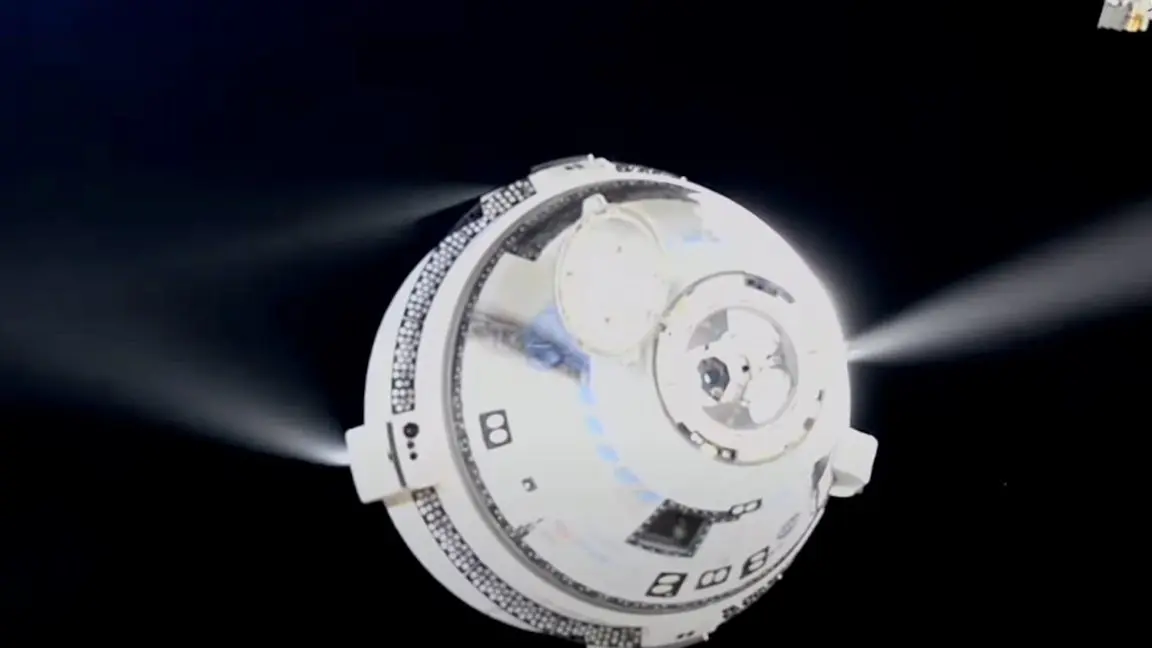
Boeing, conversely, stumbled repeatedly. The aerospace giant’s CST-100 Starliner program was beset by software glitches, valve corrosion issues, parachute deployment hurdles, and administrative friction. An uncrewed Orbital Flight Test (OFT) in 2019 failed to reach the ISS due to a mission-elapsed timer anomaly. It took until mid-2022 for Boeing to successfully execute a repeating uncrewed test (OFT-2). Even the subsequent Crew Flight Test (CFT), which finally launched NASA astronauts to the station, encountered thruster anomalies and helium leaks that significantly prolonged the astronauts’ stay in orbit and forced intensive engineering post-mortems.
The 2030 Horizon and the Looming Void
While Boeing fought to bring Starliner to operational maturity, the clock was ticking on the space architecture of the 20th century. NASA and its international partners committed to operating the International Space Station through the end of the decade. Beyond 2030, the orbital laboratory is slated for a controlled, fiery de-orbit, clearing the path for private industry to step forward.
Recognizing the economic and geopolitical imperative of maintaining a continuous human presence in LEO, NASA initiated the Commercial LEO Destinations (CLD) program. Rather than owning and operating another multi-billion-dollar station, the agency opted to act as an anchor tenant, purchasing services from privately developed and managed space stations built by companies such as Axiom Space, Blue Origin (Orbital Reef concept), and Nanoracks (Starlab).
Yet, a private space station is worthless if astronauts cannot reach it. With the retirement of Dragon anticipated by or before 2030—either due to structural life limits, technological evolution, or SpaceX pivoting its capital toward Mars-focused architectures like Starship—NASA realized it faced a terrifying cliff. Without a certified, operational crew vehicle outside of SpaceX’s ecosystem, the United States risked losing independent, redundant access to low-Earth orbit just as its commercial space station economy was coming online.
Supporting Context and Metrics: The Math of Monopolies and Missed Competitions
Faced with this stark horizon, critics and aerospace analysts urged NASA to launch a sweeping new initiative: a second Commercial Crew competition. Proponents argued that the agency should invite established players and energetic newcomers—such as Boeing, Blue Origin with its under-development space vehicles, and European challengers like The Exploration Company—to pitch fresh, cost-effective architectures for the 2030s.
The Prohibitive Economics of Redundancy
Why did NASA ultimately reject this path? The answer lies in the cold, unyielding mathematics of modern spaceflight economics.
During high-profile press briefings, key decision-makers—including high-ranking officials and policy architects such as Isaacman—emphasized that launching a brand-new crew vehicle development program is an astronomically expensive endeavor. Historically, developing a human-rated orbital spacecraft and its accompanying launch vehicle runs into the multiple billions of dollars.
More importantly, the demand side of the ledger simply does not justify the capital expenditure. NASA’s projected future demand for astronaut flights to low-Earth orbit is remarkably modest: approximately two seats every six to nine months.
When spread across such a low flight cadence, the fixed development costs of a second brand-new vehicle would result in an exorbitant per-seat price tag for taxpayers. Furthermore, the United States has already poured significant financial capital and engineering sweat into Boeing’s Starliner. To discard that multi-billion-dollar investment at the eleventh hour—just as the vehicle is achieving operational readiness—was viewed by agency leadership as fiscally irresponsible.
The Pricing Dilemma and the Spectre of a Monopoly
However, sticking with Starliner introduces a volatile new variable: market dominance without competitive pressure.
For the initial contracted missions—designated Starliner-2 through Starliner-6—NASA and Boeing settled on a baseline price point of approximately $90 million per seat. While expensive compared to early commercial projections, it was deemed an acceptable price of admission to maintain a dual-capability baseline while Dragon was still flying.
The real anxiety centers on the post-2030 landscape. Once Dragon exits the market, Boeing will effectively hold a monopoly on NASA-certified crew transportation to the ISS extension and the newly minted CLD platforms—unless SpaceX extends Dragon or another vehicle emerges.
This market power reared its head during summer negotiations between Boeing and private CLD operators. When pressed by commercial station developers for long-term seat pricing for the 2030s, Boeing executives declined to provide detailed figures.
+--------------------------------------------------------------------------+
|                     POST-2030 LEO TRANSPORT MATRIX                       |
+--------------------------+-----------------------------------------------+
| Primary Provider         | Boeing (CST-100 Starliner)                    |
| Secondary Provider       | None (Dragon retirement expected ~2030)       |
| NASA Flight Cadence      | ~2 seats every 6 to 9 months                  |
| Initial Contract Pricing | ~$90 million per seat (Starliner 2-6)         |
| CLD Pricing (2030s)      | Undisclosed (Pending Vehicle & Vulcan Cert)   |
+--------------------------+-----------------------------------------------+
The lack of firm pricing is not necessarily born of corporate malice; rather, it reflects fundamental engineering milestones that remain uncrossed. According to John Mulholland, Boeing’s vice president and program manager of Commercial Crew, the company cannot formulate precise long-term pricing structures until critical hardware transitions from development to routine operations.
Official Statements and Industry Perspectives
The friction between corporate caution and agency urgency was on full display during recent industry updates. Stakeholders from both NASA and Boeing attempted to project confidence while navigating the rocky terrain of technical certification.
John Mulholland addressed the media with an upbeat assessment of Boeing’s renewed dedication to the program, framing the challenges not as roadblocks, but as standard engineering milestones on the path to maturation.
"We’re incredibly excited about the partnership with NASA," Mulholland declared during a media conference.
"To continue to fly to the International Space Station, and then obviously, with the Vulcan certification, missions beyond the current six that we have. Certainly, we have talked to all of the CLD providers about becoming their preferred transportation supplier in the future."
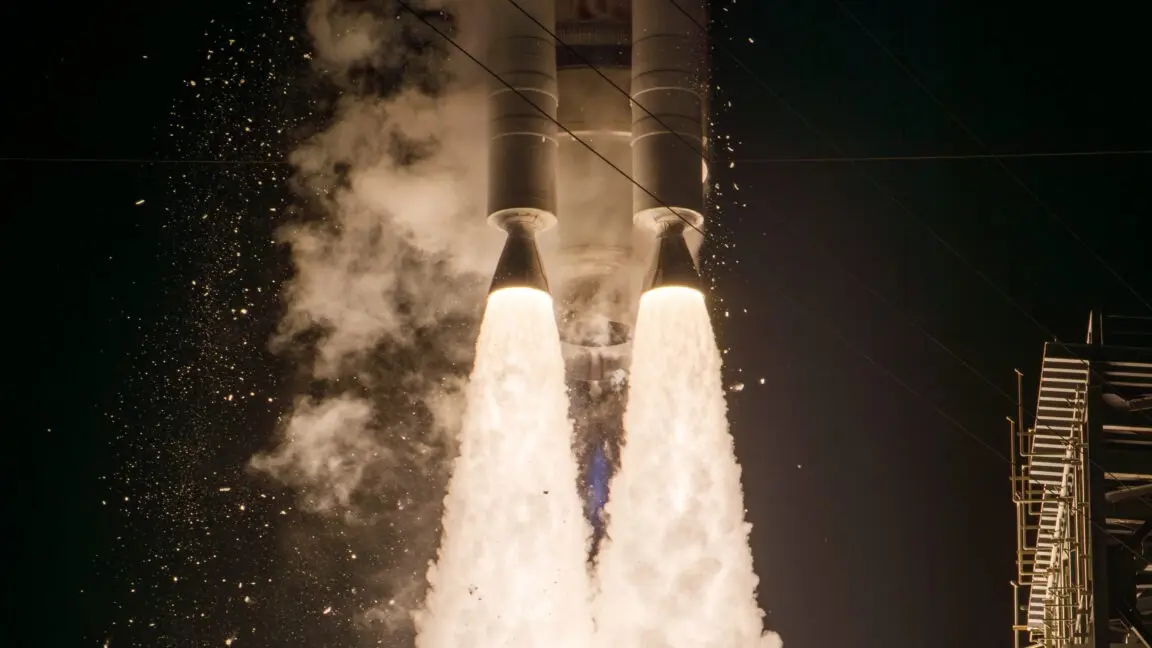
Mulholland’s reference to the United Launch Alliance (ULA) Vulcan rocket touches upon the intricate supply chain dependencies governing Starliner. While Starliner has historically flown atop ULA’s Atlas V rocket, that venerable launch vehicle is being phased out as ULA transitions its manifest to the next-generation Vulcan Centaur. Certifying Starliner to fly on Vulcan—alongside achieving final, unblemished operational certification for the spacecraft itself—represents a massive engineering hurdle that must be cleared before Boeing can seriously market routine taxi services to private space stations.
Addressing the thorny issue of why detailed pricing has not been handed over to private station developers, Mulholland was candid about the current state of informational gaps:
"We couldn’t provide detailed pricing to the CLD suppliers as the Vulcan rocket has not been certified, and the spacecraft has not been certified, and we don’t have detailed pricing on the Vulcan. That will come in the future, and obviously we want to be as competitive as possible."
Independent aerospace analysts, however, remain watchful. While corporate promises of future competitiveness are standard in the defense and aerospace sectors, the absence of a competitive market constraint once Dragon retires leaves private space station operators vulnerable to high pricing. If Boeing is the only game in town for certified American human spaceflight to LEO, market dynamics dictate that pricing leverage rests firmly in Arlington.
Future Outlook: Navigating the 2030s Orbital Economy
As NASA, Boeing, and the broader commercial aerospace sector look toward the next decade, the stakes could not be higher. The decisions made today will dictate the economic viability of human habitation in low-Earth orbit for a generation.
Execution is Everything
The overarching caveat to Boeing’s entire strategy is simple: execution. Boeing has yet to prove it can execute a steady, reliable, and cost-effective cadence of crewed flights. The company must successfully close out its current manifest of missions, resolve lingering technical anxieties surrounding propulsion and life-support subsystems, and seamlessly transition Starliner flights to the Vulcan launch vehicle.
Any further delays or anomalies could prove fatal to the program’s public standing and congressional support, potentially leaving NASA with no operational vehicle to service the ISS extension or early CLD platforms.
The Rise of the Commercial LEO Market
For the private space station operators—entities building the habitats that will replace the ISS—securing reliable, reasonably priced transportation is an existential requirement. These stations cannot generate revenue if tourists, corporate researchers, and sovereign astronauts cannot reach them.
If Boeing’s per-seat costs remain excessively high due to a lack of direct competition, it could stunt the growth of the entire commercial space economy, pricing out researchers and limiting the market to heavily subsidized government missions. Conversely, if Boeing successfully scales operations, standardizes its manufacturing processes, and leverages Vulcan to drive down launch costs, it could unlock a thriving, self-sustaining orbital marketplace.
Conclusion: A Calculated Gamble
NASA’s decision to stand by Starliner and forego a costly second crew competition is a classic exercise in aerospace risk management. It is a calculated gamble born of fiscal constraint and pragmatic necessity.
The space agency has chosen to lean into its sunk costs, betting that Boeing can right the ship, overcome its technical hurdles, and evolve into a reliable, competitive provider for the post-ISS era. Whether this gamble pays off will depend entirely on Boeing’s engineering rigor in the coming years. As the clock ticks down toward 2030, the eyes of the global space community remain fixed on the assembly lines and launch pads where America’s orbital future is being forged.