Executive Overview
The professional digital imaging landscape is experiencing a significant paradigm shift. For over a decade, creative professionals, agencies, and independent photographers have operated under the near-total hegemony of subscription-based software ecosystems. However, a growing undercurrent of subscription fatigue, combined with rapid advancements in independent software development, has set the stage for a major market disruption.
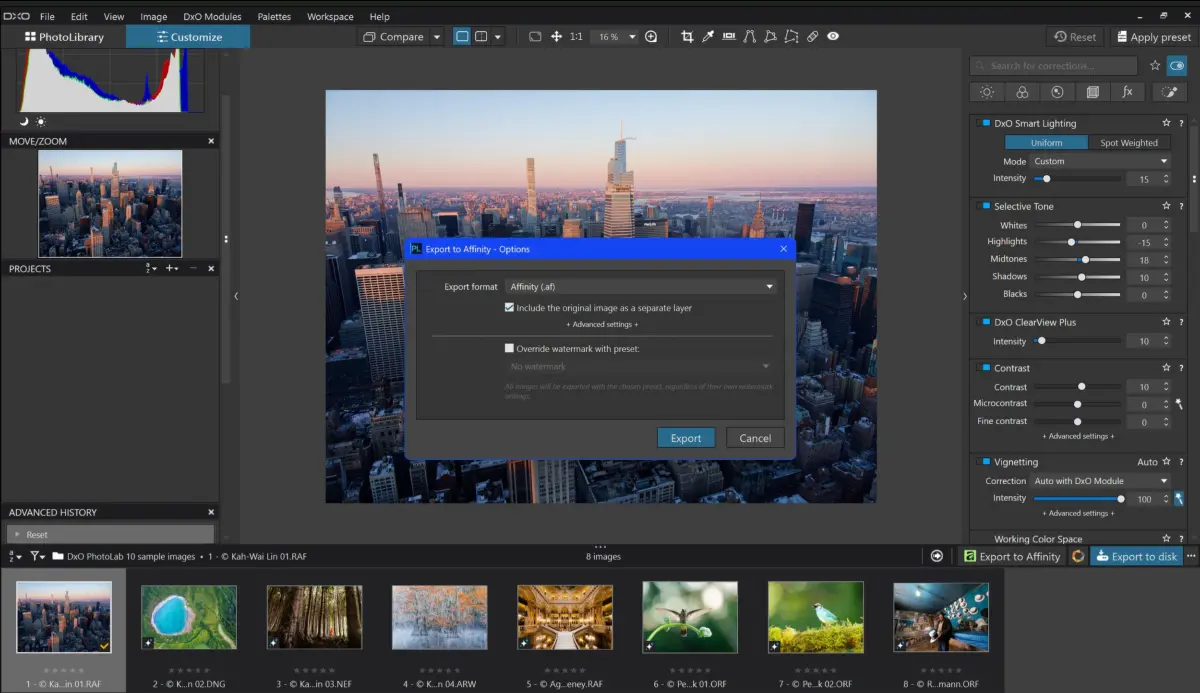
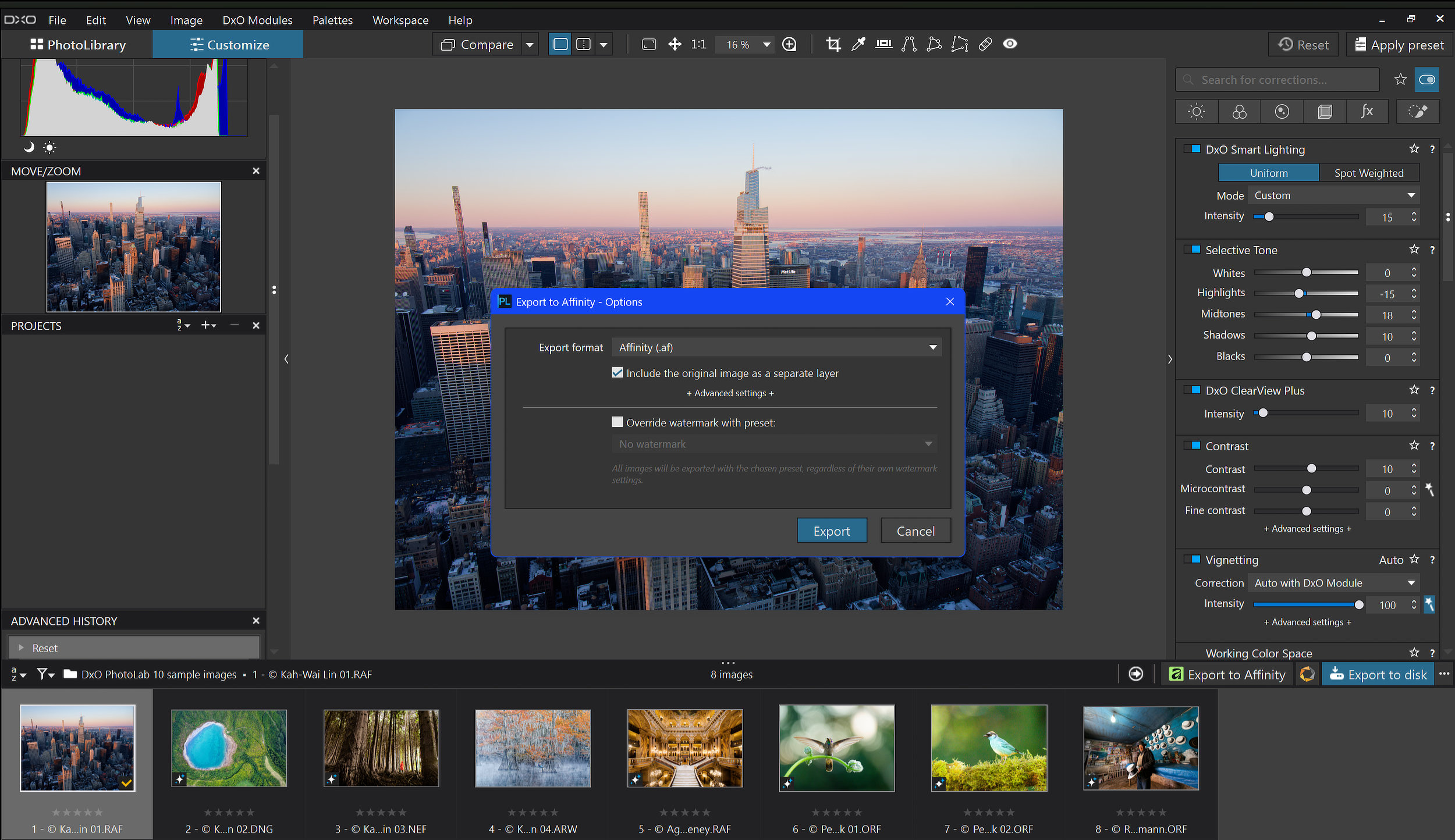
In a strategic move that directly challenges established industry workflows, DxO Labs has announced the release of DxO PhotoLab 10.1. This update introduces a seamless, one-click export pipeline to the native Affinity (.af) file format.
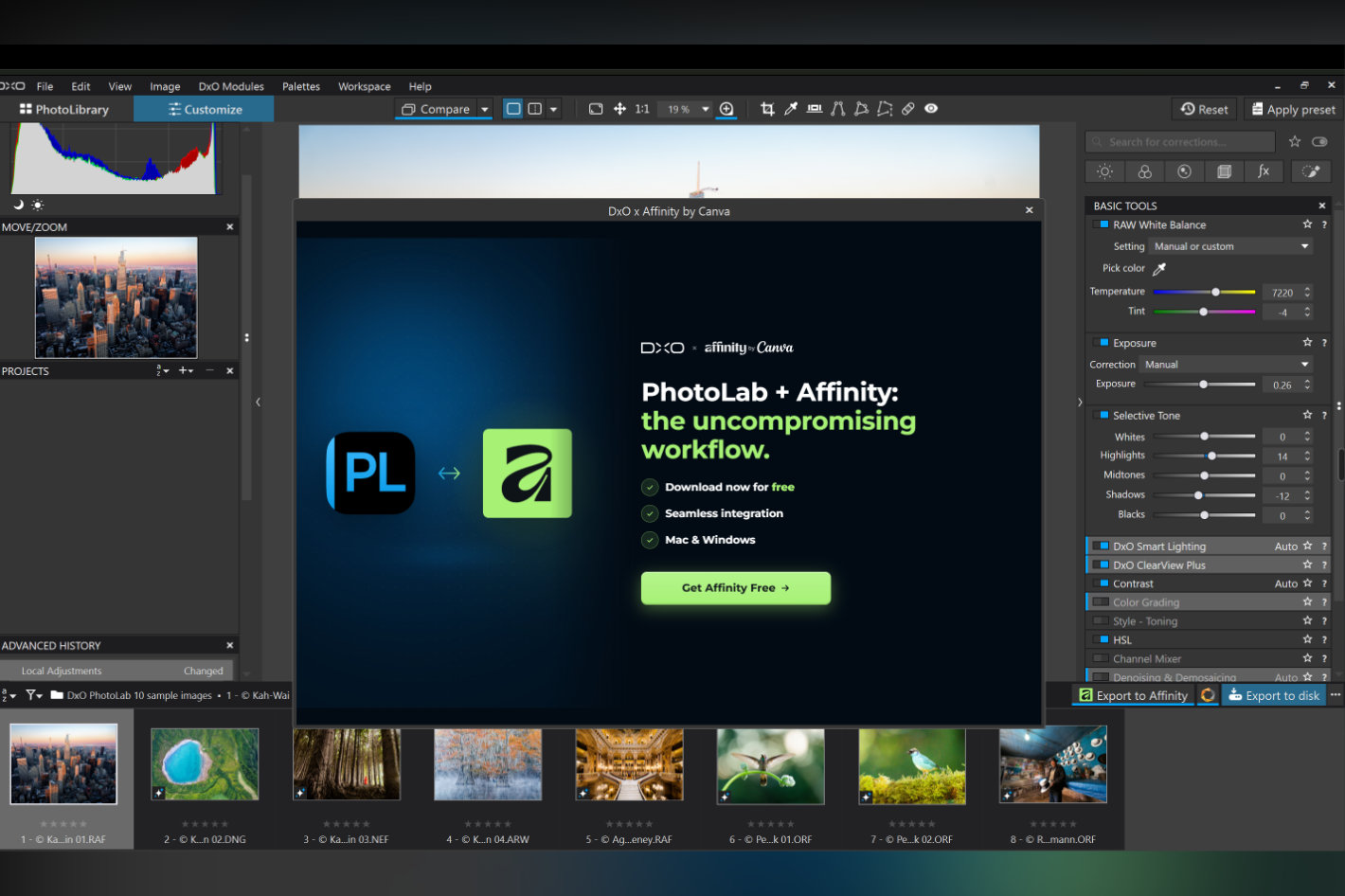
This development represents the first milestone in a formal partnership between DxO—renowned for its science-led RAW processing, optical corrections, and advanced denoising technologies—and Affinity, the professional creative suite backed by global design platform Canva. By bridging the gap between non-destructive RAW development and advanced layer-based retouching, vector design, and page layout, the integration establishes a robust, end-to-end professional creative pipeline.
Crucially, this ecosystem operates entirely outside the subscription-based model. DxO PhotoLab remains available via a traditional perpetual license, while the professional-grade Affinity suite is currently offered completely free of charge to macOS and Windows users through a free Canva account. By eliminating the technical friction of file conversion and the financial friction of monthly recurring costs, this partnership offers a viable, high-performance alternative to Adobe’s Creative Cloud dominance.
+-------------------------------------------------------------------------+
|                      THE SUBSCRIPTION-FREE PIPELINE                     |
+-------------------------------------------------------------------------+
|                                                                         |
|  [ RAW File ]                                                           |
|       │                                                                 |
|       ▼                                                                 |
|  +───────────────────────────────────────────────────────────────────+  |
|  | DxO PhotoLab 10.1 (Perpetual License)                             |  |
|  | - Industry-Leading Demosaicing & RAW Conversion                   |  |
|  | - DeepPRIME AI-Powered Denoising                                  |  |
|  | - Precision Optical Corrections & Lens Profiles                   |  |
|  +───────────────────────────────────────────────────────────────────+  |
|       │                                                                 |
|       │  <-- ONE-CLICK NATIVE EXPORT (.af Format)                       |
|       ▼                                                                 |
|  +───────────────────────────────────────────────────────────────────+  |
|  | Affinity Suite (Free via Canva Account)                           |  |
|  | - Unified .af File Format (Photo, Designer, Publisher)            |  |
|  | - Advanced Layer-Based Pixel Retouching & Compositing             |  |
|  | - Vector Graphics, Typography, and Page Layout                    |  |
|  +───────────────────────────────────────────────────────────────────+  |
|                                                                         |
+-------------------------------------------------------------------------+
Detailed Chronology
The integration of DxO PhotoLab 10.1 and the Affinity suite is the culmination of distinct developmental timelines that have converged to address a critical market demand: interoperability without compromise.
The Evolution of DxO PhotoLab 10
In late 2024, DxO Labs launched PhotoLab 10, a major upgrade designed to push the boundaries of RAW image editing. PhotoLab 10 expanded the software’s signature AI-driven tools, notably enhancing its DeepPRIME denoising algorithms, optical correction engines, and local adjustment capabilities. Despite its power as a RAW developer, DxO has historically recognized its architectural boundaries. A RAW converter is designed to extract maximum fidelity from sensor data; it is not built to serve as a vector design engine, a typography tool, or a multi-page layout application.
The Canva-Affinity Realignment
Concurrently, the creative software landscape underwent a major realignment when Canva acquired Serif, the UK-based creator of the Affinity suite (comprising Affinity Photo, Affinity Designer, and Affinity Publisher). Following the acquisition, Canva made the disruptive decision to make the professional-grade desktop applications for macOS and Windows entirely free for users who sign up for a free Canva account. This move democratized access to professional-grade creative tools, positioning Affinity as a direct competitor to Adobe Photoshop, Illustrator, and InDesign.
The Road to Version 10.1
Recognizing the complementary strengths of their respective platforms, engineering teams at DxO and Affinity initiated a collaborative development project. The objective was to eliminate the export-import bottlenecks that have long plagued photographers who use separate programs for RAW conversion and design.
This collaboration resulted in DxO PhotoLab 10.1. Released as a free update for all existing PhotoLab 10 users, the 10.1 iteration introduces a native .af exporter. Instead of forcing users to export intermediate TIFF or PSD files—which can result in ballooning storage requirements and lost metadata—PhotoLab 10.1 packages the processed image data directly into a native Affinity document structure.
Supporting Context & Technical Metrics
To understand the impact of this integration, it is necessary to examine the technical mechanics of the workflow, the division of labor between the two applications, and the economic landscape of the modern creative software market.
The Dual-Layer Export Architecture
The native .af export in PhotoLab 10.1 is not a simple file conversion; it is an intelligent, multi-layered document compilation. When a user executes a one-click export to Affinity, the software renders the RAW file using DxO’s proprietary demosaicing and optical correction algorithms.
NATIVE .af EXPORT STRUCTURE:
┌──────────────────────────────────────────────────────────┐
│ Layer 1: Fully Developed Image (Processed RAW)           │
│ - DxO Demosaicing, DeepPRIME Denoising, Lens Corrections │
├──────────────────────────────────────────────────────────┤
│ Layer 2: Original, Unprocessed RAW Reference (Optional)  │
│ - Clean baseline for masking, blending, and comparison   │
└──────────────────────────────────────────────────────────┘
The resulting export produces a native Affinity document containing:
- The Developed Image Layer: The primary layer, fully optimized with DxO’s lens profiles, color science, and noise reduction.
- The Unprocessed Reference Layer (Optional): A secondary layer containing the original, uncorrected photograph. This serves as an invaluable baseline reference. Retouchers can use this secondary layer for advanced masking, blending, or direct comparison at any stage of the post-processing pipeline.
The Unified .af File Advantage
One of the most powerful aspects of the Affinity ecosystem is its unified file format. Unlike traditional creative suites where photo editing, vector illustration, and page layout use incompatible proprietary formats (e.g., .psd, .ai, .indd), the Affinity suite uses a single, shared file format: .af.
This means that once DxO PhotoLab 10.1 exports an .af file, that document can move seamlessly between:
- Affinity Photo: For complex pixel-level retouching, frequency separation, and multi-image compositing.
- Affinity Designer: For adding vector graphics, branding elements, and digital illustrations.
- Affinity Publisher: For importing the image directly into editorial layouts, book designs, and multi-page documents.
Because the file format remains constant, there is zero translation loss, zero rasterization of vector elements, and no need to manage multiple version-controlled files across different applications.
Economic Comparison: Perpetual & Free vs. Subscription
The economic implications of this workflow are highly significant for independent creators, boutique studios, and enterprise IT departments looking to optimize software licensing costs.
| Metric / Feature | DxO + Affinity Workflow | Traditional Subscription Suite |
|---|---|---|
| Licensing Model | Perpetual License (DxO) + Free (Affinity) | Monthly/Annual Recurring Subscription |
| Software Ownership | User owns the software license permanently | Software ceases to function if subscription lapses |
| Initial Cost | One-time purchase for DxO PhotoLab | Low initial entry fee |
| Long-Term Cost (3 Years) | Zero ongoing fees (optional upgrades only) | High cumulative cost (upwards of $1,800+ per seat) |
| RAW Conversion Engine | Science-led, custom optical profiles, AI DeepPRIME | Standardized profiles, generalized denoising |
| Layout & Design Integration | Unified .af format across all design disciplines |
Multi-file formats requiring complex linking |
Official Statements & Strategic Alignment
The leadership of both organizations has emphasized that this integration is not merely a technical update, but a strategic alliance aimed at redefining professional standards.
Duncan Clark, CEO of Pro Design for Canva, highlighted the user-centric demand that drove this partnership:
"We’re thrilled to see DxO tightly integrating with Affinity to make it seamless for photographers to combine world-class RAW editing with cutting-edge editing, retouching and design. Photographers and designers have been telling us loud and clear that they want simple, smooth workflows instead of fighting to get different products to talk to each other. This partnership is further evidence that a new generation of creative tools is meeting that need."
This sentiment was echoed by Jérôme Ménière, founder and CEO of DxO, who framed the partnership around a shared commitment to uncompromising quality and professional autonomy:
"For more than twenty years, DxO has focused on extracting every ounce of quality from a RAW file. What happens after the RAW is developed—retouching, compositing, layout—deserved a partner of the same calibre. With Affinity, PhotoLab users now have a complete professional workflow, from RAW file to finished page, with no subscription required."
These statements underscore a shared philosophy: professional software should empower the user through technical excellence and financial fairness, rather than locking them into restrictive ecosystems through proprietary file formats and mandatory monthly fees.
Future Outlook & Industry Implications
The release of DxO PhotoLab 10.1 is merely the opening salvo in what both companies promise will be an expanding collaborative roadmap.
Expanding Beyond PhotoLab: The Nik Collection
According to roadmap disclosures from DxO Labs, the integration with the Affinity ecosystem will soon extend beyond PhotoLab. The next major milestone will target the Nik Collection, DxO’s highly acclaimed suite of creative plugins.
FUTURE WORKFLOW EXPANSION:
[ RAW File ] ──> [ DxO PhotoLab ] ──> [ Affinity Photo (.af) ] ──> [ Nik Collection Plugins ]
                                                                   - Analog Efex
                                                                   - Silver Efex (B&W)
                                                                   - Color Efex
The Nik Collection—which includes dedicated tools for black-and-white conversion (Silver Efex), film emulation, and creative color grading (Color Efex)—naturally complements Affinity Photo’s raster editing capabilities. Future updates will bring streamlined, non-destructive round-tripping between Affinity Photo and the Nik Collection plugins, providing retouchers with a highly sophisticated creative palette.
Platform Parity and Mobile Workflows
A key component of this partnership is cross-platform accessibility. Currently, both DxO PhotoLab 10.1 and the Affinity desktop applications are fully optimized for macOS and Windows, including native support for Apple Silicon and modern multi-core Windows hardware.
To further bridge the gap between desktop and mobile creative workflows, Affinity is scheduled to release its highly anticipated iPad application updates in November. This will allow photographers to transition their .af projects seamlessly from high-performance desktop workstations to mobile tablet environments without losing layer structures, adjustment masks, or vector elements.
The Broader Industry Impact
The collaboration between DxO and Affinity (under the Canva umbrella) represents a credible challenge to Adobe’s market dominance. By proving that independent, specialized applications can achieve a level of integration that rivals a single-vendor suite, DxO and Affinity are dismantling the "walled garden" argument often used to justify creative suite subscriptions.
As PhotoLab’s .af support continues to expand with further workflow enhancements planned before the end of the year, the professional community is watching closely. The success of this alliance may well encourage other independent software developers to adopt open, cross-compatible standards, fostering a healthier, more competitive, and highly innovative creative software ecosystem.