Executive Overview
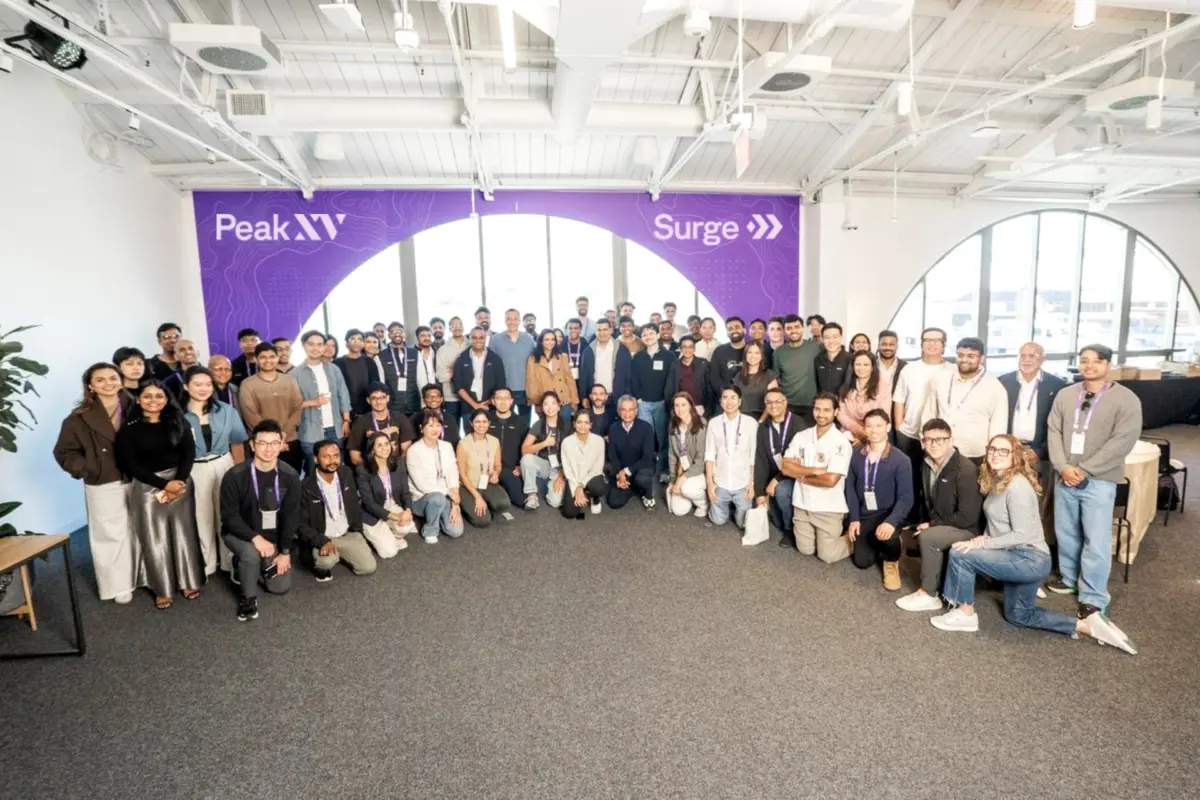
Peak XV Partners—one of the most formidable venture capital institutions operating across India, Southeast Asia, and global markets, managing a robust war chest exceeding $10 billion in assets—has officially pulled back the curtain on its latest early-stage cohort. Dubbed Surge 12, this new batch introduces 18 high-potential startups to the global innovation ecosystem.
Crucially, this cohort marks a watershed moment for the firm: it is the first institutional batch to operate under Peak XV’s expanded financial ceiling, which permits deploying up to $5 million per startup, up significantly from the previous $3 million cap. Across the newly minted cohort of 18 companies, Peak XV has funneled upwards of $50 million. Collectively, these early-stage ventures have already captured more than $90 million in total seed funding—a testament to the fierce demand for elite technical talent and disruptive business models even in a tightening macro environment.
While the headline-grabbing financial figures illustrate Peak XV’s aggressive capitalization strategy, the broader narrative of Surge 12 lies in its geopolitical reach and the evolving maturity of its founders. Bridging tech hubs from San Francisco to Sydney, the cohort underscores a fundamental decoupling between where companies are engineered and where they monetize. Only a fraction of these startups focus explicitly on the Indian domestic market, while over half are legally or operationally anchored in the region, building products destined for complex, high-value global economies.
Detailed Chronology & Evolution of the Surge Program
To truly understand the weight of Surge 12, one must look at the program’s historical trajectory. Launched originally in April 2019 when Peak XV operated under its former iteration as Sequoia Capital India and Southeast Asia, Surge was designed to compress decades of entrepreneurial trial-and-error into a high-octane, immersive acceleration and funding mechanism.
Over the past seven years, the platform has evolved from a regional experiment into a globally recognized engine of venture creation. Since its inception, Surge has backed more than 180 startups. These companies have been forged by visionary entrepreneurs representing more than 18 nationalities, reflecting a cosmopolitan approach to venture building.
The maturation of the program is vividly demonstrated by the financial gravity of its alumni. According to internal data disclosed by Peak XV, the 10 largest companies to emerge from prior Surge cohorts now collectively generate more than $1 billion in annual revenue. This elite tier of performers validates the firm’s thesis: identifying outlier founders early, wrapping them in institutional scaffolding, and backing them through subsequent institutional rounds yields outsized, compounding returns.
Surge 12 represents the latest evolutionary step. By increasing the maximum check size to $5 million and elevating the median investment per company, Peak XV is actively rewriting the playbook for seed-stage investing in emerging and developed markets alike.
Supporting Context & Metrics: Navigating a Changing Venture Landscape
The decision to elevate investment ceilings was not made in a vacuum. According to Rajan Anandan, Managing Director at Peak XV, the macro environment for early-stage and growth-stage companies has undergone structural shifts over the past 24 to 36 months.
“The bar to raise a Series A has gone up pretty significantly,” Anandan explained during an exclusive interview. This higher bar means that seed-stage startups require more runway, deeper capital reserves, and stronger product-market validation before graduating to subsequent institutional rounds.
Compounding this reality is the emergence of a new breed of capital-intensive startups. Sectors such as deeptech, quantum computing, autonomous robotics, and aerospace require significant R&D capital long before a product ever touches a customer. By offering up to $5 million at the seed stage, Peak XV is providing these asset-heavy, frontier-tech companies with the financial oxygen they need to build complex hardware and software architectures without stalling out prematurely.

Demographics and Geographic Arbitrage
Surge 12 also highlights a fascinating geographical arbitrage. While the foundational engineering and core development teams for many of these startups are based in regional hubs like Bengaluru, Pune, and Singapore, their ultimate market ambitions are strictly international.
- Geographic Distribution: Just 5 of the 18 startups in Surge 12 focus primarily on the Indian domestic market.
- Operational Footprint: More than half of the cohort’s entities maintain significant operational bases in India.
- Global Ambitions: The remaining 13 companies target Western or truly global markets, proving that top-tier technical talent in emerging markets is increasingly building world-class SaaS, AI, and deeptech infrastructure for global consumption.
Furthermore, the human capital behind Surge 12 is remarkably seasoned. Peak XV notes that roughly 50% to 60% of a typical cohort is composed of veterans transitioning out of senior operating roles at established global technology giants. These are not green, first-time founders; they are repeat entrepreneurs, specialized PhDs, and seasoned engineering leaders who understand how to scale products from day one.
Official Statements and Insider Perspectives
Peak XV’s leadership views Surge not merely as a batch-based accelerator, but as the foundational bedrock of its entire sourcing funnel.
“Surge is our primary route for seed-stage investing,” Anandan noted, emphasizing that the relationship does not terminate at graduation. Peak XV intentionally positions itself as a long-term partner, remaining heavily invested as its portfolio companies progress through Series A, B, and growth-stage rounds.
This continuity is evidenced by the structure of Surge 12 itself: at least three companies within this cohort had already secured outside institutional capital—in some cases directly from Peak XV—prior to officially entering the Surge ecosystem. This fluid, hybrid model allows the venture firm to double down on hyper-prominent founders early while simultaneously scouting raw, unpolished talent through traditional cohort applications.
Inside the Surge 12 Cohort: A Sector-by-Sector Breakdown
The 18 companies comprising Surge 12 represent an eclectic mix of applied artificial intelligence, space tech, robotics, healthcare, consumer products, and fintech. Below is a detailed look at the public enterprises making up this dynamic roster:
Artificial Intelligence & Developer Infrastructure
- Alma: Founded by Nischith Shadagopan M N and Vinod Ganesan, Alma is building an advanced personal computing platform engineered to make computer interaction significantly faster and more cost-effective. The founders bring elite pedigree, having previously worked at Microsoft Research and served as founding engineers at Sarvam AI, the prominent Bengaluru-based startup building foundational models for Indian languages.
- HiLoop: Led by Jad Ghalayini, Karan Brar, and Thomas Boser, HiLoop provides a sophisticated post-training platform designed to help enterprise AI companies adapt general-purpose, open-weight models for hyper-specific industrial applications. The founding team features former Reducto engineers alongside a Cambridge computer science PhD who earned his doctorate at the precocious age of 24.
- Kindling: Founded by Adam Miller and Sachin Shah, Kindling describes itself as a "storytelling operating system" for technology startups. The platform leverages generative AI to help scaling companies streamline, draft, and produce complex communications, marketing content, and internal narratives.
- Reinforce Labs: Spearheaded by Anish Das Sarma, Reinforce Labs is tackling the critical enterprise challenge of AI reliability and safety. The company builds evaluation, red-teaming, and remediation tools for corporate AI systems. Sarma brings heavy industry validation; he previously founded a venture acquired by Airbnb and served as a director at Google leading major machine-learning initiatives.
Healthcare & Consumer Platforms
- August AI: Founded by Anuruddh Mishra—an IIT-BHU alumnus who launched the company in 2022 following a personal medical misdiagnosis—August AI delivers an integrated healthcare platform combining generative AI with rigorous, physician-led care. The platform has scaled rapidly, touching over 9 million users across 160 countries.
- Hoola Health: Founded by Deeksha Senguttuvan, whose family background is deeply rooted in managing and operating established hospital groups, Hoola Health provides a unified pediatric and family care platform. It aggregates consultations, routine vaccinations, diagnostics, medicines, developmental therapy, and dental services into a single digital roof.
- Wingit: Founded by Nikunj Kothari and Saksham Khandelwal, Wingit is capturing India’s exploding premium consumer market. The platform revolutionizes how high-end beauty products are discovered, evaluated, and purchased by affluent demographic segments.
Fintech, Dating, & Financial Mechanics
- Ditto: Founded by UC Berkeley dropouts Allen Wang and Eric Liu, Ditto introduces an AI dating matchmaker embedded directly into iMessage, aiming to transition Gen-Z college students away from superficial swiping apps toward meaningful in-person interactions. Notably, Ditto had already closed a $9.2 million seed round led by Peak XV earlier this year.
- GameStock: Bringing an entirely new spin to retail investing, GameStock is founded by Antoine Mistico, Easton Dana, and Vivek Indlebele Narasimha Prasad. The platform injects competitive gaming mechanics directly into financial markets, transforming trading into a gamified, interactive experience. Mistico brings a unique background as a two-time founder and former professional baseball player.
- Rosella: Founded by Chris Dwyer and Sean Stuart, Rosella is building an AI-native commercial insurance brokerage tailored for U.S. enterprises. By automating legacy, manual workflows associated with risk assessment and policy placement, Rosella is slashing friction in the commercial insurance market. The startup previously secured a $2.5 million pre-seed round co-led by Peak XV and Intact Private Capital.
- Tribe Money: Founded by Himanshu Arora and Nikhil Shanker, Tribe Money delivers an AI-driven personal finance management suite designed to help everyday users track expenditures, analyze asset performance, and execute intelligent investment decisions.
Deeptech, Robotics, & Aerospace
- Puralink: Developed by Harrison Crowe-Maxwell, Shyeon Delnawaz, and Thien “Long” Tran, Puralink designs autonomous robots capable of navigating complex, hazardous underground pipe networks. Crowe-Maxwell has engineered robotics since childhood and successfully commercialized university research into patented drive technology.
- ULOOK: Founded by Adheesh Boratkar and Siddhesh Ravindra Naik, ULOOK is constructing autonomous satellite networks dedicated to radio-frequency sensing and spectrum intelligence for global enterprise and governmental clients. The founding duo brings heavy aerospace credentials, having contributed to over 12 satellite missions. ULOOK previously raised approximately $2.3 million in seed funding from growX Ventures and InfoEdge Ventures.
Creative Tools & Talent Discovery
- Kello: Co-founded by Mona Gandhi (Airbnb’s first female engineer and founder of Upraised) and Subramanya Jingade (co-founder of AmbitionBox), Kello is building an AI-powered talent-discovery engine. The platform evaluates candidates based on trajectory and latent potential rather than traditional resumes and credentials.
- Riffle: Founded by Anurag Choudhary and deo, Riffle is constructing an integrated, browser-based creative suite enabling musicians to compose, collaborate, and share audio assets without constantly switching between fragmented software tools.
Note: Three additional stealth-mode startups in the Surge 12 cohort have yet to publicly disclose their brand names or product offerings, though Peak XV confirms they are actively operating in the education, applied AI, and medical device sectors.
Future Outlook: The Next Wave of Global Innovation
As Surge 12 integrates into Peak XV’s expansive portfolio ecosystem, the implications for the broader venture capital market are profound. By scaling its individual ticket sizes up to $5 million, Peak XV is effectively blurring the traditional boundaries between seed-stage accelerators and institutional Series A funds.
This aggressive capitalization reflects a broader maturation within emerging markets. Founders in India, Southeast Asia, and beyond are no longer just building localized iterations of Western software; they are engineering advanced deeptech hardware, sovereign AI models, satellite architectures, and frontier biotech solutions from day one.
For Peak XV, Surge has evolved into a self-sustaining flywheel. By capturing the brightest technical minds at inception, providing them with multi-million dollar reserves, and leveraging a vast cross-border operational network, the firm is positioning itself to mint the next generation of global decacorns. As these 18 companies deploy their newly secured capital across San Francisco, Sydney, Bengaluru, and beyond, the global tech ecosystem will be watching closely to see which of these nascent bets breaks out to define the next decade of innovation.