Executive Overview
The digital piracy ecosystem is notoriously resilient, operating as a digital hydra where cutting off one head often yields several more. Few sagas illustrate this chaotic reality quite as vividly as the tumultuous life—and now, apparent afterlife—of YggTorrent. Once reigning supreme as France’s largest and most active torrent community, the platform boasted an impressive roster of over 10 million registered members. However, the first half of 2004 was nothing short of apocalyptic for the site. A devastating cyberattack in March completely gutted its infrastructure, leaked sensitive internal data, and resulted in the theft of cryptocurrency reserves, ultimately forcing the original operators to pull the plug.
To compound these disasters, French law enforcement stepped in during July, arresting twelve individuals suspected of being the masterminds behind the massive pirate ring. For most websites, such a catastrophic one-two punch—a fatal data breach followed by a targeted federal police sweep—would spell the permanent end of the road.
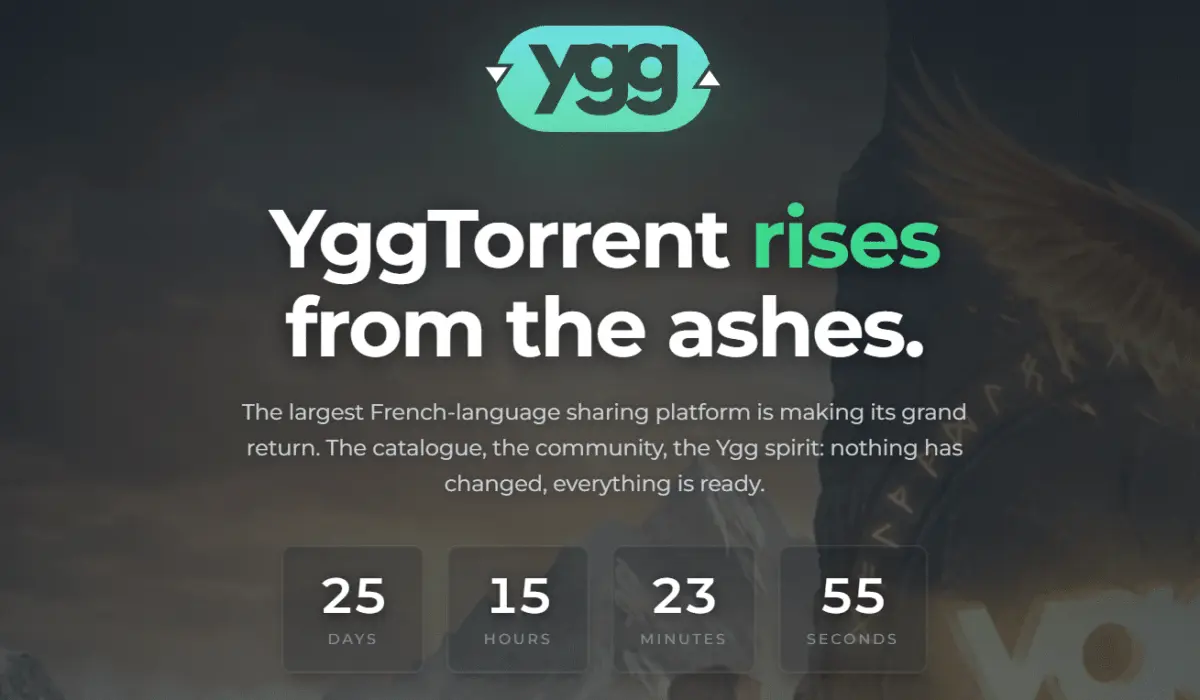
Yet, the YggTorrent saga has taken another bizarre twist. Following a purported ownership transition and a brief stint on the open market with a staggering $700,000 price tag, the platform’s core domains have roared back to life. A mysterious new crew has claimed stewardship of the brand, complete with a ticking countdown clock pointing toward a "grand return" scheduled for September 1 at midnight, Paris time.
This deep-dive investigation examines the anatomy of YggTorrent’s collapse, the ripple effects of the French Gendarmerie’s crackdown, the mechanics of its unexpected resurrection, and the lingering questions surrounding who—or what—is really driving this high-stakes digital comeback.
Detailed Chronology: From Dominance to Devastation and Back
The Golden Age and the March Catastrophe
To understand the gravity of YggTorrent’s current revival, one must look at its peak. Established as a titan of French-language peer-to-peer (P2P) file sharing, YggTorrent filled the massive vacuum left by previous French torrent giants that had fallen victim to copyright enforcement. It grew into a tightly knit ecosystem offering everything from independent films and software to hard-to-find localized media, cementing a community of over 10 million users.

This house of cards collapsed in March, not under the direct pressure of copyright holders or police warrants, but from the inside out. A sophisticated hacker breached the platform’s security perimeter, thoroughly gutting its operational framework. Beyond exposing user accounts and server details, the threat actor exfiltrated digital assets, including the platform’s accumulated cryptocurrency funds. Faced with total exposure, data leaks, and compromised security architectures, the original operators threw in the towel. They abruptly shuttered the site, leaving millions of French-speaking peers stranded without their digital home.
The Federal Sweep in July
The closure of the platform did not mean the end of legal scrutiny. In July, the French Gendarmerie—the nation’s military police force with specialized cybercrime units—unveiled the results of an extensive, months-long investigation. Officers executed coordinated raids and arrested twelve suspected operators tied to the infrastructure of the defunct platform.
The arrests sent shockwaves through the European piracy community. It signaled that even after a website voluntarily goes offline, law enforcement will aggressively pursue individuals who profited from or managed large-scale copyright infringement enterprises. At this point, industry observers and legal analysts agreed that YggTorrent was officially dead, consigned to the history books alongside intellectual property casualties like KickassTorrents and ExtraTorrent.
The $700,000 Domain Sale and the New Custodians
However, in the shadowy world of high-value domain flipping, dead brands still carry immense monetary weight. Prior to the police arrests in July, sharp-eyed observers noticed that the primary domain—yggtorrent.org—was no longer redirecting to a shutdown notice. Instead, it was actively pitched for sale.
The domain was not offered in isolation. It was bundled into a massive portfolio consisting of 59 distinct properties. The broker’s pitch highlighted the offering as a "comprehensive portfolio" anchored by an "established brand with millions of users." The asking price for this digital real estate was a jaw-dropping $700,000.

Whether the actual transaction went through before or after the July police raids remains a matter of intense speculation. Domain WHOIS registration records have remained stubbornly static, offering no immediate public clues regarding a formal change of ownership. Nevertheless, the digital footprints left on the web indicate that a new faction has secured control of the infrastructure, breathing unexpected life into a supposedly dead enterprise.
Supporting Context & Metrics: Analyzing the Digital Remnants
While human leadership may have changed hands—or perhaps been forced to abandon ship entirely—the underlying infrastructure of YggTorrent never truly vanished. Peer-to-peer networks are decentralized by nature, and while a central indexing site is crucial for user discovery, the underlying BitTorrent trackers often continue to function autonomously long after the web portal goes dark.
The "Nothing Has Changed" Philosophy
The incoming administrative team has leaned heavily on this decentralized resilience. Upon visiting the resurrected domain ecosystem—which now redirects users from .org to yggtorrent.to—visitors are greeted with a bold proclamation:
"YggTorrent rises from the ashes. The largest French-language sharing platform is making its grand return. The catalogue, the community, the Ygg spirit: nothing has changed, everything is ready."
This rhetoric is carefully chosen to comfort a rattled user base. By assuring members that their accounts, community structures, and favorite categories will remain intact, the new team is attempting to capture lightning in a bottle a second time.

Hard Data: The Tracker Status Page
Rhetoric is cheap, but network metrics tell the real story. Pointing directly to its active backend, the comeback announcement highlights a live tracker status page hosted at connect.drago-server.org:8080/. This transparency serves a dual purpose: it proves technical competence and reassures users that the files they love are still accessible.
An analysis of the tracker metrics at the time of writing reveals astonishing vitality:
- Active Torrents: Approximately 455,300 indexed files remain registered on the tracker.
- Connected Peers: More than 1.5 million active peers are currently communicating with the network.
- Seeders vs. Leechers: An astonishing 94% of these connected peers are acting as seeders (uploaders), maintaining the health and availability of the file archive.
These numbers demonstrate a crucial technical reality: the new team operating yggtorrent.to either possesses direct administrative control over the legacy tracker infrastructure or has successfully engineered a seamless data migration from the old servers to a brand-new backend. Without access to these active peers and torrent hashes, a simple web domain would be nothing more than an empty shell.
Official Statements and Industry Reactions
The resurrection of YggTorrent has triggered a mix of cautious optimism within pirate forums and quiet alarm within intellectual property enforcement circles.
Industry watchdogs, including anti-piracy coalitions in France such as the Association de lutte contre la piraterie audiovisuelle (ALPA), have traditionally viewed the dismantling of platforms like YggTorrent as major victories. The coordinated July arrests of the twelve alleged operators were heavily publicized as proof that law enforcement possesses the cross-border and digital forensic tools necessary to dismantle elite piracy rings.

However, the rapid reappearance of the brand under a fresh top-level domain (.to) highlights the classic "Whac-A-Mole" dilemma of modern digital enforcement. When asked about the September 1 relaunch, independent cybersecurity analysts have noted that the sudden shift in domain extensions is a classic playbook maneuver. By migrating to jurisdictionally friendly or decentralized registries, fugitive operators make it exponentially harder for domestic police forces to seize assets without extensive international legal cooperation.
Meanwhile, community sentiment on platforms like Reddit and specialized Telegram channels is sharply divided. While hardline enthusiasts are celebrating the return of their preferred French-language repository, veteran users are expressing valid security concerns. Given that the original site was compromised via a catastrophic hack that leaked sensitive user data, and given that the previous administration was subsequently rounded up by federal authorities, paranoia runs high. Many are openly questioning whether the "new team" is genuinely composed of privacy advocates, or if the domain has been acquired by opportunistic scammers—or worse, functioning as a localized honeypot monitored by law enforcement agencies.
Future Outlook: What to Expect on September 1
As the countdown clock on yggtorrent.to ticks down toward midnight on September 1 (Paris time), the entire French digital landscape is watching with bated breath.
Several critical questions remain unanswered as the relaunch date approaches:
- Security and Anonymity: Will the new administrators implement robust, zero-knowledge security protocols to protect their users from the vulnerabilities that exposed the previous leadership?
- Law Enforcement Response: Will the French Gendarmerie and European judicial authorities extend their ongoing investigations to target this "new team," viewing them as legal successors to a criminal enterprise?
- Community Trust: Can a platform tainted by data leaks, cryptocurrency theft, and federal arrests successfully re-engage a cautious user base of 6 million active members?
One thing is certain: the return of YggTorrent is not merely a technical relaunch; it is a stress test for the durability of modern file-sharing networks. Whether the platform establishes a stable, secure new era for French P2P enthusiasts or collapses under the weight of its own turbulent history will become apparent in the coming days. Until the clock strikes midnight on September 1, the digital underworld waits in suspense.