Executive Overview
The software development lifecycle (SDLC) is undergoing its most profound structural shift since the advent of cloud computing. As generative artificial intelligence (AI) and specialized coding assistants saturate the developer ecosystem, engineering organizations are suddenly confronted with an unprecedented volume of output. Developers who historically managed one or two pull requests (PRs) a week are now routinely generating fifteen to twenty. While this velocity unlocks staggering productivity gains at the point of code creation, it introduces an acute operational crisis further downstream. Human-centric DevOps pipelines, manual security reviews, and legacy deployment scripts simply cannot scale to meet machine-generated throughput.
Enterprises are rapidly discovering that standalone AI coding tools lack the holistic contextual awareness required to safely compile, test, secure, and deploy applications into production. Left unchecked, autonomous agents operate in silos, frequently reinventing development patterns, introducing architectural drift, and consuming excessive computational tokens through redundant processing.
Addressing this critical inflection point, software delivery automation pioneer Harness used the stage at the unscripted NYC 2026 conference to preview its forthcoming Harness Software Factory. Designed to act as the overarching governance and orchestration layer for multi-agent ecosystems, the new platform leverages rigid specifications, policy controls, and a proprietary knowledge graph to harmonize agentic workflows. Alongside the Software Factory, Harness introduced Vibe Mode for Harness—a targeted interface meant to apply strict compliance guardrails to code originating from non-traditional "citizen developers"—and rolled out a streamlined Flex Pricing model.
This comprehensive briefing explores the architectural underpinnings of the Harness Software Factory, analyzes the mechanics of machine-speed DevOps orchestration, and evaluates the broader strategic implications of governing autonomous engineering workforces.
Detailed Chronology of the Announcement
The unveilings at unscripted NYC 2026 mark a strategic evolution for Harness, shifting its core value proposition from human-assisted continuous delivery (CD) to autonomous, agent-driven software factory orchestration. The announcements unfolded through a carefully structured series of previews and platform enhancements designed to tackle the chaos of agentic software engineering.
The Genesis of Harness Software Factory
Opening the conference, Harness CEO Jyoti Bansal confronted the burgeoning reality of "agent sprawl" within modern engineering organizations. As platform teams experiment with specialized AI agents for everything from unit-test generation to vulnerability patching, a chaotic environment has emerged. Without centralized direction, individual AI agents operate autonomously, rewriting workflows and repeating redundant logic with every development cycle.
To counter this, Harness previewed the Harness Software Factory, a centralized platform engineered specifically to help DevOps teams govern, coordinate, and manage teams of AI agents across the entire engineering pipeline. Rather than permitting agents to improvise development methodologies on the fly, the Software Factory introduces strict specifications. These parameters enforce uniform standards, ensure predictable behavior, curb redundant token consumption, and align every autonomous action with enterprise governance frameworks.
Vibe Mode and Citizen Development Governance
Recognizing that the democratization of software creation extends far beyond professional software engineers, Harness also previewed Vibe Mode for Harness. As business units increasingly empower non-technical employees—so-called "citizen developers"—to build applications using natural-language AI coding tools, the risk of technical debt and unvetted security vulnerabilities multiplies exponentially.
Vibe Mode provides a dedicated interface layer within the broader Harness platform designed to automatically intercept, evaluate, and apply enterprise development policies to code generated outside traditional engineering departments. This ensures that even as software creation is decentralized to non-technical stakeholders, the resulting applications adhere to foundational security, compliance, and architectural baselines.
Flex Pricing and Core Platform Evolution
Rounding out the product updates, Harness announced a new Flex Pricing option. Historically, purchasing and managing enterprise DevOps tooling required individual licensing models for separate modules—ranging from deployment pipelines to security testing and cost management. Flex Pricing introduces a consolidated pool of credits. DevOps teams can allocate these credits dynamically across any unit within the Harness platform, removing administrative friction and allowing organizations to scale their tooling usage in tandem with fluid workloads.
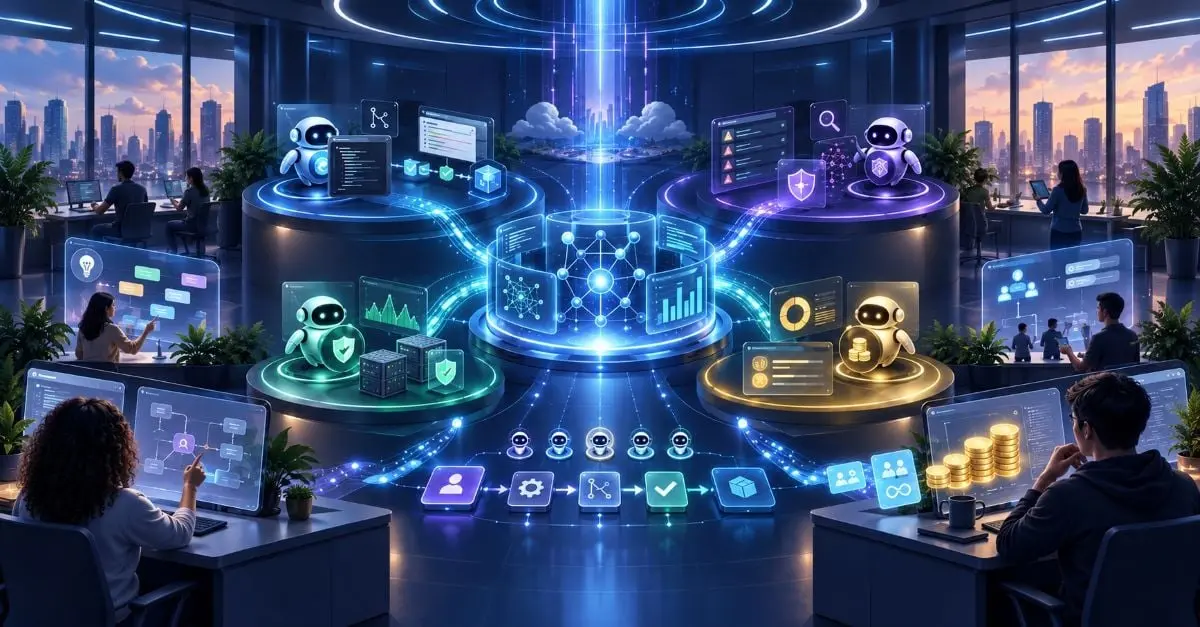
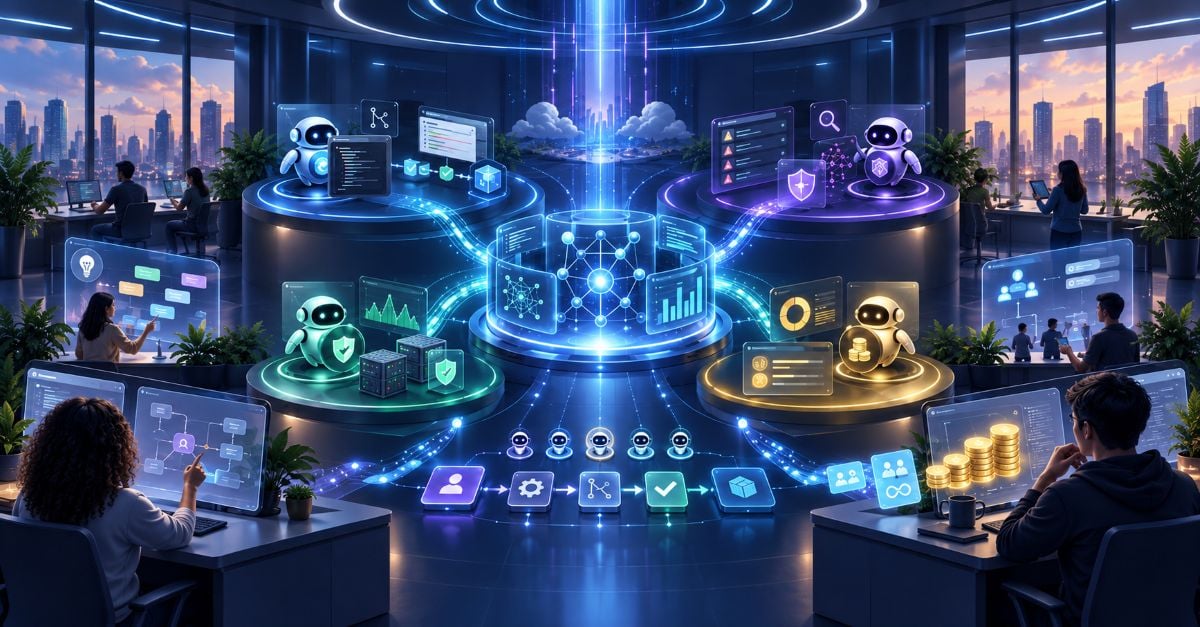
Underpinning these new interfaces and commercial models is a complete architectural realignment of the Harness platform. The system now revolves around four foundational AI agents responsible for distinct pillars of the SDLC:
- Software Delivery Agents: Orchestrating CI/CD pipelines and deployment strategies.
- Security Testing Agents: Proactively identifying vulnerabilities during the build phase.
- Runtime Security Agents: Monitoring and defending applications in production environments.
- Cost Management Agents: Continuously optimizing cloud resource utilization and infrastructure spend.
Each of these core agents operates as a master controller, autonomously delegating granular, specialized tasks to subordinate sub-agents designed to execute specific micro-operations.
Supporting Context & Metrics: The Mechanics of Machine-Speed DevOps
The impetus behind the Harness Software Factory is rooted in cold, hard metrics regarding data complexity and developer velocity. Traditional DevOps workflows—crafted by humans, for humans—are facing an existential bottleneck.
The Scaling Crisis of AI-Generated Code
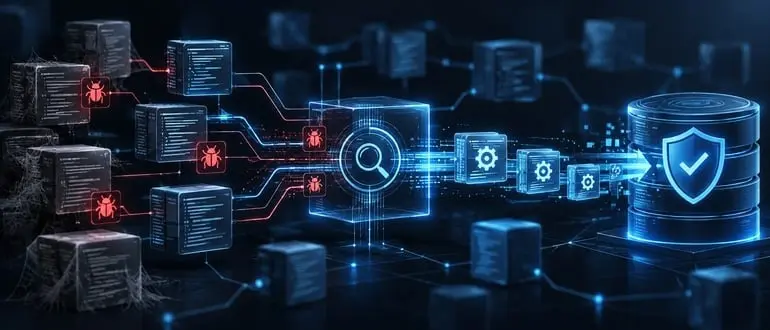
When an application developer scales their output from a handful of PRs to twenty per week, the cumulative operational friction multiplies across code reviews, merge conflicts, integration tests, and security scans. Human engineers cannot manually gatekeep every transaction without bringing innovation to a grinding halt.
However, delegating this gatekeeping entirely to uncoordinated AI agents fails because of a fundamental limitation: contextual isolation. An AI coding assistant excels at writing localized functions or debugging specific scripts, but it typically lacks visibility into the broader production environment, cross-service dependencies, corporate compliance mandates, or live infrastructure topology. Deploying code blindly based on the narrow context of a single code generator invites catastrophic production failures.
The Harness Knowledge Graph: Powering 29 Billion Context Updates Monthly
To bridge the gap between autonomous code generation and reliable production deployment, Harness has engineered a proprietary knowledge graph. Serving as the central nervous system for the platform’s AI agents, the knowledge graph allows disparate agents to collaborate and execute DevOps workflows at machine speed.
The sheer scale of this infrastructure is immense. According to company metrics shared at the event, the Harness knowledge graph currently tracks 567 different types of entities across the software delivery ecosystem. More impressively, the system processes an astounding 29 billion context updates per month.
This real-time accumulation of metadata ensures that when an AI agent initiates a deployment or triggers a security remediation task, it does so with absolute awareness of the organization’s entire digital footprint. The knowledge graph maps dependencies between source code, container registries, Kubernetes clusters, cloud infrastructure, security policies, and financial cost centers, giving agents the contextual depth required to make safe, automated decisions.
Official Statements and Industry Insights
Addressing the audience at unscripted NYC 2026, Jyoti Bansal emphasized that the transition from manual scripting to agentic orchestration is not merely an optional upgrade, but an absolute necessity for enterprise survival in the AI era.
"The overall goal is to eliminate the need for software engineers to write and manage scripts to construct a DevOps workflow," Bansal stated during his keynote. "Existing DevOps workflows designed for humans will not scale in the AI era when application developers may soon be creating 15 to 20 pull requests a week. The controls required to safely deploy applications can now be managed by a set of AI agents."
Bansal expanded on the necessity of maintaining strict boundaries of engineering concern, even as automation expands its reach across every facet of the enterprise:
"Those AI agents are required because AI coding tools lack the context required to successfully deploy code in a production environment. In essence, there will always be a need to separate areas of engineering concerns even as DevOps workflows are extended into everything from security and compliance to database management."
Regarding the enterprise adoption curve, Bansal acknowledged that organizations will not transition to fully autonomous operations overnight. Instead, the adoption of agentic workflows will occur across a spectrum of maturity:
"It’s not clear at what pace DevOps teams are injecting AI agents into DevOps workflows, but in time there will be multiple levels of automation, ranging from fully autonomous to augmenting a human engineer. In most cases, organizations, depending on the nature of the application, will apply multiple levels of automation across different use cases."
Future Outlook: Re-Engineering the Enterprise for the Autonomous Era
The preview of the Harness Software Factory signals a paradigm shift in how enterprise software will be built, tested, and maintained over the next decade. As artificial intelligence transitions from a novelty coding assistant to an active, autonomous workforce of software agents, the primary challenge facing Chief Technology Officers (CTOs) and VP of Engineering leaders is no longer how to generate code faster, but how to govern the chaos of abundance.
The Shift from Imperative Scripting to Declarative Specifications
For decades, DevOps engineering has relied on imperative scripting—painstakingly writing and maintaining thousands of lines of CI/CD configuration files, Terraform scripts, and custom shell pipelines. The Harness Software Factory heralds the death of manual script maintenance. By shifting toward specification-driven, policy-controlled agentic orchestration, engineers will graduate from pipeline mechanics to architectural direction.
Organizations that successfully adopt this model will see dramatic efficiency gains. By leveraging specifications to standardize agent behavior, companies will curb wasteful token consumption, reduce architectural drift, and eliminate redundant execution paths.
Navigating the Multi-Level Automation Spectrum
As Bansal noted, the journey toward complete autonomy will be nuanced. Enterprises will likely adopt a tiered automation strategy:
- Level 1 (Augmentation): AI agents assist human developers by writing tests, suggesting code fixes, and running localized security scans within tight boundaries.
- Level 2 (Supervised Autonomy): Agents execute routine CI/CD pipelines, manage minor deployments, and remediate known vulnerabilities, subject to human-in-the-loop sign-off on PRs.
- Level 3 (Autonomous Orchestration): Fully integrated Harness Software Factory environments where core agents (delivery, security, runtime, cost) autonomously collaborate across the knowledge graph, pushing code to production under strict policy guardrails without direct human intervention for routine workloads.
Conclusion: The Opportunity Ahead
Programmatically managing the development and deployment of custom applications is destined to become more accessible to a broader range of organizations as AI agents weave themselves deeper into the fabric of daily operations. However, accessibility without governance is a recipe for operational disaster.
The challenge—and the defining enterprise software opportunity of the late 2020s—lies in re-engineering workflows to harness the blinding velocity of artificial intelligence. Platforms like the Harness Software Factory point the way forward, offering a blueprint for how organizations can tame agent sprawl, enforce uncompromising security, and ultimately deploy superior applications faster than ever before.