Executive Overview
In the modern digital content ecosystem, anime recap and commentary channels occupy a massive, highly lucrative niche. Generating tens of millions of views, these creators dissect, narrate, and summarize popular Japanese animation for global audiences who may not have immediate access to localized media. However, this genre has long sat on a knife-edge of copyright law. Now, a high-stakes legal battle unfolding in a U.S. federal court threatens to reshape the landscape of online video commentary.
Japanese media conglomerate KADOKAWA Corporation—renowned for its aggressive intellectual property enforcement strategies—has successfully cleared a major procedural hurdle in its quest to unmask three prominent South Korean YouTube creators. Managing hundreds of thousands of subscribers each, these creators utilized limited anime footage alongside custom narration, text-to-speech (TTS) scripts, and specialized formatting to break down titles such as Oshi no Ko, A Ninja and an Assassin Under One Roof, and Once Upon a Witch’s Death.
When KADOKAWA filed a Digital Millennium Copyright Act (DMCA) subpoena in January to compel YouTube into revealing the personal identities of these creators, it anticipated a routine administrative process. Instead, the targets pushed back, filing a rare motion to quash and setting off a complex legal tussle over fair use, extraterritorial copyright enforcement, and the legal boundaries of digital commentary.
Despite the creators’ arguments that their channels actually drove legitimate traffic to authorized streaming services like Laftel, a U.S. federal judge dealt a heavy blow to the narration-and-recap format. Ruling that straightforward summary and narration do not constitute transformative fair use, the court cleared the way for YouTube to hand over the creators’ identifying information. With an appeal now lodged at the Ninth Circuit, this case stands as a watershed moment for content creators worldwide who rely on third-party media to fuel their channels.
Detailed Chronology: From Subpoena Request to Judicial Blow
The January Filing and the DMCA Subpoena Mechanism
The conflict began in January when KADOKAWA turned to a U.S. federal court, leveraging Section 512(h) of the DMCA. This statute allows copyright owners to request a subpoena directly from a court clerk, demanding that service providers—in this case, Google-owned YouTube—hand over the identifying details, such as names, addresses, and IP logs, of anonymous or pseudonymous users suspected of infringement.
Typically, DMCA subpoenas function as a formality, requiring little judicial oversight beyond verifying the technical validity of the request. However, the mechanism hits a brick wall when targeted users actively contest the subpoena by filing a motion to quash. Rather than rolling over, three massive Korean-language anime channels—run by creators Bongseop Kim, Woohyuk Yang, and Youngyoon Ko—decided to fight back.
The Motion to Quash and the Defense
In their motion to quash, the three YouTubers argued that their channels were legitimate hubs of cultural commentary, review, and media analysis rather than black-market piracy operations. They maintained that their videos incorporated only selected portions of the underlying copyrighted works, paired with extensive original elements such as Korean narration, text-to-speech dialogue, custom scripts, and unique presentation styles. They stressed that they never uploaded full, raw, unedited episodes.
Furthermore, the creators highlighted a history of prior friction with KADOKAWA. They noted that the publisher had previously issued copyright takedowns against their content, only for the videos to be successfully restored after the creators filed formal counter-notifications—a process during which KADOKAWA declined to initiate formal litigation. The YouTubers argued that the sudden rush to utilize a DMCA subpoena was not a genuine precursor to a lawsuit, but rather a coercive pressure tactic designed to harass and intimidate creators outside of standard dispute channels.
The Court Orders an Unusual Fair Use Briefing
In April, U.S. District Judge Trina L. Thompson injected an unexpected twist into the proceedings. In a rare move for a preliminary DMCA subpoena stage, she ordered both parties to submit supplemental legal briefs focusing specifically on whether the creators’ content was protected under the U.S. copyright doctrine of "fair use."

In their subsequent filings, the creators doubled down on their defense. Bongseop Kim submitted analytics and technical breakdowns demonstrating that his videos used only a fraction of the source material—for instance, utilizing roughly 15 percent of episode 4 of A Ninja and an Assassin Under One Roof.
KADOKAWA’s legal counsel fired back aggressively. They pointed out procedural missteps by the creators (who were managing their defense pro se), noted that several of the contested videos had been hastily made private or deleted, and dismissed the remaining content as little more than a play-by-play plot summary. In a biting critique, KADOKAWA’s attorneys wrote that parts of the creators’ legal arguments read "like an AI hallucination, because it is wholly unsupported by the statute or case law."
The July 17 Ruling and the Rejection of Fair Use
On July 17, Judge Thompson issued a decisive order denying the motion to quash. The court determined that the factual record was sparse, largely because the creators had made their videos private, but concluded that the core nature of the content was descriptive rather than transformative.
Citing the recently decided Barnes v. YouTube case from February—where the same court rejected fair use claims for a channel narrating copyrighted book chapters—Judge Thompson cemented a judicial skepticism toward the narration-and-recap format. The court held that reproducing significant portions of an anime episode to narrate its plot does not constitute criticism, parody, or transformative alteration under the law. Even if the market impact of the summary videos is relatively minor, the court ruled that a copyright owner’s exclusive right to reproduce their work outweighs speculative claims of promotional benefit.
Rather than accepting defeat, the three YouTubers immediately filed a notice of appeal with the Ninth Circuit Court of Appeals and requested an emergency stay to halt the disclosure of their personal identities while the appellate process plays out.
Supporting Context & Metrics: The Scale of the Creators and Platforms
To fully understand why KADOKAWA is targeting these specific individuals, one must examine the staggering scale of their operations and the broader economics of anime summary channels on YouTube.
Channel Demographics and Content Formats
The three targeted channels are by no means minor players in the digital video space. They command large, dedicated audiences and boast hundreds of videos apiece:
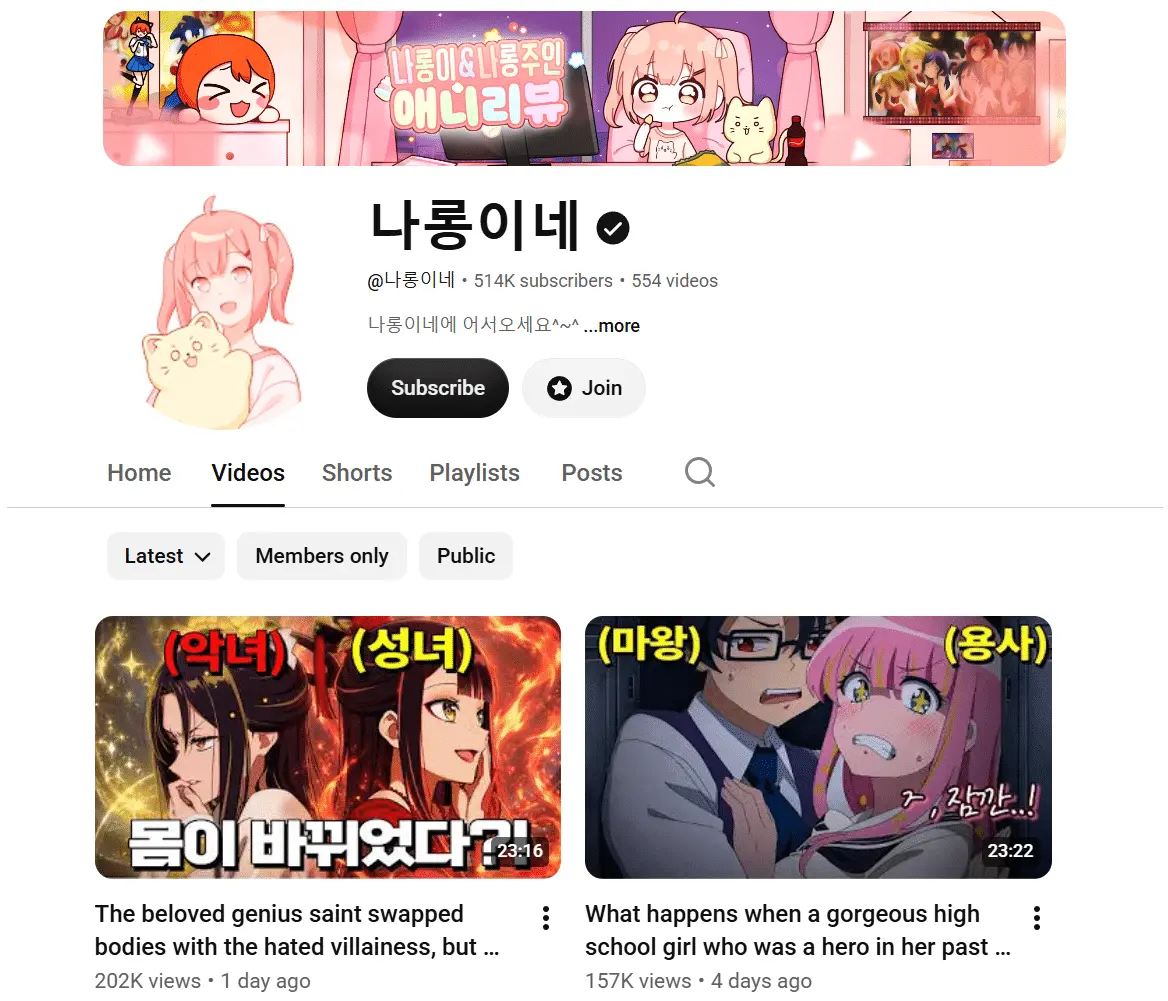
- Bongseop Kim: Commanding over half a million subscribers, Kim’s channel focuses on meticulous narrative summaries. For titles like A Ninja and an Assassin Under One Roof, he implemented an original virtual mascot character named "Narong," utilizing Text-to-Speech (TTS) dialogue, customized scripts, and heavily edited visual pacing.
- Woohyuk Yang: Also boasting a subscriber base well north of 500,000, Yang specializes in in-depth Korean-language anime reviews and media analysis, anchoring his video essays with professional-grade voiceover narration.
- Youngyoon Ko: With nearly 350,000 followers, Ko’s channel delivers dynamic reviews and recaps characterized by custom Korean subtitles, emotional reactions, sound effects, and frame-by-frame plot commentary.
The Traffic-Driving Defense and Analytics
A central pillar of the creators’ defense was the argument that their videos acted as a powerful marketing funnel for the anime industry rather than a substitute for official viewing. To substantiate this, the creators pointed to direct outbound traffic driven to Laftel, South Korea’s premier licensed anime streaming platform.
Analytics data submitted by Bongseop Kim revealed a surprising metric: his channel had successfully generated 114,494 click-throughs to Laftel, boasting an impressive 82 percent engagement rate. The creators argued that rather than depriving publishers of revenue, their summaries served as an accessible onboarding ramp for casual viewers, converting curious internet users into paying subscribers of legal streaming services.

However, the U.S. federal court ultimately dismissed this utilitarian defense, emphasizing that statutory reproduction rights belong solely to the copyright holder, regardless of whether a third party believes their promotional efforts are beneficial.
Official Statements & Legal Arguments
The legal documents filed in the case illuminate the sharp philosophical divide between digital content creators and traditional entertainment conglomerates regarding the nature of online commentary.
The Creators’ Perspective: Collaborative Ecosystems vs. Coercion
The defendants maintained that copyright law must evolve to accommodate modern internet subcultures. In their filings, they emphasized that their work adds distinct cultural, linguistic, and analytical layers to the source material:
"The videos used selected portions of the underlying works in connection with Korean narration, explanation, summary, commentary, and creator-specific presentation. They were not uploaded as full episodes or as raw reproductions of the copyrighted works."
Furthermore, the creators highlighted the aggressive nature of KADOKAWA’s legal posture, suggesting that the publisher was misusing statutory mechanisms to bypass traditional dispute resolution channels:
"Such repeated conduct suggests that the present subpoena may not be directed toward a genuine intent to pursue litigation, but rather reflects an overbroad or coercive use of the DMCA process."
KADOKAWA’s Stance: Protecting the Core Right of Reproduction
KADOKAWA’s legal representatives maintained a strict, text-based interpretation of copyright law. They argued that dressing up a scene-by-scene summary with voiceover narration, subtitles, and virtual avatars does not magically transform copyright infringement into protected speech.
In their supplemental oppositions, KADOKAWA’s attorneys argued that the creators’ defense fundamentally misunderstood the boundaries of the DMCA and fair use doctrine. They asserted that allowing creators to appropriate substantial percentages of a copyrighted episode—such as Kim’s utilization of 15 percent of a single episode—simply to retell the story strips the original creator of their exclusive market control.
The court ultimately echoed this sentiment, ruling that the videos "describe and narrate" the copyrighted works rather than actively transform them through genuine criticism or parody.

Future Outlook: Global Crackdowns on Anime Piracy and Summary Culture
The ongoing legal saga between KADOKAWA and the South Korean YouTubers is just one front in an aggressive, multi-jurisdictional campaign waged by Japanese media companies against the "fast content" and summary genre.
The Global War on "Fast Content"
Across the globe, copyright holders are waking up to the financial drain of unauthorized recap videos, written plot summaries, and accelerated media breakdowns. This U.S. federal court ruling follows a trend of increasing judicial skepticism toward content that relies on extensive reproduction under the guise of review.
The parallels to domestic Japanese enforcement are stark. In April 2026, the Tokyo District Court delivered a harsh warning to text-based summary pirates by convicting 39-year-old Wataru Takeuchi. Takeuchi operated a heavily monetized website that published detailed text transcriptions and plot summaries of major intellectual properties, including the blockbuster film Godzilla Minus One and KADOKAWA’s own anime series Overlord.
For his efforts, Takeuchi was hit with a suspended 18-month prison sentence and a 1 million yen fine, having amassed roughly 36 million yen (approximately $225,000 USD) in advertising revenue during 2023 alone. These concurrent domestic and international actions demonstrate that publishers are targeting both text-based transcription sites and video-based commentary channels with equal ferocity.
What Lies Ahead for the YouTubers and the Genre
As the case moves to the U.S. Court of Appeals for the Ninth Circuit, the stakes for digital creators could not be higher. If the lower court’s ruling stands, it will establish a potent precedent allowing copyright holders to unmask anonymous creators with relative ease, opening the floodgates for widespread civil lawsuits and channel terminations.
For now, the immediate battle centers on whether YouTube will be forced to hand over Bongseop Kim, Woohyuk Yang, and Youngyoon Ko’s personal data while their appeal pends. Regardless of the final outcome of this specific subpoena battle, the writing is on the wall for the anime recap community: the era of operating in a legal gray area under the banner of "fair use" is rapidly coming to an end. Creators navigating foreign intellectual property without direct licensing agreements must now prepare for a much more hostile, litigious digital environment.