Executive Overview
Cracks are beginning to show publicly within the upper echelons of Bill Simmons’ sports and pop culture empire, The Ringer. In a candid and wide-ranging interview on the podcast Talk Easy With Sam Fragoso, Sean Fennessey—the former head of content for the network and host of its flagship film podcast, The Big Picture—voiced direct, unfiltered frustrations regarding corporate licensing and editorial integrity at the company he has helped build since its 2016 inception.
Fennessey’s public critiques center on two major pain points: a controversial non-exclusive licensing deal between Spotify and Netflix that brings The Ringer’s film programming onto the streaming giant’s platform, and founder Bill Simmons’ embrace of artificial intelligence sponsorships, most notably a recurring bit using ChatGPT to simulate the critical voice of the late film critic Roger Ebert.
While internal disagreements are par for the course in modern digital media organizations, it is rare for a top-tier executive and flagship talent to openly push back against corporate strategy and their founder’s editorial choices. Fennessey’s comments shine a harsh spotlight on the complex and often contradictory landscape of modern audio-visual media conglomerates. As tech platforms consolidate their grip on content production, editorial independence, brand alignment, and the ethical boundaries of emerging technologies like generative AI are increasingly colliding.
This report provides an in-depth examination of the growing rift at The Ringer, contextualizing Fennessey’s remarks within the broader corporate history of Spotify’s acquisition, the evolving dynamics of video podcast distribution, and the ethical dilemmas posed by the unbridled integration of AI in cultural criticism.
Detailed Chronology of the Discontent
The unfolding narrative of internal dissent at The Ringer is rooted in a series of strategic pivots, corporate acquisitions, and high-profile editorial decisions that have transformed the independent sports and culture blog into a massive corporate subsidiary.
The Foundation and Corporate Buyout (2016–2020)
The Ringer was launched by media personality Bill Simmons in 2016 following his high-profile exit from ESPN. Positioned as a modern multi-platform network encompassing written journalism, video essays, and a sprawling portfolio of podcasts, the company quickly established itself as a cultural powerhouse. Sean Fennessey, a veteran film critic and former editor at Grantland, joined Simmons early on, eventually ascending to the role of head of content and helming The Big Picture alongside co-host Amanda Dobbins.
In February 2020, recognizing the explosive growth and monetization potential of audio, streaming giant Spotify acquired The Ringer in a massive deal valued at approximately $250 million. The acquisition integrated Simmons’ network tightly into Spotify’s proprietary audio infrastructure, cementing the platform’s ambition to become the dominant global audio-first company. Fennessey remained a core pillar of the network’s leadership and creative output throughout this transition.
The Spotify-Netflix Licensing Deal (October 2025)
A critical flashpoint in the current tension arrived in October 2025, when Spotify announced a sweeping, non-exclusive video podcast licensing deal with Netflix. The partnership brought select marquee shows from Spotify’s network—including The Ringer’s premier film commentary properties—onto Netflix’s streaming catalog.
While corporate leadership hailed the move as a major distribution win that would expand the reach of audio shows into video-first streaming environments, it immediately raised red flags for creators whose daily work involves scrutinizing and reviewing the exact content produced and distributed by their new streaming partner.
The Talk Easy Interview (August 30)
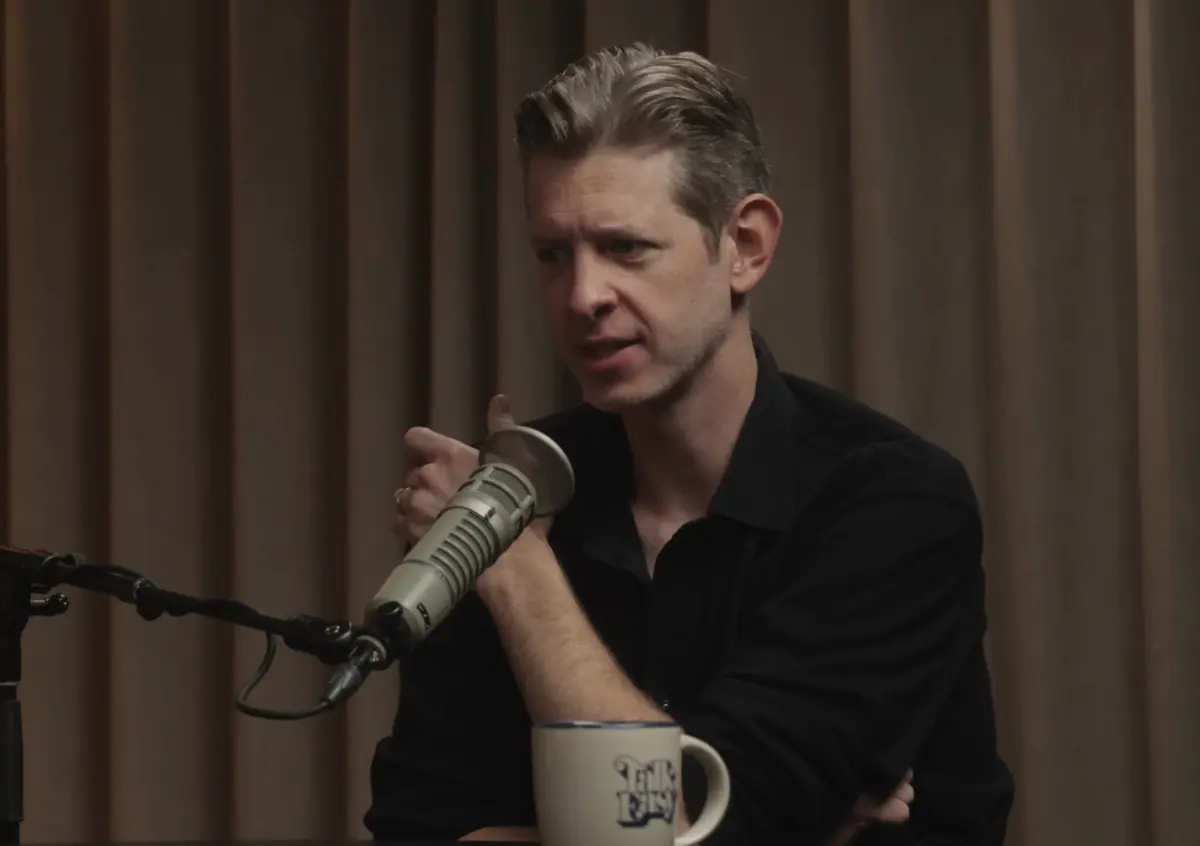
The friction culminated on August 30, when Fennessey appeared as a guest on Sam Fragoso’s interview podcast, Talk Easy. Speaking alongside The Big Picture co-host Amanda Dobbins, Fennessey did not shy away from addressing the systemic contradictions of his working environment.
Addressing the Netflix distribution agreement, Fennessey offered an unvarnished assessment: "I think there’s an inherent conflict with the work that we’re doing. I don’t think it totally makes sense for a show that’s covering films released by Netflix to be licensed non-exclusively to Netflix — but it wasn’t my decision, so we’re working within that reality."
The conversation subsequently pivoted to the network’s commercial partnerships, specifically Simmons’ ongoing sponsor integration with OpenAI’s ChatGPT. Fennessey expressed acute discomfort with a specific recurring bit in which Simmons prompts the AI chatbot to simulate how legendary film critic Roger Ebert—who passed away in 2013—might have reviewed films released years after his death.
"I don’t like it. I’ve told Bill I don’t like it," Fennessey stated flatly. He noted that fellow Ringer podcaster Chris Ryan shared similar reservations, recounting instances where staff members actively pushed back on air against the simulated Ebert takes with remarks like "Eh, that’s not cool."
Fennessey added a deeply personal ethical boundary regarding mortality and legacy: "I wouldn’t want that done for me after I died, and I wouldn’t want to be represented in that way, and I revere Roger Ebert. I’m thinking very critically about AI and trying to not be an alarmist and trying to be thoughtful about what’s coming, while also having a clearer moral view of what it means and how it’s going to impact us."
Supporting Context & Industry Metrics
To fully understand the gravity of Fennessey’s public critiques, it is essential to examine the economic and technological landscape that dictates the operations of modern podcasting networks.
The Video Podcast Gold Rush
Over the past half-decade, the audio podcasting industry has undergone a radical transformation, shifting from an audio-only medium to a video-first ecosystem largely driven by YouTube, Spotify Video, and, increasingly, subscription video-on-demand (SVOD) platforms like Netflix.
For platforms like Spotify, video integration boosts user engagement, unlocks lucrative visual advertising inventories, and helps capture audiences who prefer to consume pop-culture commentary through a visual medium. However, this shift introduces profound editorial challenges. When a podcast dedicated to rigorous, independent film criticism is financially and distribution-wise tethered to the studios whose products it critiques, listeners naturally question the objectivity of the commentary.
Fennessey’s critique highlights the perilous tightrope walked by modern cultural critics: maintaining credibility and fierce independence while housed inside a corporate machinery designed to maximize cross-platform distribution and ad revenue.
The Generative AI Frontier and Journalistic Ethics
The friction over the ChatGPT-generated Roger Ebert reviews touches on one of the most contentious battlegrounds in contemporary media: the ethics of generative AI.
As media networks seek innovative ways to appease corporate sponsors and generate viral moments, AI tools are increasingly deployed to automate content creation, mimic human voices, and resurrect the personas of deceased cultural figures. Critics, ethicists, and creators argue that using AI to simulate deceased critics without consent—especially when tied to commercial advertising sponsorships—crosses an ethical red line. It commodifies a critic’s life’s work, reduces nuanced human analysis to algorithmic output, and bypasses the consent of the subject’s estate and legacy.
Fennessey’s measured pushback—acknowledging the need to avoid blind alarmism while maintaining a strict moral framework—captures the anxieties felt by traditional journalists and critics navigating an industry rapidly pivoting toward automated efficiencies.
Official Statements and Stakeholder Reactions
As of this writing, neither Bill Simmons nor official representatives from Spotify or The Ringer have issued a formal, public retraction or statement addressing Fennessey’s comments on the Talk Easy podcast.
However, industry observers note that the lack of an immediate corporate clampdown reflects a broader cultural tolerance within The Ringer ecosystem for candid internal discourse. Historically, Simmons has fostered an environment where prominent personalities maintain distinct, often vocal public personas, occasionally airing operational grievances or creative disagreements out in the open.
Nevertheless, the public nature of Fennessey’s remarks—particularly given his long-standing executive stature within the company—places pressure on network leadership. The tension between commercial imperatives (such as high-paying AI sponsorships and broad streaming distribution deals) and editorial independence is a balancing act that top executives must navigate delicately to prevent further alienation of their core creative talent.
Future Outlook: Navigating the Intersection of Commerce and Culture
The public airing of dissent at The Ringer serves as a case study for the broader digital media landscape. As independent networks are absorbed by multinational tech conglomerates, the friction between corporate revenue strategies and creator-driven editorial integrity is bound to intensify.
Key Questions Moving Forward:
- Editorial Independence Under Corporate Ownership: Will other creators within the Spotify ecosystem begin speaking out about cross-platform licensing conflicts, or will The Ringer remain an isolated exception of vocal dissent?
- The Evolution of AI Advertising: How will media companies balance lucrative sponsorships from tech giants like OpenAI with the growing pushback from journalists and critics concerned about the ethical implications of generative AI?
- Talent Retention: As creative leaders like Sean Fennessey grapple with corporate realities that clash with their artistic values, how will top-tier talent negotiate autonomy within heavily consolidated media frameworks?
Ultimately, Sean Fennessey’s willingness to draw a line in the sand—criticizing both a corporate distribution strategy and his boss’s sponsored AI bits—underscores an enduring truth of cultural commentary: true criticism requires a fierce, uncompromised independence. As The Ringer navigates its post-acquisition future under Spotify, the ability to preserve that independence will determine whether the network maintains its cultural authority or devolves into a mere marketing arm for the tech and streaming monoliths that fund it.