Executive Overview
The intersection of artificial intelligence, copyright law, and peer-to-peer (P2P) file-sharing networks has generated some of the most complex intellectual property litigation of the digital age. Over the past two years, copyright holders, major publishers, and well-known authors have filed a barrage of lawsuits against major AI developers. Their core grievance is stark: artificial intelligence models cannot be trained on copyrighted works without explicit authorization or fair use protection.
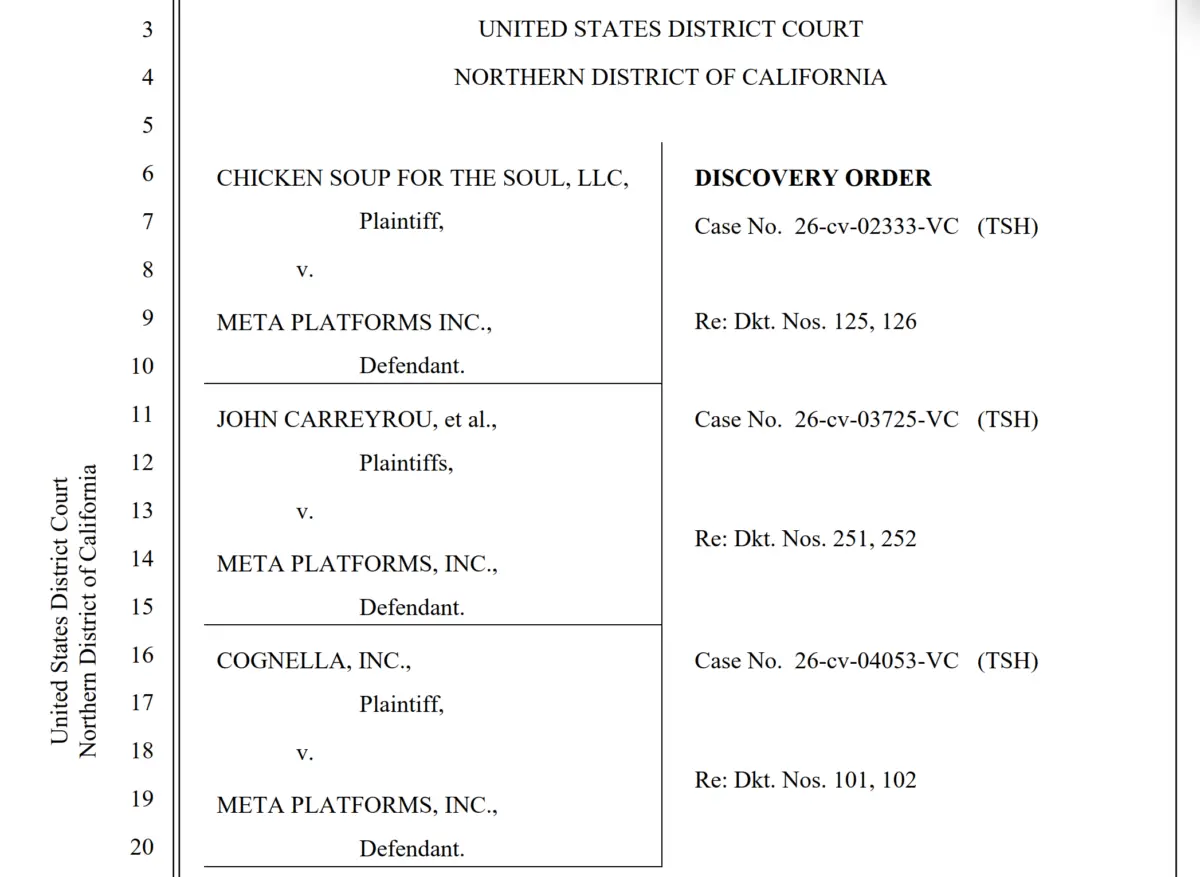
Among the defendants caught in the crosshairs is Meta Platforms, the parent company of Facebook, Instagram, and WhatsApp. Meta faces multiple high-profile class-action and individual lawsuits—including actions spearheaded by prominent authors like Richard Kadrey and Sarah Silverman, as well as coordinated suits from academic publishers like Cognella, media brands like Chicken Soup for the Soul, and journalist John Carreyrou’s Cambronne Inc. These plaintiffs accuse Meta of utilizing pirated books sourced from notorious "shadow libraries" to train its flagship Llama AI models.
While a federal judge previously ruled that the core act of AI training constituted fair use under U.S. copyright law, a critical shadow remains: Meta’s alleged distribution of copyrighted materials via BitTorrent during the data-gathering process. Meta has staked its defense on an intriguing technical argument, claiming that uploading data while downloading via BitTorrent is "part-and-parcel" of the protocol and served as the only efficient method to harvest bulk training datasets from sources like Anna’s Archive.
Desperate to dismantle this defense, plaintiffs subpoenaed Meta’s formidable industry rivals—OpenAI and Anthropic—hoping to prove that other AI labs successfully blocked uploading when utilizing torrent protocols. However, a recent federal magistrate court ruling shielded OpenAI and Anthropic from these expansive subpoenas, forcing plaintiffs to rely instead on Meta’s own internal server logs and command histories. This investigative report explores the technical nuances, legal arguments, and courtroom drama shaping the future of AI training practices.
Detailed Chronology of the Legal Battle
The Genesis of the AI Copyright Wars
The legal reckoning began shortly after the commercial explosion of generative AI models in late 2022 and early 2023. As systems like OpenAI’s GPT-4 and Meta’s Llama demonstrated advanced natural language capabilities, creators realized that training these models required vast corpuses of text. Because acquiring millions of books legally and at scale is economically unfeasible and logistically staggering, many developers allegedly turned to digital underground repositories—commonly known as shadow libraries—to amass training data.
Meta’s legal troubles regarding its Llama models deepened when authors discovered evidence that the tech giant utilized datasets containing pirated books. The lawsuits quickly consolidated around a central question: Did Meta’s acquisition methods infringe upon copyrights not only through ingestion, but also through peer-to-peer distribution?
The Fair Use Split and Meta’s Pivot
In the summer of 2024, Judge Vince Chhabria delivered a mixed ruling in the Meta AI piracy litigation. He determined that the actual training of AI models—transforming expressive text into statistical weights—fell under the umbrella of "fair use." For Meta, this was a massive victory.

However, Judge Chhabria left one critical claim alive: the distribution claims centered around BitTorrent usage. Because BitTorrent is inherently a peer-to-peer protocol where downloaders simultaneously upload (seed) data segments to other network participants, the plaintiffs argued that Meta had actively distributed unauthorized copies of copyrighted books to third parties worldwide.
Faced with this remaining liability, Meta introduced a novel legal defense. In a supplemental interrogatory response filed earlier this year, Meta asserted that any uploading of pirated books during its torrent downloads was "part-and-parcel" of a fair use purpose. The company argued that BitTorrent was chosen because it represented "a more efficient and reliable means of obtaining the datasets," and that in the case of massive repositories like Anna’s Archive, it was the only practical way to acquire the data in bulk. Meta’s legal team maintained that because sharing is an "inherent characteristic of the BitTorrent protocol," any incidental seeding was unavoidable and legally permissible under the umbrella of its data acquisition goals.
The Subpoena Strategy and AI Rival Resistance
Determined to test whether BitTorrent seeding is truly an inescapable necessity, the plaintiffs handling the coordinated publisher lawsuits against Meta executed a clever tactical maneuver. In August, rather than waiting for Meta to voluntarily disclose its internal IT configurations, the plaintiffs issued broad subpoenas to two of Meta’s chief AI rivals: OpenAI and Anthropic.
The plaintiffs demanded the identity, versions, and configurations of every torrent client OpenAI and Anthropic had used since 2019, specifically targeting records detailing efforts to prevent seeding. The logic was clear: if OpenAI or Anthropic had utilized BitTorrent to gather training data but successfully configured their clients to block uploading (leech-only mode), Meta’s claim that uploading is an "inherent, unchangeable characteristic" would collapse.
OpenAI and Anthropic swiftly pushed back against the subpoenas. Through their legal counsel, both companies argued that their internal technical practices had zero bearing on Meta’s infrastructure. They maintained that torrent clients are highly customizable, vary widely in default settings, and that probing rival AI labs for proprietary software configurations was an unwarranted fishing expedition.
Supporting Context & Metrics: The BitTorrent Dilemma
To understand the legal significance of this dispute, one must examine the fundamental architecture of the BitTorrent protocol. Created by Bram Cohen in 2001, BitTorrent revolutionized file distribution by decentralizing traffic. Instead of downloading a file from a single central server, a user (client) downloads pieces of the file from dozens or hundreds of different users (peers) simultaneously.
[Traditional Download Model]
Server (Source) ──> Client (User)  [Bottleneck risk, high server load]

[BitTorrent Peer-to-Peer Model]
Peer A <══> Peer B
   ║         ║
   ╚═════════╩══════> Client (Meta/AI Lab) [Simultaneous upload/download]
However, the protocol operates on a reciprocity ethos, often summarized by the phrase "sharing is caring" or enforced through tit-for-tat algorithms. While standard clients allow users to throttle or completely disable their upload speeds (turning the client into a "leech"), doing so often degrades connection speeds or gets the user banned from private trackers.
Key Technical Considerations in the Litigation:
- Leeching vs. Seeding: Leeching refers exclusively to downloading data without contributing back to the swarm. Seeding involves uploading data to other peers after downloading is complete (or concurrently).
- The "Necessity" Defense: Meta’s legal strategy hinges on proving that obtaining shadow library datasets could only be achieved via BitTorrent, and that the protocol’s architecture legally excuses the incidental uploading.
- Internal Scripts: Earlier discoveries in the litigation revealed that a Meta engineer had actually written a custom script designed to prevent seeding during certain data-harvesting operations—complicating Meta’s current assertions that uploading was technically unavoidable.
Official Statements and Judicial Rulings
The legal battle over discovery boundaries culminated in a decisive ruling by U.S. Magistrate Judge Thomas Hixson. Siding squarely with OpenAI and Anthropic, Judge Hixson blocked the publishers’ attempts to dredge through the proprietary technical logs of Meta’s competitors.
In his written order, Judge Hixson dismantled the plaintiffs’ justification for the subpoenas:
"To the extent Meta’s fair use defense hinges on the assertion that its use of BitTorrent was the only way BitTorrent can be used, that assertion can be tested by examining the BitTorrent client itself," Judge Hixson wrote.
The court emphasized that looking at what OpenAI or Anthropic did provides no definitive proof regarding Meta’s specific technical setup, hardware environment, or client versions. Furthermore, the judge noted that if the plaintiffs wanted to prove that shadow library data could be acquired through non-torrent methods or that torrent clients could be configured to block uploading, they had ample tools to test this through their own technical experts or by directly questioning the shadow libraries.
Turning the Lens Back on Meta
While the court barred the plaintiffs from examining OpenAI and Anthropic, it delivered a starkly different verdict regarding Meta’s own internal infrastructure.
In a parallel order concerning the class-action lawsuit led by Richard Kadrey, Judge Hixson granted a motion compelling Meta to hand over the command history files for every server, virtual machine, and AWS instance used by the company to torrent files.
Command histories represent the granular operational logs maintained by servers, recording every single terminal command entered by system operators. For engineers downloading training datasets via command-line torrent utilities (such as Transmission-cli, Rtorrent, or custom scripts), these logs preserve an immutable timeline of how the software was installed, what flags were passed, and whether upload limits or blocking scripts were actively deployed.
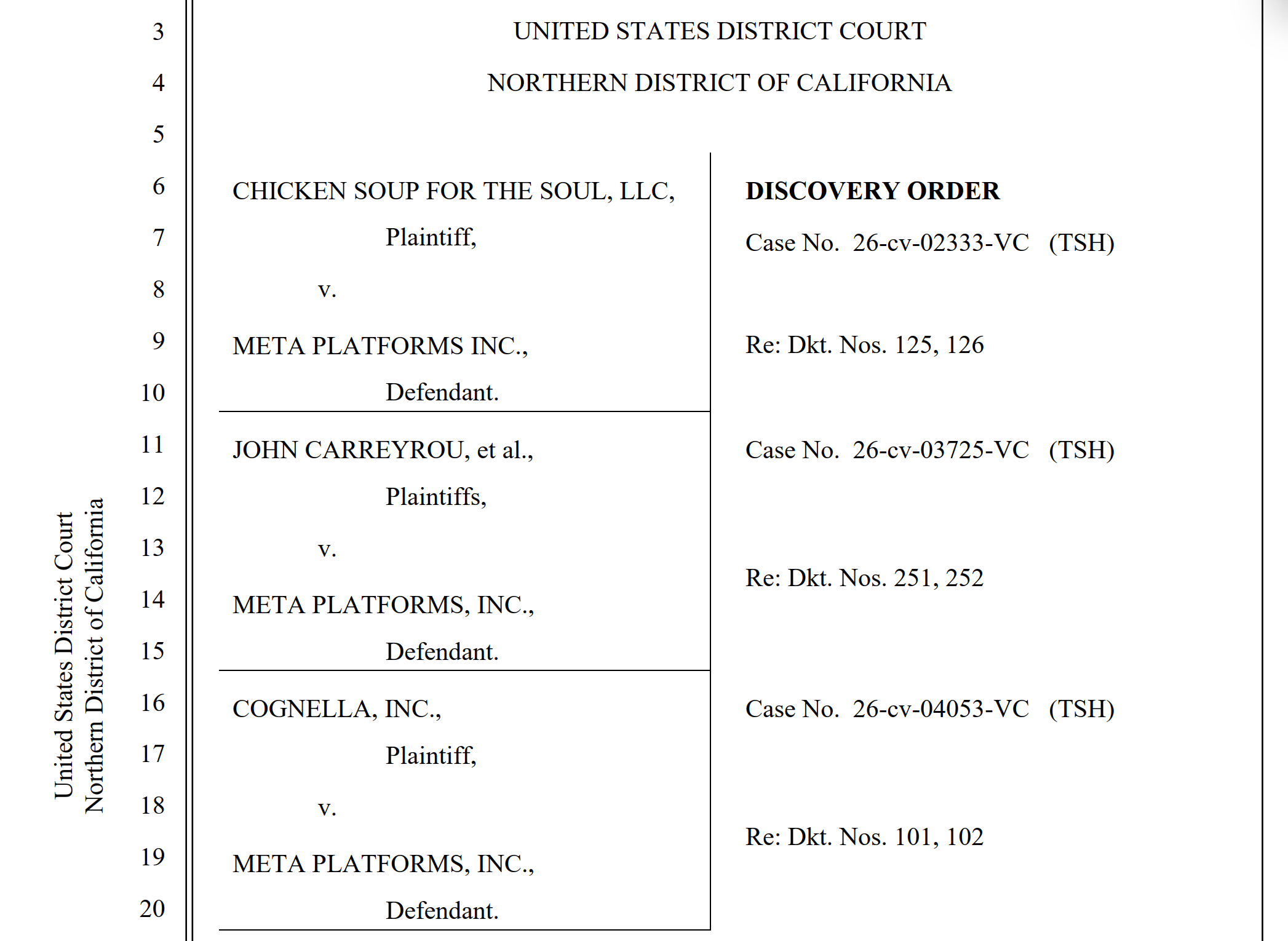
This ruling acts as a major remediation for Meta’s previous disclosure failures. Earlier in 2025, Meta admitted to withholding relevant technical documentation until after the formal discovery deadlines had elapsed. Judge Chhabria subsequently ordered supplemental discovery, opening the door for plaintiffs to inspect Meta’s raw server data.
Future Outlook: What Lies Ahead for AI Copyright Litigation
The courtroom skirmishes over BitTorrent logs and server command histories represent a micro-battle in a macro-war that will define the economic and legal boundaries of generative artificial intelligence for decades.
As the litigation moves into its next phase, several critical milestones loom on the horizon:
- Expert Testimony and Opening Reports: Plaintiffs’ technical experts are scheduled to submit their opening reports later this month. Armed with Meta’s newly surrendered server command histories, these experts will attempt to reconstruct Meta’s exact data-harvesting methodology. If the logs demonstrate that Meta engineers deliberately left uploading enabled—or worse, disabled anti-seeding scripts that were readily available—Meta’s "part-and-parcel" fair use defense could crumble.
- The Definition of Transformative Use: While the core AI training has found safe harbor under fair use doctrines in this particular court, the secondary issue of mass distribution via peer-to-peer networks remains legally precarious. A ruling against Meta on the distribution claims could set a dangerous precedent for other tech giants that utilize aggressive, unorthodox data-acquisition pipelines.
- Industry-Wide Compliance Standards: The aggressive posturing by publishers against OpenAI, Anthropic, and Meta sends a clear message to the broader tech sector: courts will peer deeply beneath the hood of AI development pipelines. Even if rival labs successfully fought off subpoenas in this instance, transparency demands from copyright holders are intensifying. AI developers are increasingly pressured to establish clean, legally vetted licensing pipelines rather than relying on the legal gray areas of shadow libraries and torrent networks.
Ultimately, as the deadlines for expert reports approach, the spotlight remains firmly fixed on Meta’s server logs. Whether those digital command histories reveal a calculated decision to distribute copyrighted works, or merely standard operational procedures in the pursuit of artificial intelligence supremacy, will soon be laid bare in a San Francisco federal courtroom.