Executive Overview
Germany’s anti-piracy ecosystem has long operated at the intersection of industry self-regulation and strict telecommunications laws. At the heart of this framework is the Clearing Body for Copyright on the Internet (CUII), a coalition of major German internet service providers (ISPs) and rightsholders established in 2021 to streamline the blocking of egregious copyright-infringing websites.
Recent enforcement actions by the Cologne Regional Court, however, have thrust the mechanical realities of copyright enforcement into the spotlight. By formalizing a mathematical threshold—namely, that illegal content must clearly outweigh legal content, a condition met when at least 81.5% of a site’s catalog is unauthorized—courts and clearing bodies have introduced a pseudo-scientific metric to qualitative legal standards.
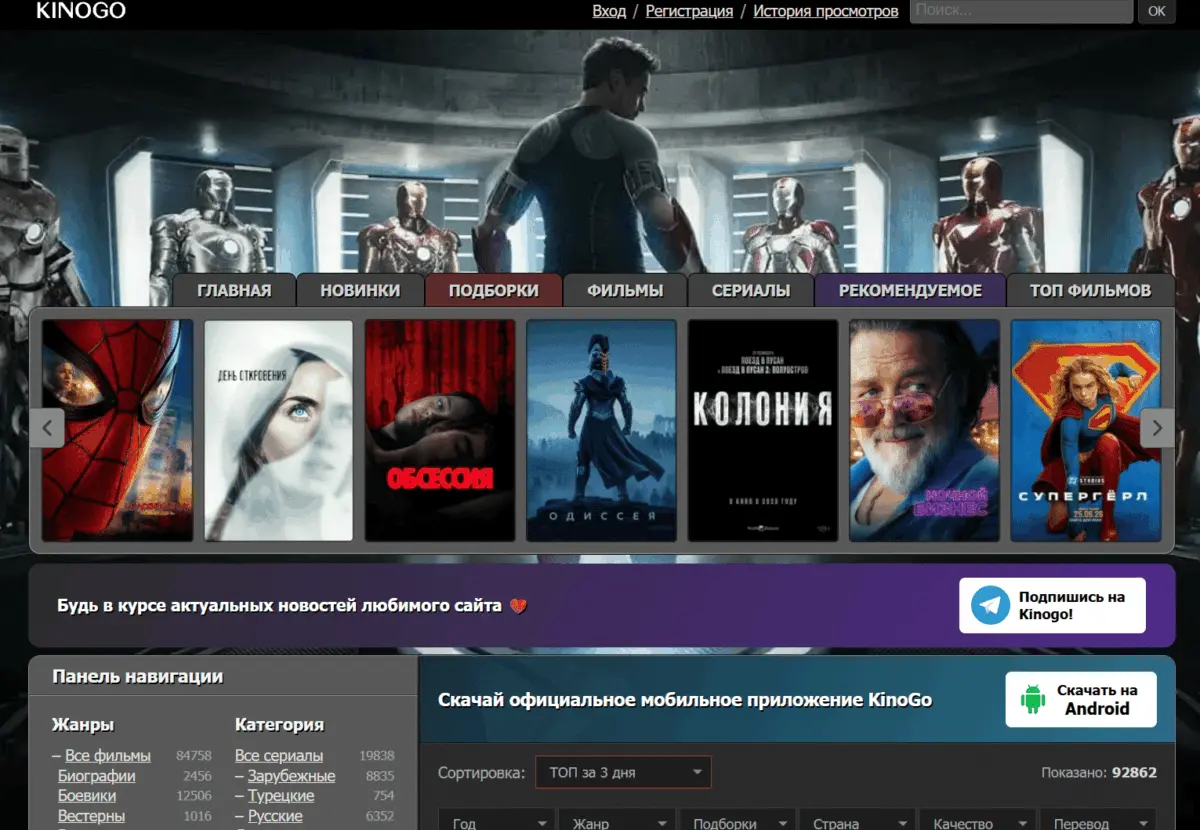
Recent site-blocking orders targeting platforms such as the streaming aggregator Streamed and the long-standing Eastern European movie portal KinoGo demonstrate just how close enforcement actions are cutting to this numerical margin. KinoGo recorded an infringing share floor of just 82.4%. This proximity raises critical questions for both rightsholders and site operators: Is 81.5% an absolute legal benchmark, or is it merely a circumstantial artifact of past default judgments? And more importantly, does this rigid percentage open the door for systemic exploitation, such as operators padding their digital libraries with public domain works or AI-generated filler to evade site-level blocks?
Detailed Chronology: From Administrative Bureaucracy to Judicial Oversight
To understand the weight of these recent developments, it is necessary to examine how Germany’s site-blocking mechanism has evolved over the past half-decade.
The CUII Era Begins (2021)
When major German ISPs and rightsholders united to launch CUII in March 2021, the primary goal was efficiency. Germany’s complex intermediary liability laws had previously made site-blocking remedies slow, expensive, and difficult to secure. CUII was designed as an administrative clearinghouse.
Under the original model, rightsholders would submit complaints regarding specific piracy domains to CUII’s internal committee. This committee would evaluate the structural infringement of the target site. If deemed sufficiently illegal, the committee issued a blocking recommendation. This recommendation was then reviewed by the Federal Network Agency (Bundesnetzagentur) before participating ISPs voluntarily implemented DNS and IP-level blocks.
While this streamlined the takedown of major rogue portals, it faced persistent criticism from digital rights advocates over its lack of formal judicial oversight and transparency. Because the process bypassed traditional courtroom battles, critics argued that fundamental due process rights were being minimized in favor of streamlined industry enforcement.
The Mid-2025 Legal Overhaul
Recognizing the constitutional vulnerabilities of an administrative-only framework, stakeholders restructured the CUII code of conduct in mid-2025. The updated mechanism introduced direct judicial scrutiny.
Under the revised framework, rightsholders can no longer rely purely on CUII’s administrative rubber stamp. Instead, every blocking action must now originate from a formal civil lawsuit filed by a rightsholder against a single participating ISP. Once a competent court—most notably the Cologne Regional Court—confirms that the target site is structurally infringing and issues a binding order, the remaining ISPs follow suit.

While CUII no longer serves as the primary issuing authority for the blocks, it continues to act as an information clearinghouse, distributing recommendations and documenting court orders for participating providers. This shift successfully introduced judicial accountability, but it also tied the fate of site-blocking directly to formal court judgments, making the evidentiary standards used by judges a matter of intense public and legal interest.
Supporting Context & Metrics: The Mechanics of Structural Infringement
Under current German legal theory, a site cannot be blocked simply because it hosts a handful of infringing files. To justify an internet-wide blockade as a "reasonable and proportionate" remedy under freedom of expression and information laws, the site must be classified as structurally copyright infringing.
The Investigator’s Random Sample
Determining whether a platform crosses the threshold from a legitimate or mixed-content platform into a dedicated piracy hub requires empirical evidence. In practice, rightsholders hire private investigators to analyze target domains.
The investigator pulls a randomized sample of the site’s total content library. This sample is then evaluated against a 95.5% confidence level to calculate a statistically sound estimation of the platform’s overall infringement rate. The resulting data provides a statistical range—a lower bound and an upper bound—presented to the court as objective proof of the site’s structural nature.
Recent Blockade Statistics and Historical Comparisons
Data compiled via independent transparency portals such as CUIIListe reveals how various platforms score under this empirical scrutiny:
| Site | Ruling Date | Estimated Infringing Share |
|---|---|---|
| KinoGO | July 2026 | 82.4% to 94.6% |
| LIVETV.SX | April 2026 | 85.28% to 96.72% |
| SPORTPLUS | February 2026 | 88.8% to 100% |
| MegaKino | February 2024 | 89.8% to 100% |
| Kinoger | November 2025 | 91.4% to 99.0% |
| Anna’s Archive | September 2025 | 91.6% to 94.8% |
| NSWPedia | January 2026 | 94.4% to 99.8% |
| s.to | February 2021 | 94.84% to 100% |
| LibGen | May 2024 | 96.07% to 98.23% |
| Streamed | July 2026 | 96.16% to 100% |
| cine.to | June 2022 | 96.28% to 100% |
As the table illustrates, most major torrent hubs, shadow libraries, and pirate streaming sites operate with infringement rates consistently exceeding 90% or even 95%. However, recent actions against platforms like KinoGo (82.4%) demonstrate a downward creep into lower statistical floors.
Official Statements and the Genesis of the 81.5% "Line"
The mathematical foundation of Germany’s site-blocking threshold was solidified in a March 2025 CUII order targeting platforms such as HDFILME, STREAMCLOUD, and FILMPALAST. In the official documentation accompanying those blocks, CUII made an explicit determination regarding the balance of legal versus illegal content:
"The illegal content on the websites far outweighs the legal content. This is the case in any event when at least 81.5% of the website’s content is illegal," the order stated, as translated from the original German.
This precise figure did not originate within CUII’s committee rooms; rather, it traces back to a January 2025 default judgment issued by the Cologne Regional Court against the download portal NOX. Because the operator of NOX chose not to contest the lawsuit, the court issued a default ruling that codified the 81.5% threshold as a concrete operational definition of structural infringement.

Subsequent orders have referenced this benchmark, creating a de facto quantitative floor for what constitutes a pirate site in the eyes of the court.
The KinoGo Case Study
The July 2026 Cologne Regional Court ruling against KinoGo brought this benchmark into sharp focus. With private investigators determining that KinoGo’s infringing share sits between 82.4% and 94.6%, the platform’s lower statistical bound hovers merely 0.9 percentage points above the 81.5% line.
KinoGo is far from a marginal target. Operating for well over a decade, the site remains a major thorn in the side of international copyright holders, routinely pulling in upwards of 50 million monthly visits—primarily originating from users in Belarus, Ukraine, and the broader Eastern European diaspora. Despite its immense scale and notoriety, its content library apparently contains enough mixed or legacy media to push its lower statistical boundary uncomfortably close to the legal tipping point.
Future Outlook: Loopholes, Padding, and the Path Forward
The establishment of a quantitative threshold like the 81.5% rule introduces profound strategic implications for both copyright enforcement agencies and website operators.
The Threat of Library Padding
If courts and clearing bodies increasingly rely on a hard mathematical percentage to determine whether a site is "structurally infringing," rational actors within the gray-market streaming and file-sharing ecosystem will inevitably look for ways to manipulate the math.
In theory, an enterprising site operator facing potential blockage could engage in "library padding." By intentionally diluting their unauthorized catalogs with massive volumes of public domain cinema, open-source educational media, creative commons documents, or even AI-generated video and text filler, operators could artificially depress the ratio of infringing files. If a private investigator’s random sample hits enough of these legal additions, the calculated infringement rate could theoretically drop below the 81.5% floor, shielding the domain from a court-ordered ISP blockade while leaving the core pirated library entirely intact.
Legal and Institutional Uncertainty
When approached for clarification regarding whether the 81.5% figure represents a rigid statutory benchmark or merely a case-specific evidentiary baseline, representatives for CUII did not provide a definitive statement prior to publication. This institutional ambiguity leaves intellectual property litigators and digital rights lawyers in a state of watchful waiting.
As litigation continues through the Cologne Regional Court and other specialized jurisdictions, judges will ultimately have to decide whether rigid percentages can withstand clever evasion tactics, or whether they must adopt a more holistic, qualitative approach to assessing structural infringement. Until then, rightsholders and ISPs will continue to navigate a legal landscape where fractions of a percent can mean the difference between an open internet gateway and a total national blackout.