








Executive Overview
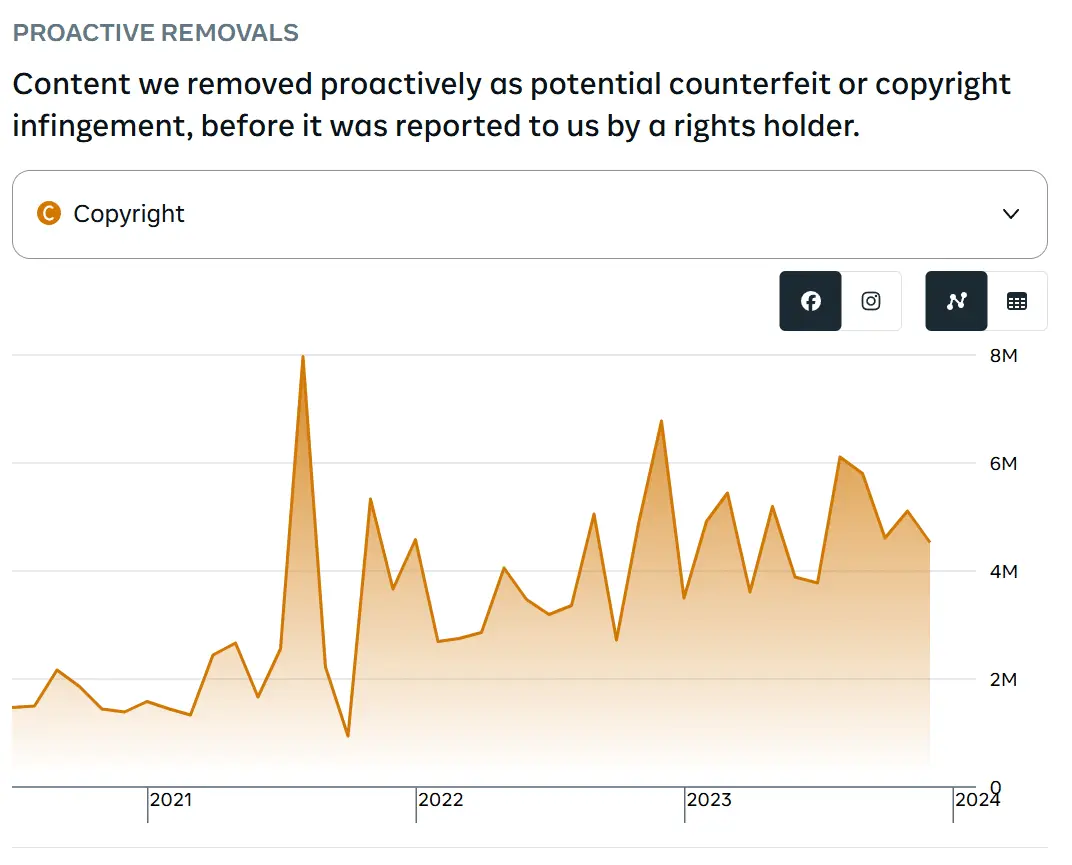
Meta’s automated copyright enforcement infrastructure—designed to protect intellectual property across Facebook and Instagram—faces a profound security and trust crisis. At the core of the controversy is Rights Manager, a nearly decade-old system that allows copyright holders to upload reference files, proactively detect infringing material, and automate takedowns or monetization claims. While Meta’s public transparency reports routinely tout this system as a vital safeguard that sweeps away millions of unauthorized posts every month, a series of escalating lawsuits and legal challenges in India reveal a glaring structural flaw.
Bad actors and organized syndicates have discovered how to turn Meta’s anti-piracy mechanisms against the very creators they were engineered to protect. By exploiting a seemingly mundane desktop feature—the "Edit Post" function—scammers can backdate their own content, falsely establishing chronological priority over legitimate creators. Armed with this manufactured seniority, bad actors successfully file fraudulent copyright strikes, hijack monetization rights, and suppress the reach of original content creators.
The crisis has boiled over at the Delhi High Court, where multiple high-profile content creators, financial educators, and public interest litigants have taken Meta to task. Plaintiffs are seeking substantial monetary damages, aggressive forensic audits, sweeping accountability measures, and immediate structural overhauls—including Know Your Customer (KYC) verifications and robust metadata tracking. As judicial pressure mounts, Meta finds itself scrambling to defend an automated architecture that is increasingly accused of enabling a sophisticated copyright extortion racket.
Detailed Chronology of the Legal Battles
The systemic exploitation of Meta’s copyright framework has transitioned from an underground exploit into a high-stakes legal battleground. Three distinct legal actions before the Delhi High Court highlight the depth of the crisis, detailing how scammers operate and how judicial intervention is slowly unmasking them.
1. The Pushkar Raj Thakur Lawsuit: Targeting the "Edit Post" Loophole
The crisis gained widespread attention when prominent financial educator and entrepreneur Pushkar Raj Thakur discovered that at least 36 of his original videos had been systematically flagged, taken down, and monetized by bad actors worldwide.
Thakur’s legal team filed a lawsuit in the Delhi High Court in May, alleging that Meta’s automated systems act blindly, processing copyright claims without verifying foundational parameters such as the rightsholder’s identity, file metadata, or the actual edit history of the offending posts.

Initially, legal counsel for Meta requested time to investigate the anomalies. However, as the false claims persisted, the court pressed Meta for concrete resolutions. In subsequent hearings, Meta’s stance shifted, offering critical assurances to the court:
- Meta agreed not to remove Thakur’s authentic videos based on contested copyright strikes.
- The company committed to preventing account termination or penalties resulting from repeat, fraudulent strikes against Thakur’s profile.
- Meta initiated the process of restoring the deleted content to its rightful place.
Despite these concessions, Thakur is pushing forward with his legal action, demanding approximately 2 crore rupees (roughly $210,000 USD) in damages. Furthermore, his legal filing insists that Meta implement rigorous technical safeguards within Rights Manager—including mandatory KYC checks for anyone asserting copyright claims, timestamp protections, and strict metadata verification to prevent backdating manipulation. In a striking irony, Thakur noted that Meta repeatedly denied him access to Rights Manager to protect his own brand, even as malicious actors utilized that exact infrastructure against him.
2. The Neeraj Joshi Case: Unmasking the Perpetrators
While Thakur’s case focused heavily on platform accountability and systemic reform, a parallel lawsuit filed by creator Neeraj Joshi has delivered more immediate, actionable judicial relief.
Joshi fell victim to the exact same backdating exploit, finding his verified Instagram account under siege by fraudulent copyright claims. Taking the matter to the Delhi High Court, Joshi secured a critical favorable order on July 9 from Justice Jyoti Singh.
The court mandated that Meta take immediate steps to preserve Joshi’s verified Instagram account. More importantly, Justice Singh ordered Meta to hand over basic subscriber information, access logs, and Internet Protocol (IP) logs tied to the fraudulent claimants within a tight three-week window. These digital breadcrumbs represent a crucial breakthrough; they could finally unmask the physical entities or syndicates operating behind the network of bot accounts and shell profiles. An upcoming hearing scheduled for August 5 will weigh Joshi’s request for a comprehensive interim injunction.
3. Nitin Joshi’s Public Interest Litigation (PIL): Attacking the Legal and Architectural Framework
While individual creators targeted specific exploits, a third legal challenge elevates the dispute to a systemic level. On July 15, creator Nitin Joshi filed a Public Interest Litigation (PIL) that goes beyond individual restitution, directly challenging the foundational rules and structural framework governing digital enforcement in India.

The PIL characterizes the ecosystem of bogus copyright strikes as an organized extortion racket. According to the filing, syndicates utilize automated bot networks to bombard creators with false copyright claims, subsequently demanding financial payoffs or extortion fees to withdraw the strikes.
Crucially, the petition takes aim at Rules 3(1)(c) and 4 of India’s Information Technology (IT) Rules. The legal challenge argues that these regulatory provisions grant social media platforms sweeping immunity while enabling them to disable creator accounts arbitrarily:
- Without prior notice to the account holder.
- Without disclosing the legal identity or contact information of the complainant.
- Without performing even rudimentary checks to establish whether the claimant holds legitimate ownership of the disputed material.
To dismantle this alleged extortion ring, the PIL requests that the Delhi High Court establish a Special Investigation Team (SIT) to conduct a deep forensic audit of Instagram’s copyright strike architecture. It also demands regular, publicly accessible transparency reports detailing repeat complainants and strike frequencies. Although this third case remains in its early preliminary stages, it poses a direct legislative and operational challenge to how Meta handles automated enforcement.
Supporting Context & Technical Mechanics: The Anatomy of the Exploit
To understand how bad actors successfully manipulate a trillion-dollar company’s automated systems, one must examine the precise technical vulnerability that underpins these lawsuits: the abuse of Meta’s desktop "Edit Post" functionality.
The Mechanics of Backdating
When a standard user or creator publishes content on Facebook via a desktop browser, the platform logs the precise timestamp of publication. However, Meta’s "Edit Post" feature allows users to modify existing text, update captions, or entirely replace attached media files (such as swapping out an old photograph or replacing a video file) while retaining the original publication date.
Scammers have weaponized this feature through a calculated, multi-step process:

- Dormant Account Preparation: Bad actors acquire or create aged Facebook pages—profiles that have existed for months or years, granting them inherent chronological seniority in the platform’s database.
- Media Substitution: The operators edit these old, dormant posts, replacing the historical media with newly downloaded videos, reels, or images freshly harvested from popular creators like Pushkar Raj Thakur or Neeraj Joshi.
- Automated Deception: Because Meta’s backend systems preserve the original publication timestamp of the edited post, the platform’s automated enforcement algorithms perceive the scammer’s newly uploaded content as having existed longer than the original creator’s legitimate post.
- Rights Manager Hijacking: Armed with this manufactured priority, the bad actor utilizes Rights Manager—or leverages the flawed reporting mechanism—to claim that the original creator is actually infringing upon the scammer’s intellectual property.
The Consequences for Creators
The fallout from this exploit extends far beyond bruised egos; it directly impacts creators’ livelihoods and professional reputations. When Rights Manager acts on a fraudulent claim, it triggers a cascade of automated penalties:
- Immediate Content Removal: Original, high-performing videos are abruptly wiped from Facebook and Instagram, halting audience engagement and community growth.
- Monetization Theft: Meta’s automated systems frequently redirect ad revenue streams away from the legitimate creator and toward the scammer, effectively allowing bad actors to profit directly off stolen labor.
- Account Strike Penalties: Accumulating multiple copyright strikes can trigger automated shadowbanning, reach throttling, or complete account suspension, effectively silencing creators who rely on these platforms for their primary income.
Official Statements and Institutional Silence
Despite the escalating gravity of the legal filings and the mounting body of technical evidence, Meta’s official response has been muted.
During the initial court proceedings, Meta’s legal representation focused primarily on securing investigative windows to review individual claims rather than issuing a sweeping public defense of Rights Manager’s underlying architecture. While the company made specific binding assurances to the Delhi High Court regarding the restoration of Pushkar Raj Thakur’s content and the protection of his account status, Meta has notably declined to issue a broader public statement addressing the systemic vulnerabilities of the "Edit Post" backdating exploit.
Furthermore, industry watchdogs and legal experts have pointed out concerning gaps in Meta’s transparency infrastructure. At the time of publication, Meta’s most recent official copyright transparency report is severely outdated, covering data from 2023—more than two years behind the current operational reality. Critics argue that this lack of up-to-date reporting obscures the true scale of automated enforcement errors, leaving the public and regulators blind to how frequently innocent creators fall victim to algorithmic overreach and bad-faith exploitation.
Future Outlook: Patching the Loophole or Facing Regulatory Overhaul
The convergence of multiple lawsuits, high-stakes judicial orders, and sweeping public interest litigations marks a watershed moment for Meta’s content moderation and copyright enforcement strategy in South Asia and globally.
Technical Imperatives for Meta
Moving forward, Meta faces a stark choice: it can either aggressively patch the structural vulnerabilities within its desktop infrastructure or risk severe judicial penalties and regulatory crackdowns. Cybersecurity and platform integrity experts suggest several immediate remedies Meta must implement to restore trust:

- Timestamp Integrity Overhauls: The platform must strip historical publication timestamps when media assets (videos or high-resolution images) are swapped out during an edit, forcing edited posts to register the timestamp of the modification.
- Identity Verification (KYC): As demanded by plaintiffs like Thakur, implementing mandatory Know Your Customer protocols for users accessing Rights Manager or filing bulk copyright strikes would deter anonymous syndicates and extortion rings.
- Human-in-the-Loop Safeguards: Automated takedowns must be subjected to intermediate verification layers when challenged by verified creators, preventing automated bots from unilaterally stripping monetization and suppressing reach.
Broader Regulatory Implications
The outcome of these Delhi High Court proceedings will likely set a monumental legal precedent. If courts compel Meta to hand over detailed IP logs and subscriber data in the Neeraj Joshi case, it could blow the lid off international copyright extortion rings operating across social media platforms. Moreover, if Nitin Joshi’s PIL successfully challenges Rules 3(1)(c) and 4 of India’s IT Rules, it could force a massive legislative re-evaluation of intermediary liability, compelling tech giants to balance automated efficiency with due process and creator protections.
For now, Meta sits at an uncomfortable crossroads. The automated systems built to protect intellectual property have proven dangerously susceptible to malicious manipulation. Until Meta bridges the security gaps in Rights Manager, verifies metadata integrity, and holds bad actors accountable through transparent cooperation with judicial authorities, creators will continue to build their digital empires on shaky, exploitable ground.