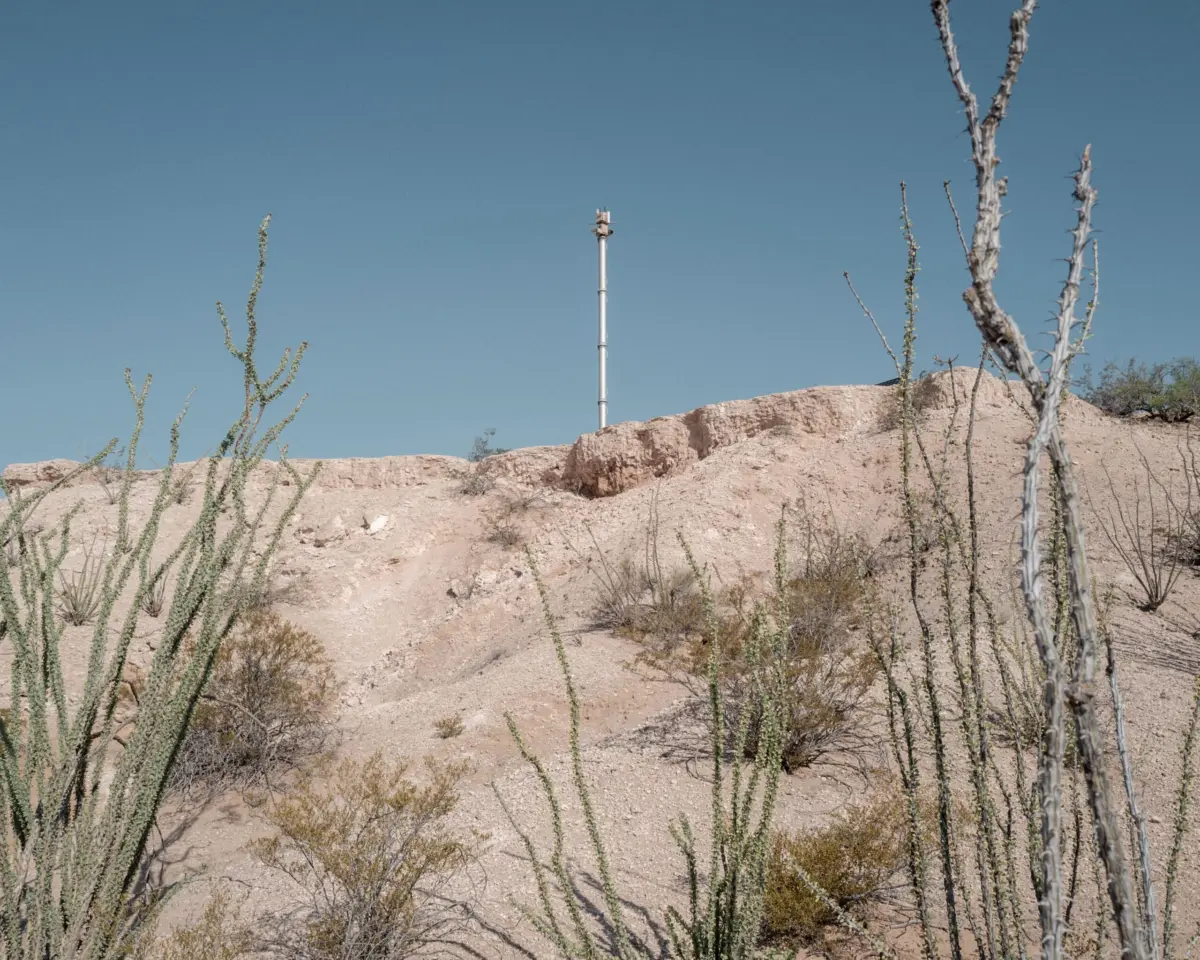
For decades, the United States government has confronted the same formidable logistical puzzle: how to effectively secure nearly 2,000 miles of remote, rugged terrain along the southern border. As traditional physical barriers proved expensive and difficult to construct across deserts, mountains, and sprawling ranchlands, Washington turned increasingly to technology. Billed as a modern, cost-effective alternative to a physical barrier, the so-called "virtual wall" of surveillance towers was promised to revolutionize border security.
Today, this digital infrastructure spans the entire southern border, comprising over 800 active structures equipped with long-range cameras, thermal imaging, and advanced artificial intelligence. With billions in federal funding secured—including a projected $1 billion for nearly 1,500 new AI-powered towers by 2034—the program enjoys broad, bipartisan political support. Hardliners view it as an indispensable force multiplier against drug and human smuggling, while fiscal conservatives tout it as a cheaper substitute for concrete walls.
However, an exhaustive investigation reveals a disturbing disconnect between the utopian promises of defense contractors and the grim reality on the ground. Despite operating under the watchful gaze of high-tech surveillance systems, hundreds of migrants have died in plain sight. Interviews with more than 45 individuals—including current and former White House advisors, Border Patrol agents, medical examiners, sheriffs, humanitarian volunteers, and tech sector employees—demonstrate that a systemic failure is occurring on two fronts: the technology frequently fails to detect crossings, and agents frequently fail to respond.
Customs and Border Protection (CBP) has done little to systematically assess how its towers function or whether they mitigate fatalities. Former officials across four presidential administrations admitted that the government has never conducted a comprehensive analysis linking surveillance coverage to human deaths. As billions more flow into defense technology startups and aerospace giants, the virtual wall remains a multibillion-dollar gamble that offers high-tech surveillance without accountability, leaving human suffering unaddressed in the shadows of the desert.
Detailed Chronology: Evolution of the Virtual Wall
The evolution of the virtual wall spans three distinct technological generations, reflecting the federal government’s escalating reliance on private contractors to solve the border crisis.
Phase One: The Era of Remote Video (Late 1990s–2010s)
The earliest iterations of border surveillance technology began taking shape in the late 1990s, catalyzed by historic enforcement sweeps like Operation Gatekeeper in El Paso and San Diego. As urban crossings became heavily militarized, migration shifted toward deadlier, remote rural deserts. To monitor these vast expanses, Border Patrol installed its first generation of Remote Video Surveillance System (RVSS) towers. Standing 60 to 80 feet tall, these structures featured pan-and-zoom cameras that allowed agents to monitor large geographic areas from centralized dark rooms without deploying personnel into the field immediately.
While praised as an initial tactical breakthrough, the RVSS program quickly bogged down in information overload. Operators sat before dozens of screens, expected to track hundreds of square miles of terrain simultaneously. Studies and inspector general reports revealed that illegal crossings frequently went unnoticed unless an agent was actively staring at a specific monitor at the precise moment of an crossing. Furthermore, maintenance issues plagued the infrastructure; congressional memos later revealed that more than 66% of first-generation towers were completely unusable at various points due to technical failures, turning vital observation posts into blind eyes.
Phase Two: Integrated Fixed Towers and Radar (2011–2018)
Recognizing the limitations of human monitors, CBP sought a technological leap forward. In 2011, the agency contracted Israeli defense contractor Elbit Systems of America to install Integrated Fixed Towers (IFT) primarily across the rugged landscapes of Arizona. Unlike older cameras, IFTs utilized radar to automatically detect motion and cue cameras to pan toward targets.
Yet, these systems faced their own severe limitations. The radar could register movement—such as livestock, blowing tumbleweeds, or wildlife—but could not reliably classify what was moving, generating a flood of false alerts. Moreover, physical obstructions like mountainous terrain, deep arroyos, and dense brush frequently blocked lines of sight, leaving substantial coverage gaps across the Arizona desert.
Phase Three: The Age of AI and Autonomy (2018–Present)
By 2018, under mounting pressure from Congress to justify tens of billions in border spending, CBP established an Innovation Team to harvest Silicon Valley solutions. This opened the door for Anduril Industries, a defense tech startup founded by Palmer Luckey. Utilizing modular, solar-powered masts equipped with computer vision algorithms, Anduril promised a fully autonomous "Sentry" tower capable of automatically classifying, tracking, and alerting agents to humans, vehicles, and animals in real time.
By 2020, Anduril’s autonomous surveillance towers (ASTs) moved into an official program of record, with contracts swelling past $1 billion. Yet, field agents soon encountered algorithmic shortcomings. Smugglers quickly learned to adapt, covering groups with tarps, blankets, or netting to fool computer vision models into registering them as "unidentified objects" rather than human crossers. Furthermore, rapid handoffs between towers frequently failed, and fatigued agents—overwhelmed by record-high migration surges—frequently overrode the AI or missed automated alerts entirely.
Supporting Context & Metrics: The Human Toll
Establishing the true human cost of surveillance gaps along the virtual wall is exceptionally difficult. Data regarding human remains is heavily fragmented across dozens of county sheriff departments and medical examiners. Many remains are never discovered, while others are found months or years after death, rendering precise timelines challenging to reconstruct.
Despite these methodological hurdles, data analysis reveals a staggering toll:
RVSS Corridors: Between 500 and 700 deaths are estimated to have occurred within range of RVSS towers since 2015. Even when restricting analysis strictly to rural areas with unobstructed lines of sight, more than 300 fatalities occurred less than three miles from an active tower.
Elbit IFTs: Nearly 350 people have died within range of Elbit’s towers in Arizona since 2015. Notably, deaths were recorded within the surveillance footprints of 52 out of the 53 IFT towers analyzed, with specific towers overseeing dozens of fatalities despite having high visibility ratings.
Anduril ASTs: In areas heavily saturated with Anduril’s autonomous towers—such as the Santa Teresa station sector in New Mexico and the Otay Mountain Wilderness in California—numerous migrant bodies have been recovered within direct line of sight of active towers.
Humanitarian volunteers emphasize that the existence of these towers rarely translates into timely rescue operations. In many instances, emergency coordinates provided by humanitarian groups languished for days before Border Patrol agents arrived, transforming living individuals into recovered remains.
Official Statements & Institutional Accountability
The widening chasm between technological claims and operational realities has drawn intense scrutiny from lawmakers, academics, and oversight bodies, while eliciting defensive postures from federal agencies and defense contractors.
CBP vehemently defends the operational utility of its surveillance ecosystem. Hilton Beckham, CBP’s assistant commissioner for public affairs, stated:
"Autonomous surveillance towers use artificial intelligence to detect and classify people, vehicles, and animals and alert Border Patrol agents to activity in monitored areas… ASTs complement physical barriers and other border security infrastructure by improving detection and situational awareness between ports of entry."
Agency officials emphasize that technology does not make law enforcement decisions; human agents review the information and determine the appropriate response. According to CBP, operational strategies—such as "hanging back" to observe smuggling routes or prioritizing higher-threat targets—legitimately preclude immediate responses to every alert.
Defense contractors, including Anduril and General Dynamics, routinely direct inquiries regarding specific operational incidents back to CBP, noting that tower performance is inherently constrained by physical terrain obstructions and virtual boundaries established by the agency for privacy and operational reasons.
Independent experts, however, remain deeply skeptical of these assertions. Geoff Boyce, an assistant professor of geography at University College Dublin, notes that while surveillance assets provide useful intelligence under specific conditions, they consistently fail to deliver the operational efficacy claimed by corporate vendors and DHS.
Political oversight remains fractured. Delia Ramirez, a Democratic representative on the House Homeland Security Committee, offered a scathing assessment:
"AI-powered surveillance technologies are not making us safer. Yet DHS continues to spend millions of taxpayer dollars on these ineffective, negligent technologies, with no commitment to oversight or transparency… It is clear we must terminate CBP’s integrated surveillance tower program and dismantle DHS."
Crucially, internal investigations into surveillance failures are virtually nonexistent. Former agents and officials confirmed that CBP does not formally investigate whether a surveillance tower should have detected a deceased person, nor why agents failed to render aid prior to death.
Future Outlook: Billions More, Zero Accountability
Despite mounting evidence of structural and algorithmic failures, enthusiasm for high-tech border enforcement shows no sign of abating. The federal spending package passed in July awarded $2.7 billion exclusively for border security technology, and CBP has signaled plans to spend $1 billion on nearly 1,500 additional AI-equipped towers by 2034.
Furthermore, the defense market is expanding beyond Anduril. General Dynamics has developed its own line of autonomous surveillance towers, securing a $115 million delivery order from CBP to supply competing AI hardware along the border. This expansion occurs within an increasingly opaque oversight environment; the Department of Homeland Security dissolved its internal office responsible for evaluating major spending programs, removing a critical layer of independent review.
As border encounters fluctuate and overall crossing rates decline, the fundamental paradox of the virtual wall persists. Thousands of active cameras continue to sweep the desert landscape, capturing the minutiae of border terrain while failing to prevent a steady accumulation of human casualties. For families searching for missing loved ones, and for researchers documenting borderland fatalities, the virtual wall remains an expensive monument to technological optimism—one where systems fail, algorithms falter, and human beings ultimately pay the highest price.