As multinational corporations scale across borders and continents, the technological infrastructure supporting their daily operations can quickly transform from an operational asset into a severe liability. For global manufacturing leader Jabil—a behemoth boasting over 100 sites across more than 30 countries and a workforce exceeding 140,000 employees—decades of regional growth resulted in a fragmented digital landscape. Disconnected systems, site-specific tools, manual spreadsheet workarounds, and legacy applications created profound data silos. These barriers hampered the company’s capacity to identify operational bottlenecks early, coordinate rapid responses, and execute strategic decisions with high confidence.
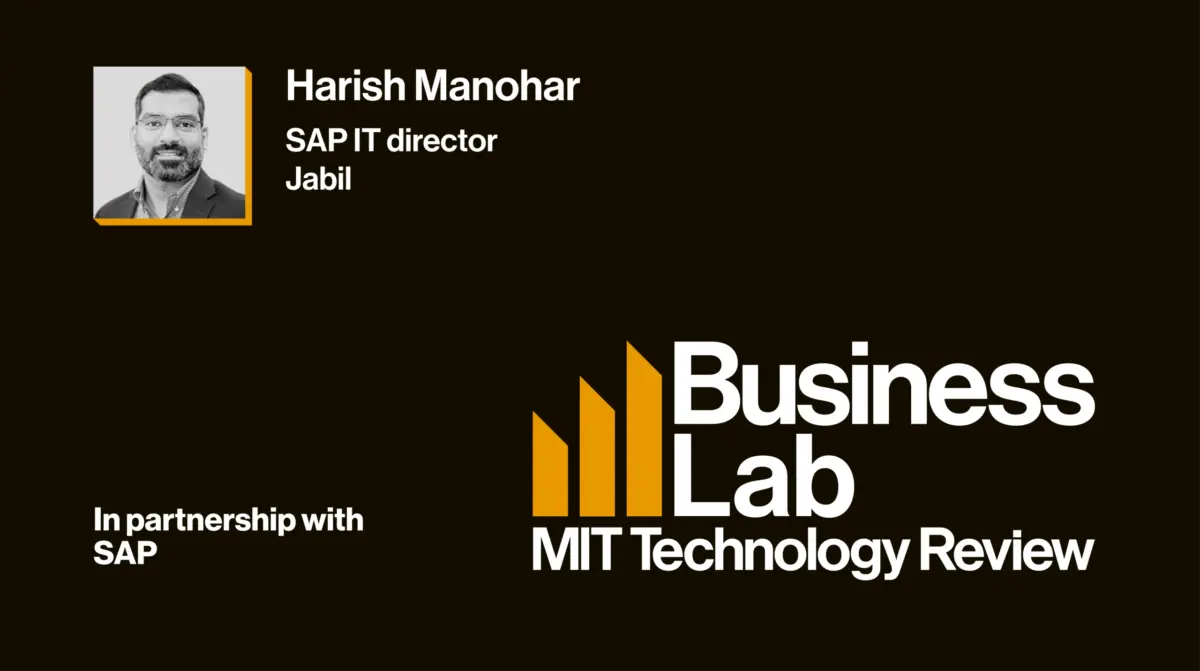
To dismantle these structural hurdles, Jabil embarked on a massive, deliberate enterprise technology transformation. Rather than chasing bleeding-edge innovations blindly, the company adopted a strict "simplify-first, then-innovate" philosophy. Spearheaded by Harish Manohar, SAP IT Director at Jabil, this enterprise-wide modernization effort prioritized integration, standardization, and core system consolidation using SAP solutions, including SAP Integration Suite and the SAP Business Technology Platform (BTP).
By establishing a trusted data backbone and standardizing core workflows via SAP Signavio, Jabil successfully transitioned from fragmented, site-specific operations to a cohesive enterprise capability. This deep dive explores Jabil’s strategic modernization journey, detailing how rigorous integration practices have unlocked real-time supply chain visibility, empowered employees, mitigated operational risk, and laid the groundwork for scalable artificial intelligence (AI) and automation.
Detailed Chronology of Jabil’s Transformation Journey
The Roots of Complexity: Unpacking 25 Years of Technical Debt
Founded nearly six decades ago, Jabil has evolved into a trusted manufacturing, engineering, and supply chain partner for more than 400 of the world’s leading brands. However, this expansive global footprint came with a steep operational cost. Over a span of 25 years, individual manufacturing sites operated with a high degree of autonomy, developing localized workflows and deploying site-specific tools tailored to immediate, regional demands.
Over time, this decentralization morphed into significant technical debt. Plants relied heavily on spreadsheets, manual reconciliation processes, and isolated legacy applications. Because data remained trapped within regional silos, leadership faced severe limitations in spotting cross-plant issues early. Coordinated responses to supply chain disruptions were delayed, and robust decision-making suffered from an absence of a single source of truth. Recognizing that these structural inefficiencies threatened future scalability, Jabil’s executive and IT leadership elevated enterprise integration to a top strategic priority.
Embracing the "Simplify-First, Then-Innovate" Mandate
When organizations plan modernization initiatives, the temptation to immediately adopt frontier technologies like generative AI, advanced cloud frameworks, and machine learning models is immense. Jabil, however, deliberately avoided the trap of technology-led complexity.
"Any innovation without simplification is going to add more complexity," asserts Harish Manohar.
Under this guiding principle, Jabil placed SAP at the center of its core digital platform. The objective was clear: bring as many core processes into the SAP ecosystem as possible while aggressively retiring fragmented, point-in-time tools. To achieve this without destabilizing ongoing production, the company adopted an API-driven, event-based integration architecture. Instead of repeatedly shifting massive volumes of static data across disparate networks, Jabil’s technical teams utilized SAP’s BTP and Integration Suite to establish dynamic, real-time data pipelines.
Furthermore, Jabil confronted its history of heavy system customization. Because the company caters to diverse, demanding global customers, its SAP instances had historically accumulated deep customizations. Moving forward into SAP RISE, Jabil instituted stringent governance criteria and review processes to enforce a "clean-core" strategy, minimizing bespoke modifications and ensuring long-term platform maintainability.
Standardizing Global Processes Across 100+ Sites
Rolling out a unified operational model across more than 100 highly diverse manufacturing sites is a monumental undertaking. Facilities exhibited varying levels of process maturity, and regulated business units faced stringent compliance mandates, qualification requirements, and rigorous Current Good Manufacturing Practice (CGMP) standards.
To navigate this complexity, Jabil deployed SAP Signavio as its central business process management tool. Signavio enabled the organization to map, analyze, and standardize global processes systematically. Rather than imposing a rigid, top-down template overnight, Jabil focused on identifying best practices at individual plants and scaling those workflows across regions. By replacing localized workarounds with standardized data flows, governance models, and consistent workflows, Jabil began shifting its operating model from isolated site-based execution to an agile, enterprise-wide capability.
Supporting Context & Metrics: Operational Scale and Impact
To fully appreciate the scope of Jabil’s modernization initiative, it is essential to examine the quantitative and qualitative metrics defining the enterprise:
- Global Footprint: Over 100 manufacturing and engineering sites spanning 30-plus countries.
- Workforce Scale: More than 140,000 employees operating across diverse regulatory and cultural environments.
- Client Portfolio: Trusted manufacturing and supply chain partner for over 400 of the world’s leading brands.
- Core Technological Enablers: SAP Integration Suite, SAP Business Technology Platform (BTP), SAP Signavio, and SAP RISE for the clean-core journey.
- Target Milestone: Initial standardization initiatives targeted toward aligning shared processes across more than 40 core plants globally.
Transforming the Employee Experience
Enterprise transformations are frequently evaluated through hard financial metrics, but Jabil’s leadership recognized that the human element is equally vital. Before the integration initiative, everyday personas—such as procurement buyers, inventory planners, and financial analysts—spent an inordinate amount of time wrestling with operational friction. Employees were forced to juggle multiple disconnected systems, perform manual data reconciliations across conflicting spreadsheets, and engage in endless communications simply to determine the single source of truth.
The implementation of integrated workflows fundamentally reshaped this daily reality. By establishing a shared data backbone across teams, Jabil eliminated the need for manual cross-referencing. Employees were liberated from the exhausting cycle of chasing information and could instead focus on interpreting real-time insights. This shift transformed enterprise technology from an administrative overhead into an active enabler of intelligent, rapid decision-making.
Official Statements & Expert Insights
To understand the strategic philosophy underpinning Jabil’s transformation, insights from key leadership highlight the intersection of business value and technical execution:
"Simplicity at scale is a very competitive advantage, and technology investments must ultimately connect to business value and operational resilience."
— Harish Manohar, SAP IT Director, Jabil
Discussing the absolute necessity of prioritizing data architecture before deploying advanced applications, Manohar emphasizes:
"The backbone of any contemporary or modern organization is data. Data needed to flow seamlessly before we start optimizing or automating or even applying AI use cases. This is where integration came first."
Reflecting on the partnership between IT and the broader business community, Manohar notes that true transformation is impossible without mutual alignment:
"Any modernization or transformation should add measurable business value. We don’t do any transformation initiatives just because we want to do it from an IT standpoint. Any investment that we make… has to have a deliverable business case that is approved, signed off by business, because that is the only way true transformation happens."
Future Outlook: AI, Automation, and Scalable Resilience
With a robust integration foundation now firmly established, Jabil is poised to unlock the next frontier of enterprise maturity. Having resolved the fundamental challenge of data fragmentation, the organization is systematically turning its attention toward advanced artificial intelligence, predictive analytics, and intelligent automation.
The Roadmap for AI and Automation
Jabil’s leadership firmly believes that artificial intelligence cannot deliver sustainable value if it is implemented in an architectural vacuum. AI models require continuous access to trusted, clean, and real-time data to function effectively. By establishing event-driven, integrated data pipelines across its global supply chain, Jabil has created the ideal ecosystem for scalable AI adoption.
Key focus areas for Jabil’s immediate technological horizon include:
- Predictive Supply Chain Insights: Leveraging integrated data streams to anticipate potential bottlenecks, material shortages, and logistical delays before they impact active production lines.
- Intelligent Exception Handling: Automating the triage and resolution of operational disruptions at manufacturing sites, significantly reducing manual intervention and operational risk.
- AI-Driven Planning and Forecasting: Deploying advanced machine learning algorithms to augment human decision-making, optimize inventory levels, and enhance long-term demand forecasting accuracy.
Strategic Lessons for Enterprise Leaders
For chief information officers, digital transformation leaders, and operations executives grappling with tool sprawl, Jabil’s journey offers a definitive blueprint for success:
- Prioritize Integration as a Foundation: Treat integration as an architectural prerequisite rather than an afterthought. Build systems designed to scale for the next three to five years, not just immediate operational patches.
- Enforce Simplification Over Feature Creep: Resist the urge to deploy point solutions for isolated site problems. Instead, standardize processes and reuse existing capabilities across regions.
- Establish a Single Source of Truth: Break down data silos by creating centralized data pipelines that ensure teams across all geographies operate from the same trusted information.
- Tie Technology Directly to Business Outcomes: Ground every IT investment in measurable business value, ensuring tight alignment between technical roadmaps and operational resilience.
Through disciplined execution, an unwavering focus on simplicity, and a strategic commitment to data integration, Jabil has transformed its global technology landscape into a powerful engine for competitive advantage and long-term operational resilience.