Executive Overview
In a milestone achievement that fundamentally reshapes the European aerospace landscape, German launch startup Isar Aerospace has successfully carried a privately developed rocket into low-Earth orbit. The triumphant liftoff of the two-stage "Spectrum" rocket from the Andøya Spaceport in northern Norway makes Isar the first fully commercial launch vehicle operator in Europe to reach orbit.
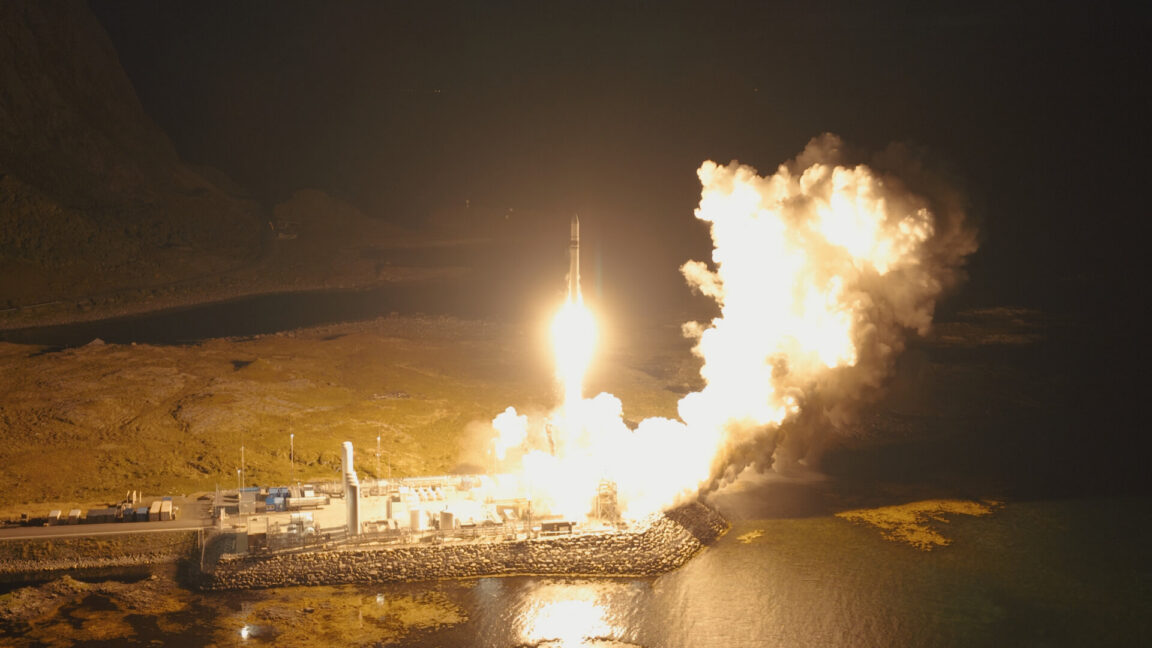
Carrying a payload of five small CubeSats and a non-separating technology experiment, the 92-foot (28-meter) vehicle cleared the pad at 4:12 pm EST (20:12 UTC) on Saturday, slicing through the fading twilight above the Arctic Circle. Just seven minutes later, the upper stage achieved orbital velocity, proving that European entrepreneurial space ventures can match the speed, agility, and technical execution of their American and Asian counterparts.
This breakthrough shatters a decades-long paradigm characterized by risk-averse institutional bureaucracy and rigid government-contracting frameworks. By demonstrating a sovereign commercial launch capability untethered from massive state-directed cartels, Isar Aerospace has vaulted to the front of a competitive pack of European startups. As the global space economy pivots toward high-cadence access and commercial autonomy, Isar’s success provides Europe with a long-sought alternative to heavy-handed government subsidies and reliance on foreign launch providers.
Detailed Chronology: From Student Workshop to Orbital Triumph
The roots of Isar Aerospace trace back to 2018, when three engineering students—Daniel Metzler, Josef Fleischmann, and Markus Brandl—met at the Technical University of Munich. Initially bonding over a shared passion for tinkering with rocket propulsion hardware in a campus workshop, the founders named their fledgling enterprise after the Isar River, which winds through Munich. At the time, the concept of a "New Space" commercial launch provider on European soil was widely dismissed by industry veterans.
Overcoming Early Skepticism and Technical Failure
Skepticism was a constant companion during Isar’s formative years. In an industry dominated by legacy players accustomed to guaranteed government contracts and multi-year development cycles, the founders were frequently told that private orbital manufacturing could not succeed in Europe.
Nevertheless, the team pressed forward, securing roughly $1 billion in private venture capital funding across multiple financing rounds over eight years, growing the company into an enterprise of nearly 500 employees.
That resilience was severely tested in March 2025, when Spectrum’s maiden test flight ended abruptly less than 20 seconds after liftoff. The vehicle spun out of control and crashed near the pad due to the unintentional opening of a vent valve and a subsequent loss of attitude control. Rather than viewing the setback as a fatal blow, Isar embraced an iterative, fail-fast philosophy common among modern aerospace pioneers.
The "Onward and Upward" Mission
Rebranded as "Onward and Upward," Saturday’s second flight test carried the heavy weight of redemption. The countdown faced a series of technical holds, adverse weather conditions, and crowded range schedules at the Andøya Spaceport that had repeatedly delayed the attempt since January.
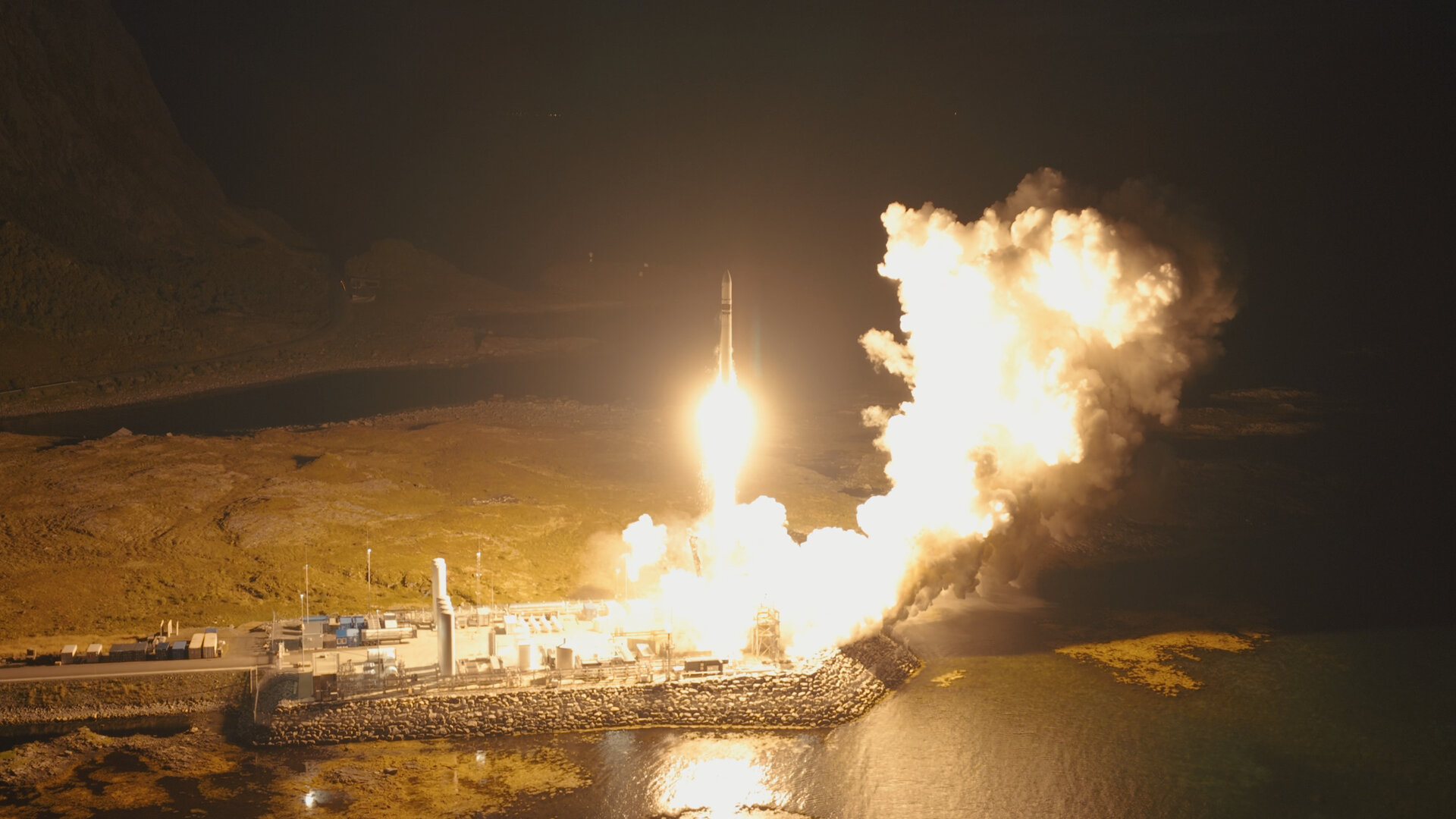
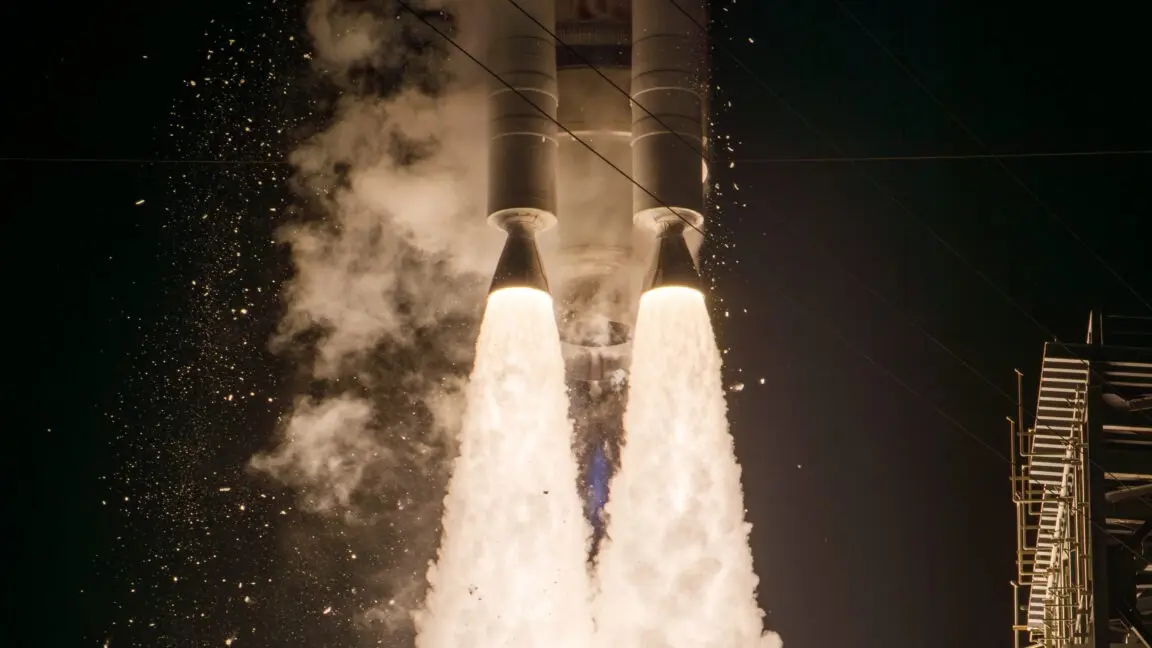
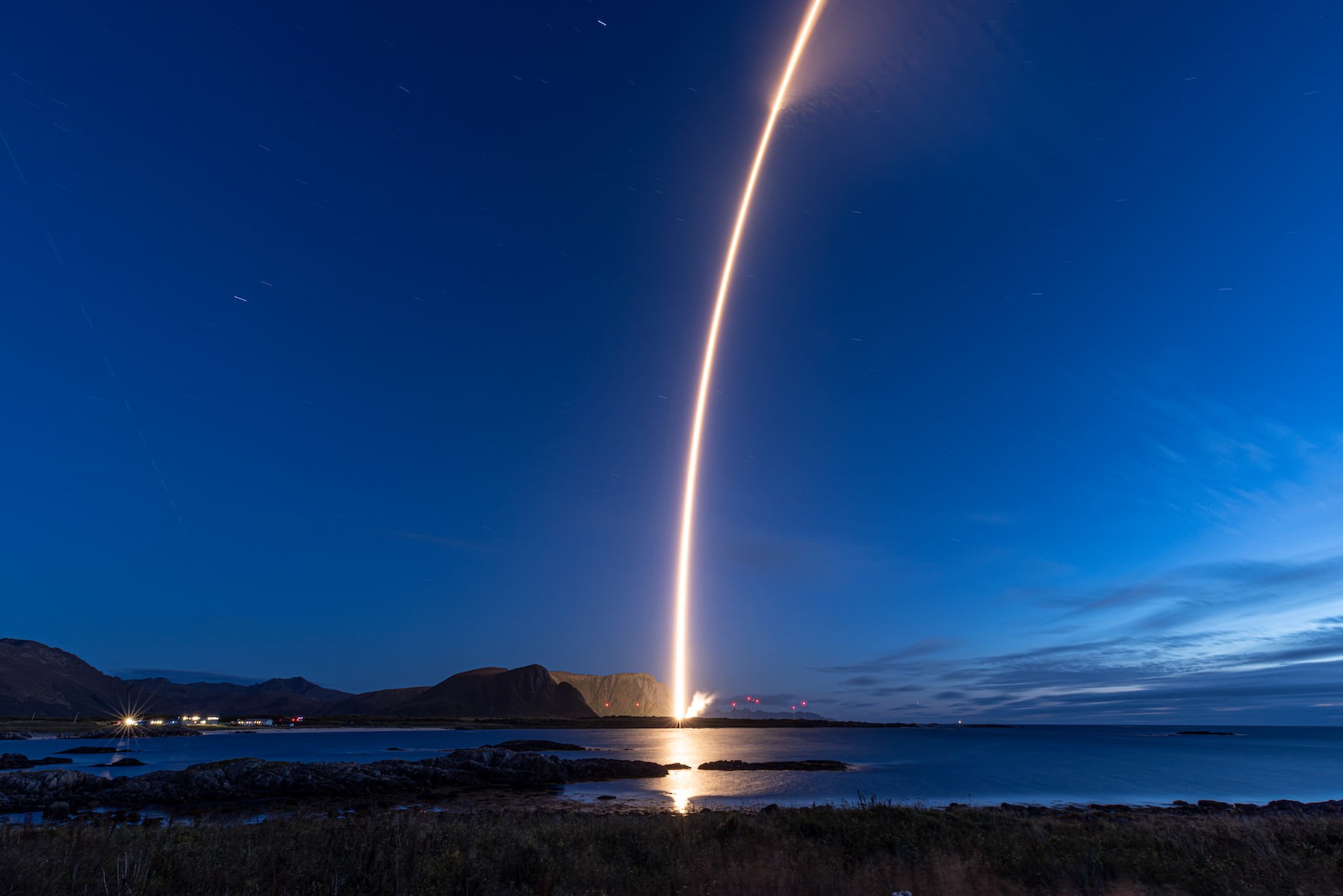
At 20:12 UTC, the nine Aquila main engines roared to life, consuming a high-performance mixture of liquid oxygen and propane to generate over 150,000 pounds (675 kilonewtons) of thrust. Climbing away from the pad, the rocket executed a northward trajectory over the Norwegian Sea.
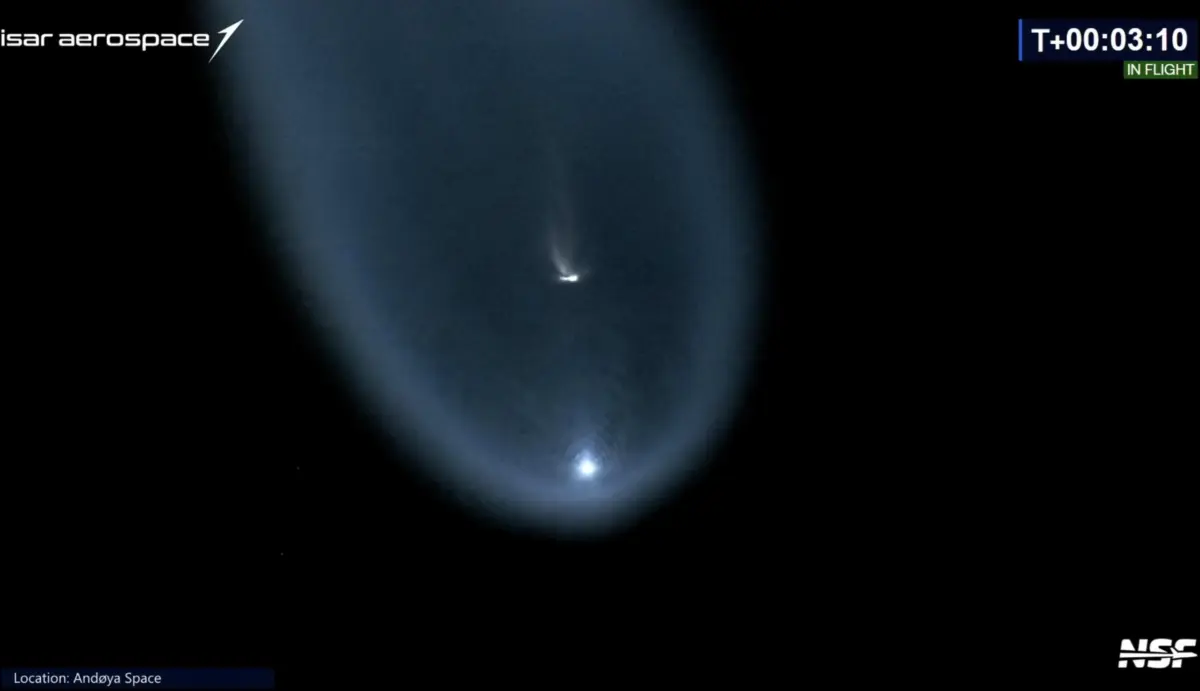
- First-Stage Burn: The booster fired for two and a half minutes before staging cleanly, descending into a pre-designated marine drop zone.
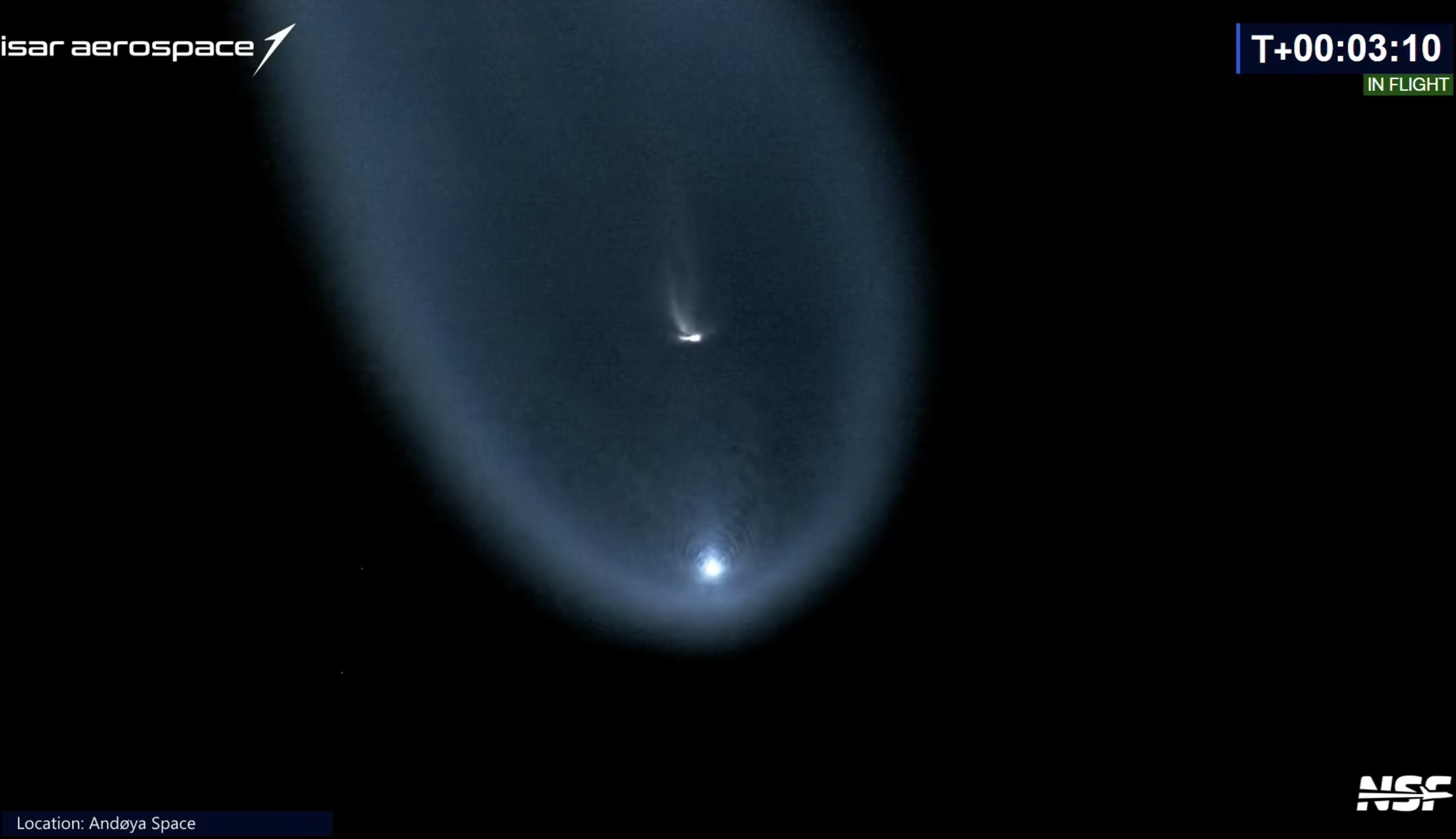
- Second-Stage Insertion: A single Aquila engine on the upper stage ignited, pushing the vehicle to an orbital velocity of roughly 5 miles per second.
- Orbital Circularization: Following a coast phase halfway around the globe, the upper stage successfully re-ignited to circularize its orbit at an altitude of approximately 300 miles (500 kilometers).
Ground stations soon picked up signals from at least one of the deployed CubeSats, confirming that Isar had officially crossed the threshold into orbit.
Supporting Context & Metrics: Redefining Europe’s Launch Paradigm
To understand the magnitude of Isar’s achievement, one must examine the historical architecture of European spaceflight. For decades, Europe’s access to space has been anchored by institutional programs managed through the European Space Agency (ESA) and executed by legacy prime contractors like Arianespace and Avio.
While heavy-lift systems like the Ariane 6 and Vega-C have provided reliable service, they operate within a procurement ecosystem heavily reliant on multi-billion-euro state subsidies and a principle known as "geographical return" (geo-return)—where workshare is distributed based on financial contributions from member states rather than purely meritocratic or cost-effective manufacturing efficiencies.
Geopolitical Pressures and Strategic Autonomy
In recent years, geopolitical tensions and fluctuating transatlantic relations have elevated "strategic autonomy" from a policy buzzword to an urgent security imperative. European governments have frequently found themselves caught between paying a steep financial premium to fly on domestic rockets or utilizing cost-effective alternatives like SpaceX, an option that remains politically unpalatable for sensitive institutional payloads.
+-------------------------------------------------------------------------+
|                  European Small-Lift Market Landscape                   |
+-------------------+-----------------------+-----------------------------+
| Launch Provider   | Vehicle Name          | Payload Capacity to LEO     |
+-------------------+-----------------------+-----------------------------+
| Isar Aerospace    | Spectrum              | Up to 1 metric ton (2,200lbs|
| Rocket Lab        | Electron              | ~300 kg                     |
| Avio (Italy)      | Vega-C                | Medium-Heavy (Supercedes)   |
| Firefly (USA)     | Alpha                 | ~1 metric ton               |
+-------------------+-----------------------+-----------------------------+
Isar’s Spectrum rocket occupies a highly strategic market niche. Capable of lifting up to one metric ton (2,200 pounds) to low-Earth orbit, Spectrum bridges the gap between light-class workhorses like Rocket Lab’s Electron and the heavier capabilities of Italy’s Vega-C. This capacity matches the American Firefly Alpha rocket, though Isar has now raced ahead by securing an unblemished orbital deployment.
Furthermore, Spectrum’s success marks a historic turning point for German aerospace engineering. It is the first rocket predominantly built in Germany to reach orbit, effectively supplanting the V-2 rocket of World War II as the largest German-built launch vehicle in history—a historical ghost that modern German aerospace leaders are eager to supersede with peaceful commercial enterprise.
Official Statements and Institutional Reactions
The success reverberated through government halls across Europe, drawing immediate praise from top-tier political and agency figures.
-
Daniel Metzler (Co-founder & CEO, Isar Aerospace):
"Today, Isar Aerospace opened space from continental Europe. Launch continues to be the largest bottleneck for the global space industry, and from today on, there is a true alternative for commercial and institutional customers. We achieved within a few years what had taken the European space industry decades before. Europe now has sovereign access to space."
-
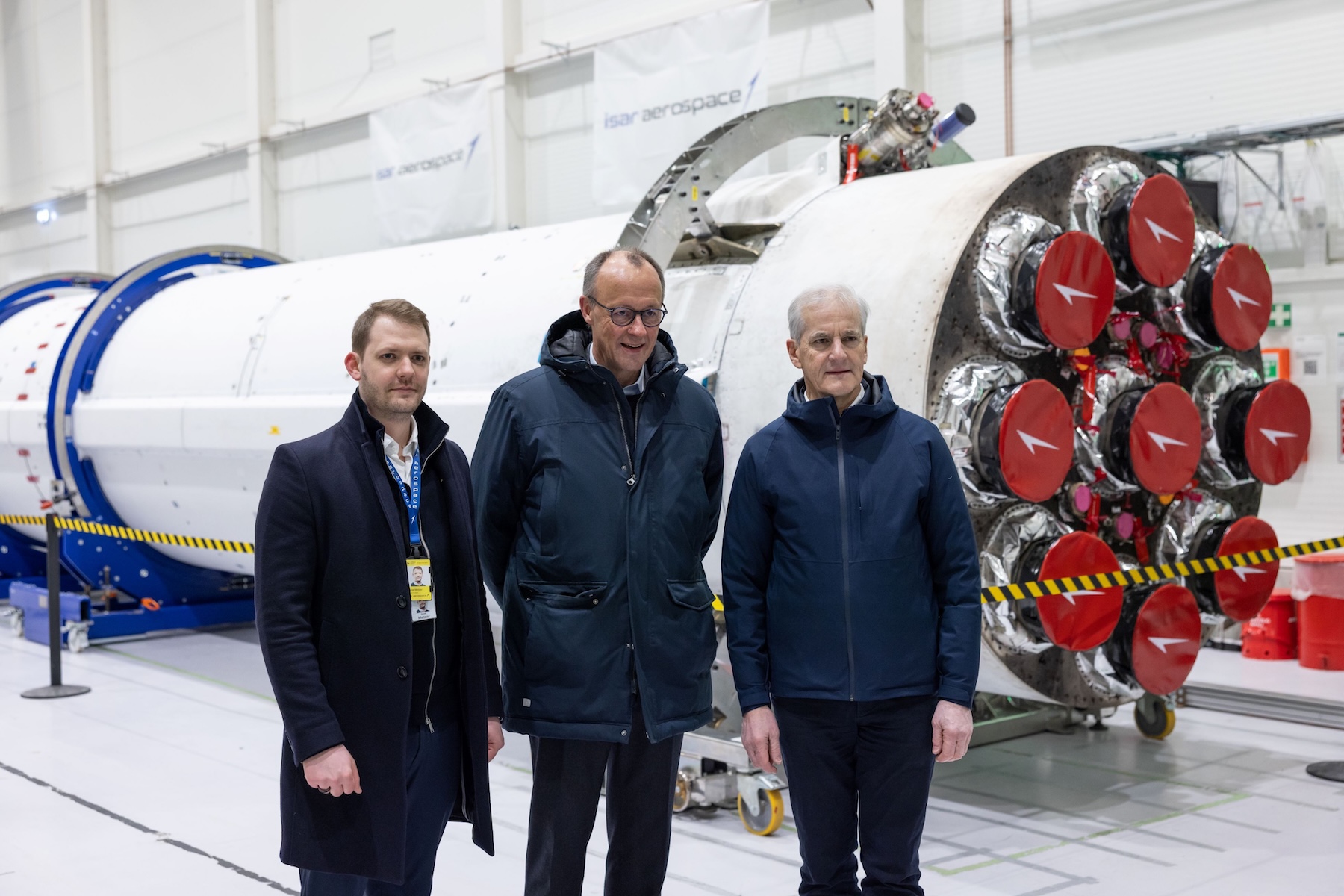
Friedrich Merz (German Chancellor):
Congratulating the team via social media, Chancellor Merz hailed the launch as the "beginning of a new era" for German technological innovation and European independence. -
Walther Pelzer (Director General, German Space Agency DLR):
"The Spectrum rocket was not developed under a government contract. It was developed to serve a global market. This redefines the path to independent European access to space and is a clear sign of the innovative strength of a young, ambitious company."
-
Josef Aschbacher (Director General, European Space Agency):
"Spectrum quite literally rose to the challenge and delivered its payloads in low-Earth orbit."
Future Outlook: Scaling Production and the Road Ahead
Having secured the pole position among European launch startups, Isar Aerospace faces a new set of challenges: scaling manufacturing, meeting a growing order backlog, and establishing a high-cadence launch rhythm.
The European Launcher Challenge and Financial Runway
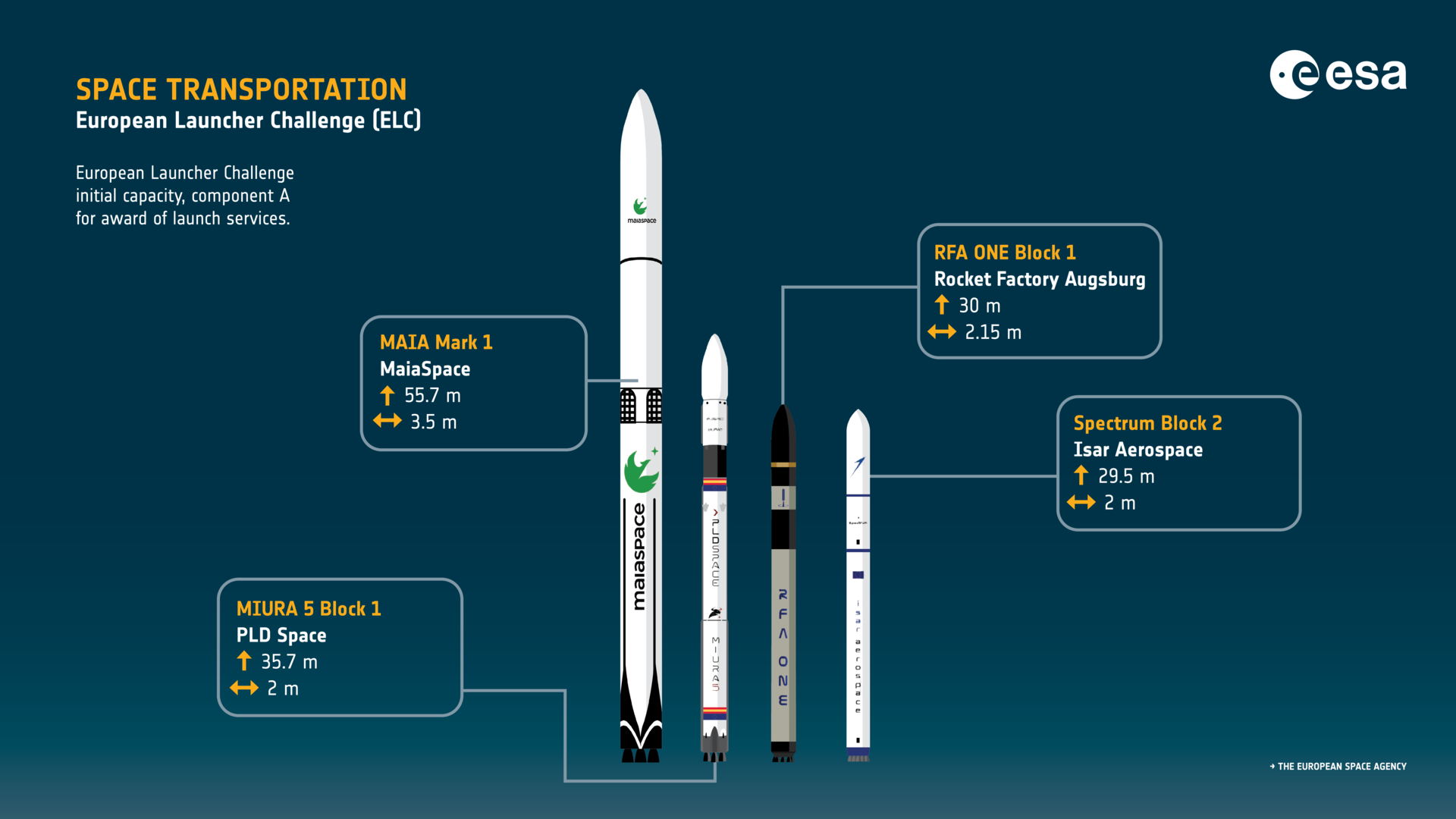
Just weeks prior to the orbital flight, Isar secured a landmark €197.8 million ($230 million) contract through ESA’s European Launcher Challenge. This initiative requires participants to demonstrate an orbital launch by 2027—a milestone Isar has cleared well ahead of schedule. The company’s primary competitors in the challenge, Rocket Factory Augsburg (Germany) and PLD Space (Spain), as well as MaiaSpace (a subsidiary of ArianeGroup), are now under increased pressure to accelerate their own orbital timelines.
Manufacturing Infrastructure and Future Iterations
To keep pace with global demand, Isar is constructing a massive 10-acre production facility near Munich. Once fully operational, the factory is designed to scale output to an ambitious 40 launch vehicles per year. CEO Daniel Metzler has emphasized that production scaling represents the ultimate test for any aerospace firm:
"Our margins of error are so small when you compare it to other industries. Sometimes, even a tolerance of a few micrometers on a single part out of 100,000 parts can make the difference between a payload that gets separated in orbit versus the rocket exploding somewhere during the flight."
To achieve cost targets of $10 million to $15 million per launch, Isar plans to apply modular, highly standardized manufacturing principles—an approach Metzler describes as an "IKEA approach" to rocketry. Beyond Spectrum, the company is already conducting preliminary research on a much larger vehicle architecture and dedicating engineering resources toward reusable rocket technologies.

With upcoming missions contracted for commercial clients like orbital debris cleaner Astroscale and institutional payloads for ESA, Isar Aerospace is no longer merely an ambitious student startup. It has transformed into the vanguard of a new, competitive, and autonomous European space age.