








Historically, medium format digital photography has been defined by two major characteristics: unparalleled image quality and significant physical compromises. For decades, photographers operating in this high-resolution tier have accepted bulky camera bodies, slow native lenses, and astronomical price points as the cost of doing business. However, the mirrorless revolution has steadily dismantled these barriers.
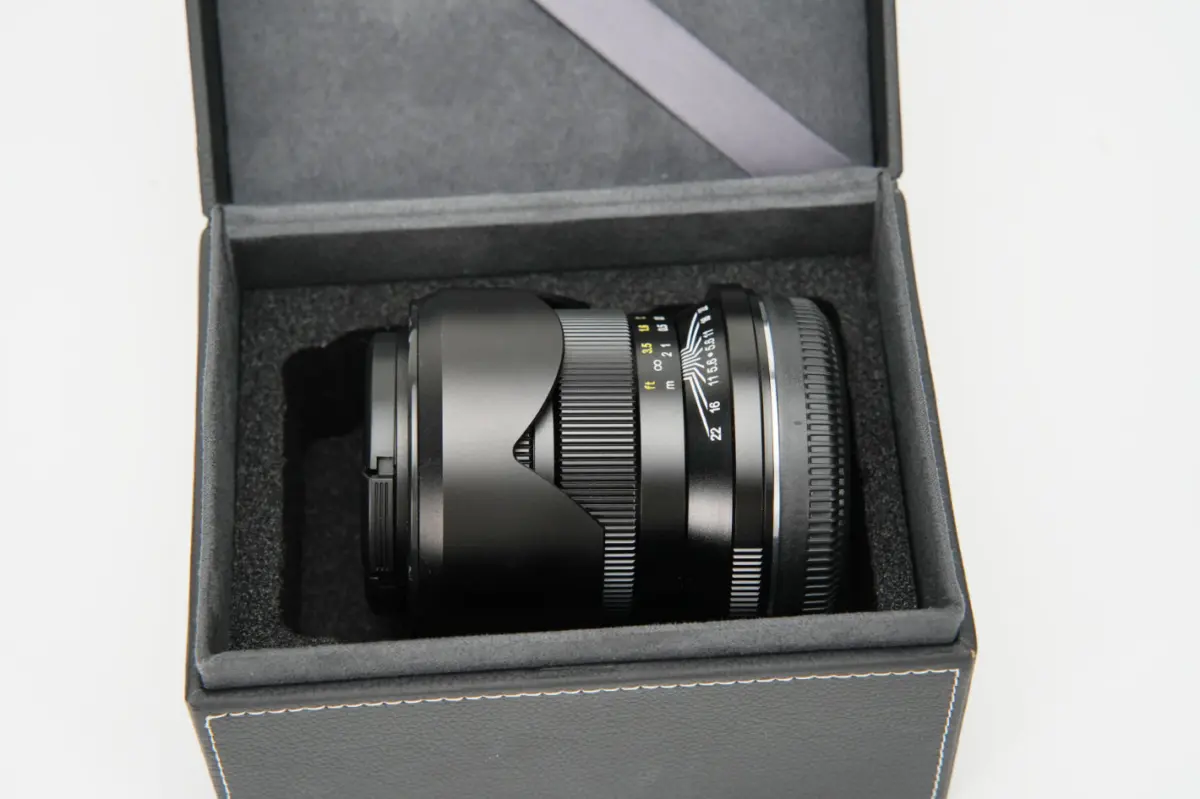
In a significant move that further democratizes the medium format ecosystem, specialty lens manufacturer Zhong Yi Optics has announced the release of the Pittura 30mm f/2.4. Engineered specifically for modern medium format systems utilizing the Fujifilm G and Hasselblad X mounts, this compact, manual-focus wide-angle prime combines a fast f/2.4 maximum aperture, an ultra-close 0.2-meter minimum focus distance, and a highly portable, all-metal chassis. Priced at an aggressive $499 USD, the Pittura 30mm f/2.4 directly challenges the established pricing models of first-party lens manufacturers, offering an intriguing alternative for street, landscape, travel, and documentary photographers.
Executive Overview
The Zhong Yi Optics Pittura 30mm f/2.4 represents a calculated expansion of third-party optical support for modern "cropped" medium format sensors (measuring approximately 44 x 33mm). Offering a versatile 24mm equivalent focal length in 35mm terms, the lens addresses a persistent gap in the native lens lineups of both Fujifilm’s GFX and Hasselblad’s XCD systems: the availability of fast, compact, and affordable wide-angle glass.
Standard native wide-angle lenses for these systems typically feature maximum apertures restricted to f/3.5 or f/4. By engineering a lens with a maximum aperture of f/2.4, Zhong Yi Optics provides a full stop of additional light-gathering capability. This allows photographers to maintain lower ISO values—preserving the rich dynamic range and color depth of high-resolution sensors—while shooting handheld in low-light environments.
Beyond low-light performance, the optical formula of the Pittura 30mm f/2.4 is optimized to produce a distinct "painterly" rendering style. It delivers a gentle, aesthetic focus fall-off and organic bokeh while maintaining the high resolving power required by modern 50-megapixel and 100-megapixel sensors.
+-----------------------------------------------------------------------------------+
|                            ZHONG YI OPTICS PITTURA 30mm f/2.4                     |
+--------------------------+--------------------------------------------------------+
| Focal Length             | 30mm (Approx. 24mm in 35mm Full-Frame Equivalent)      |
| Mount Compatibility      | Fujifilm GFX (G-mount) & Hasselblad (XCD-mount)        |
| Maximum Aperture         | f/2.4                                                  |
| Minimum Aperture         | f/22                                                   |
| Minimum Focus Distance   | 0.2 meters (7.8 inches)                                |
| Optical Construction     | Floating Element Design (All-Metal Barrel)             |
| Filter Thread Diameter   | 58mm                                                   |
| Weight                   | Approx. 550g                                           |
| Retail Price             | $499 USD                                               |
+--------------------------+--------------------------------------------------------+
Detailed Chronology: The Evolution of Mirrorless Medium Format Optics
To understand the positioning of the Pittura 30mm f/2.4, one must examine the rapid evolution of the digital medium format segment over the past decade.
The Mirrorless Shift (2016–2018)
The medium format landscape was disrupted in 2016 with the near-simultaneous announcements of the Hasselblad X1D-50c and the Fujifilm GFX 50S. By removing the traditional SLR mirror box, both manufacturers successfully shrank camera bodies to sizes comparable to professional full-frame DSLRs. However, while the camera bodies became highly portable, the optical roadmaps lagged behind. Early lens offerings prioritized studio-centric, slower-aperture lenses (often f/4 or f/2.8) to guarantee corner-to-corner sharpness across the large 44x33mm sensor plane.
The Megapixel War and the Optical Bottleneck (2019–2023)
With the introduction of 100-megapixel sensors in cameras like the Fujifilm GFX 100, GFX 100S, and the Hasselblad X2D 100C, the demands on optical glass reached unprecedented heights. Sensor pixels became smaller and more densely packed, meaning that optical imperfections—such as chromatic aberration, astigmatism, and diffraction—became immediately visible. First-party manufacturers responded by designing highly corrected, complex autofocus lenses. While optically superb, these lenses were physically large, heavy, and expensive, often costing between $2,000 and $4,000 USD.
The Rise of Third-Party Specialist Lenses (2024 and Beyond)
Recognizing a growing segment of photographers who desired portable, character-rich, and affordable lenses, third-party manufacturers stepped in. Zhong Yi Optics, known globally for its "Mitakon Speedmaster" line of ultra-fast manual lenses, began developing high-performance manual glass tailored for medium format sensors.
The launch of the Pittura 30mm f/2.4 marks a maturation of this strategy. Rather than attempting to compete directly with first-party autofocus systems, Zhong Yi Optics has focused on tactile manual operation, compact physical profiles, and fast maximum apertures. The Pittura 30mm f/2.4 is the culmination of this design philosophy, targeting the highly coveted wide-angle focal length with a unique set of optical priorities.
Supporting Context & Metrics: Analyzing the Optical Formula
Designing a wide-angle lens for a medium format sensor presents severe engineering challenges. Because the sensor area is roughly 68% larger than a standard 35mm full-frame sensor, the lens must project a much larger image circle. Doing so while maintaining a fast f/2.4 aperture and minimizing spherical aberration, vignetting, and field curvature requires precise optical architecture.
The Light-Gathering Advantage
A maximum aperture of f/2.4 on a medium format sensor provides significant advantages over the standard f/3.5 or f/4 lenses common in this focal range (such as the Fujifilm GF 30mm f/3.5 R WR or the Hasselblad XCD 28mm f/4 P).
- One Full Stop Faster: An aperture of f/2.4 allows twice as much light to reach the sensor as an f/3.5 lens, and nearly three times as much light as an f/4 lens.
- ISO Reduction: In low-light environments, this allows a photographer to shoot at ISO 1600 instead of ISO 3200 or 6400, directly preserving the dynamic range, tonal transitions, and color fidelity that make medium format imagery desirable.
- Depth of Field Control: While wide-angle lenses are not typically associated with shallow depth of field, an f/2.4 aperture on a medium format sensor creates a shallower depth of field than a 24mm f/1.8 lens on a full-frame camera, yielding a beautiful, smooth transition from the sharp focal plane to the background.
Sensor Size Comparison & Equivalent Depth of Field:
+-------------------+--------------------+------------------------+-------------------------+
| Format            | Sensor Dimensions  | Diagonal Crop Factor   | Equivalent FoV / DoF    |
+-------------------+--------------------+------------------------+-------------------------+
| Medium Format     | 44.0 x 33.0 mm     | 0.79x                  | 30mm f/2.4              |
| 35mm Full-Frame   | 36.0 x 24.0 mm     | 1.00x (Baseline)       | ~24mm f/1.9             |
+-------------------+--------------------+------------------------+-------------------------+
The Floating Element Optical Structure
Typically, wide-angle lenses suffer from a loss of edge sharpness and increased distortion when focusing on close-up subjects. To combat this, Zhong Yi Optics has integrated an internal floating element optical structure into the Pittura 30mm f/2.4.
As the manual focus ring is turned, specific groups of lens elements move independently of one another. This dynamic adjustment of air spaces within the lens barrel corrects for spherical aberrations and field curvature across the entire focusing range. Consequently, the lens maintains high contrast and fine-detail resolution even at its minimum focusing distance of 0.2 meters (7.8 inches).
Physical Design and Ergonomics
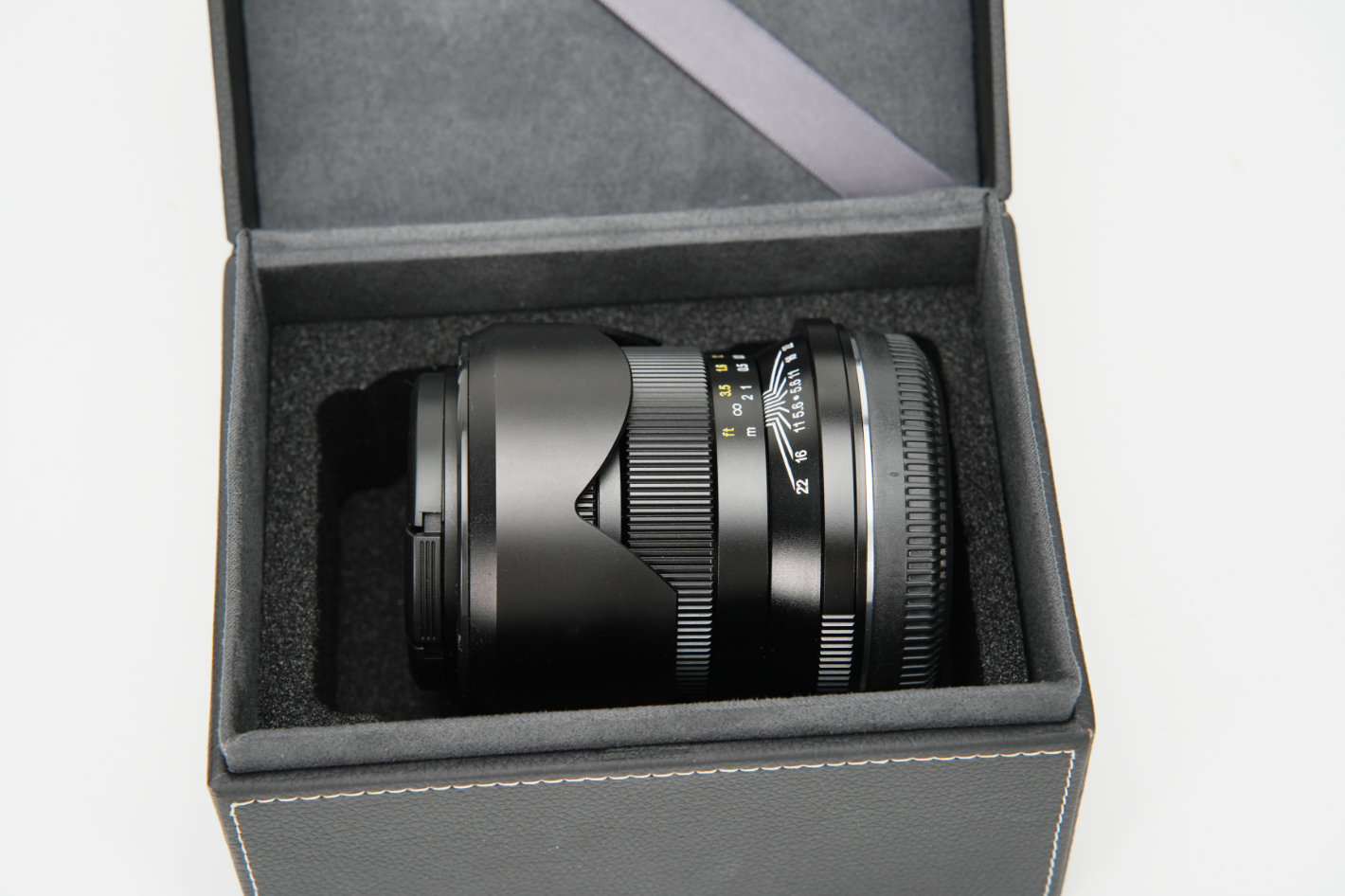
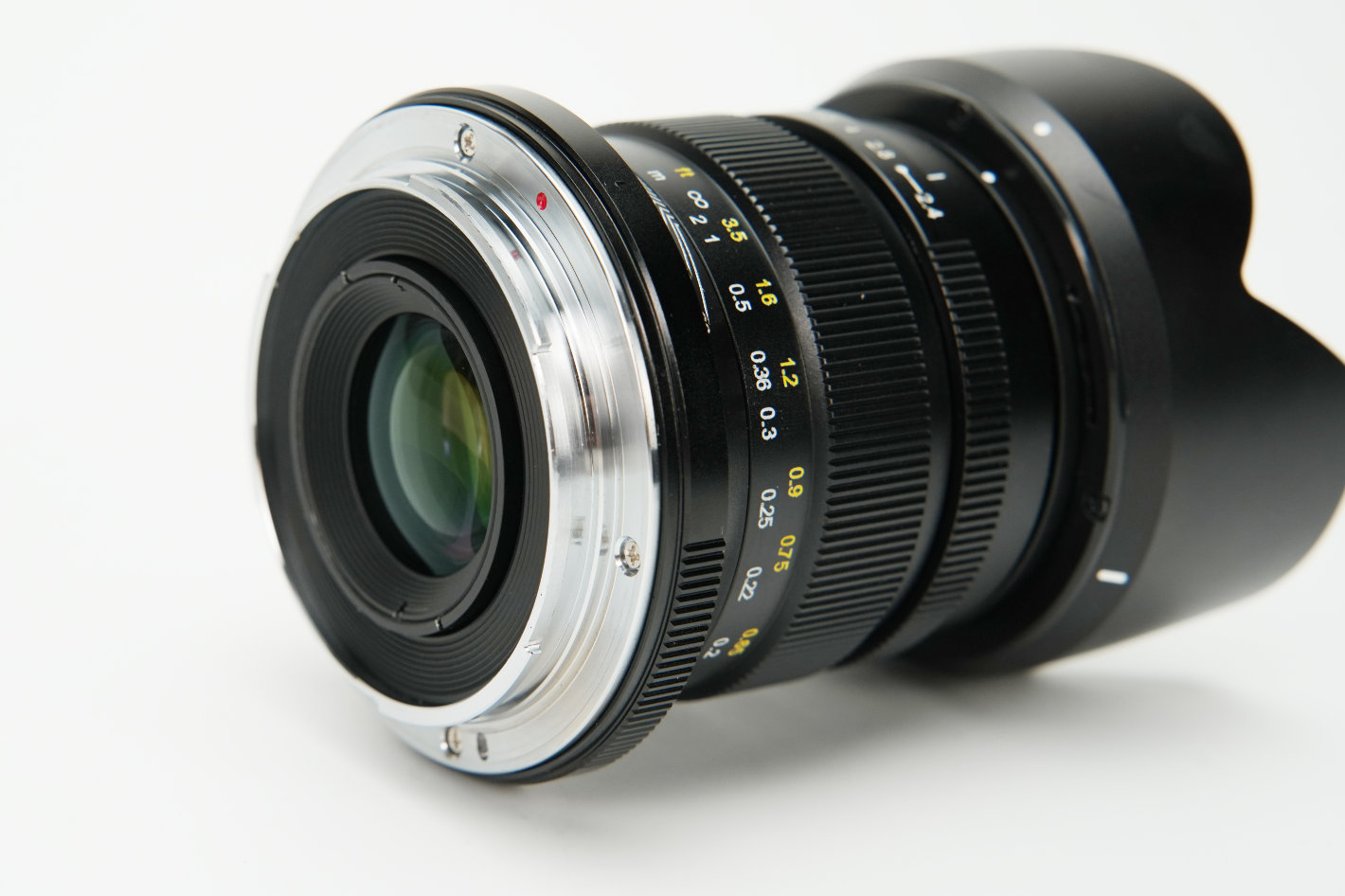
The Pittura 30mm f/2.4 is housed in a precision-machined, all-metal lens barrel. This heavy-duty construction ensures durability in field environments while providing a highly tactile user experience.
- Manual Focus Control: The manual focus ring is damped to provide smooth, precise resistance, allowing for micro-adjustments when shooting at f/2.4.
- Aperture Ring: The lens features a tactile, clicked aperture ring with clear markings from f/2.4 down to f/22.
- Compact Dimensions:
- Fujifilm GFX Version: Ø 81mm x 80mm
- Hasselblad XCD Version: Ø 73mm x 84mm
- Weight: At approximately 550 grams, the lens is exceptionally light for medium format glass, making it an excellent option for long-duration handheld shooting, street photography, and travel.
- Filter Thread: A standard 58mm front filter thread allows for the easy attachment of circular polarizers, ND filters, or specialized creative filters.
Official Statements and Industry Reactions
In announcing the lens, representatives from Zhong Yi Optics emphasized their desire to challenge the conventional design philosophies of medium format lens manufacturing.
"With the Pittura 30mm f/2.4, we wanted to rethink what is possible for wide-angle medium format optics. For too long, photographers utilizing these ultra-high-resolution systems have been restricted to slow, heavy lenses that limit their creative freedom, especially in low-light environments. By delivering a fast f/2.4 aperture and an ultra-close focusing distance of 0.2 meters in a compact, highly portable metal body, we are giving creators a versatile tool that encourages exploration and handheld shooting. The name ‘Pittura’—the Italian word for painting—reflects the organic, painterly rendering and smooth focus fall-off that this lens produces."
Industry Analysis: The Manual Focus Trade-Off
Industry analysts have noted that the manual-focus nature of the Pittura 30mm f/2.4 is key to its compact design and aggressive price point. By omitting complex autofocus motors, electromagnetic aperture diaphragms, and optical image stabilization (OIS) systems, Zhong Yi Optics has bypassed the primary drivers of physical bulk and manufacturing costs.
Furthermore, manual focus is increasingly viewed not as a limitation, but as a creative preference. Modern medium format camera bodies—such as the Fujifilm GFX 100 II and the Hasselblad X2D 100C—feature exceptionally bright, high-resolution electronic viewfinders (EVFs) equipped with sophisticated manual focusing aids, such as focus peaking, split-image displays, and digital magnification. These features make manual focusing fast, accurate, and highly intuitive, even when shooting wide open at f/2.4.
Future Outlook: Implications for the Medium Format Ecosystem
The release of the Zhong Yi Optics Pittura 30mm f/2.4 is indicative of a broader trend: the democratization and creative expansion of medium format photography.
Expanding the Demographic
Historically, medium format was the exclusive domain of commercial, fashion, and high-end landscape photographers who worked almost exclusively on tripods in controlled studio environments. Today, the availability of lightweight camera bodies combined with compact, fast, and affordable lenses like the Pittura 30mm f/2.4 is opening the format to street, documentary, and travel photographers. These creators require high mobility, low-light capability, and a rendering style that sets their work apart from standard full-frame and APS-C formats.
Comparison of Compact Wide-Angle Lenses for Medium Format:
+-----------------------------------+---------------+---------------+---------------+
| Lens Model                        | Focal Length  | Max Aperture  | Price (USD)   |
+-----------------------------------+---------------+---------------+---------------+
| Zhong Yi Optics Pittura 30mm      | 30mm          | f/2.4         | $499          |
| Fujifilm GF 30mm f/3.5 R WR       | 30mm          | f/3.5         | ~$1,699       |
| Hasselblad XCD 28mm f/4 P         | 28mm          | f/4.0         | ~$1,679       |
+-----------------------------------+---------------+---------------+---------------+
The Crossover into Cinema
Another significant factor shaping the future of medium format is the growing convergence of still photography and cinematography. Fujifilm recently announced its roadmap for the GFX Eterna, a dedicated medium format cinema camera.
As medium format sensors become more common in high-end video production, manual lenses like the Pittura 30mm f/2.4 will become increasingly valuable. Cinematographers favor manual lenses because they offer repeatable focus pulls, zero autofocus hunting, and a distinct "analog" character. The Pittura’s clicked aperture ring, compact dimensions, and smooth manual focus helicoid position it as a highly attractive, budget-friendly wide-angle option for indie filmmakers exploring the world of large-format cinematography.
Conclusion
By offering an unprecedented blend of speed, close-focus capability, portability, and value, the Zhong Yi Optics Pittura 30mm f/2.4 is poised to become a popular addition to the gear bags of Fujifilm GFX and Hasselblad XCD shooters. At $499 USD, it lowers the barrier to entry for medium format wide-angle photography, proving that high-end imaging does not always require a high-end budget. As third-party optical manufacturers continue to push boundaries, the entire medium format ecosystem stands to benefit from increased competition, innovation, and creative diversity.