DETROIT — In the high-stakes, capital-intensive world of automotive startups, few words strike more fear into founders than "pivot." For young companies building around nascent technologies, shifting direction usually signals an existential crisis, a frantic scramble to salvage burnt investor cash before the doors close.
Yet, for Detroit-based Grounded, pivoting has become less of a desperate contingency plan and more of a core competency.
Founded in 2022 by CEO Sam Shapiro, Grounded entered the market with a distinct, consumer-facing vision: applying a modular, "Lego-like" system to customize electric vans—such as Ford’s E-Transit and General Motors’ BrightDrop—for the burgeoning "van life" and recreational vehicle (RV) demographic. It was a hip, modern take on a classic American pastime, reimagining camper vans through the lens of zero-emission technology and smart-home software.
However, the macroeconomic and industrial landscape of the American automotive sector can change on a dime. As consumer demand for electric vehicles (EVs) cooled and public charging infrastructure lagged behind ambitious corporate timelines, the market shifted beneath Grounded’s feet. Compounding these headwinds, General Motors discontinued its BrightDrop electric van line, and Ford abruptly scrapped plans for its next-generation electric Transit.
Rather than succumbing to the pressures that have cratered dozens of EV and mobility startups over the past three years, Grounded leaned into adaptability. On Tuesday, the company announced the successful close of a $5 million seed funding round. The injection of capital features repeat investments from early backers Also Capital and Chicago-based early-stage firm The 81 Collection, alongside Animal Capital, the Michigan Outdoor Innovation Fund, and a cohort of "various SpaceX alumni," according to Shapiro.
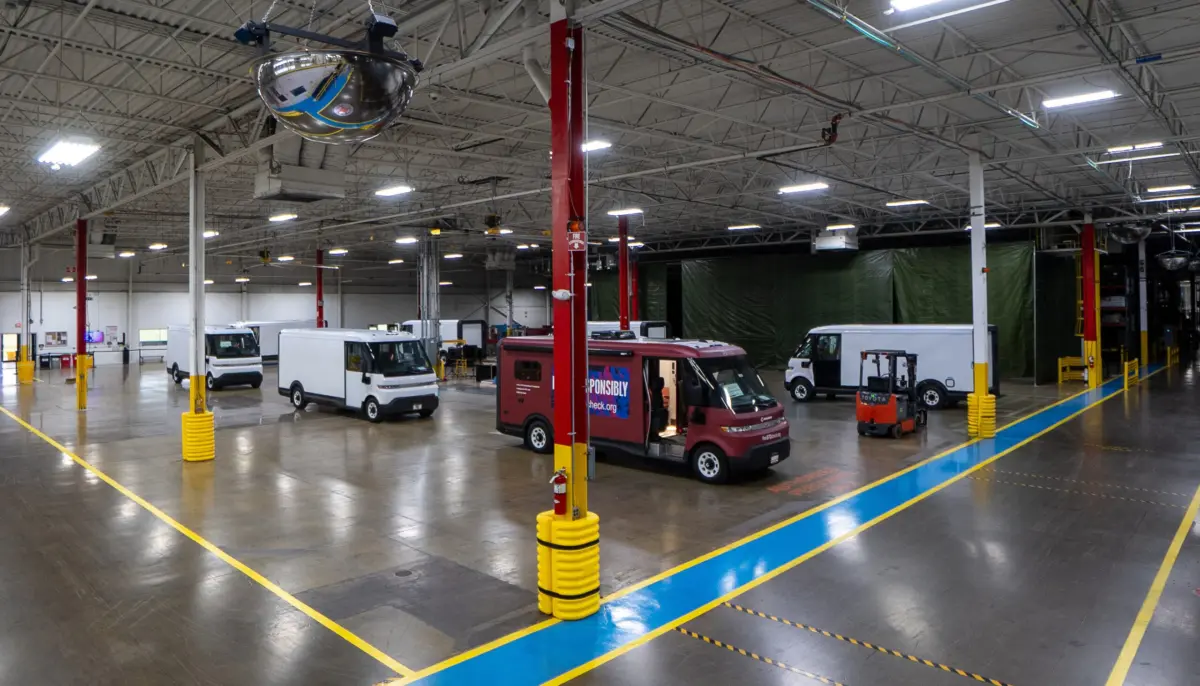
Simultaneously, Grounded is throwing open the doors to a sprawling, brand-new 50,000-square-foot manufacturing facility in Detroit. This industrial expansion allows the company to transition its modular design business from a niche consumer play into a vehicle-agnostic commercial powerhouse. Production at the facility kicks off this month, with manufacturing capacity slated to ramp up significantly through next year.
The journey from electric camper van startup to a diversified, vehicle-agnostic fleet upfitter offers a masterclass in modern industrial resilience. It reveals how agile hardware startups can survive—and thrive—when the original thesis of an entire industry hits a brick wall.
Executive Overview
To understand Grounded’s current trajectory is to understand a fundamental reframing of what the company actually is. As CEO Sam Shapiro explicitly laid out in a pivotal blog post late last year, "Grounded is not an ‘EV company,’ nor is Grounded a vehicle company at all."
Instead, Grounded operates in the application layer of mobility. The startup builds smart, high-tech, modular workspaces and living environments that sit directly on top of a vehicle’s chassis. Utilizing proprietary design, advanced materials, sophisticated power systems, and its custom "Grounded+" software, the company transforms a raw vehicle shell into a fully connected mobile healthcare clinic, a police command center, a commercial delivery vehicle, a mobile coffee shop, or a luxury camper van.
By detaching its software and modular architecture from any single powertrain, Grounded has decoupled its business model from the unpredictable whims of the consumer EV market.
Key Milestones at a Glance:
- Founded: 2022 in Detroit, Michigan.
- Initial Concept: Modular, "Lego-like" conversions of electric vans (Ford E-Transit, GM BrightDrop) for the consumer "van life" market.
- Strategic Pivot: Transitioning toward commercial, medical, and municipal fleets following broader EV market stagnation and OEM cancellations (such as GM sunsetting BrightDrop).
- Recent Funding: $5 million seed round announced, featuring Also Capital, The 81 Collection, Animal Capital, the Michigan Outdoor Innovation Fund, and SpaceX alumni.
- Manufacturing Expansion: A new 50,000-square-foot facility in Detroit opens for production, enabling vehicle-agnostic commercial scaling.
Detailed Chronology: From Van Life Dreams to Commercial Reality
Phase 1: The Electric Camper Genesis (2022–2023)
When Grounded first emerged from the industrial ecosystem of Detroit, the timing seemed propitious. Automakers were pouring billions into commercial electric vehicle architectures. Fleets were under intense pressure to decarbonize, and consumer interest in remote work, outdoor recreation, and alternative living arrangements skyrocketed in the wake of the COVID-19 pandemic.
Grounded’s value proposition was straightforward: leverage modular interior components that could be snapped together, rearranged, or swapped out with minimal tooling. This reduced the time and labor required to upfit a van compared to traditional, bespoke woodworking and custom cabinetry methods used in the traditional RV industry.
By targeting electric platforms like the Ford E-Transit and GM’s newly minted BrightDrop electric delivery vans, Grounded positioned itself at the bleeding edge of the green transition. The company attracted early attention for its ability to deliver slick, app-controlled climate systems, solar-integrated roofs, and modular furniture layouts.
Phase 2: Spotting the Commercial Opportunity
As Grounded deployed its initial consumer-facing vehicles, the founding team noticed a glaring discrepancy in the market. While consumers loved the modular setup, small businesses, municipal agencies, and corporate fleets were practically begging for similar efficiencies.
Small business owners—from mobile dog groomers to HVAC technicians and urban couriers—faced massive downtime when getting commercial vehicles upfitted. Traditional upfitting shops operated on slow, analog timelines, often taking months to turn around a single custom van. Grounded realized its "Lego-like" modular approach could drastically slash lead times for commercial clients, transforming a recreational luxury into an essential enterprise tool.
Phase 3: Industry Headwinds and the BrightDrop Shock (Late 2023–2024)
However, the broader market macroeconomic reality began to shift. High interest rates, persistent supply chain hiccups, and slower-than-projected consumer adoption rates made electric vehicles a significantly harder sell in the United States. Fleet operators found themselves grappling with inadequate public charging infrastructure, high upfront capital costs, and range anxiety.
Then came the structural shocks from Detroit’s legacy automakers. General Motors made the strategic decision to discontinue BrightDrop as a standalone brand and restructure its operations, pulling the rug out from under startups that had built their product roadmaps around the platform. Simultaneously, Ford quietly axed its plans for a next-generation electric Transit van, forcing EV-exclusive startups to re-evaluate their supply chains.
For many early-stage companies, these combined blows would have proved fatal. For Grounded, they served as a catalyst for a radical, unfiltered self-assessment.
Phase 4: The Pivot to Vehicle-Agnostic Agility (Late 2024–Present)
Rather than doubling down on a purely electric roadmap that depended on vehicles automakers were canceling, Shapiro and his leadership team made a pragmatic choice. They decided to embrace internal combustion engine (ICE) vehicles, unlocking compatibility with high-volume, highly reliable platforms like the Ford Transit (gas-powered) and the Mercedes-Benz Sprinter.
This pivot allowed Grounded to instantly capture a much larger addressable market: fleet customers who loved the modular software and workspace design of Grounded products but whose operational realities—such as rural routes or lack of depot charging—prevented them from going fully electric.
To bridge the gap between electric ambition and combustion pragmatism, Grounded also secured partnerships with emerging alternative-powertrain companies, such as commercial EV startup Harbinger, to integrate hybrid and electric options as demand warrants.
Supporting Context & Metrics: Diversifying the Fleet
The success of Grounded’s pivot is evidenced not just by its fresh capital infusion, but by the impressive diversity of its growing client roster. By abandoning the dogmatic pursuit of 100% EV exclusivity, Grounded opened its doors to institutional, medical, and corporate buyers who require dependable, purpose-built mobile workspaces regardless of what burns under the hood.
Enterprise and Institutional Adoption
While the startup maintains its roots in customization, its enterprise footprint has expanded dramatically. Grounded has secured contracts with major multinational corporations such as Colgate and Nokia, which utilize the company’s modular builds for specialized field operations, marketing activations, and mobile technical units.
The medical and public health sectors have proven to be an equally fertile ground for growth. Institutions like Wayne State University Medical and the Healthy Mothers, Healthy Babies Coalition of Hawaii have deployed Grounded-upfitted vehicles to serve as mobile clinics, bringing healthcare resources directly to underserved or remote communities.
According to Chief Product Officer Nadia Meyer, the company is also witnessing "notable growth" across food and beverage vendors, veterinary services, and public safety organizations requiring mobile command centers.
The New Detroit Factory: Scaling for Fleet-Level Demand
The newly opened 50,000-square-foot manufacturing facility in Detroit represents the physical manifestation of this growth. Traditional upfitting is notoriously labor-intensive and difficult to scale, relying on craftspeople custom-building interiors by hand.
Grounded’s modular system inherently lends itself to semi-automated manufacturing processes, pre-fab sub-assemblies, and standardized quality control. By moving into a facility capable of scaling up production significantly through next year, Grounded can now fulfill large fleet orders for commercial customers who require dozens—or even hundreds—of identical, upfitted vehicles deployed on tight corporate timelines.
"This new facility is a turning point for Grounded," CEO Sam Shapiro said in a statement. "We built this company to bring smart, modular electric vehicles to the businesses and institutions that keep our cities running. With this expansion, we can finally build at the scale our fleet customers need and bring our platform to an entirely new class of commercial vehicles."
Official Statements and Industry Insights
The infusion of $5M in seed funding, paired with backing from institutional venture firms and technical investors like SpaceX alumni, underscores a growing investor appetite for hardware-enabled software plays that avoid the capital traps of full vehicle manufacturing.
Investors are increasingly wary of "vertical integration trapdoors"—the immense cash burn associated with designing proprietary chassis, building crash-test frames, and engineering powertrains from scratch. Grounded’s asset-light approach—letting legacy automakers or dedicated chassis builders handle the heavy metal while Grounded owns the high-margin "application layer" on top—presents a far more palatable risk profile for venture capital.
"Grounded is not an ‘EV company,’ nor is Grounded a vehicle company at all," Shapiro emphasized in his watershed blog post.
"We build the smart, high-tech, modular workspace or living space on top of the chassis: the design, materials, power system, and Grounded+ software that turn a vehicle into a modern, connected mobile healthcare vehicle, command center, camper van, coffee shop, and more. The application layer on top of the vehicle is our product."
This distinction is crucial for understanding why investors lined up for this seed round even as broader venture funding for mobility startups remains tight. By positioning itself as a software-and-systems upfitter rather than an OEM, Grounded can pivot fluidly alongside the automotive market. If hydrogen fuel cells, hybrids, or advanced ICE vehicles dominate commercial fleets for the next decade, Grounded’s modular architecture can bolt onto them just as easily as an electric battery pack.
Future Outlook: Navigating the Road Ahead
As Grounded ramps up operations at its new Detroit factory this month, the company stands at a fascinating crossroads in American industrial history.
Detroit has spent the better part of a decade trying to reinvent itself as the Silicon Valley of hardware, chasing the elusive dream of home-grown electric vehicle startups. Yet, the road is littered with bankruptcies, missed production targets, and retreating corporate strategies.
Grounded’s survival and recent expansion suggest a different, more sustainable blueprint for the Motor City’s future. By combining the digital-first ethos of modern software development with the gritty, practical pragmatism of traditional Detroit manufacturing, the startup has found a way to deliver what fleet managers actually want: speed, flexibility, and reliability.
Looking ahead, the primary challenge for Grounded will be execution. Scaling a 50,000-square-foot facility requires tight operational discipline, robust supply chain management, and maintaining rigorous quality control across a rapidly diversifying array of vehicle models—from Mercedes Sprinters and Ford Transits to emerging EV platforms like Harbinger.
If Grounded can successfully execute its vehicle-agnostic playbook without losing the agile, modular magic that defined its early days, it may prove that the most successful companies in the modern transportation revolution aren’t the ones building the cars at all. They are the ones smart enough to build everything else that goes inside them.