Executive Overview
The rapid democratization of software development through generative artificial intelligence has fundamentally altered how digital products are conceived, built, and deployed. While AI-driven coding assistants have exponentially increased raw code generation, they have simultaneously introduced unprecedented friction into cross-functional workflows.
Software engineers, application designers, and product management teams frequently find themselves working in isolated silos, struggling to bridge the gap between abstract design logic and functional codebases. Traditional DevOps pipelines, originally architected for human-paced iteration cycles, are buckling under the sheer volume of code flooding repositories.
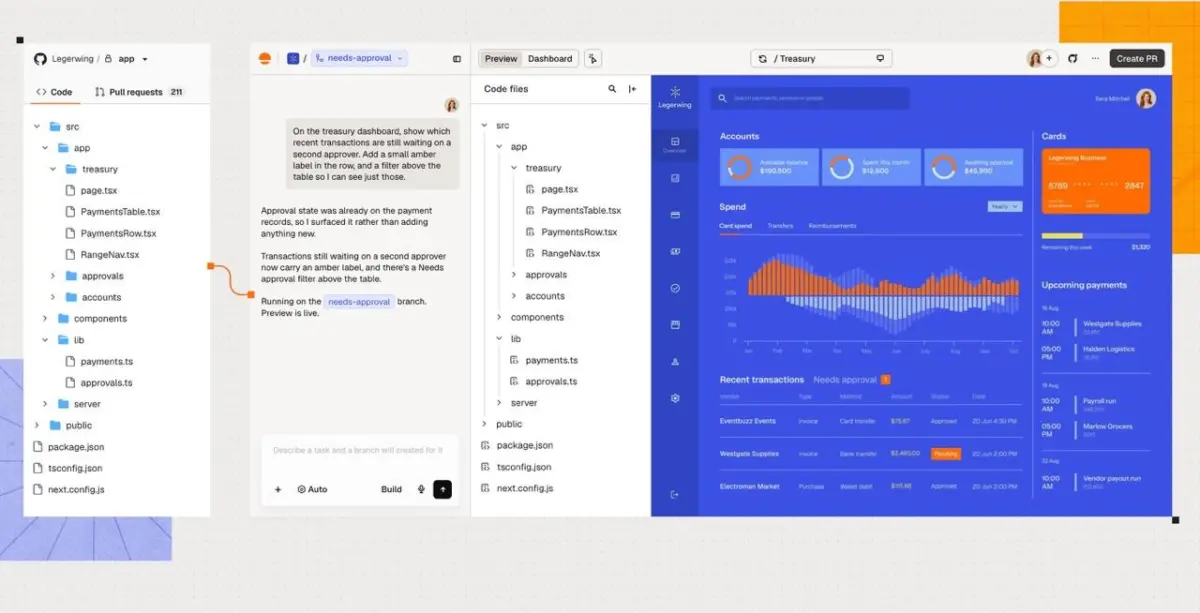
Enter Base44, which has officially launched Base Code, a cloud-based collaboration platform designed specifically to resolve this modern engineering bottleneck. By leveraging a proprietary artificial intelligence harness, Base Code analyzes existing GitHub-hosted codebases, automatically provisions required sandbox environments, and introduces a familiar, Figma-style workspace tailored for both developers and designers.
According to Base44 Chief Product Officer Yoav Orlev, the platform aims to eliminate the traditional friction points that slow down iterative development, making it significantly easier for non-traditional developers and designers to interact directly with application code while keeping software engineers firmly in the loop.
Detailed Chronology & Technological Architecture
The Genesis of Base Code
The development of Base Code was driven by an observation common to modern software organizations: although coding assistants have made individual contributors hyper-efficient, the collaborative lifecycle of an application remains fractured. Teams waste countless hours translating design specifications into functional code, setting up local development environments, and managing architectural dependencies.
During the platform’s official rollout, Base44 detailed how the system bridges these disparate workflows. Rather than treating design and engineering as sequential steps, Base Code introduces a unified cloud ecosystem where both disciplines intersect in real time.
The AI Harness and Automated Sandboxing
At the technological core of Base Code is an advanced AI harness developed by Base44. Unlike standard single-model coding plugins, this harness orchestrates multiple AI models simultaneously to interrogate and interpret a codebase residing within a GitHub repository.
- Repository Ingestion: The AI harness scans the target GitHub repository, mapping out dependencies, structural patterns, and application requirements.
- Requirement Discovery: Based on insights gathered from the codebase, the system identifies operational needs—such as underlying databases, caching layers, or specific microservice architectures—that must be active for the application to function.
- Automated Provisioning: The platform dynamically spins up secure, isolated sandbox environments tailored precisely to these discovered requirements, removing the manual setup burden traditionally borne by software engineers.
The Figma-Style Workspace Interface
Once the environment is live and configured, application designers and developers gain access to a specialized collaborative workspace. Modeled deliberately after Figma—the ubiquitous vector graphics and UI/UX design tool—the interface bridges the cognitive gap between visual layout and underlying syntax.
Designers can inspect, modify, and review application code within an environment that feels native to their daily workflows, while software engineers retain complete oversight via structured pull requests (PRs). By democratizing direct code interaction without sacrificing architectural integrity, Base Code significantly accelerates the iterative feedback loop.
Supporting Context & Metrics: The Crisis in Modern DevOps
The Code Generation Paradox
To understand the necessity of platforms like Base Code, industry analysts point to a mounting crisis within enterprise software pipelines. Generative AI tools allow developers and "citizen developers" to spin up boilerplate code and complex features in seconds. However, this velocity creates a severe downstream crisis for DevOps and platform engineering teams.
Key structural challenges facing modern software organizations include:
- The Review Bottleneck: Human reviewers are physically incapable of vetting the sheer volume of pull requests generated by augmented teams. Consequently, a concerning volume of unvetted code slips quietly into production environments.
- Siloed Tooling: Designers operate in visual design systems, developers work in Integrated Development Environments (IDEs), and product managers track milestones in agile boards. The lack of unified tooling forces manual context-switching, introducing human error and communication lag.
- Environment Configuration Drag: Manually provisioning staging and sandbox environments consumes thousands of engineering hours annually, stalling rapid prototyping and continuous delivery initiatives.
The Rise of Agentic Engineering
As Orlev noted during the platform launch, the traditional boundaries separating software engineers from product designers are dissolving. Citizen developers—business analysts, product designers, and operations specialists—are increasingly participating in software creation workflows.
Without centralized orchestration, this democratization threatens to plunge enterprise IT departments into chaos. DevOps teams require cloud-native platforms that can supervise these expanding ecosystems invisibly, ensuring governance and security without acting as a bureaucratic roadblock to delivery speed.
Official Statements and Industry Insights
In detailing the strategic vision behind Base Code, Base44 leadership emphasized that simply distributing AI coding assistants to a workforce is no longer enough to maintain a competitive edge.
"At the core of the Base Code platform is a harness the company developed that enables multiple AI models to be used to analyze a codebase hosted in a GitHub repository," explained Yoav Orlev, Chief Product Officer for Base44. "Those insights are then used to spin up a sandbox environment for application developers and designers based on service requirements discovered by the AI harness."
Orlev further elaborated on the user experience and cultural shift the platform seeks to foster:
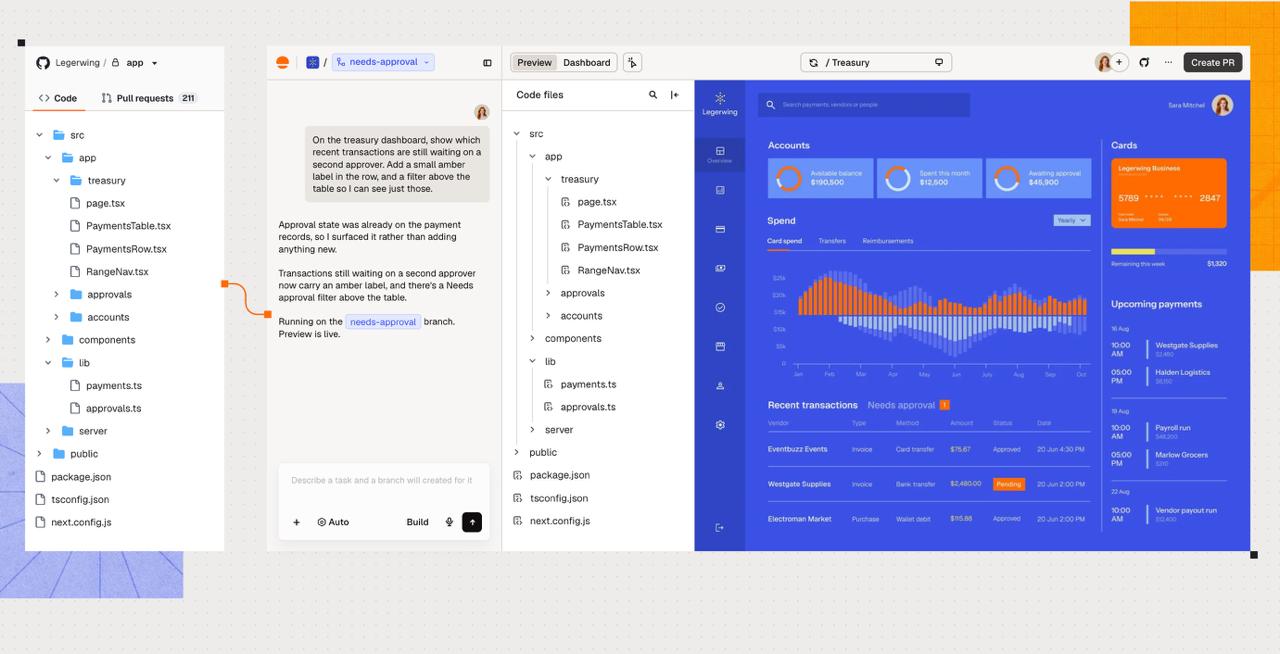
"Once configured, designers and application developers can interact with code in a workspace that is based on a familiar Figma-style interface that many of them already use to build web applications. The overall goal is to reduce the level of friction that teams of developers and designers often experience when iteratively building applications in a way that also makes it simpler for software engineers to review the pull requests those teams generate."
Addressing the macro-level industry trends driving the adoption of such technologies, Orlev emphasized that organizations must evolve their software delivery lifecycles (SDLC) or risk severe operational stagnation:
"As application development continues to evolve in the AI era, the line between application developers and designers will continue to blur, especially as AI coding tools enable more so-called citizen developers to participate in the workflows used to build and deploy applications… DevOps teams will need to deploy a cloud-based platform to supervise those interactions without having to necessarily participate directly in each workflow."
Future Outlook: Navigating the AI-Driven SDLC
The Evolution Toward Agentic Oversight
Looking ahead, the software development industry stands at a critical crossroads. The current model—where human engineers manually review every line of code generated by human-AI hybrid teams—is mathematically unsustainable.
Industry consensus points toward a future defined by agentic engineering, where AI agents assist not only in writing code but also in reviewing, testing, and validating pull requests. Platforms that fail to integrate agentic governance into their SDLC will likely find their CI/CD pipelines hopelessly gridlocked by their own productivity gains.
Strategic Imperatives for Enterprises
For enterprise leaders and DevOps architects evaluating their toolchains in light of Base44’s announcements, several critical action items emerge:
- Re-evaluate Cross-Functional Collaboration: Break down traditional barriers between design, product, and engineering. Implement shared workspaces that translate visual elements into code syntax seamlessly.
- Automate Environment Provisioning: Eliminate manual infrastructure setups by adopting AI-driven harnesses capable of inspecting codebases and deploying contextual sandbox environments on demand.
- Embrace Intelligent Governance: Transition toward automated, agent-assisted code review processes to manage the massive influx of pull requests generated by AI-augmented teams.
- Avoid the Laggard Penalty: Organizations that delay modernizing their SDLC for the AI era will find themselves outpaced by competitors capable of shipping iterative updates at unprecedented scale.
Conclusion
Base44’s introduction of Base Code represents a mature acknowledgement of the challenges ushered in by the generative AI revolution. By combining multi-model AI code analysis, automated sandbox provisioning, and a design-centric workspace, the platform offers a compelling blueprint for how multidisciplinary teams can collaborate harmoniously. As the scale of software deployment approaches levels previously thought unimaginable, mastering the intersection of AI, design, and DevOps will separate market leaders from the rest of the pack.