Executive Overview
For at least 100,000 years, humanity has engaged in spoken communication, yet through the vast majority of that history, only one entity in the known universe could master a human language to absolute fluency: a human child. Today, that exclusivity has vanished. Modern Large Language Models (LLMs) such as Claude, DeepSeek, and OpenAI’s GPT variants converse with fluid versatility, seamlessly masquerading as human beings.
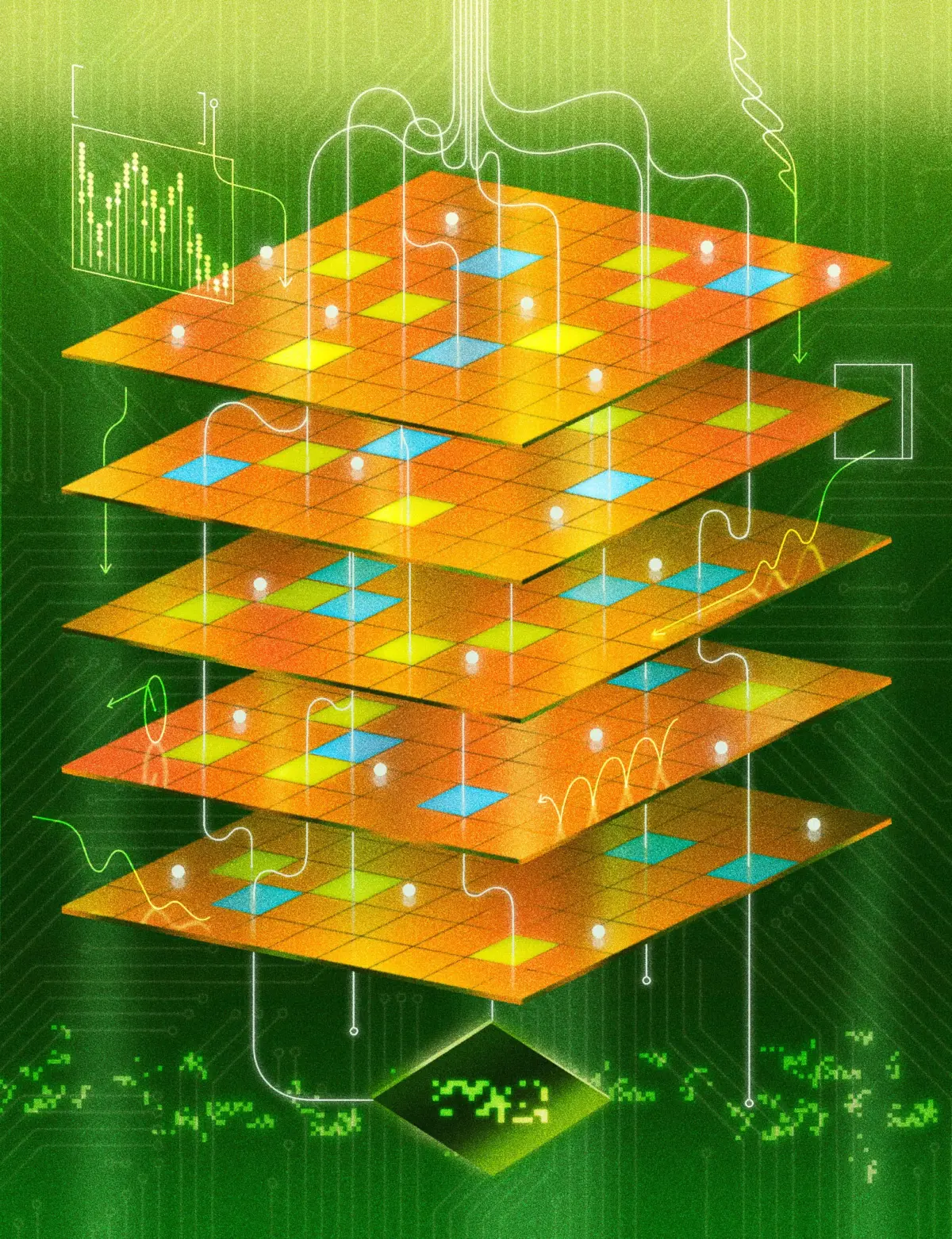
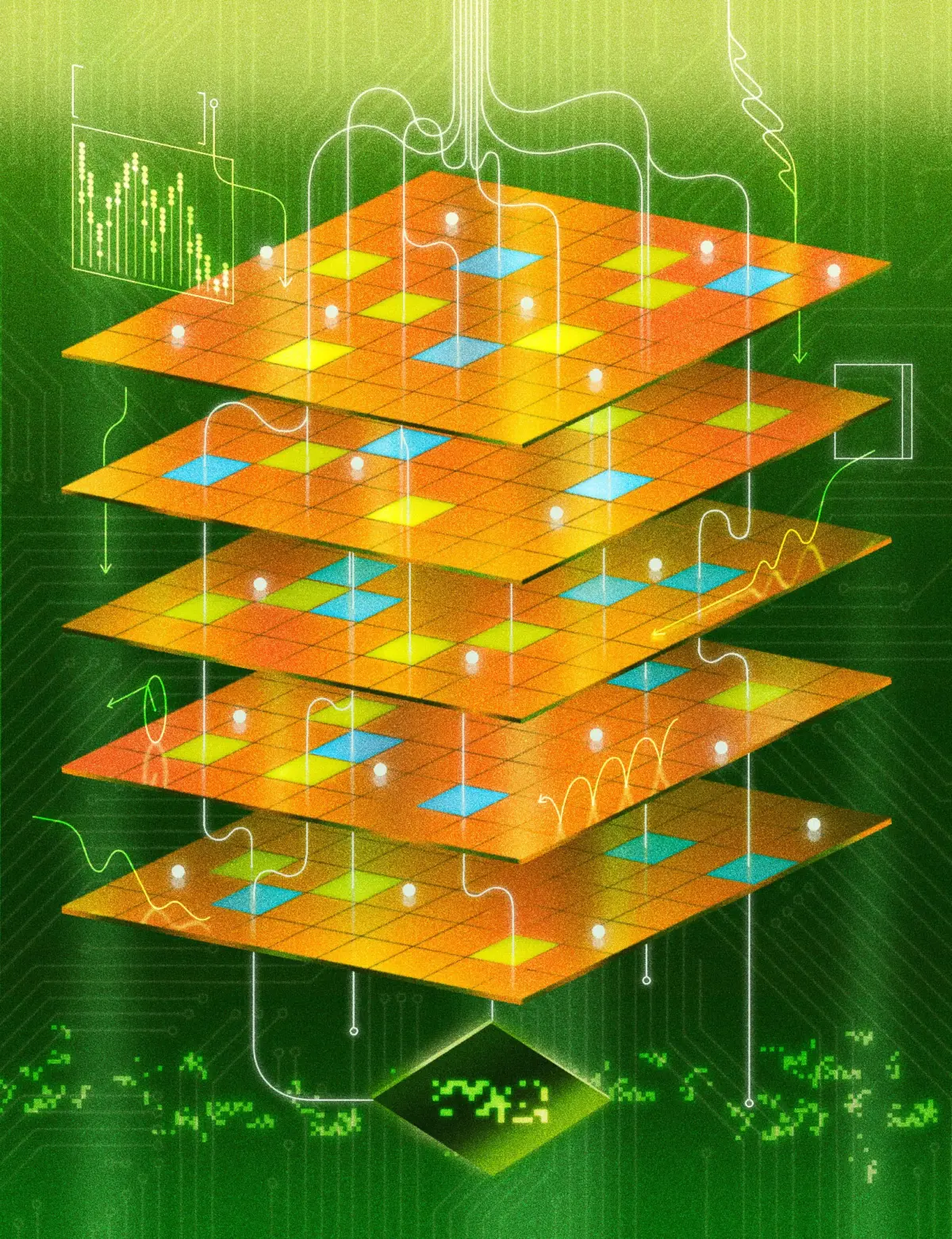
Yet, when we peer behind the computational curtain, a profound vulnerability reveals itself. Teaching an artificial intelligence to achieve linguistic fluency requires an industrial, almost consumption-heavy amount of data. Cutting-edge LLMs churn through trillions of tokens—up to a hundred thousand times more words than a human encounters while mastering their native tongue. This stark disparity is known among cognitive scientists and artificial intelligence researchers as the data efficiency gap.
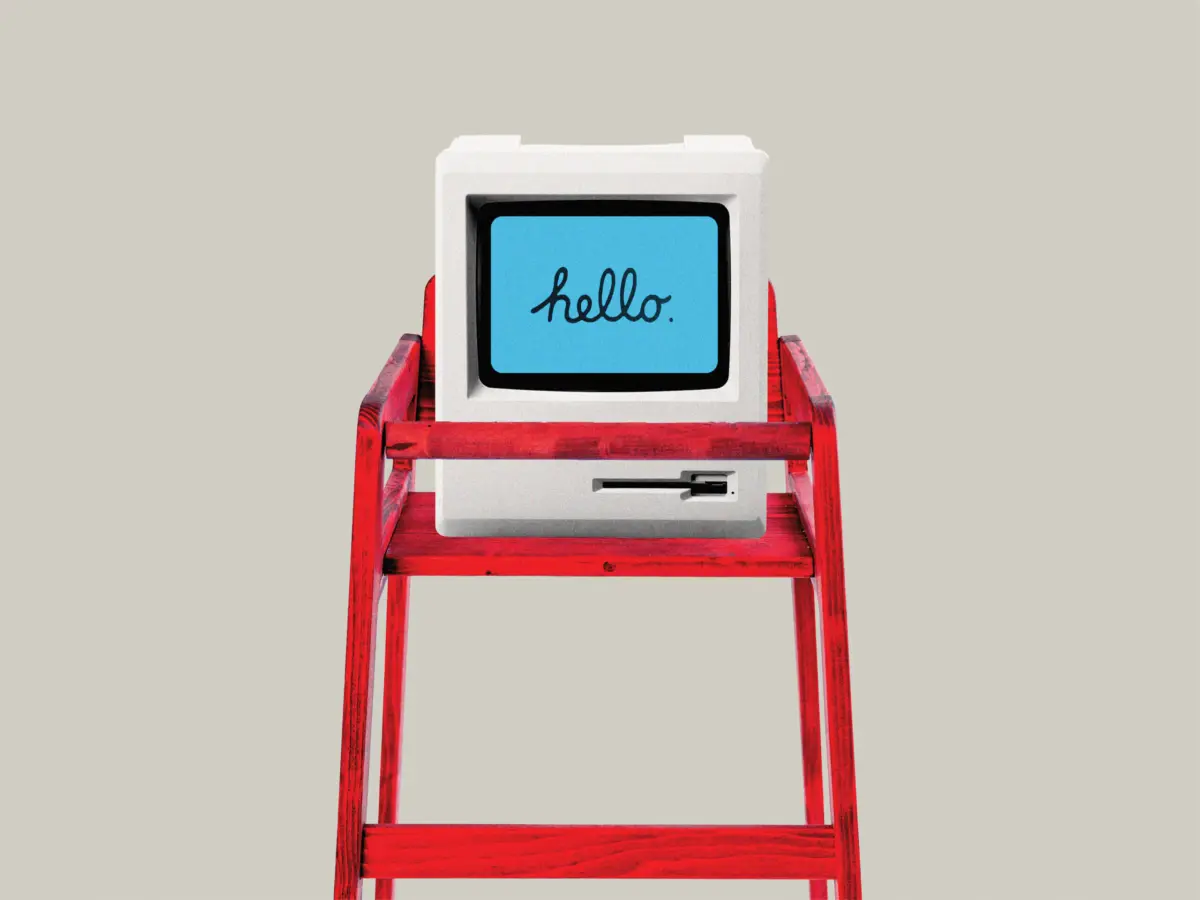
As frontier AI models rapidly approach a hard ceiling imposed by the finite scale of human internet text—with data supplies potentially drying up by the 2030s—researchers are urgently pivoting toward a radical new source of inspiration: human infants. By reverse-engineering how a toddler processes a mere fraction of the language that feeds a data-center-scale neural network, scientists hope to pioneer a new generation of data-efficient models. This endeavor not only promises to democratize artificial intelligence for minority languages and resource-constrained institutions, but it also serves as a mirror for cognitive science, forcing a re-examination of how human minds acquire language, process meaning, and make sense of the world.
Detailed Chronology: From Chomsky’s Rule-Bound Theories to the Transformer Era
To understand the magnitude of today’s data efficiency gap, one must trace the historical pendulum swing between nativist theories of mind and statistical machine learning.
The Mid-20th Century: The Chomskyan Revolution and Symbolic AI
In the 1950s, linguistics was revolutionized by MIT linguist Noam Chomsky, who aggressively pushed back against behaviorist psychology championed by B.F. Skinner. Skinner argued that language was acquired entirely through environmental conditioning and reinforcement, much like a dog learning to sit for a treat.
Chomsky countered with the concept of the "poverty of the stimulus." He asserted that human syntax—with its recursive, nested structures capable of generating infinite unique thoughts from a finite lexicon—is far too complex, and a child’s exposure to it far too sparse, for learning to happen purely through surface-level statistics. Instead, Chomsky argued that humans are born with an innate, hardwired biological grammar—a universal blueprint that allows children to deduce complex syntax from fragmented, imperfect speech.
During the first major artificial intelligence booms of the 1950s and 1960s, driven largely by Cold War funding for English-Russian translation, computer scientists heavily embraced Chomskyan paradigms. This gave rise to symbolic AI, an approach that attempted to manually program explicit grammatical rules into computers rather than letting machines learn from raw experience. Unsurprisingly, this rigid methodology struggled to scale, ultimately plunging the field into the structural doldrums known as the "AI winter" of the 1970s.
The Rise of Neural Networks and the Transformer Breakthrough
As computational hardware grew cheaper and the internet blossomed, connectionism—specifically neural networks designed to recognize statistical patterns—gradually clawed its way back into prominence. However, it was not until the late 2010s, with the invention of the transformer architecture, that the paradigm fundamentally shifted.
When models like BERT and GPT-2 debuted in 2018 and 2019, trained on billions of digital tokens, they demonstrated something that generation after generation of generative linguists deemed theoretically impossible: statistical pattern-matching machines, devoid of biological cortices or innate grammar rules, could successfully deduce human syntax simply by analyzing the raw probabilities of massive textual corpuses. By 2022, the explosive public release of ChatGPT made it plain to the world that brute-force statistical learning worked.
The Birth of BabyLM and Alternative Benchmarks
Realizing that frontier models were relying on unsustainable amounts of data, a new academic movement emerged in the early 2020s. Prompted by foundational conversations between linguists like Alex Warstadt and AI researchers like Leshem Choshen, the BabyLM challenge was born in 2022.

The annual competition forces researchers to train language models on a developmentally plausible corpus of just 100 million words (or 10 million words for the toddler-scale track)—drawn from children’s books, dialogue, movie subtitles, Wikipedia, and transcripts of speech directed at children. Evaluated on the same psycholinguistic grammar benchmarks used for humans, these models have challenged core assumptions in the field, proving that transformer architectures do not necessarily require complex curriculum learning (starting simple and working up to complex syntax) to learn effectively.
Supporting Context & Metrics: The Scale of the Divide
The gulf separating human language acquisition from large language model pretraining can scarcely be understood without looking closely at the sheer scale of the metrics involved.
- Human Scale vs. Machine Scale:
- A preteen raised in a linguistically rich household will hear roughly 100 million words. Adding literacy pushes that count to roughly 300 million words by age 20.
- Meta’s Llama 3.1, by contrast, ingested 15 trillion tokens during pretraining. Frontier models currently under development are projected to consume an order of magnitude more.
- Physical Analogies of Data Volume:
- If you were to print out all the text used to train a modern frontier LLM, the resulting stack of paper would soar past the International Space Station.
- Conversely, a human preteen’s lifetime exposure of 100 million spoken words, if printed out, would stack up to a modest 20 meters.
- The "Nonsense Generator" Threshold:
- According to Stanford cognitive scientist Michael C. Frank, training an older architecture like GPT-2 on a human-scale dataset of 30 million words does not produce a child; it produces an incoherent nonsense generator. This underscores that raw volume is not the only variable at play—the structural nature of the input matters profoundly.
Official Statements & Expert Insights
Leading minds across cognitive science, developmental psychology, and machine learning have increasingly weighed in on the profound implications of closing this data gap.
-
Michael C. Frank (Stanford University):
"The progress recently has been amazing. But we still have to burn down a forest and scrape the entire sum of all human knowledge to re-create this milestone that happens in our living rooms over the course of a year… If you train GPT-2 on 30 million words, you get a nonsense generator; you don’t get a kid."
-
Ethan Gotlieb Wilcox (Georgetown University):
"Claude has seen the amount of language that an entire city will experience in one generation… There’s only so much internet to train on, and eventually—perhaps as early as the 2030s—the well of easily available data could run dry."
-
Alison Gopnik (University. of California, Berkeley):
"No matter how skeptical you are about AI, the thing that everyone has been really impressed with is: These things learn syntax. I didn’t think that was going to turn out to be true. And I think most people didn’t think that you could just look at the statistics of a large sample of language and figure out grammar."
-
Brenden Lake (Princeton University):

Commenting on models trained on raw audiovisual headcam datasets (such as SAYCam): "It turns out you can get a real start on language learning using a lot less than what a number of theories suggested… Still, we don’t get a two-year-old out of training when we’re done."
Future Outlook: Embodied AI and the Path Forward
If current text-only transformers cannot replicate human data efficiency, what is the missing ingredient? Researchers increasingly agree that the answer lies in embodied, multimodal learning and active exploration.
1. Moving Beyond Text: Headcams and 24/7 Home Monitoring
Historically, data collected on infant environments was limited to sparse snapshots—such as the pioneering SAYCam dataset, which recorded a few hours a week of headcam footage. However, recent breakthroughs are changing the game. Developmental psychologists and neuroscientists, such as Princeton’s Uri Hasson, have recently orchestrated large-scale longitudinal projects recording the first 1,000 days of young children’s lives using multi-room home cameras and microphones capturing 12 hours a day. Powered by modern AI transcription and video analysis tools, these massive audiovisual repositories provide machines with the raw, multimodal inputs that children actually experience.
2. Active Exploration and Social Reasoning
As developmental psychologist Elizabeth Bonawitz points out, children do not sit passively in isolation absorbing words like a microphone; they are active agents. Kids experiment with cause and effect to maximize their "empowerment"—the ability to make a predictable impact on the physical world. Furthermore, children exhibit sophisticated social reasoning: when an adult speaks to them, they evaluate the teacher’s knowledge state and intentions.
Future iterations of AI may require architectures that actively seek out information to fill their own blind spots, experiment with babbling, and dynamically interact within simulated social environments rather than simply consuming static, pre-scraped internet archives.
3. Democratization and Minority Languages
Beyond solving theoretical riddles in cognitive science, closing the data efficiency gap carries profound practical urgency. As machine-learning researcher David Samuel of the University of Oslo points out, minority languages like Sami or Czech lack the multi-trillion-token internet archives available to English. By engineering language models capable of learning effectively from the scale of a toddler’s exposure (tens of millions of tokens), researchers can democratize AI, ensuring that lower-resource languages are not left behind in the technological revolution.
Conclusion: The Ultimate Scientific Mirror
Ultimately, the most enticing reason to close the data efficiency gap is that it helps humanity understand itself. While brains are made of living, plastic neurons and LLMs are static arrays of linear algebra, using language models as "model organisms" allows scientists to test counterfactual hypotheses—such as simulating bilingualism or removing specific grammatical exposures—in ways that are ethically impossible with real children.
For the entirety of human history, humanity stood alone as the sole linguistic species in the universe. Now, alongside us, stands an artificial interlocutor. By teaching machines to learn more like children, we may finally unlock the deepest mysteries of our own minds.