Executive Overview
The global race to secure supply chains for critical hardware—ranging from military-grade autonomous drones to warehouse robotics—has reached a critical juncture. As policymakers in Washington and Brussels push aggressively to reshore manufacturing, a consensus has emerged that dependence on foreign entities, particularly China, represents a foundational vulnerability for Western national security and economic stability. While a wave of domestic startups is racing to build factories on U.S. soil, veteran engineer and entrepreneur Michael Van Steenburg argues that much of this domestic industrial policy is built on a flawed premise.
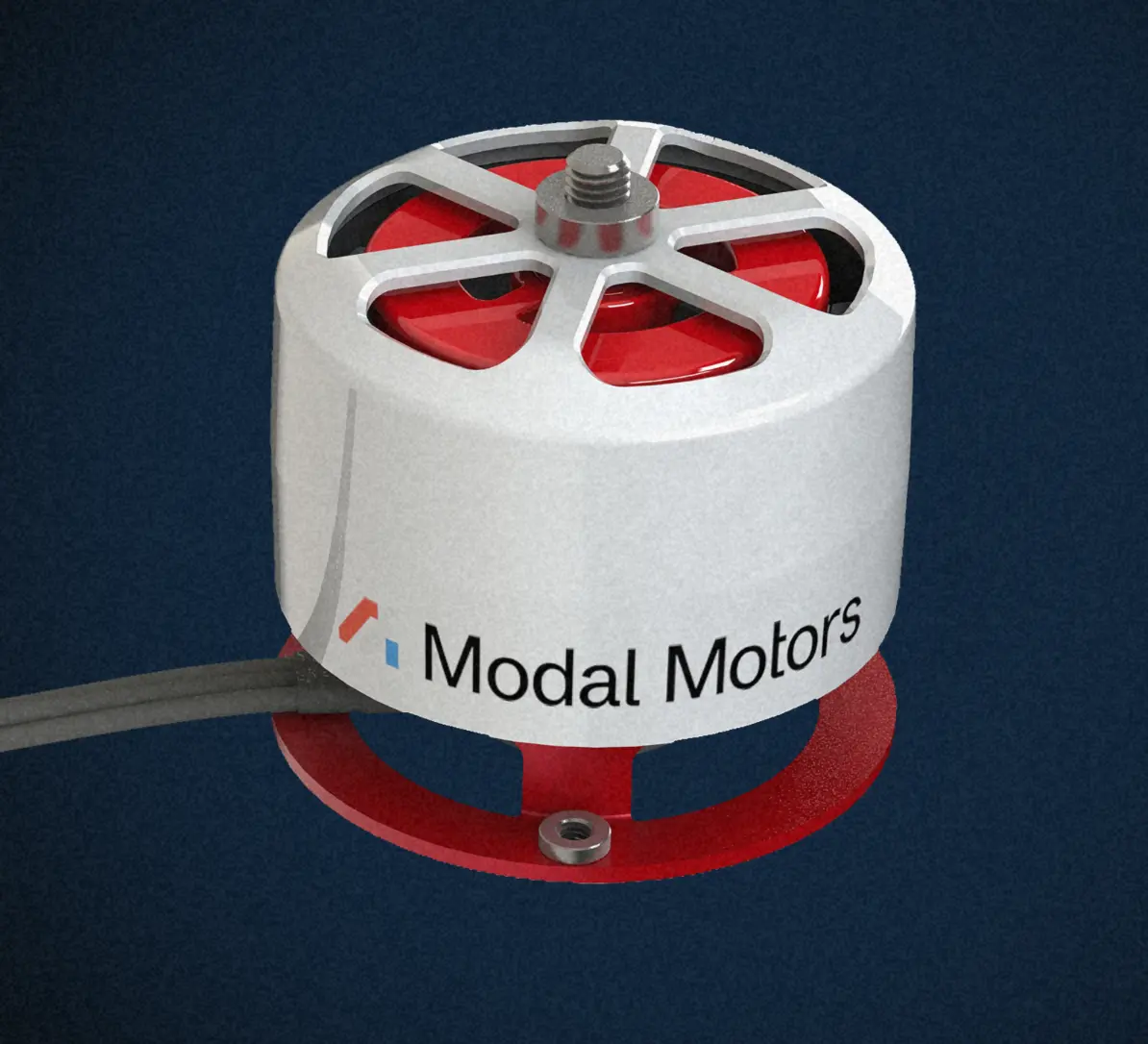
Enter Modal Motors, a nascent hard-tech startup positioning itself at the vanguard of a radical manufacturing revolution. Unlike competitors attempting to replicate Chinese motor designs domestically while gambling on an eventual, long-overdue U.S. rare-earth supply chain, Modal Motors is taking a more disruptive path: completely eliminating rare-earth magnets from its electric motors.
As one of the elite founders selected for the Startup Battlefield 200 at TechCrunch Disrupt, Van Steenburg is bringing an urgent message to the venture capital and tech communities. China’s proven willingness to weaponize its near-monopoly on rare-earth elements—restricting exports and tightening access to crucial raw materials—poses an immediate threat to the Western robotics and aerospace sectors. By developing high-performance, magnet-free electric motors tailored for drones, actuators, and compact machinery, Modal Motors aims to decouple American innovation from geopolitical leverage once and for all.
Detailed Chronology: From the "People’s Car" to the Magnet-Free Frontier
To understand Michael Van Steenburg’s vision for Modal Motors, one must examine a career spanning decades of propulsion engineering across North America’s automotive and electric vehicle sectors. His journey mirrors the broader arc of modern manufacturing—from early globalization experiments to the stark geopolitical wake-up call of the 2020s.
The 1990s: Globalization and the "People’s Car"
In the late 1990s, the global automotive industry was caught up in an era of boundless optimism regarding cross-border collaboration. During this period, Van Steenburg worked on cutting-edge hybrid gas-electric drivetrains—technology that, at the time, caught the eye of international markets, including Chinese entities looking to develop the so-called "People’s Car."
Looking back, Van Steenburg views the irony with a wry smile. The very manufacturing ecosystems that Western engineers helped cultivate or engage with decades ago have since evolved into centralized behemoths. What began as an era of open-market partnership slowly transformed into a concentrated, state-backed consolidation of the world’s most critical mineral reserves.
The Two-Decade "Slow-Motion Train Wreck"
Over the next twenty years, while Western markets focused heavily on software, consumer internet applications, and financial engineering, Van Steenburg watched what he describes as a "slow-motion train wreck."
- The Mineral Grab: Quietly and systematically, Chinese state-backed entities secured mining concessions, refining facilities, and mineral rights across the globe, establishing a near-total monopoly over the processing of rare-earth elements (REEs) such as neodymium, praseodymium, and dysprosium.
- The Industrial Dependency: Because rare-earth permanent magnets offer unmatched power density and efficiency, nearly every major electric vehicle, drone, and industrial robot manufacturer became utterly dependent on these imported components.
- The Awakening: It was only recently—spurred by pandemic-era supply chain fractures, escalating trade tensions, and direct export curbs by Beijing—that Western governments and industries woke up to the reality of their reliance.
The Founding of Modal Motors and the TechCrunch Disrupt Spotlight
Recognizing that domestic "reshoring" efforts were merely replicating foreign blueprints using unavailable local materials, Van Steenburg founded Modal Motors. Drawing on his extensive background building electric motors throughout North America, he set out to build a company designed from day one to withstand geopolitical shocks.
Now, as a selected contender in the Startup Battlefield 200 at TechCrunch Disrupt, Modal Motors is stepping onto one of the industry’s largest global stages. The timing could not be more critical. With Beijing having already demonstrated its willingness to flex its muscle by restricting rare-earth exports prior to high-level diplomatic summits, the market is urgently seeking alternatives that do not rely on Chinese raw materials.
Supporting Context & Metrics: The Anatomy of Rare-Earth Dependency
To grasp the magnitude of Modal Motors’ engineering challenge, one must examine the metrics governing modern electric propulsion and the geopolitical choke points surrounding it.
The Rare-Earth Dilemma
Permanent magnets containing rare-earth elements have long been the gold standard for electric motors because they generate strong magnetic fields relative to their size and weight. This yields high torque density—crucial for applications where every gram matters, such as aerospace drones and agile robotics.
However, the supply chain for these materials is fraught with vulnerabilities:
- Extraction vs. Refining: While rare-earth elements are not entirely absent in the United States and other Western nations, the complex, environmentally hazardous refining and separation processes are overwhelmingly concentrated in China.
- Time Horizons for Domestic Supply: Industry analysts estimate that establishing a fully operational, end-to-end U.S. rare-earth mining, processing, and magnet-manufacturing ecosystem will take many years, if not decades.
- The "Reshoring" Illusion: As Van Steenburg points out, many domestic startups boasting "Made in America" labels are essentially building clone motors that require Chinese-supplied magnets, simply betting that local supply chains will mature before geopolitical flashpoints boil over. Modal Motors views this as a dangerous gamble.
Modal Motors’ Technological Approach
To bypass this dependency entirely, Modal Motors is advancing two distinct product lines engineered for high efficiency without the use of rare-earth magnets:
- High-Performance Drone Motors: Designed primarily for unmanned aerial vehicles (UAVs), this compact electric motor is equally suited for auxiliary applications such as cooling fans, blowers, and precision actuators. The engineering focus is strictly on minimizing mass while maximizing torque density and thermal efficiency—a historically difficult feat for non-rare-earth designs.
- The "Hybrid Enigma Drive": Modal’s more radical engineering endeavor is a planar (flat) electric motor designed to integrate into ultra-low-profile spaces. By rethinking the geometric arrangement of the electromagnetic fields, the Hybrid Enigma Drive opens up new form factors for robotics and electric mobility where traditional cylindrical motors simply will not fit.
Official Statements & Industry Perspectives
The debate over hard-tech manufacturing sovereignty has drawn sharp commentary from industry leaders, geopolitical analysts, and founders on the front lines.
"China’s already flexed its muscles a couple times… I always tell people that the clock started ticking 25 years ago, and in that whole time, I’ve watched a slow-motion train wreck as China’s been going around the world, grabbing mines, grabbing mineral rights, doing all these things, and slowly but surely monopolizing the entire rare-earth supply chain."
— Michael Van Steenburg, Founder, Modal Motors
Van Steenburg’s critique cuts directly to the core of current U.S. industrial policy. While billions of dollars in federal subsidies via legislation like the CHIPS Act and the Inflation Reduction Act have stimulated interest in domestic manufacturing, hardware entrepreneurs argue that subsidies alone cannot instantly conjure raw materials and specialized refining infrastructure that took decades to outsource.
"Other people are ‘reshoring,’ [but] they’re basically knocking off Chinese motors and just doing it in the U.S. But they’re hoping that the U.S. rare-earth magnet system is going to get up to speed fast enough. It’s going to still be a while longer before they can actually replace China."
— Michael Van Steenburg
Industry observers note that venture capitalists are increasingly paying attention to these warnings. For years, hard-tech investments lagged behind software and consumer internet plays due to high capital expenditures and long development cycles. However, as geopolitical tensions mount, investors are pivoting toward foundational technologies that promise true supply chain independence.
Future Outlook: Can Magnet-Free Tech Win the Hard-Tech Race?
As Modal Motors prepares to present its pitch at TechCrunch Disrupt, the startup stands at a fascinating intersection of engineering innovation and macroeconomic necessity. The road ahead, however, is not without hurdles.
Challenges on the Horizon
- Performance Parity: Historically, electric motors built without rare-earth magnets have suffered from lower power density or heavier weight penalties. Modal Motors must prove to commercial drone operators and industrial robotics manufacturers that its designs can match or exceed traditional performance metrics.
- Manufacturing Scale: Transitioning from bespoke prototypes to mass production requires significant capital investment, rigorous quality control, and robust supply chains for alternative materials (such as advanced electrical steels and copper windings) that must themselves be sustainably sourced.
- Market Education: Convincing an entrenched industry to pivot away from legacy designs requires overcoming deep-seated engineering habits.
The Broader Implications for U.S. Hard Tech
Despite these challenges, the macroeconomic tailwinds heavily favor innovators willing to rethink foundational components. As trade restrictions tighten and national security concerns surrounding autonomous systems escalate, the demand for truly sovereign, tamper-resistant, and embargo-proof hardware will only intensify.
If Modal Motors can successfully scale its magnet-free drone motors and the Hybrid Enigma Drive, it will not only secure a lucrative niche in the booming UAV and robotics markets; it will also provide a blueprint for how American hard tech can break free from foreign supply chains once and for all. The competition at TechCrunch Disrupt will serve as an early indicator of whether investors and industry partners are ready to embrace this harder, but ultimately more secure, path forward.