Executive Overview
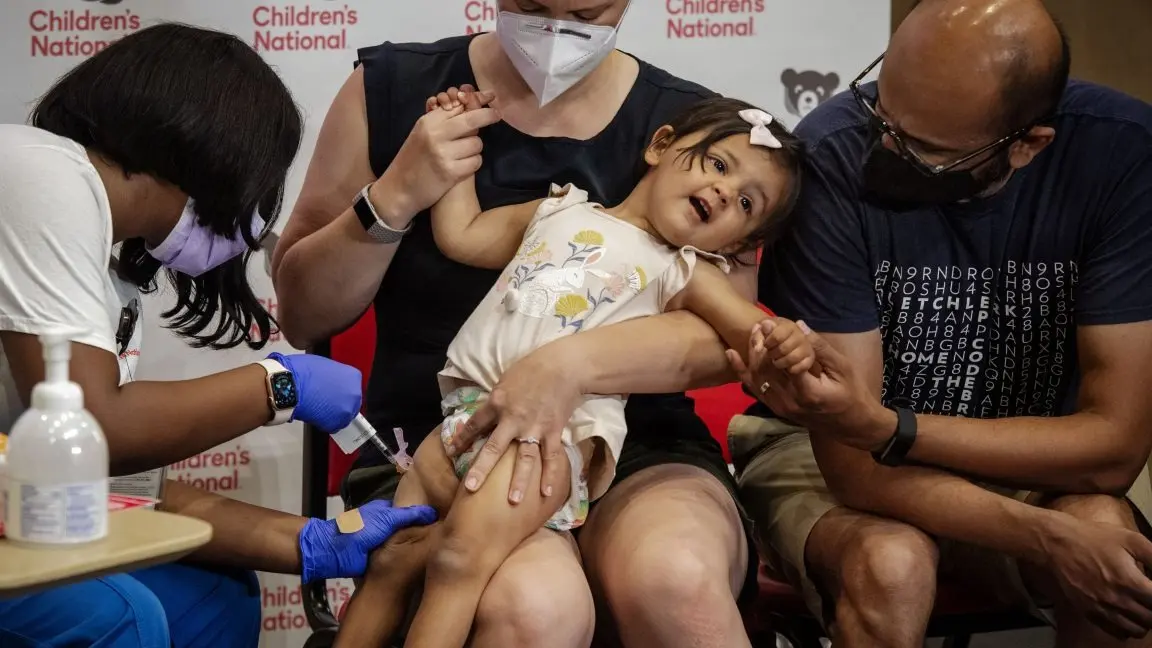
As the crisp air of autumn arrives and public health officials brace for the annual surge of respiratory viruses, a quiet crisis is unfolding across the United States. More than half of the nation’s children currently face profound uncertainty regarding their access to this year’s updated COVID-19 vaccine. In an unexpected and unexplained move, the Centers for Disease Control and Prevention (CDC) has delayed the nationwide distribution of these crucial immunizations through key federal safety-net programs.
The holdup stems from a stalled procurement process within the federal Vaccine for Children (VFC) program—an initiative that provides vaccines at zero cost to families who are uninsured, underinsured, eligible for Medicaid, or of Indigenous heritage. Because the VFC infrastructure also serves as the purchasing backbone for several state-level universal vaccination programs, the federal delay has created a cascading bottleneck. At least 11 states and one U.S. territory, which rely on these centralized federal contracts to secure shots for all children regardless of income or insurance status, find themselves unable to stock their shelves ahead of the peak vaccination window.
Compounding public health anxieties is the political landscape governing the Department of Health and Human Services (HHS). Now led by Robert F. Kennedy Jr.—a prominent and historically outspoken vaccine skeptic with a long track record of pushing debunked claims regarding immunization safety—the agency has offered few concrete answers. While HHS officials maintain that procurement decisions are still being evaluated to ensure products are "appropriate" for target populations, the unexplained postponement aligns disturbingly with Kennedy’s long-standing public campaigns against COVID-19 inoculations.
With respiratory season looming, pediatricians, state health officials, and patient advocacy groups are raising urgent alarms. The delay not only threatens to depress childhood immunization rates but also signals a potential paradigm shift in federal health policy under the current administration, placing vulnerable youth at the center of an ideological tug-of-war over public health.
Detailed Chronology of a Public Health Bottleneck
The current crisis did not emerge in a vacuum; rather, it is the result of administrative friction hitting at the most vulnerable point in the seasonal public health calendar.
The Traditional Rollout Timeline
Historically, late summer marks the synchronization of federal purchasing, state allocation, and clinical delivery. By August and September, the CDC routinely finalizes its contracts for updated seasonal COVID-19 formulations, aligning with recommendations from the Advisory Committee on Immunization Practices (ACIP). Once these contracts are secured, state health departments place their orders through the VFC distribution network, ensuring that clinics, community health centers, and private pediatric practices receive their shipments ahead of the back-to-school season and the traditional fall uptick in respiratory syncytial virus (RSV), influenza, and SARS-CoV-2.
The Breakdown in Federal Distribution
This year, that machinery ground to an abrupt halt. Rather than greenlighting the distribution of the updated seasonal boosters as anticipated, the CDC unexpectedly postponed the finalization of procurement decisions. According to statements provided to industry publications, the agency has frozen the mechanism that allows states to pull their allocated supply through the VFC pipeline.
Because many state health agencies piggyback on federal purchasing power to negotiate lower bulk prices and streamline logistics, the federal freeze instantly paralyzed regional supply chains. State immunization managers, who rely on predictable timelines to coordinate shipments to hundreds of local health departments and thousands of individual clinical sites, were left scrambling with no clear guidance on when—or if—the vaccines would arrive.
The Immediate Fallout for State Programs
The ripple effects of the federal delay are particularly acute in jurisdictions utilizing universal vaccine purchase frameworks. At least 11 states—Alaska, Connecticut, Hawaii, Maine, Massachusetts, New Hampshire, New Mexico, Rhode Island, Vermont, Washington, and Wyoming—along with the U.S. territory of American Samoa, operate models where the state buys all childhood vaccines through federal contracting pathways.
In these regions, the system is designed to eliminate bureaucratic hurdles and financial barriers, ensuring that a child receiving a shot at a rural community clinic has access to the exact same preventive care as a child in a major metropolitan hospital. By halting the VFC procurement process, the federal government has effectively locked these jurisdictions out of acquiring state-wide supplies, transforming a localized administrative snag into a systemic barrier to healthcare access.
Supporting Context & Metrics: Who Bears the Burden?
To fully understand the gravity of the CDC’s delay, one must examine the sheer scale of the population dependent on these federal safety-net frameworks.
The Scope of the Vaccine for Children (VFC) Program
Established in the wake of the early 1990s measles resurgence, the Vaccine for Children program remains one of the most successful public health interventions in modern American history. It removes the financial barrier to immunization by purchasing vaccines directly from manufacturers at discounted federal rates and distributing them to participating healthcare providers at no cost.
- Target Demographics: The program covers children up to 19 years of age who are Medicaid-eligible, uninsured, or underinsured (meaning their health insurance does not cover certain immunizations).
- Indigenous Communities: It also explicitly serves Native American and Alaska Native children, bridging historic gaps in healthcare access for Indigenous populations.
- National Reach: Approximately 52 percent of all children in the United States are eligible to receive vaccines through the VFC program.
When federal procurement stalls for a population comprising over half of America’s youth, the implications extend far beyond mere inconvenience. It introduces structural inequity, as families with private insurance and robust financial resources may still find ways to access the vaccine through commercial channels, while lower-income, uninsured, and marginalized families are left entirely unprotected.
The State-Level Universal Purchasing Landscape
The 12 jurisdictions utilizing universal purchase contracts represent diverse geographic and socioeconomic profiles, yet they share a commitment to universal healthcare access for minors.
| State / Territory | Program Type | Estimated Impact |
|---|---|---|
| Alaska | Universal Purchase / VFC Alignment | High rural vulnerability; logistical reliance on federal cold-chain networks. |
| Connecticut | Universal Purchase | Statewide coverage ensuring equitable access across high- and low-income districts. |
| Hawaii | Universal Purchase | Island geography heightens dependence on streamlined federal shipping schedules. |
| Maine | Universal Purchase | Significant rural demographics relying on community health centers. |
| Massachusetts | Universal Purchase | Robust healthcare infrastructure temporarily bottlenecked by federal supply freezes. |
| New Hampshire | Universal Purchase | State-level procurement tied directly to federal contracting cost-efficiency. |
| New Jersey / New Mexico | Universal Purchase | Border and regional health clinic dependencies halted by administrative delays. |
| Rhode Island | Universal Purchase | Comprehensive statewide immunization tracking impacted by supply deficits. |
| Vermont | Universal Purchase | Highly integrated public health network awaiting federal purchasing clearance. |
| Washington | Universal Purchase | Large pediatric population facing delayed seasonal protection. |
| Wyoming | Universal Purchase | Frontier medicine networks deeply reliant on centralized federal distribution. |
| American Samoa | Universal Purchase / VFC | Island territory facing severe logistical constraints without federal support. |
As Demetre Daskalakis, former director of the CDC’s National Center for Immunization and Respiratory Diseases, noted in interviews with The Guardian:
"The delay in VFC means delays in these states’ ability to get vaccine for all children."
Without these centralized shipments, local clinics are forced to cancel scheduled appointments, redirect frustrated parents, or navigate complex, expensive commercial procurement markets that smaller community practices simply cannot afford.
Official Statements and the Shadow of Leadership
The opacity surrounding the procurement freeze has intensified scrutiny on the Department of Health and Human Services and its leadership.
The HHS Response
When pressed for clarification regarding the timeline and rationale behind the hold, an HHS spokesperson offered a guarded statement to Ars Technica:
"CDC has not yet finalized procurement decisions for COVID-19 vaccines through the Vaccines for Children and Section 317 programs."
When asked directly why the decision had been delayed—and whether political ideology had played a role in stalling shipments designed to protect millions of minors—the department declined to answer. However, the official statement strongly hinted that current administration officials are actively re-evaluating the foundational medical consensus regarding pediatric COVID-19 vaccination:
"HHS and CDC are committed to… ensuring that vaccines purchased through federally funded programs are appropriate for the populations those programs serve," the department noted, adding that further information would be released "soon."
Robert F. Kennedy Jr.’s Record and Ideology
The unwillingness of HHS leadership to provide a straightforward justification for the delay cannot be separated from the ideological stance of its secretary, Robert F. Kennedy Jr. Long before assuming leadership of the nation’s premier health agency, Kennedy built a prominent public platform centered on skepticism toward mainstream pharmaceutical interventions, regulatory bodies, and vaccine safety.
Public health historians and ethics watchdogs have pointed out that Kennedy has a well-documented history of spreading disproven claims about immunizations. Most notably, he has publicly characterized COVID-19 shots as "the deadliest vaccines ever made"—a claim thoroughly debunked by independent fact-checking organizations and overwhelming scientific consensus. Furthermore, he has repeatedly attempted to link pediatric vaccinations to unexplained child mortality figures, despite an utter lack of peer-reviewed data supporting such assertions.
Critics argue that freezing VFC procurement is not an administrative oversight, but rather a calculated, de facto policy choice designed to restrict access to a vaccine the leadership personally opposes. By introducing indefinite delays under the guise of "reviewing appropriateness," officials can effectively suppress immunization rates without having to officially ban the vaccine outright.
Future Outlook: Public Health at a Crossroads
As the autumn respiratory virus season gathers momentum, the immediate future for pediatric COVID-19 immunization remains precarious. Public health experts warn that even if the CDC eventually clears the procurement backlog, the weeks of lost time will inflict lasting damage on vaccination coverage rates.
Clinical and Community Consequences
For pediatricians and family practice physicians, the delay creates an impossible triage scenario. Medical providers are left to decide whether to advise parents to seek out commercial vaccines—which often carry prohibitive out-of-pocket costs—or to tell families to wait indefinitely, leaving children vulnerable during the peak transmission months of late fall and winter.
Furthermore, public health infrastructure relies heavily on momentum. When annual vaccination campaigns are disrupted by administrative chaos, public trust erodes. Parents who might otherwise have immunized their children during routine back-to-school checkups may encounter unavailable supplies, grow fatigued by conflicting messaging, and ultimately skip the shot altogether.
Institutional Trust and the Road Ahead
The current standoff over VFC procurement highlights a broader, more alarming vulnerability in America’s public health architecture: the susceptibility of nonpartisan scientific institutions to political interference. For decades, programs like the VFC operated on the principle that evidence-based medical recommendations should guide the distribution of life-saving interventions, insulated from shifting political winds.
As HHS and the CDC prepare to release their finalized review "soon," the medical community watches with cautious apprehension. Whether the resulting policy will restore the free flow of vaccines to the nation’s most vulnerable children or impose lasting barriers based on ideological skepticism remains to be seen. What is clear, however, is that every day of delay leaves millions of children exposed, turning a routine seasonal rollout into an unprecedented test of the nation’s commitment to public health equity.